

Tigriopus Californicus: Culturing tigriopus californicus for a Thriving Reef Pod
If you've been in the reefing hobby for any length of time, you've probably heard of Tigriopus californicus, or as they're more affectionately known, "Tig Pods." There's a good reason they're so popular. These little copepods are legendary for their exceptional hardiness and fantastic nutritional profile, making them one of the best choices for seeding a saltwater aquarium.
This isn't just another fish food; it's a living engine for your reef. Because they're so tough, Tig Pods are brilliant at establishing a self-sustaining population right in your tank, creating a permanent food source and clean-up crew all in one.
Meet the Toughest Copepod for Your Reef Tank
Every reef keeper is chasing the same dream: a stable, vibrant, and self-sufficient ecosystem. The reality, though, is often a constant battle to maintain that perfect balance. This is where Tigriopus californicus comes in—it's the unsung hero that can help you win that fight. Think of it less as a simple food source and more as a foundational piece for building a living, breathing food web from the rockwork up.
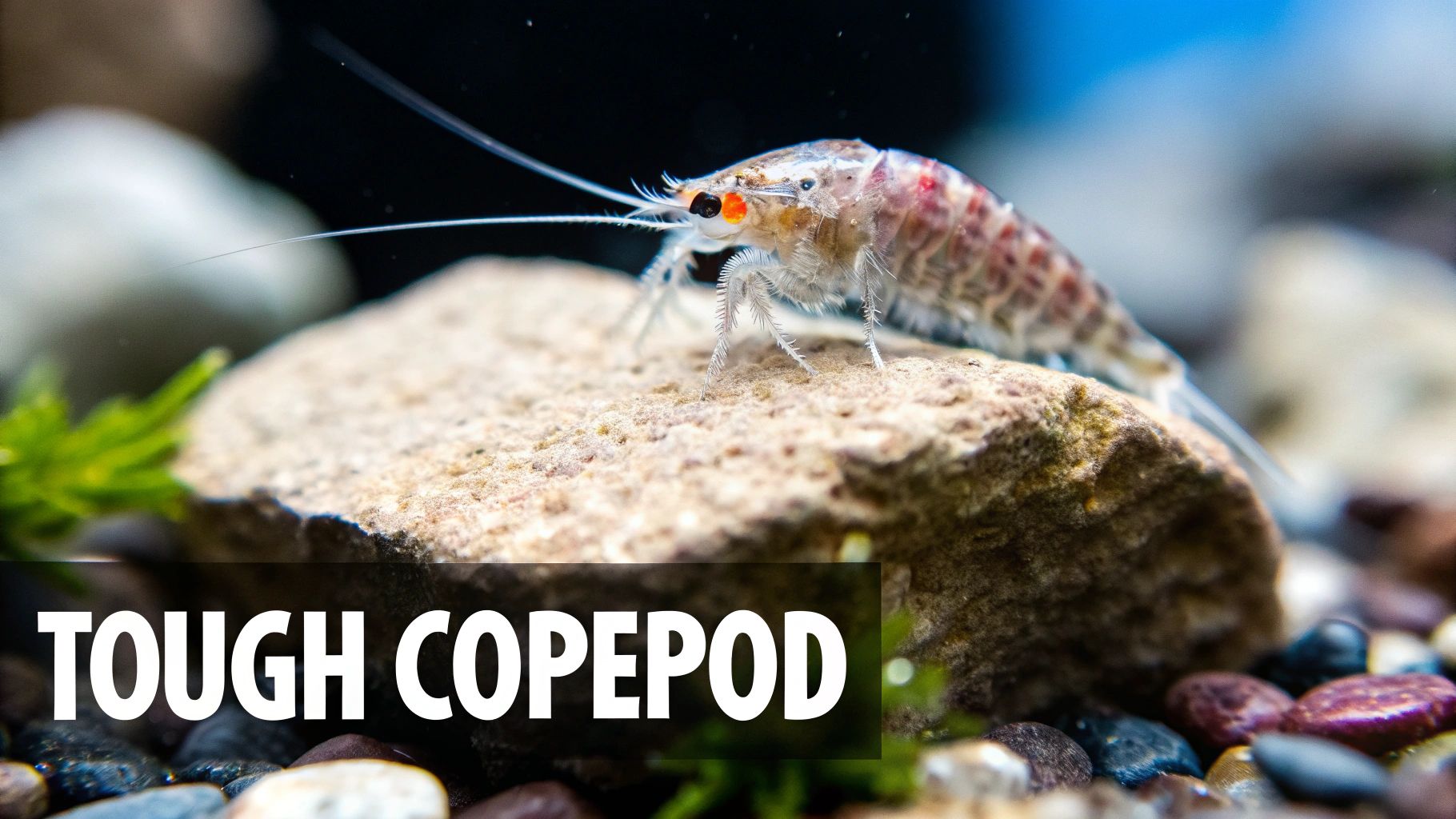
So, what's its secret? The answer lies in its wild origins. This tiny powerhouse comes from the punishing intertidal rock pools along North America's Pacific coast. It has evolved over millennia to withstand the most extreme conditions imaginable. Picture a small puddle on a rocky shore, baking under the midday sun, only to be flooded with cold ocean water or diluted by a sudden freshwater downpour. Tigriopus just rolls with it.
From Tide Pools to Your Tank
That incredible resilience is exactly what makes it a superstar in your aquarium. While other, more delicate copepod species might crash after a minor temperature swing or a slight dip in salinity, Tigriopus californicus is built to handle the inevitable fluctuations of a home reef system. Its natural toughness means it doesn't just survive the introduction—it thrives and gets to work establishing a breeding population.
For such a tiny creature, its impact on the health of your reef is massive. It wears several hats at once:
- A Premier Live Food: Its jerky, noticeable swimming style is like a dinner bell for finicky eaters. Even notoriously picky fish like mandarins, dragonets, and pipefish can't resist chasing them down.
- A Micro Clean-Up Crew: These pods are constantly grazing on detritus, uneaten food, and the ugly film algae that can plague a tank. They essentially turn waste back into a valuable food source.
- A Biodiversity Engine: A healthy pod population forms the base of a natural food web, supporting everything from your corals and anemones to other filter-feeding invertebrates.
In essence, this one organism acts as a bridge, converting microscopic waste and algae into a nutrient-dense meal for the animals you actually want to see flourish. When you add Tigriopus californicus to your tank, you aren't just feeding your fish for a day; you're building a more stable, dynamic, and resilient ecosystem from the ground up.
In this guide, we'll dive into exactly how to put this tide pool survivor to work in your own aquarium, helping you create a healthier, more vibrant, and lower-maintenance reef.
Getting to Know the Biology of This Amazing Pod
So, what’s the big deal with Tigriopus californicus? Why is it such a rockstar in the aquarium world? The secret isn't just one thing—it’s baked right into its biology. To really get why this tiny crustacean is so valuable, you have to follow its journey from a microscopic larva to a surprisingly tough, breeding adult.
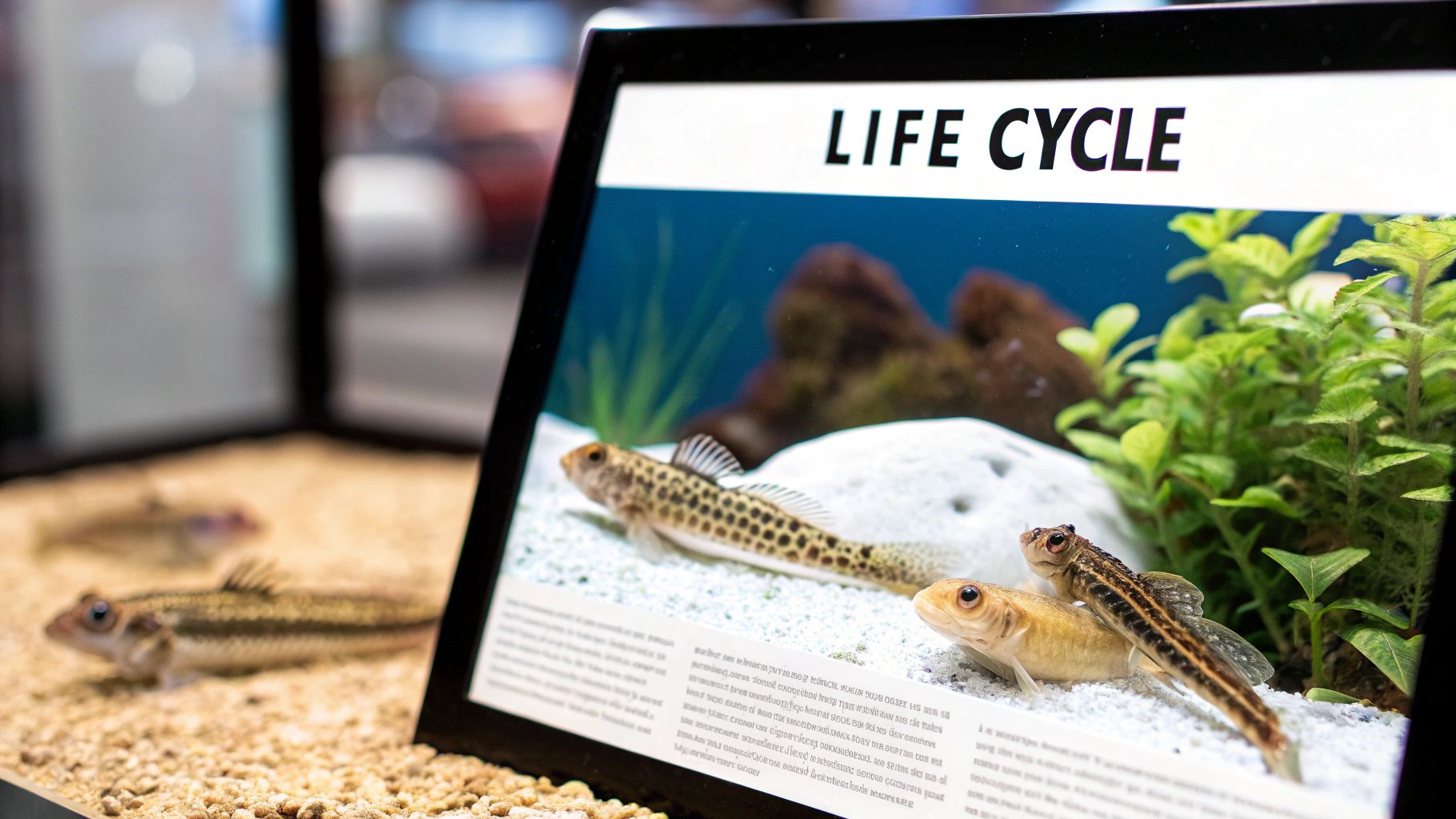
This whole process kicks off when a female releases her egg sac. From that moment, the copepod goes through several distinct phases, and each one brings something unique to your reef tank.
- Nauplius Stage: Life begins as a tiny, free-swimming larva called a nauplius. At just 70-150 micrometers, these little guys are the perfect mouthful for small polyp stony (SPS) corals and other filter-feeding critters.
- Copepodid Stage: After molting a few times, the nauplius grows into a juvenile copepodid. It starts looking more like a miniature adult and shifts its behavior, spending more time crawling on rocks and the aquarium glass.
- Adult Stage: Finally, it hits maturity. Adult females are the heavyweights, often reaching a beefy 1-2 millimeters—a seriously substantial meal for fish like mandarins and wrasses, or even some hungry large polyp stony (LPS) corals.
Because of this multi-stage life cycle, you're not just adding one type of food; you're adding a living, breathing buffet that caters to practically everyone in your tank.
Built Tough from the Inside Out
That vibrant reddish-orange color you see on a healthy Tigriopus isn't just for looks. It’s a billboard advertising its nutritional punch, which comes from high levels of astaxanthin and other carotenoid pigments it picks up from eating microalgae.
When your fish and corals munch on these pods, they absorb those valuable pigments. The payoff for you? You'll start to see your tank’s inhabitants pop with more intense colors—brighter reds, oranges, and yellows. It’s a beautiful, visual confirmation that your animals are getting top-tier nutrition.
But this pigment storage isn't just about food quality; it's also a clever survival trick. In the shallow tide pools where these pods come from, those same pigments act like a natural sunscreen, shielding them from harsh UV rays. This inherent toughness is precisely what helps them thrive in the sometimes-challenging environment of a home aquarium.
Think of it this way: its biology is perfectly engineered for both survival and service. The life cycle creates a continuous food supply for your entire reef, while its rugged internal chemistry ensures it can establish a lasting population where more delicate pods would simply vanish.
An Expert in Adapting to Change
The natural home of Tigriopus californicus—high intertidal rock pools—is a place of constant, dramatic shifts. This has forced the species to evolve an almost unbelievable tolerance for wild swings in both temperature and salinity.
In their native environment, their populations boom and bust with the seasons. In the cooler winter months, you might find a few hundred individuals per liter. But when summer hits and the water warms up, those numbers can explode to over 800 individuals per liter. Some pools have even been recorded with a mind-boggling 20,000 individuals per liter. Their breeding habits follow suit, with clutch sizes jumping from about 20 eggs in winter to nearly 40 in the peak of summer. You can dive deeper into these population dynamics in this detailed study from the University of British Columbia.
This biological programming for explosive growth is exactly what you want to harness in your aquarium. Give them a stable home and a steady supply of phytoplankton, and a small starter culture will quickly transform into a thriving, self-sustaining food web.
Why Professionally Cultured Strains Are Superior
When you're buying copepods for your tank, it’s easy to assume a pod is just a pod. But the difference between a bottle of generic, mixed-source pods and a professionally cultured, single-species strain is like night and day. Going with a lab-grade culture isn't just about getting "cleaner" pods; it's about setting your entire reef ecosystem up for long-term success.
A lot of hobbyists don't realize they might be buying copepods that have been sourced from various wild populations or even from several different cultures combined. They all look the same, sure, but mixing them can cause a huge problem down the road called hybrid breakdown. This is a sneaky genetic issue that can make your new copepod population boom at first, only to mysteriously crash a few generations later.
The Hidden Danger of Hybrid Breakdown
The science here is pretty wild. Tigriopus californicus populations in nature show an insane amount of genetic diversity, even between tide pools that are just a short distance apart. In fact, studies have found that populations only 500 meters from each other can have mitochondrial DNA that differs by over 20%! When you mix these genetically distant pods in your aquarium, they'll breed, and the first generation of offspring might seem perfectly fine.
The real problem shows up in the second generation. These hybrids often have seriously reduced fitness. Their fertility can drop by as much as 50%, their growth slows to a crawl, and their overall survival rates plummet. The population just fizzles out. This happens because the genetic "blueprints" for essential functions, like how their cells produce energy, become mismatched and don't work together properly. You can dive deeper into the intricacies of Tigriopus genetics and hybrid breakdown through dedicated research projects if you're curious.
Think of it like this: hybrid breakdown is like trying to build a high-performance engine using a mix of Ford and Chevy parts. The pieces might bolt together initially, but that engine is doomed to fail because the components were never designed to work in harmony. That’s exactly what happens to a mixed copepod culture over time.
The Purity and Performance Guarantee
This is where professionally cultured strains from a single, isolated population really shine—they completely eliminate this risk. By carefully maintaining one genetically consistent line, producers can guarantee that every copepod in the bottle is 100% compatible with the others. This ensures your pods will reproduce reliably and steadily, allowing you to establish a thriving, self-sustaining population that won't just vanish after a few months.
Besides dodging the genetic time bomb, lab-grade cultures give you a few other crucial advantages:
- Pest-Free Assurance: Wild-caught or poorly managed cultures are notorious for introducing nasty hitchhikers into a pristine system. We're talking hydroids, pest anemones like Aiptasia, harmful bacteria, and even invasive algae.
- Parasite-Free Confidence: Controlled lab environments prevent the introduction of marine fish parasites that can easily catch a ride on wild copepods, protecting the health of your prized fish.
- Species Accuracy: You get exactly what you pay for. A bottle of pure Tigriopus californicus, not a random mix that includes less desirable or less hardy species. This ensures you aren't accidentally seeding with a smaller pod like the popular Tisbe biminiensis when you wanted the larger, more robust Tigriopus.
At the end of the day, choosing a professionally cultured strain is an investment in quality control. It gives you peace of mind, knowing you're adding a clean, productive, and genetically stable organism that will become a cornerstone of your reef's food web for years to come.
How Tigriopus Californicus Transforms Your Aquarium
Adding Tigriopus californicus to your aquarium isn't just about dropping in more fish food. It’s about kickstarting a living, breathing ecosystem within your tank. These tiny powerhouses get to work almost instantly, filling several crucial roles that lead to a healthier, more vibrant reef with less hands-on maintenance from you. The results aren't just theoretical; they are tangible improvements you can see.
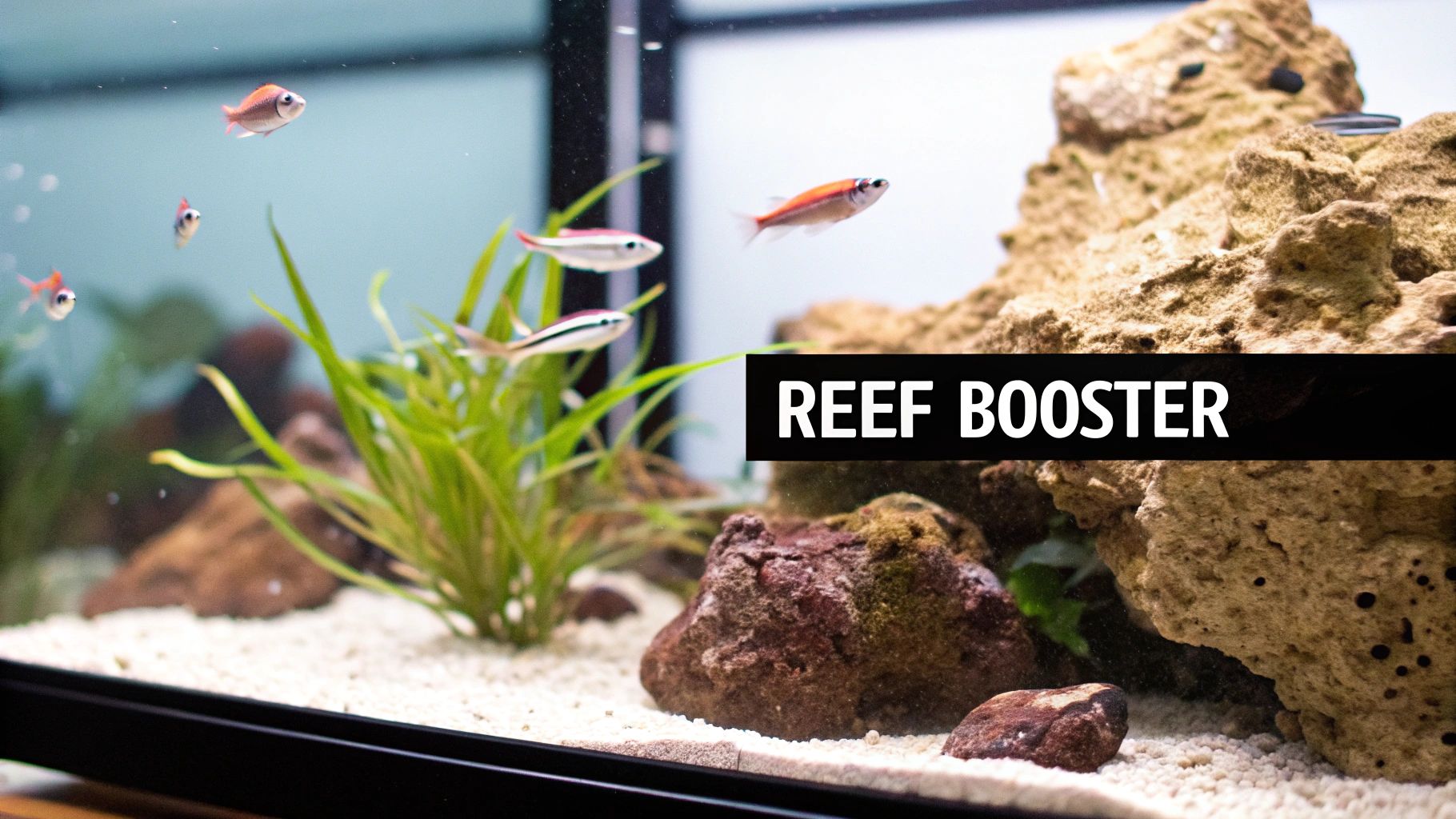
This transformation happens because these copepods wear three very important hats in your tank. They are a five-star live food source, a relentless clean-up crew, and a fundamental boost to your tank's biodiversity. Each role builds on the other, creating a far more stable and natural environment for everything inside.
A Premier Live Food Source
The most immediate benefit you'll notice is the feeding response. The unique, jerky swimming motion of Tigriopus californicus is like a dinner bell for fish, triggering an instinctual hunting drive that even the pickiest eaters can't resist.
This is a game-changer for delicate species like mandarins, pipefish, and certain wrasses that often turn their noses up at frozen or flake foods. Having a constant supply of live prey keeps them active, reduces stress, and allows them to exhibit the natural foraging behaviors they'd have on a wild reef.
A Tireless Clean-Up Crew
Beyond being dinner, these copepods are the janitors you never have to pay. A healthy population will constantly graze on all the stuff you don't want in your tank. They devour detritus, gobble up leftover fish food, and mow down the ugly nuisance algae films that coat your glass and rockwork.
This process of converting waste into a valuable food source is a cornerstone of a healthy reef ecosystem. They effectively recycle nutrients, preventing them from fueling unwanted algae blooms and helping to maintain pristine water quality.
This constant cleaning reduces your workload and helps create a more balanced system where waste is processed naturally. Think of a thriving colony as a living, self-regulating filtration layer that's always on duty.
A Crucial Biodiversity Booster
Maybe the most profound impact these pods have is on your tank's biodiversity. When you establish a self-sustaining population, you're laying the foundation for a complete food web. This microfauna becomes a continuous source of nutrition for corals, invertebrates, and fish, creating a more stable and resilient environment.
This incredible resilience is hardwired right into their DNA. Having evolved in the brutal conditions of tide pools, Tigriopus californicus is uniquely adapted to survive low-oxygen events, a common stressor during shipping or in aquarium dead spots. In fact, under anoxic (zero oxygen) conditions, their median lethal time can be over 51 hours.
This extreme durability is a huge advantage, ensuring they survive the journey to your tank and establish themselves where more fragile species would perish. You can dive into the fascinating science behind their survival skills in this groundbreaking research from PNAS.
Ultimately, adding Tigriopus californicus bridges a critical gap in the captive marine food chain. It helps shift your aquarium from being just a collection of individual animals into a truly interconnected and self-sufficient ecosystem.
A Practical Guide to Seeding Your Tank
Getting a healthy, self-sustaining population of Tigriopus californicus going in your tank is pretty simple, but paying attention to a few details can make all the difference. Think of it less like tossing in fish food and more like planting a garden. You're giving the initial "seeds" the best shot at taking root and really flourishing.
First things first, let's figure out how many pods you'll need. A solid rule of thumb is to start with one bottle for every 20-30 gallons of water in your entire system. If you're dealing with a high-nutrient tank or have a crew of hungry, pod-eating fish like mandarins and wrasses, I'd strongly recommend doubling that initial dose. It's a small investment that pays off big by establishing a strong starting colony right away.
The Best Way to Add Copepods
When and how you add the pods is everything. The whole idea is to give them a fighting chance to find cover before they end up as a quick snack for your fish. The absolute best time to introduce them is at night, or at least an hour after your main lights have turned off. Most fish are less active then, giving the copepods a chance to scatter and settle in under the cover of darkness.
Before you pour them in, you need to hit the "pause" button on your filtration.
- Pumps & Powerheads: Turn these off so the pods aren't immediately blasted around the tank and into the mouths of waiting fish.
- Protein Skimmers: A running skimmer is great at its job, which unfortunately includes pulling copepods right out of the water. Switch it off for a few hours.
- Filter Socks & Mechanical Media: These are designed to trap particles, and they'll trap your new copepods just as easily.
Creating a calm, still environment lets the Tigriopus californicus do what they do best: settle down into the nooks and crannies of your rockwork and substrate. That's exactly where they need to be to start breeding.
Choosing the Right Spot
Where you pour the pods matters, too. Don't just dump them into the open water. You want to aim for safe zones where they're shielded from predators right from the get-go. The perfect spot is your refugium, if you have one. It's a predator-free nursery where the population can boom, eventually overflowing into your display tank.
No refugium? No problem. Pour them directly into areas with complex rockwork or dense patches of macroalgae. The goal is to get them into a safe harbor where they can acclimate and start multiplying. For a deeper dive into techniques, check out our complete guide on how to add copepods to your tank.
After a few hours, you can fire all your equipment back up, knowing your tiny new clean-up crew has found its footing.
Feeding and Maintaining a Booming Population
Once you've added Tigriopus californicus to your tank, the real work—and fun—begins. You’ve planted the seeds, so to speak. Now it's time to nurture them into a self-sustaining population that constantly feeds your reef. The secret to making this happen is simple: give them their favorite food, live phytoplankton.
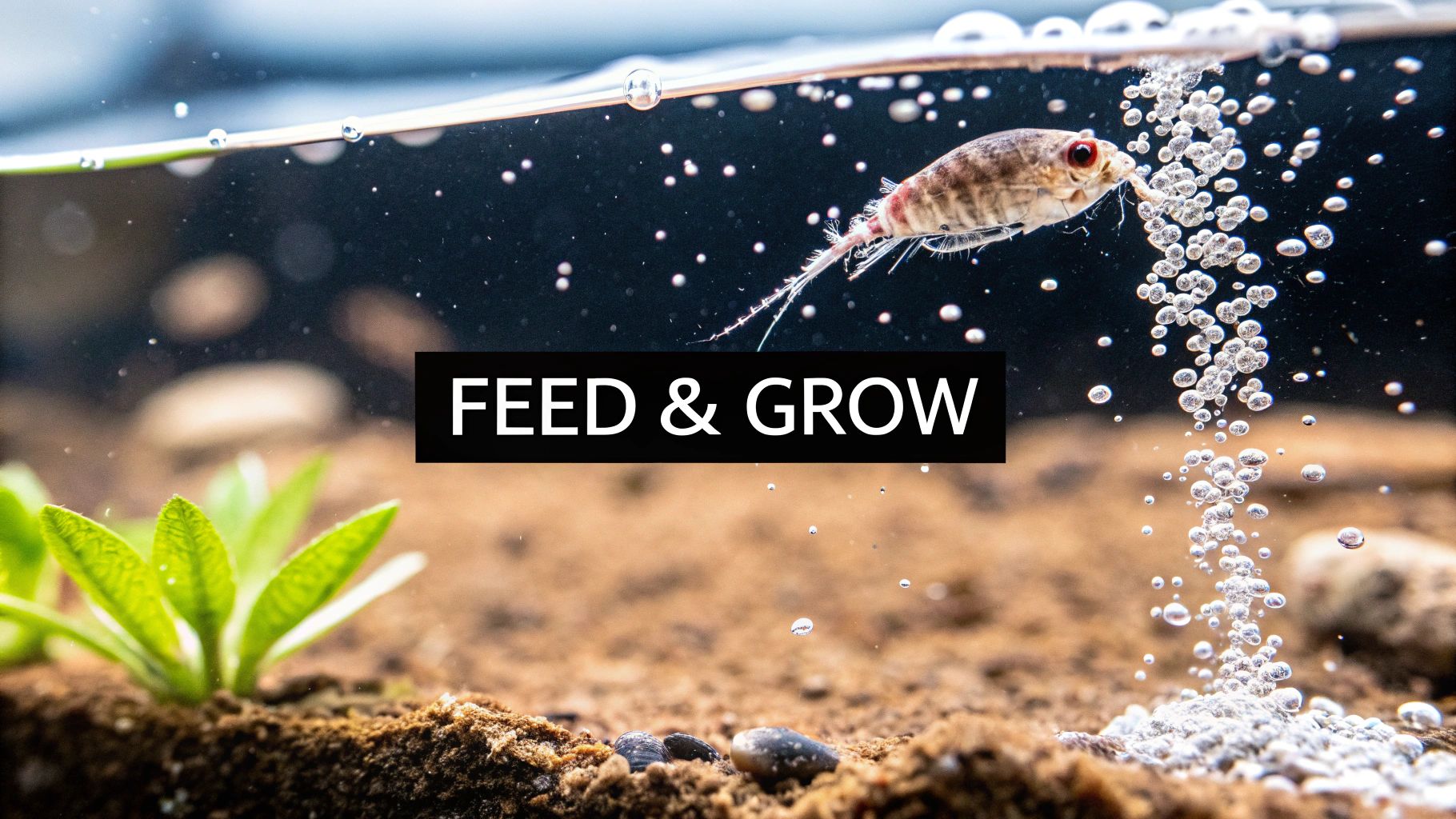
Forget the powdered or preserved stuff. Live phytoplankton is the whole-food, nutrient-dense superfood that fuels explosive copepod growth. It's packed with the essential fatty acids, proteins, and vitamins that pods need to reproduce like crazy. Seriously, a consistent supply of good phyto is the number one thing you can do to get your pod population booming.
Creating a Sustainable Food Source
Keeping your pods well-fed is surprisingly easy. For most tanks, dosing live phytoplankton 2-3 times per week is the sweet spot. You're looking for a light green tint in the water that disappears within a few hours as the pods and your corals get to work eating it.
The best way to check on your progress? Grab a flashlight after the tank lights go out. Shine it on the glass and rockwork. If you see dozens of tiny, reddish-orange specks zipping around, congratulations—your Tigriopus colony is thriving. If you're not seeing much activity, just bump up the frequency or amount of your phytoplankton feedings a little.
Think of a refugium as the ultimate pod nursery. It’s a safe house, free from hungry fish, where copepods can breed without interruption. This protected zone creates a constant stream of baby and adult copepods that flows right into your main display, delivering a fresh meal to your fish and corals.
Long-Term Population Management
Once you establish this cycle of feeding and breeding, you've fundamentally changed your aquarium's ecosystem for the better. You're no longer just dumping in food; you're cultivating a permanent, living part of your reef's food web. This simple routine provides a constant source of nutritious live food, meaning you can rely less on frozen and dry foods.
Ready to take full control of your pod's food source? Check out our guide on how to culture phytoplankton for your reef tank. It's a game-changer.
Your Questions Answered
Even the most seasoned reefers have questions when introducing a new organism to their tank. Let's tackle some of the most common ones about Tigriopus californicus so you can get your population booming with confidence.
Will My Fish Just Gobble Them All Up?
It's a valid concern! Your fish will definitely go on a hunting spree. But Tigriopus californicus are survival experts, quickly darting into the safety of your rockwork and sandbed to hide and breed.
The trick is to give them a fighting chance. Add them to the tank at night when most fish are less active, and turn off your pumps for an hour. This gives the pods plenty of time to settle into nooks and crannies before the morning feeding frenzy begins. A refugium is your ultimate insurance policy, giving them a completely predator-free zone to reproduce and spill over into the main display.
How Often Do I Need to Re-Dose My Tank?
The whole point is to build a self-sustaining population that you never have to re-dose. Think of the initial bottle as the seed for a permanent food source.
Once you've added them, your job shifts from adding more pods to feeding the pods you have. A steady supply of live phytoplankton is the fuel they need to multiply. If you keep them fed, their reproduction will easily outpace what your fish can eat, creating a constant supply of nutritious live food.
A well-fed Tigriopus population is a productive one. Consistent phytoplankton dosing is far more effective for long-term success than repeatedly adding new bottles of pods to an unfed system.
Can I Actually See These Copepods in My Tank?
You bet! This is one of the coolest parts about using Tigriopus. They are one of the largest and most visible copepod species in the hobby, so you don't even need a microscope.
Wait until after lights-out and grab a flashlight. Shine it on your glass and live rock, and you’ll see tiny, reddish-orange specks zipping around. It’s the ultimate visual confirmation that you've successfully established a thriving micro-ecosystem right in your own tank.
Ready to build a vibrant, self-sustaining ecosystem in your reef tank? PodDrop Live Aquarium Nutrition provides the highest-quality, lab-cultured Tigriopus californicus to get you started. Order your bottle today and see the difference that pure, live nutrition makes.