

A Definitive Guide to Culturing Tisbe Biminiensis Copepods
Tisbe biminiensis is a tiny, bottom-dwelling copepod that’s more than just another bug in your tank. It’s a powerhouse—a self-sustaining food source and a tireless cleanup crew all rolled into one. For aquarists looking to boost biodiversity and feed notoriously picky eaters like Mandarin Dragonets, these little critters are an absolute game-changer.
Why Tisbe Biminiensis Is Your Reef Tank's Secret Weapon
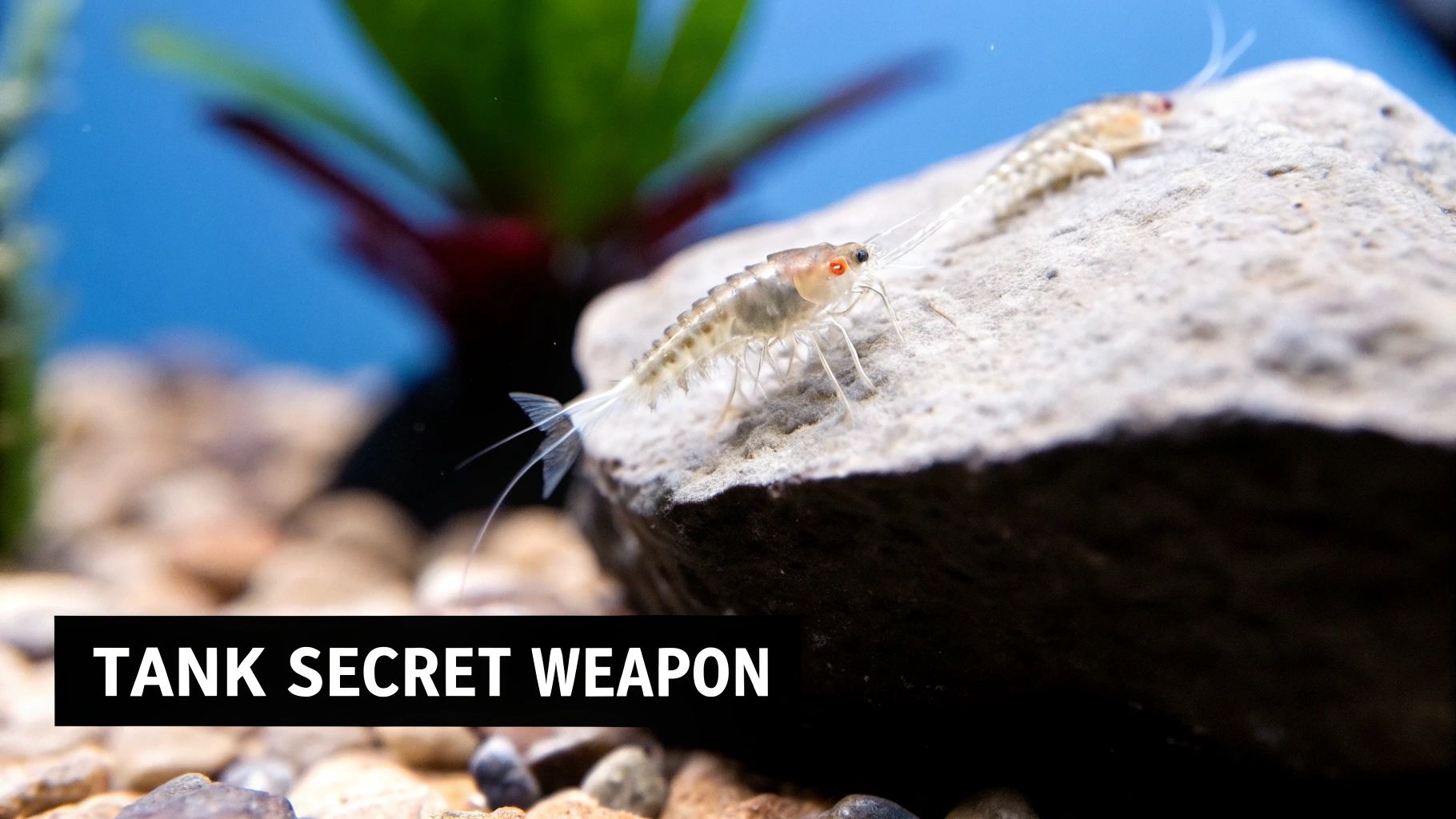
Before we get into culturing them, you need to understand why these specific pods are so valuable. Unlike larger, free-swimming copepods that get snapped up by fish almost immediately, Tisbe biminiensis works behind the scenes. They stay hidden in the rockwork and sandbed, establishing a stable, long-term population that benefits your entire ecosystem.
They truly complete your tank’s food web in a way that no flake or frozen food ever could. For many reefers, especially those with nano tanks or delicate fish, a thriving Tisbe colony is one of the best investments you can make for a healthier, more vibrant aquarium.
Here’s a quick overview of what makes Tisbe biminiensis so special:
Tisbe Biminiensis At a Glance
| Parameter | Optimal Range/Value |
|---|---|
| Type | Benthic Harpacticoid Copepod |
| Size | 100-500 microns (Adult) |
| Diet | Detritus, phytoplankton, biofilm |
| Optimal Temperature | 20-28°C (68-82°F) |
| Optimal Salinity | 1.019-1.026 sg |
| Reproduction | Egg-carrying (produces live nauplii) |
| Life Cycle | ~11-14 days at 25°C |
| Key Benefit | Feeds picky fish, cleans substrate |
This table highlights just how perfectly suited they are for the typical conditions found in most saltwater aquariums.
A Self-Sustaining Food Factory
The real magic of Tisbe biminiensis is its explosive reproductive rate. These copepods are incredibly prolific, creating a continuous supply of live food right where your fish need it. It’s not just a one-off snack; it’s a permanent, self-replenishing buffet that encourages fish to exhibit their natural foraging behaviors.
Fish that are notoriously tough to feed—think Mandarin Dragonets, Pipefish, and certain wrasses—instinctively hunt for these tiny crustaceans. A healthy population of Tisbe ensures these specialists have a constant source of nutrition, dramatically improving their odds of thriving in your tank.
The best part? Tisbe biminiensis converts waste into life. They consume detritus, biofilm, and leftover food—the gunk you don't want—and transform it into highly nutritious live food for the animals you love.
The Ultimate Micro Cleanup Crew
Beyond their value as food, Tisbe are exceptional janitors. Their benthic, or bottom-dwelling, lifestyle means they spend all day crawling through your sandbed and over every nook and cranny of your live rock. While they work, they consume organic waste, bacterial films, and nuisance diatoms in tight spaces that snails and crabs can’t even reach.
This constant grazing helps create a cleaner, more stable environment by:
- Recycling Nutrients: They break down waste into biomass, making those nutrients available to corals and other tank inhabitants.
- Preventing Algae: By eating biofilms and diatoms, they stop many nuisance algae outbreaks before they can even start.
- Improving Substrate Health: Their movement helps gently aerate the top layer of the sand, keeping it from becoming stagnant.
The Science Behind Their Success
The effectiveness of Tisbe biminiensis all comes down to its biology. It's one of the most prolific harpacticoid copepods we can keep, and it absolutely loves the warm waters of a reef tank. Research shows that as temperatures climb toward 25°C (77°F), their life cycle kicks into high gear.
A single female can produce around nine broods in her short life, dropping a new egg sac every couple of days. Under the right conditions, this can lead to staggering population densities that exceed 40,000 individuals per liter. You can find even more fascinating insights about these remarkable copepods over at algaebarn.com.
Setting Up Your Copepod Culture
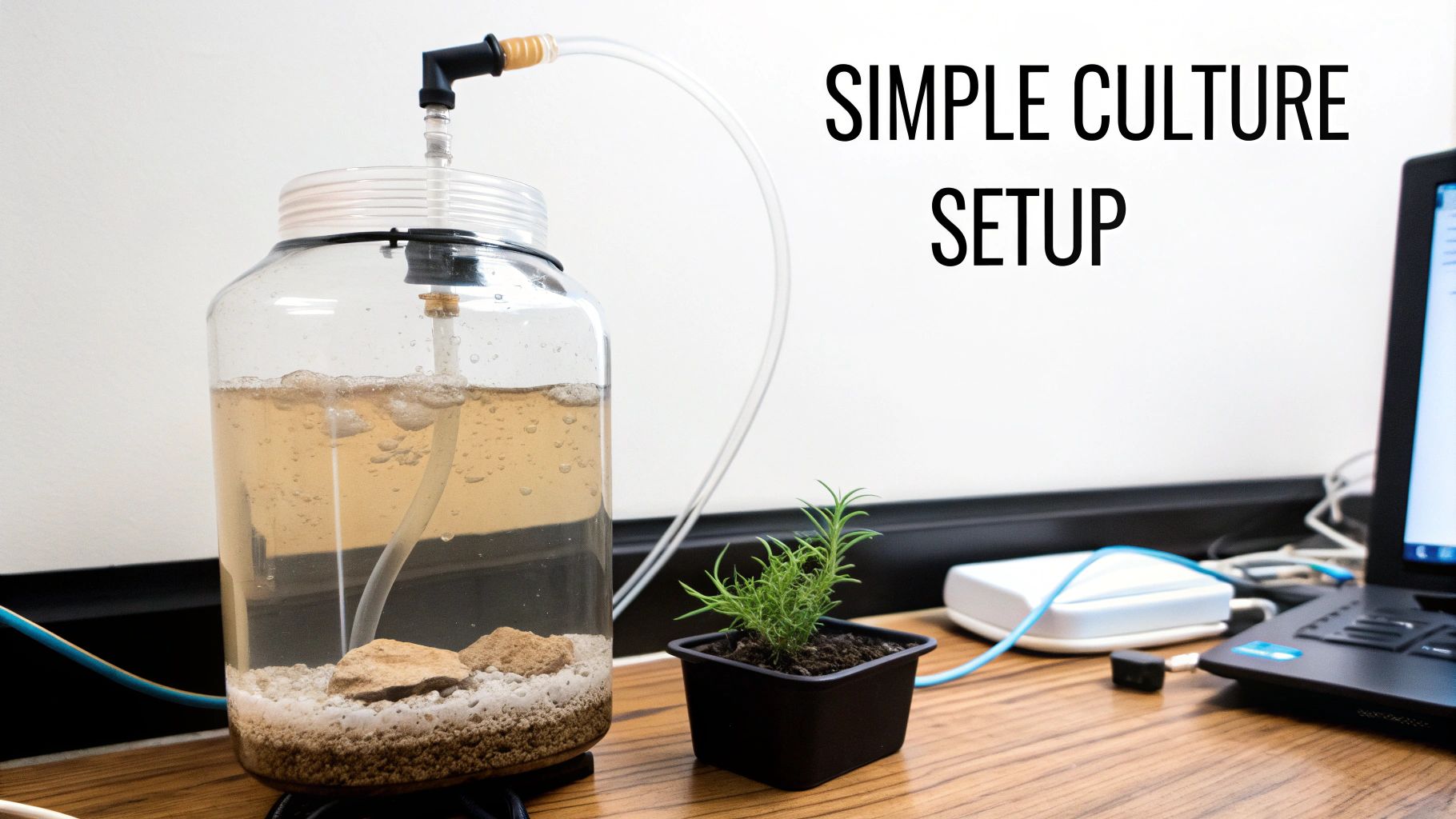
Starting a culture for Tisbe biminiensis is way less intimidating than it sounds. You don't need a lab or a bunch of expensive gear. In my experience, the best copepod cultures are the simplest ones, built around consistency and stability. Your whole goal is just to give these tiny guys a safe, predictable place to multiply without much fuss.
This can be as simple as a one-gallon glass jar on a bookshelf or as involved as a five-gallon bucket in your fish room. The size you choose really just depends on how many pods you want to produce. For most of us just looking to supplement our display tank, a 1-2 gallon container is plenty.
Choosing the Right Home for Your Pods
Your ideal culture vessel is easy to clean, clear enough to see what's going on inside, and made from food-safe material. Think glass jars, clear plastic food containers, or even a small aquarium—they all work great.
A few popular and battle-tested options include:
- One-Gallon Glass Jars: These are perfect for getting started. They're cheap, easy to find, and the clear glass lets you keep a close eye on your growing Tisbe population.
- Two-Gallon Buckets: Stepping up to a food-grade bucket gives you more volume. This makes the culture more stable and means you can pull out larger harvests without stressing the population.
- Small Glass Aquariums: A standard 2.5 or 5-gallon tank is a fantastic choice because it offers a huge amount of surface area for the pods to live on.
Whatever you pick, try to avoid containers with skinny openings. They limit air exchange and make feeding, harvesting, and general maintenance a real pain. A wide mouth is your friend here.
Water and Salinity: Keep It Simple
You don't need to obsess over perfect water parameters. The name of the game is stability. You’ll want to match the salinity of your culture to your main display tank, which is usually right around 1.025 specific gravity. This makes life easier because the copepods will already be acclimated when you add them to your reef.
Always use freshly mixed saltwater with a good reef salt and RODI water. Don't be tempted to use old water from a water change. It's a gamble that can introduce predators, pests, or algae spores that will outcompete your pods and crash the whole culture.
Remember, this is a culture, not a mini reef. There's no need for chemicals, medications, or any additives. The only things going in are saltwater, copepods, and their food.
The Low-Tech Approach to High-Tech Results
The beauty of a Tisbe biminiensis culture is how low-tech it is. All you really need is an air pump and some airline tubing to create a little circulation. A powerhead would be way too much flow; you'd just be blasting the little benthic critters all over the place.
This gentle aeration does two important things:
- It keeps food suspended. The light bubbling ensures food particles and phytoplankton float in the water column long enough for the copepods to grab them.
- It promotes gas exchange. This keeps the water oxygenated and prevents it from going stagnant and souring.
To set it up, just run a rigid airline tube to the bottom of your container and connect it to an air pump. I strongly recommend adding an air valve to dial in the flow. You're aiming for a slow, steady stream of bubbles—maybe one or two bubbles per second—just enough to get a gentle roll going in the water.
A heater is another piece of gear you can usually skip. In fact, it's often just another point of failure. Tisbe do just fine at normal room temperatures, somewhere between 68-82°F (20-28°C). As long as your culture is in a heated room, it’ll stay in that sweet spot without the risk of a faulty heater cooking your entire population. Many of these same "keep it simple" principles apply to larger systems, which you can read about in our guide on setting up a refugium in your sump.
Why Surface Area Is Your Secret Weapon
Tisbe biminiensis are benthic, which is a fancy way of saying they live on surfaces. The more surface area you give them, the bigger and more productive your population will be. A bare-bottom container will work, of course, but adding some structure gives them a world of new real estate to colonize and breed on.
Toss one of these into your culture vessel:
- A chunk of live rock rubble
- A few MarinePure spheres or similar bio-media
- A couple of plastic bio-balls
These additions create tons of little nooks and crannies where the copepods can graze on biofilm and lay their eggs away from the gentle current. It’s a dead-simple trick that can easily double the output of your culture system.
Fueling Your Culture for Maximum Growth
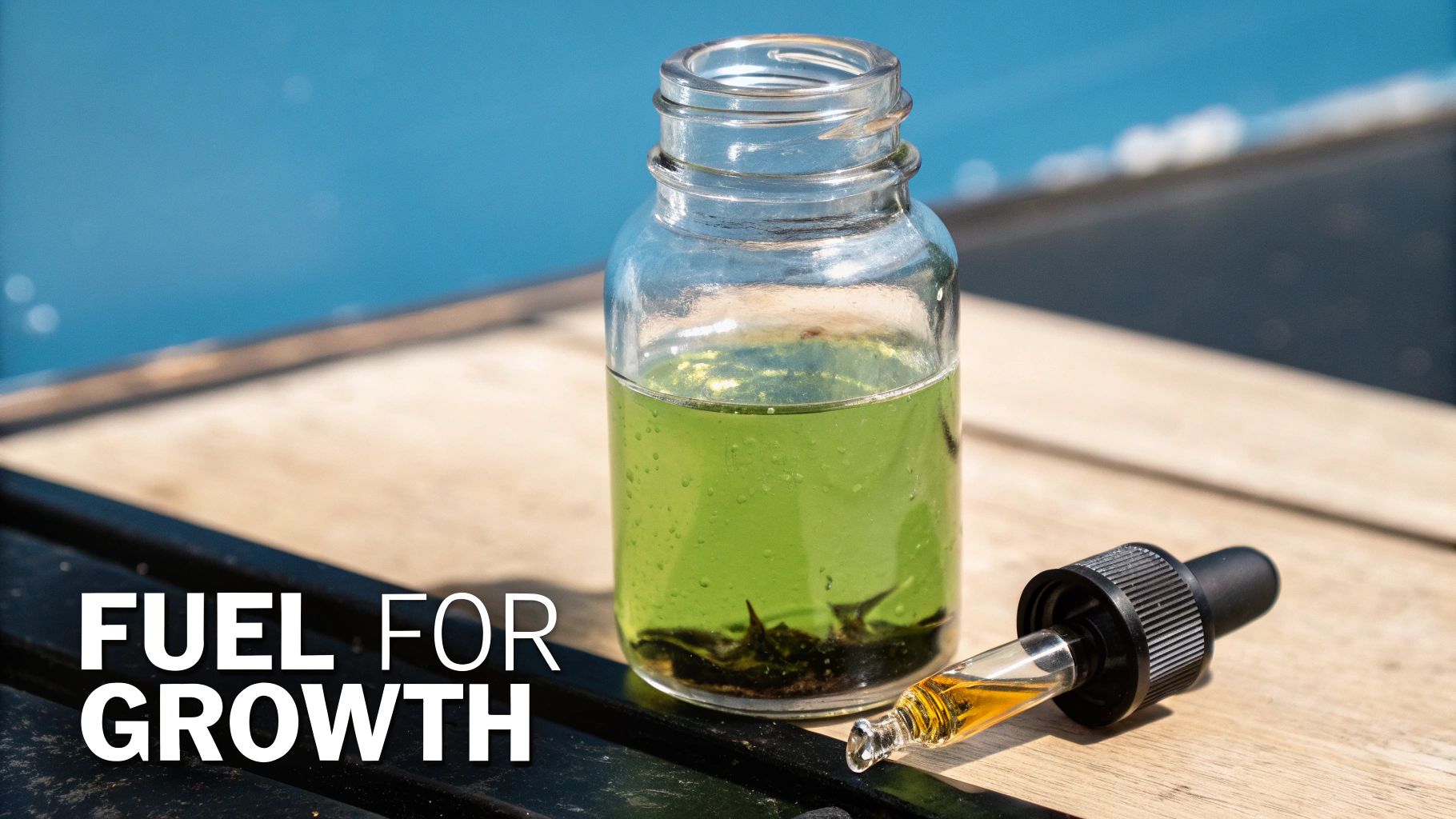
A booming Tisbe biminiensis culture is a hungry one. These little guys are constantly grazing, turning food into more copepods, so your main job is to keep the buffet stocked. The quality of their diet has a direct impact on their health, how fast they reproduce, and ultimately, their nutritional value for your reef tank.
Sure, these copepods are detritivores—they'll get by on biofilm and organic waste. But we’re not aiming for "getting by," we're aiming for a population explosion. To get there, you need a high-quality, consistent food source. Nothing beats live phytoplankton.
Why Live Phytoplankton Is the Gold Standard
Live phytoplankton is more than just food; it's a complete nutritional package. Strains like Nannochloropsis oculata are absolutely loaded with the essential fatty acids (EFAs), proteins, and vitamins that Tisbe need to reproduce like crazy. Think of it like this: you can give a kid a gummy vitamin, or you can give them a balanced meal of fresh veggies. Both provide some nutrients, but one is clearly better for their overall health.
When you feed live phytoplankton, you're not just feeding the pods. You’re also "gut-loading" them, stuffing their tiny bodies with the same high-value nutrition that makes your corals pop and your fish thrive. This is how you transform simple detritivores into a superfood. While some people get by with dried alternatives, they just can’t touch the benefits of a live diet.
A culture fed with live phytoplankton produces copepods richer in DHA and EPA—the "golden fats" crucial for fish health and vibrant coral coloration. This is the single biggest factor in maximizing the nutritional punch of your culture.
A Simple Feeding Cue: Read the Water
Forget about complicated feeding calculators or rigid schedules. The easiest way to know if your Tisbe culture needs food is to just look at the water. This simple visual cue is your best friend.
- Light Green Tint: This is the sweet spot. A faint, steady green hue means there's a healthy amount of phytoplankton suspended in the water, ready for the copepods to graze on.
- Crystal Clear Water: If the water is totally clear, your pods are hungry. They’ve eaten everything available, and it's time for a refill.
- Dark Green or Murky: This is a red flag for overfeeding. Too much uneaten phytoplankton can die off, decay, and quickly foul the water, which can lead to a culture crash.
The whole game is to add just enough phytoplankton to keep that light green color without going overboard. After a few days, you'll get a natural feel for how much your culture eats.
Feeding Schedules: What Really Works?
There's no single "right" way to feed; the best method is the one you can actually stick to. Your daily routine and the density of your copepod population will ultimately decide what's best for your setup.
Here are two common strategies that have worked well for me and other hobbyists:
- Small, Daily Feedings: This is my preferred method. Just add a small amount of phytoplankton once or twice a day to maintain that light green tint. It keeps the food source incredibly stable and the water quality pristine, making it perfect for high-density cultures.
- Larger, Less Frequent Feedings: With this approach, you add a bigger dose of phytoplankton every 2-3 days, making the water noticeably greener. Then, you simply wait for the copepods to clear it back to a light tint before feeding again. This is a great option if you have a busier schedule.
I lean toward daily feedings because it creates a more stable environment, but honestly, both methods can give you fantastic results as long as you pay attention to the water color.
Backup Foods and When to Use Them
Even with the best intentions, life happens, and you might run out of live phytoplankton. It’s always smart to have a backup plan. In a pinch, a high-quality, finely ground spirulina powder or a commercial algae paste can get you through.
A Quick Comparison of Food Sources
| Food Source | Pros | Cons | Best Use Case |
|---|---|---|---|
| Live Phytoplankton | Superior nutrition, gut-loads pods, improves water quality | Shorter shelf life, requires its own culture or regular purchase | Primary, daily food source for maximum growth |
| Spirulina Powder | Long shelf life, inexpensive, readily available | Can foul water easily if overfed, lower nutritional value | Emergency backup food only |
| Algae Pastes | Convenient, long-lasting in the fridge | Messy to dose, can still pollute water, variable quality | A good compromise for short-term use when live phyto is unavailable |
If you need to use a powder, mix a tiny pinch into a cup with some culture water until it's fully dissolved, then pour it in. Seriously, start with far less than you think you need. It’s incredibly easy to foul the water with this stuff.
And if you’re ready to take your reef nutrition to the next level, you can learn more about how to culture phytoplankton for your reef tank in our detailed guide.
Keeping Your Culture Thriving for the Long Haul
Getting a Tisbe biminiensis culture started is one thing, but the real secret to success is keeping it booming for months on end. The whole point is to establish a simple, repeatable routine that prevents crashes and gives you a steady supply of pods on demand. With just a few good habits, you can turn a small batch of copepods into a permanent live food factory.
Long-term success isn't about fancy equipment or complicated chemistry. It's all about consistency. A stable culture is a productive one, and your main job is to keep it that way by managing waste, keeping an eye on the population, and splitting it when it gets overcrowded.
Low-Impact Water Changes
Like any closed system, your culture will accumulate waste over time. Small, regular water changes are the key to exporting ammonia and nitrates, which keeps the environment clean and your copepods healthy. The trick is to get the dirty water out without siphoning away your precious pods.
Here’s my go-to, pod-safe method for a weekly water change:
- Kill the bubbles. First, turn off the airline and let everything settle for 10-15 minutes. This gives the adult Tisbe a chance to sink back down to the bottom and cling to the sides of the container.
- Siphon from the middle. Grab a piece of rigid airline tubing to act as a mini-siphon. Gently skim water from the center of the water column, staying well clear of the bottom and sides where most of the pods are hanging out.
- Catch any escapees. Run the siphoned water through a 53-micron sieve. This will catch any copepods you accidentally sucked up. Just give them a gentle rinse with some fresh saltwater and pop them right back into the culture.
- Top it off. Slowly add freshly mixed saltwater that matches the culture's temperature and salinity to replace the 10-20% you removed.
This whole process takes maybe five minutes a week, but it makes a world of difference in preventing the water from fouling and keeping your culture cranking out pods indefinitely.
Simple Ways to Check on Your Population
You don’t need a microscope to get a good read on your culture's health. A few easy visual checks can tell you everything you need to know. My favorite technique is the flashlight test.
In a dark room, just press your phone’s flashlight flat against the side of the culture container. Within seconds, you should see hundreds—or even thousands—of tiny white specks swarming toward the light. Those are your adult Tisbe. If the glass is absolutely covered in them, you've got a booming population ready for harvesting.
A healthy, dense culture should look like a blizzard of tiny dots when you shine a light on it. If you only see a few specks here and there, it’s a sign that the population is low. You'll want to hold off on harvesting and maybe bump up the food a bit to let them recover.
Knowing When and How to Split a Culture
A successful culture will eventually hit its carrying capacity. The container can only support so many copepods, and once you reach that limit, growth stalls and the whole system can become unstable. Splitting the culture is the perfect solution—it relieves the population pressure, creates a backup, and instantly doubles your production.
When should you split? When that flashlight test reveals an almost solid wall of copepods rushing to the light. That’s your cue.
Dividing the culture is really just starting a second one using half of your mature population.
Setting Up the New Culture Vessel
| Step | What to Do |
|---|---|
| Prepare a New Home | Get a second container ready with fresh, matched saltwater, aeration, and some surface area media, just like the original. |
| Stir Things Up | Vigorously (but carefully!) stir your original culture to get all the Tisbe up and swirling in the water column. |
| The Great Divide | Working quickly, pour about half of the old culture’s water and suspended copepods into the new container. |
| Top Off Both | Fill both the original and the new culture back up to their normal volume with fresh saltwater. |
After you've split them, give both cultures a couple of days to settle in before you go back to your normal feeding and harvesting routine. This simple step ensures you always have a backup culture running and is the easiest way to scale up your copepod production.
Time to Harvest and Feed Your Copepods

This is the rewarding part. You've successfully cultured a dense population of copepods, and now it's time to turn that thriving culture into a powerhouse of nutrition for your reef tank. Getting your Tisbe biminiensis from the culture jar to your display tank is more than just dumping them in; it’s about making sure they have the maximum impact.
How you harvest really comes down to what you're trying to accomplish. Are you spot-feeding a hungry coral, or are you trying to seed your entire refugium for the long haul? Each goal requires a slightly different technique.
Simple and Direct Harvesting Methods
For a quick, targeted feeding, you don't need anything fancy. A fine-mesh brine shrimp net is perfect for scooping up a small batch from your culture. Just a gentle swirl through the water column will gather a concentrated little ball of pods ready for immediate feeding.
I'm a big fan of using a turkey baster or a large pipette for this. It's fantastic for precision feeding because you can suck up a dense swarm of pods along with some of that nutrient-rich culture water. You can then aim this concentrated shot right at a specific coral or squirt it into the rockwork where a shy Mandarin Goby hangs out.
If you're doing a larger harvest and want to separate the pods from the culture water, a sieve is your best friend.
- 53-Micron Sieve: This is the go-to tool for the job. The mesh is fine enough to catch even the tiniest Tisbe nauplii while letting all the water drain away. Just pour your culture water through it, and you’ll be left with a wriggling mass of pure copepod goodness.
Pro Tip: Don't have a lab-grade sieve? Make your own! Grab a short piece of 2-inch PVC pipe and stretch a square of 53-micron mesh fabric over one end. Secure it with a rubber band or some PVC cement, and you’ve got a perfectly functional tool for a fraction of the cost.
Strategic Feeding for Maximum Benefit
Once you have your pods, it's all about timing and placement. The idea is to give them a fighting chance to settle into your reef's ecosystem before they become an instant snack for every fish in sight.
The single best time to add your copepods is well after the tank lights have gone out. Most of your fish are less active at night, which gives the benthic Tisbe time to scurry into the safety of your rockwork and sand bed. This is absolutely critical if you want to establish a breeding population that provides a continuous food source. If you're curious about how various species fit into the reef environment, you can learn more about live copepods and their specific roles.
Seeding Your Refugium and Display Tank
Seeding your system correctly is what separates a one-time meal from a self-sustaining food factory. A well-seeded refugium becomes a protected breeding ground, constantly replenishing your display tank with a fresh supply of copepods.
A Practical Seeding Strategy
| Action | Why It's Important |
|---|---|
| Turn off return pumps and skimmers | This creates a calm 20-30 minute window for the pods to settle into the rocks and substrate without getting sucked into your filtration. |
| Pour pods into a low-flow area | Add them directly to your refugium, sump, or a quiet corner of your display. Don't just dump them in front of a powerhead. |
| Target macroalgae and rubble | If you have a ball of Chaetomorpha or a rock rubble pile, pour the pods right on top. These spots are prime real estate and offer perfect refuge for them to start colonizing. |
When you follow this simple approach, you give your harvested Tisbe biminiensis the best shot at survival and reproduction. They'll quickly work their way deep into your tank’s micro-habitats, establishing a permanent, 24/7 live food source that keeps your entire reef vibrant and your pickiest eaters fat and happy.
Troubleshooting Common Culture Problems
Even the most seasoned hobbyist runs into trouble now and then. One day your Tisbe culture is booming, the next it looks a little thin. A healthy culture is a balancing act, and it doesn't take much to tip the scales. The trick is to catch the early warning signs and act fast before a small issue snowballs into a full-blown crash.
Thankfully, Tisbe are tough little critters. I've seen cultures that looked completely dead spring back to life from just a few survivors. Let's go over the most common pitfalls and how to steer your culture back in the right direction.
Diagnosing a Population Crash
The scariest moment for any culturist is seeing a dense population seemingly vanish overnight. This "blizzard to barren" scenario is almost always a water quality issue, and the number one culprit is overfeeding. That leftover food rots, spikes ammonia, and poisons the pods.
When this happens, you need to stage an emergency rescue. Here's the game plan:
- Stop feeding immediately. Don't add another speck of food until things have stabilized.
- Do a massive water change. Gently siphon off 50-75% of the water. Try to leave the few remaining pods at the bottom.
- Add fresh, clean saltwater. Slowly replenish the culture with new saltwater that matches the temperature and salinity.
- Check your aeration. Make sure you still have a gentle, consistent stream of bubbles keeping the water oxygenated.
Once you've hit the reset button, give the culture a few days to breathe. When you resume feeding, start with a tiny amount. The survivors will get back to work, and you should see the population rebound over the next couple of weeks.
Pro Tip: Trust your nose. A foul, rotten-egg smell is the tell-tale sign of a nasty bacterial bloom from decay. If you smell that, the culture is in critical condition and needs that massive water change right now.
Unwanted Guests and Contaminants
Every so often, you might spot some uninvited guests swimming around with your Tisbe. While most are harmless hitchhikers, some can compete for food. The most common invaders are rotifers—you'll see them as tiny, fast-moving dots that look more uniform than the jerky, irregular movements of copepods.
Don't panic. A few rotifers won't tank your culture. The goal here is control, not total eradication. If their population starts to explode and outnumber your pods, you can manage them by rinsing your harvested Tisbe through a fine sieve with clean saltwater before they go into your main tank. This simple step keeps the rotifers from spreading.
Sometimes a quick-reference guide is the best tool for a fast diagnosis. I've put together this table to help you quickly identify what might be going wrong and how to fix it.
Culture Troubleshooting Quick Guide
| Symptom | Potential Cause | Solution |
|---|---|---|
| Foul Odor | Bacterial bloom from overfeeding or a die-off. | Perform a 50%+ water change; drastically reduce feeding. |
| Sudden Population Drop | Ammonia spike or lack of oxygen. | Do a large water change; check the airline for kinks or clogs. |
| Cloudy Water | Too much powdered or paste food. | Skip feeding for a day or two; a small water change can help. |
| Rotifer Invasion | Contamination from shared equipment or water. | Feed less to favor Tisbe; rinse harvests with clean saltwater. |
Ultimately, most problems are manageable if you catch them early. Keeping a close eye on your culture and knowing what to look for is half the battle.
Common Questions About Culturing Tisbe Pods
Even after setting up a culture, a few questions always seem to surface. Let's run through some of the most common ones I hear from fellow reefers to make sure you're set up for success with your Tisbe biminiensis.
A big one is always about lighting. Do the pods need a light source? The short answer is no, the copepods themselves don't need it. In fact, Tisbe are naturally drawn to darkness (a trait called negative phototaxis). That said, if you're feeding live phytoplankton, a little bit of ambient light will help keep the phyto alive and kicking for longer in the culture vessel.
How Often Can I Harvest from My Culture?
People are always eager to know how often they can pull pods for their tank. Once your culture looks like a blizzard of tiny specks when you shine a light on it, you're good to go. You can either pull small amounts daily or harvest a larger batch once or twice a week.
My personal rule of thumb is to never take more than about 25% of the visible population at once. This leaves plenty of breeders behind to quickly replenish their numbers.
Here's a pro-tip for feeding hungry fish like wrasses: Add the pods to your display tank well after the lights have gone out. It's also a good idea to shut off your pumps for about 30 minutes. This gives the Tisbe biminiensis a crucial head start to settle into the rockwork before your fish wake up and start hunting.
Ultimately, it all comes down to observation. Keep an eye on the density of your culture and adjust your harvesting schedule accordingly. You want to strike that perfect balance between feeding your tank and keeping the culture thriving.
Ready to get a culture going and create a self-sustaining food source? PodDrop Live Aquarium Nutrition offers high-quality, lab-grown Tisbe biminiensis that are perfect for starting a new culture or seeding a refugium. You can get premium live copepods delivered right to your door.