

A Guide to Reef Nutrition for a Thriving Aquarium
When we talk about reef nutrition, we're diving into something much deeper than just feeding your fish. It's about cultivating a complete, living food web right inside your aquarium. By nurturing microscopic life like phytoplankton and copepods, you create a constant, natural food source for everything from your corals to your invertebrates. This approach is what transforms a simple display tank into a thriving, self-sustaining ecosystem.
Understanding Your Reef's Natural Food Web
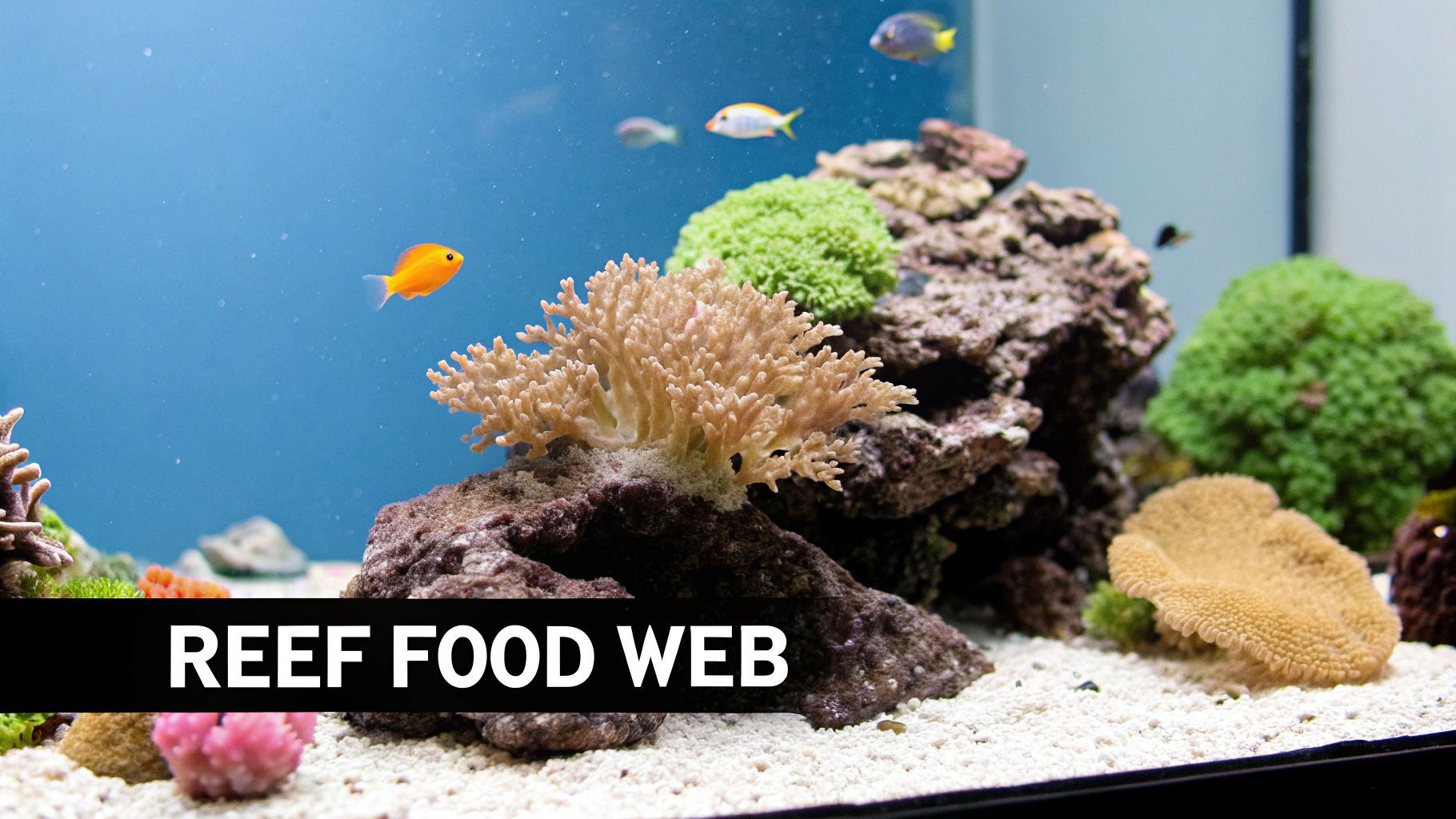
Imagine your reef tank as a bustling, miniature city. Your corals are the skyscrapers and vibrant architecture, the fish are the busy citizens, and countless tiny organisms are the essential workers keeping the whole operation running. Just dropping in some fish flakes is like air-dropping a single pizza into that metropolis—sure, a few inhabitants get fed, but it does absolutely nothing to sustain the entire community.
Real, effective reef nutrition is about building and supporting this city's entire economy from the ground up. It all boils down to the flow of energy through a well-managed food web, a concept that is absolutely fundamental to the long-term health of your tank. Once you grasp how this system works, you graduate from being a tank keeper to an ecosystem architect.
The Key Players in Your Underwater City
Every ecosystem needs a foundation, and in a reef tank, that foundation is built by primary producers. Think of phytoplankton as the microscopic farms on the city's outskirts. These tiny algae are masters at converting light and nutrients into pure energy, making them the fuel for everything else in the tank. But their job isn't just to feed corals directly; they play an even more critical role.
Grazing on these green pastures are the "livestock" of your reef: live copepods and other microfauna. These tiny crustaceans feast on the phytoplankton, essentially packing all that nutritional goodness into a perfect, bite-sized meal. They are the crucial link that moves energy from the microscopic level up to the bigger animals in your tank—the delivery drivers and sanitation crew of your underwater city.
Finally, at the top, we have the consumers. Your prized corals, colorful fish, and filter-feeding invertebrates all depend on this established food chain. Whether they're actively hunting copepods zipping through the water or passively snagging phytoplankton from the current, a constant supply of live food is what they're built to eat. You can take a closer look at these complex relationships in our guide to the coral reef food web.
By cultivating this complete food web, you aren't just feeding your animals. You are creating the conditions for a stable, resilient, and breathtakingly beautiful ecosystem where every inhabitant has a job and thrives naturally.
This holistic perspective is the secret behind the most stunning and healthy reef aquariums you see. It ensures that even your most delicate species get the precise nutrients they need, which means less reliance on processed foods and more opportunities to see natural, fascinating behaviors emerge. When you adopt this strategy, you're truly nurturing a living system, not just maintaining a glass box.
The Two Pillars of Live Reef Nutrition
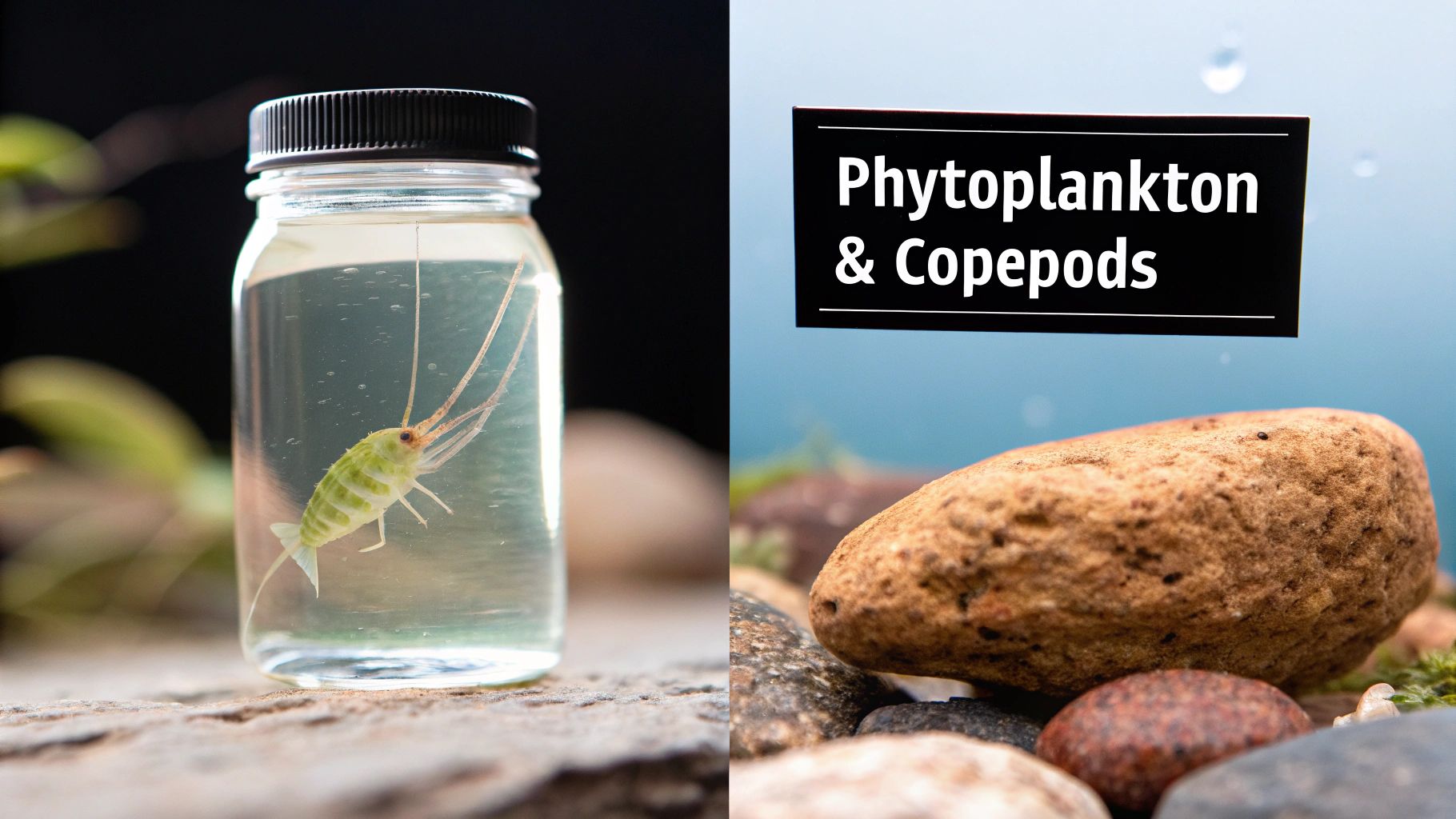
If you want to build a reef tank that truly comes alive, you have to think like nature. That means starting from the ground up, with the two fundamental pillars of live reef nutrition: phytoplankton and copepods. These microscopic powerhouses are the base of the entire marine food web.
Think of them as a one-two punch for your aquarium's health. Phytoplankton are the primary producers, creating a buffet of essential nutrients. Copepods then come in, concentrate those nutrients, and deliver them as the perfect bite-sized meal. Get this relationship right, and you'll unlock the vibrant colors and robust health you've been striving for.
Phytoplankton: The Microscopic Powerhouse
It’s easy to dismiss phytoplankton as just "green water," but these single-celled algae are the unsung heroes of the reef. They are tiny biological factories, taking light and dissolved nutrients and converting them into the essential fatty acids, vitamins, and amino acids that fuel everything else.
Dosing your tank with phytoplankton is like planting a nutrient-dense garden for your aquatic community. Different strains bring different benefits to the table, so you can really dial in your feeding strategy.
- Nannochloropsis: This is your clean-up crew. It's fantastic at consuming nitrates and phosphates, which helps you naturally export excess nutrients and starve out nuisance algae.
- Isochrysis: Prized for its rich nutritional profile, this strain is loaded with DHA, a critical fatty acid. It’s a go-to for boosting coral color and giving filter feeders the high-octane fuel they need to thrive.
By dosing a quality live phytoplankton blend, you're not just feeding your corals directly. You're ensuring the very foundation of your tank's food web is strong, healthy, and always available for your copepods and other microfauna.
Live Copepods: The Critical Link in the Food Chain
If phytoplankton are the garden, then copepods are the nutrient-rich grazers that transfer all that goodness up the food chain. These tiny crustaceans are the essential link between the microscopic world and your larger inhabitants like corals and fish. A bustling, reproducing population of copepods is one of the best signs of a mature and well-balanced reef.
Just like with phyto, different species of copepods fill different roles in the tank. Some are better for seeding a new system, while others are the perfect meal for picky fish.
A healthy copepod population basically turns your tank into a 24/7 snack bar. This constant availability of live food cuts down on stress, encourages natural hunting behaviors, and provides a lifeline for finicky eaters.
This is absolutely crucial for fish like Mandarin Dragonets or certain wrasses. They are specialized predators that only eat these micro-crustaceans. Without a sustainable "pod" population, these stunning fish simply won't make it long-term in an aquarium.
Choosing Your Live Food Source: A Quick Guide
So, which combination of phytoplankton and copepods is right for you? It really depends on your goals and what’s living in your tank. Are you trying to get a new nano reef established, satisfy a hungry Mandarin, or just make your SPS corals pop with color?
This table breaks down some popular options to help you match the right live food to your specific needs.
| Live Culture | Primary Benefit | Best For | Ideal Tank Type |
|---|---|---|---|
| Tisbe biminiensis | Detritus Control & Seeding | Establishing a robust, self-sustaining pod population and cleaning hard-to-reach areas. | New Tanks, Nano Reefs, Refugiums |
| Tigriopus californicus | Hardy Food Source | Feeding picky fish like Mandarins and Wrasses due to their jerky swimming motion that triggers a feeding response. | Systems with High Predation |
| Apocyclops panamensis | Warm Water Tolerance | Thriving in higher temperature tanks and providing a nutritious meal for corals and fish. | High-Tech SPS Tanks, Seahorse Systems |
| Phytoplankton Blend | Nutrient Export & Pod Fuel | Outcompeting nuisance algae and providing a constant, high-quality food source for your entire pod population. | All Reef Tank Types |
At the end of the day, the most successful reef keepers often use a diverse mix. Combining several species of copepods with a good blend of phytoplankton ensures every niche in your tank is filled. This creates a more dynamic, resilient, and beautiful ecosystem, all powered by the natural foundation of reef nutrition.
How Nutrition Fuels Coral Color and Fish Vitality
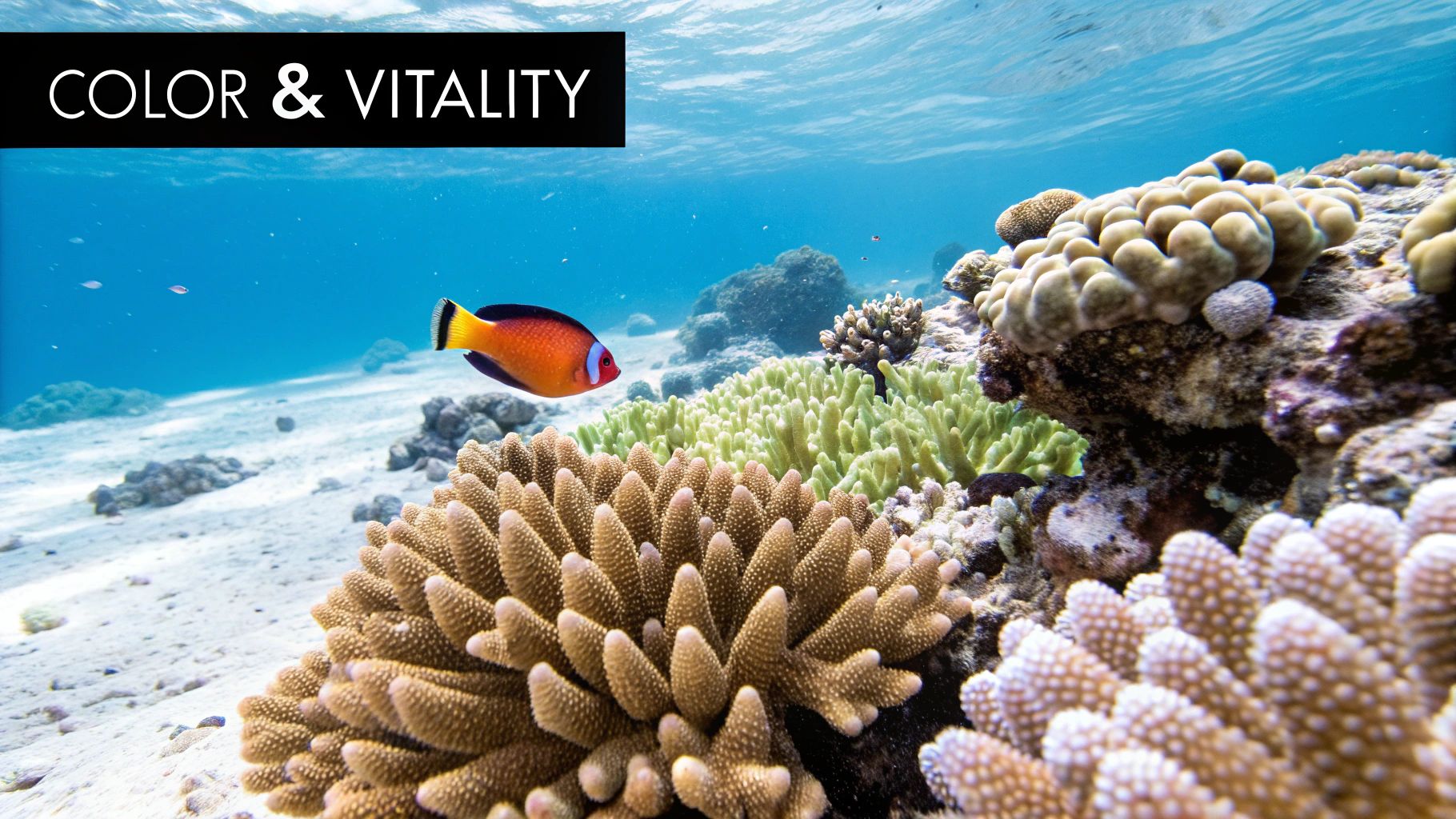
It's one thing to understand the reef food web on paper, but seeing it come to life in your own tank? That’s where the real magic happens. Those stunning, day-glow colors in your corals and the energetic buzz of your fish aren't just a happy accident—they're a direct result of proper reef nutrition.
When you add live phytoplankton and copepods to your aquarium, you're kickstarting a powerful and ancient energy transfer. Copepods feast on the phytoplankton, packing themselves full of essential fatty acids, vitamins, and pigments. Then, they become the perfect, nutrient-dense meal for your corals and fish. It’s this complete, bioavailable nutrition that truly unlocks their full genetic potential.
Unlocking a Full Spectrum of Coral Color
I like to think of corals as artists, and their diet is the palette of paints they have to work with. A coral’s breathtaking color comes from pigments in its tissue, which do everything from providing UV protection (like a natural sunscreen) to showing off. But to create those deep, rich hues, corals need a whole range of micronutrients that just aren't present in most processed foods.
This is where live foods really shine. They deliver the full palette. For instance, essential fatty acids from phytoplankton strains like Isochrysis are gobbled up by copepods, which then get eaten by your corals. This process directly fuels the creation of chromoproteins—the very molecules responsible for those incredible blues, purples, and reds. Without this complete reef nutrition, corals often look washed out or "browned out," simply because they lack the building blocks for their best colors.
A well-fed coral is not just more colorful; it's also more resilient. Proper nutrition strengthens coral tissue, improves polyp extension, and increases its ability to fight off disease and recover from stress events like temperature swings.
So, a steady supply of live food doesn't just make your tank look prettier; it makes it fundamentally healthier. You’ll start to see fuller, fleshier corals with more visible growth tips, all because their basic biological needs are finally being met. If you want to go even deeper on this topic, check out our guide on the best food for corals.
Fueling the Health and Vigor of Your Fish
Of course, the benefits don't stop with your corals. For fish, a diet that lets them hunt and forage as they would in the wild is absolutely crucial for their well-being. Chasing down live copepods isn’t just about getting a meal; it's natural enrichment that keeps them active, reduces stress, and lets them be... well, fish!
For some species, this constant availability of live food is non-negotiable. A healthy copepod population can literally be the difference between a fish that thrives and one that doesn't make it.
- Mandarinfish (Dragonets): With their sky-high metabolisms, these fish graze constantly. They almost exclusively eat live pods, so a tank without a self-sustaining population simply can't support them long-term.
- Pipefish and Seahorses: Much like mandarins, these slow, methodical hunters need a reliable source of tiny, live prey to stay healthy and active.
- Wrasses: Many wrasses, especially as juveniles, are relentless pod hunters. This natural diet helps them grow strong and develop the vibrant colors they're famous for as adults.
Beyond just keeping picky eaters alive, a diet rich in live microfauna gives a fish's immune system a major boost. The high-quality proteins and lipids from copepods are incredibly easy to digest and absorb, leading to better overall health and a stronger defense against common tank diseases. The result? Fish that are not just more colorful, but also more active, engaged, and tough.
Strategic Feeding for Different Aquarium Setups
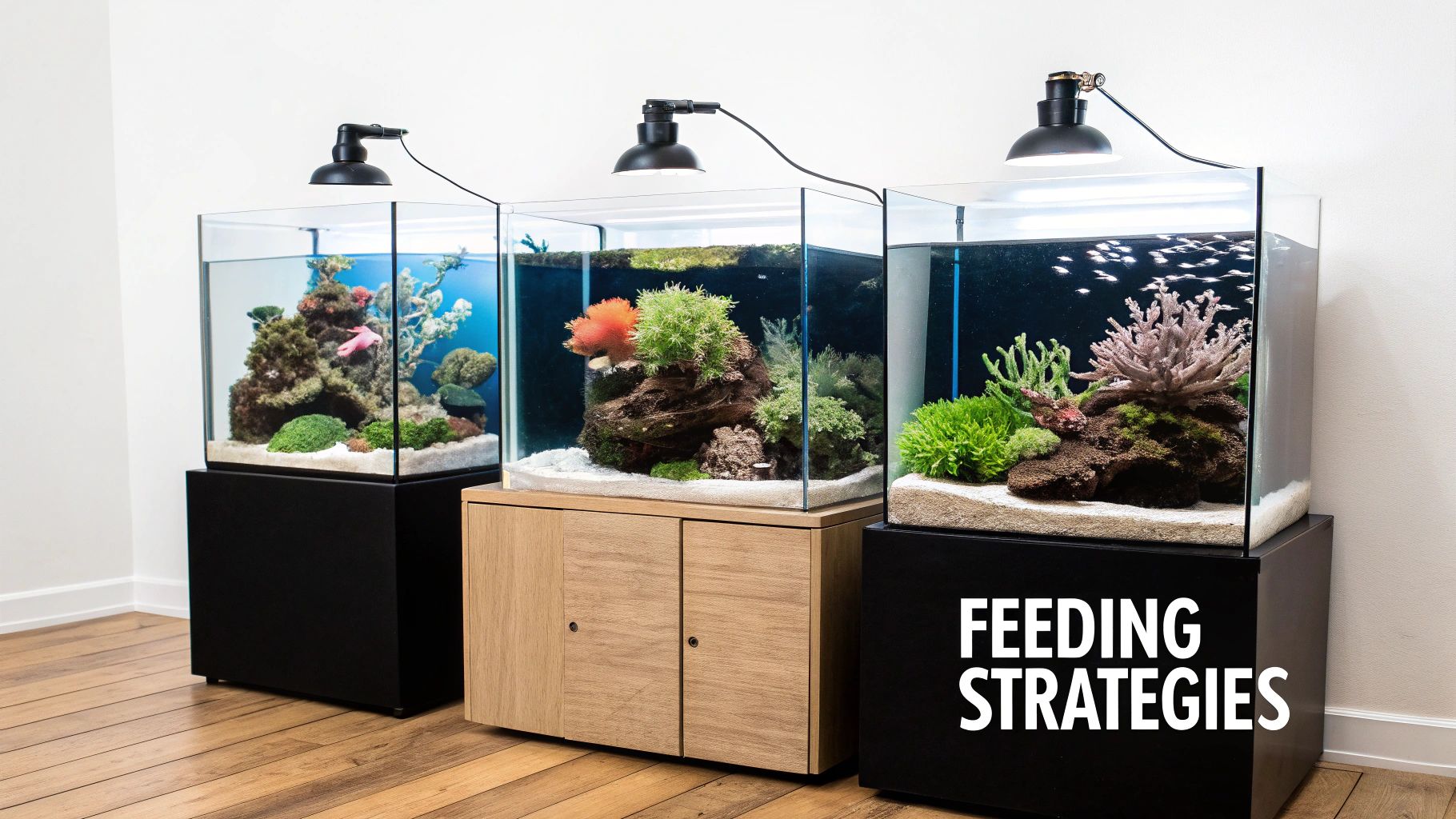
Just as a bonsai tree and a giant redwood have wildly different needs, no two reef aquariums are the same. A successful reef nutrition plan isn't a one-size-fits-all recipe; it’s a living strategy that you adapt to the unique demands of your specific system. The size of your tank, the corals you're passionate about, and the fish you keep all play a huge role in getting the feeding schedule right.
When you tailor your approach, you push nutrients where they're needed most and drastically cut down on waste. This way, every single inhabitant—from the tiniest copepod darting through the rockwork to your prized coral colony—gets exactly what it needs to truly flourish.
Fueling Compact Nano Reefs
Nano reefs are small but incredibly dynamic ecosystems. Their compact size means that balance is everything. Because the water volume is so limited, your primary goal is to establish a self-sustaining food web as quickly as you possibly can. This makes that initial "seeding" phase absolutely critical to long-term success.
For these smaller setups, a diverse, high-quality copepod blend is your best friend. Get a high-density culture of species like Tisbe and Apocyclops in there early. This jump-starts a strong breeding population that can rapidly colonize your rockwork and sand bed, creating a constant source of live food while also serving as a tireless clean-up crew.
A nano reef is like an intricate clockwork mechanism. A strong, reproducing copepod population is the mainspring that keeps the whole system running smoothly, ensuring stability and biodiversity in a small space.
When it comes to phytoplankton, dose sparingly but consistently. A light feeding 2-3 times per week is perfect for fueling the pod population without overwhelming your filtration. This method builds a resilient micro-ecosystem from the ground up.
Meeting the Demands of SPS Coral Tanks
High-demand SPS (Small Polyp Stony) coral tanks are the marathon runners of the reefing world. Corals like Acropora and Montipora have incredibly high metabolic rates—they're constantly building their intricate skeletons and showing off those stunning colors. This burns a tremendous amount of energy, which means they need a steady, nutrient-rich food source to keep up.
For these demanding systems, consistency and targeted feeding are everything.
- Frequent Phytoplankton Dosing: Add live phytoplankton 4-5 times per week. I find it's best to dose at night, when you see the most polyp extension. This provides a direct food source for the corals and also fuels the zooplankton they prey on.
- Regular Pod Replenishment: Even with a healthy refugium, the voracious appetites in an SPS-dominant tank can quickly deplete your copepod numbers. A weekly or bi-weekly boost with a hardy species like Tigriopus ensures your corals and small fish always have access to this crucial food.
The key here is consistency. Skipping feedings can stress these sensitive corals, while a steady nutrient stream is what gives you that rapid growth and deep, vibrant coloration we all strive for.
Nurturing LPS and Soft Coral Gardens
Unlike their fast-growing SPS cousins, LPS (Large Polyp Stony) and soft corals are more like patient, methodical eaters. Think of corals like Euphyllia, Favia, and Zoanthids—their larger polyps are built to capture more substantial food particles right out of the water column. They don't need that constant stream of food like SPS, but they thrive on more targeted feeding opportunities.
A great technique for these tanks is to turn off your return pump and powerheads for about 15-20 minutes during feeding. Gently broadcast a mix of phytoplankton and copepods over the corals. This creates a "snowstorm" effect, allowing the food to settle and giving these slower eaters plenty of time to grab a nutritious meal. A feeding schedule of 2-3 times per week is usually more than enough to see amazing polyp extension and lush, healthy tissue growth.
Sustaining Tanks with Specialty Fish
If your tank is home to specialist feeders like a Mandarinfish, Seahorses, or certain picky Wrasses, your reef nutrition strategy has to put their needs first. These fish aren't just eating at dinner time; they are micro-predators that graze continuously all day long. A single large seeding of copepods simply won't cut it. You have to maintain a perpetually stocked pantry for them.
For these fish, a dedicated refugium isn't just a good idea—it's practically a necessity. A 'fuge acts as a safe house where copepods can reproduce without the constant threat of being eaten. Even with one, you should still plan on a regular replenishment schedule. Adding a fresh, diverse culture of copepods every 1-2 weeks ensures the main display tank always has a surplus, keeping these beautiful but demanding fish fat, happy, and healthy.
Troubleshooting Common Reef Nutrition Problems
Even with the most careful planning, your reef nutrition strategy can sometimes hit a snag. It's easy to feel a little defeated when you see cloudy water or a sudden patch of algae, but don't worry. These are usually just signs that your tiny ecosystem is adjusting to new inputs. The real skill is learning to read these signals and make small, confident tweaks.
Most of these issues aren't catastrophes; they're simple imbalances that often have straightforward fixes. Once you learn to spot the root cause, you can get your tank back in balance quickly and build a more stable, resilient system for the long haul. Let’s walk through a few of the most common hurdles and how to clear them.
Why Is My Water Cloudy After Dosing?
So, you just added some phytoplankton and now your tank has a faint green haze? Take a deep breath. This is almost always a harmless bacterial bloom, not a red flag that something is seriously wrong.
When you introduce a nutrient-rich food source like phytoplankton, the beneficial bacteria floating in your water column get to work. They multiply rapidly to consume the new food, and this population boom is what creates that temporary cloudiness. It’s a completely natural part of the process as your tank’s biology finds its new equilibrium.
Key Takeaway: A slight bacterial bloom is actually a good sign! It shows your tank's microbiome is active and responding to the food. This haze typically clears up on its own within 24-48 hours as your protein skimmer and other filtration get the job done.
If the cloudiness hangs around longer than that, you can try a few simple things:
- Ease up on the dose. Try cutting your next phytoplankton dose in half. This gives your system a little more time to process the nutrients without getting overwhelmed.
- Check your skimmer. Make sure it’s running at peak efficiency and pulling out that dark, nasty gunk (skimmate) consistently.
- Boost the flow. Double-check that you don't have any "dead spots" in the tank where food and detritus can settle and accumulate.
Why Is My Pod Population Not Growing?
You’ve seeded your tank with live copepods, but you're just not seeing that bustling, scurrying population you were hoping for. This is a super common frustration, and the answer almost always comes down to two things: food or predators. Your pods are likely getting eaten faster than they can reproduce.
For a copepod population to really take hold and become self-sustaining, they need a constant food source and a safe place to breed. Without both, even a huge starter culture can get wiped out over time, especially in a tank packed with hungry fish.
Think of it like trying to grow a lush lawn in a field full of sheep. If you don't fence off a section to let the grass get established first, it's going to be grazed down to the roots before it ever has a chance.
Common reasons for a stagnant pod population include:
- Heavy Predation: Fish like wrasses, mandarins, and many gobies are expert pod hunters. They can mow down a new population before it ever gets a foothold.
- Not Enough Food: Copepods need to eat, too! If you aren't dosing phytoplankton consistently, they simply won't have the fuel they need to reproduce and multiply.
- Nowhere to Hide: A bare-bottom tank or minimalist rockscape offers very few places for copepods to hide from predators and raise their young. A refugium is the perfect solution—it acts as a protected nursery where the population can thrive.
Is This Algae Outbreak a Bad Sign?
Spotting a new film of algae can be alarming, but it’s critical to know the difference between a harmful nuisance algae and the signs of a healthy, productive system. Not all green is bad. In fact, that light greenish film on your glass that your snails and tangs are happily grazing on is often just a healthy biofilm, fueled by beneficial microalgae.
On the other hand, outbreaks of stringy hair algae, slimy red cyanobacteria, or the dreaded dinoflagellates are a different story. These pests are usually fueled by an excess of dissolved organic nutrients like nitrates and phosphates, which can build up from overfeeding dry foods or using unpurified top-off water.
This is where a good reef nutrition plan becomes your best defense. Live phytoplankton directly consumes nitrates and phosphates from the water column, essentially out-competing and starving out many of these unwanted algae. So, rather than causing an algae problem, consistent dosing of live foods is one of the best tools you have to prevent one.
The Bigger Picture: Why Our Reef Tanks Matter
Let's be honest, the passion we pour into our aquariums is intense. We spend hours getting the flow just right, tinkering with the lights, and obsessing over reef nutrition. But this is about so much more than just a pretty box of water in our living room. It's about nurturing a living, breathing slice of the ocean.
When we do this, something amazing happens. We start to develop a deep, almost instinctual appreciation for the massive, complex coral reefs our tanks are modeled after.
Every choice we make, whether it's adding live foods or managing water parameters, is a small-scale version of the ecological dances that play out on natural reefs every day. Your work to build a robust food web in a glass box connects you directly to the grand, beautiful chaos of ocean biodiversity. This hobby turns you from a simple keeper into a genuine ambassador for these fragile environments.
Your Tank as a Window to the Ocean
Think about it: by carefully tending to your own little ecosystem, you're getting a firsthand education in what it takes for life to thrive. You see with your own eyes how a booming copepod population keeps a Mandarin Dragonet fat and happy. It’s the exact same principle that makes wild reefs vital nurseries and feeding grounds for thousands of fish species, which in turn support entire coastal communities.
This link isn't just poetic; it's a powerful lesson. The struggles and triumphs you face with reef nutrition give you real insight into the dangers our natural reefs are up against, from pollution to nutrient runoff.
When you successfully build a balanced food web in your tank, you become a steward of the very principles that govern ocean health. It creates a powerful connection to marine conservation and gives you a voice to advocate for it.
Reefs as a Global Dinner Table
The importance of that stewardship really hits home when you look at the role reefs play in feeding the world. These underwater cities aren't just for looking at; they're a critical food source for billions of people.
A healthy coral reef can produce a staggering 15 tons of seafood per square kilometer each year. This supports around 6 million fishers in nearly 100 different countries. For developing nations, reefs provide 20-25% of their entire fish catch, making them an absolute cornerstone of local economies and nutrition. You can learn more about this vital connection on the Coral Reef Alliance website.
Seeing it this way changes everything. Responsible reef-keeping stops being just a hobby and becomes something truly meaningful. By embracing sustainable practices in our own tanks and sharing what we learn, we help protect the real-world ecosystems that captured our hearts in the first place. Every thriving home aquarium is a small testament to the beauty and importance of our oceans, and a potent reminder of what's at stake.
Got Questions About Reef Nutrition? We’ve Got Answers.
Diving into live reef nutrition can feel like a whole new world, and it's natural to have questions. After all, you're trying to create the best possible home for your corals and fish. Let's tackle some of the most common things reefers ask, so you can feel confident in your feeding plan.
How Often Should I Be Dosing Live Foods?
For a tank that's just getting started, think of it as "seeding" a garden. You'll want to begin with a big, initial dose of live copepods. This isn't just a meal; it's about establishing a breeding population that will make a home in your rockwork and sand bed, creating a food source that keeps on giving.
Once that population is established, a weekly or bi-weekly "top-up" dose is a great idea. This is especially true if you have a tank packed with fish or keep pod-hungry hunters like wrasses. Phytoplankton is a bit different; since it's consumed quickly by pods and corals, you’ll want to dose it more often—usually 2 to 4 times per week. The key is to always start on the low end of the recommendation and watch how your tank responds.
Is It Possible to Overfeed with Live Copepods and Phytoplankton?
One of the best things about feeding live is that it's incredibly difficult to overdo it, especially when compared to processed or frozen foods. You have a much wider margin for error.
If your fish don't eat every last copepod right away, it's no big deal. The leftovers will simply scurry into the rocks to hide and breed, becoming part of your tank's clean-up crew instead of fouling the water. The only real risk is adding way too much phytoplankton at once, which can sometimes lead to a harmless but unsightly bacterial bloom.
Pro Tip: Stick to the recommended dose on the bottle to start. If you want to feed more, increase the amount slowly over a few weeks. This gives your tank's ecosystem time to adjust to the new nutrients, keeping your water crystal clear.
Will Dosing Live Foods Cause an Algae Problem?
This is a fear for many reefers, but it's usually the other way around. A smart live feeding routine is actually one of your best weapons against nuisance algae.
Think about it: high-quality live phytoplankton is a tiny, nutrient-hungry plant. It actively pulls the same nitrates and phosphates out of the water that nuisance algae needs to grow. By adding phytoplankton, you're essentially out-competing the "bad" algae for its food source. On top of that, a healthy copepod population is constantly grazing on detritus and film algae, helping keep your tank spotless. If you're seeing an algae outbreak, the cause is almost certainly an imbalance somewhere else in your system, not your live feeding.
Ready to see the difference a living, thriving ecosystem can make? PodDrop Live Aquarium Nutrition delivers the freshest, highest-quality live copepods and phytoplankton your reef needs. Explore our live cultures and blends today and bring your tank to life, one drop at a time.