

A Reef Keeper's Guide to Live Phytoplankton
Live phytoplankton is the microscopic, plant-based lifeblood of the marine food web. Think of it as liquid sunshine for your reef tank—a living, breathing food source that kickstarts the entire ecosystem, fueling everything from your vibrant corals to the tiniest critters hiding in your rockwork.
What Is Live Phytoplankton and Why Your Reef Needs It
Imagine trying to plant a thriving forest on sterile, barren ground. It just wouldn't work. You need that rich, foundational layer of soil teeming with life. In a saltwater aquarium, live phytoplankton plays that exact role. It’s the fundamental energy source that builds the entire food chain from the ground up.
Unlike processed powders or dead alternatives, live phytoplankton is a dynamic, living addition to your reef. Every single microscopic cell is a powerhouse of nutrition, packed with essential fatty acids, vitamins, and amino acids. When you pour it into your tank, you're not just adding food; you're seeding a miniature ecosystem with life itself.
The Foundation of Marine Life
Out in the wild, phytoplankton is the engine of ocean ecosystems. It’s what drives the primary productivity that supports nearly all marine life. Its impact is so massive that scientists closely monitor it. In fact, organizations like NOAA track how changing climate conditions are affecting phytoplankton blooms globally, highlighting just how crucial this microscopic life is.
By dosing your tank with live phytoplankton, you're essentially recreating this natural, life-giving process in your own home, leading to a much more stable and resilient environment for everything inside.
Building a Thriving Food Web
Introducing live phytoplankton creates a wonderful ripple effect of health throughout your aquarium. This "liquid sunshine" gets to work in a few key ways:
- Direct Coral Nutrition: Many of your corals are filter feeders, and they will absolutely thank you for a direct meal. Dosing with phytoplankton often leads to incredible polyp extension, more vivid coloration, and stronger growth. If you want to dive deeper, our guide on the best food for corals covers this in more detail.
- Fuels Microfauna Populations: It's the number one food source for zooplankton like copepods and rotifers. A steady supply of phytoplankton means your pod population will explode, creating a self-generating, highly nutritious live food source for your fish and other inverts.
- Natural Nutrient Control: Here’s a major bonus: live phytoplankton actively consumes nitrates and phosphates from the water column to fuel its own growth. This helps you maintain pristine water quality by naturally outcompeting nuisance algae for the very same nutrients.
A Guide to Popular Phytoplankton Strains
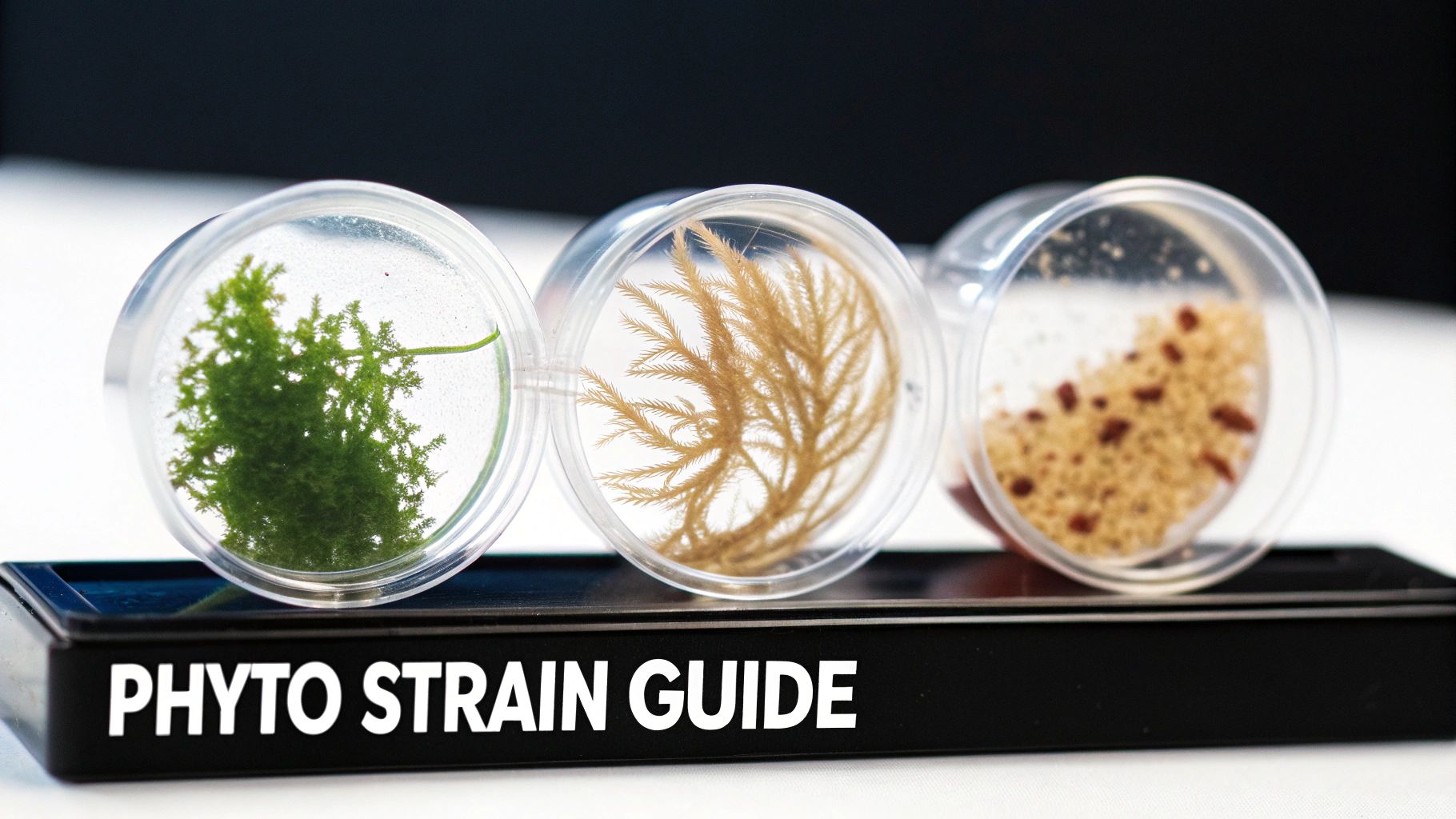
Diving into the world of live phytoplankton can feel like you're exploring a microscopic jungle. Each species offers a completely different set of benefits for your reef tank. It's important to remember that not all phytoplankton are created equal—think of them as specialized tools in your reefing toolbox, each one perfect for a specific job.
Getting to know the key players helps you fine-tune your feeding strategy for the biggest impact. Let's meet the all-stars of the reefing world. Two names you'll see over and over are Nannochloropsis and Isochrysis. For good reason, these strains are the foundation of most high-quality phytoplankton blends. They each bring something unique to the table, creating a powerful nutritional one-two punch when used together.
Nannochloropsis: The Tiny Powerhouse
Nannochloropsis, or "Nanno" for short, is a tiny, non-motile green algae. Its incredibly small size—typically just 2 to 4 micrometers—makes it the perfect first meal for a massive range of filter feeders in your aquarium. From the smallest copepod nauplii to corals, clams, and feather dusters, almost everything in your tank can easily consume it.
This strain is fantastic for kick-starting and sustaining your tank's microfauna population. If your main goal is to cultivate a booming population of copepods to keep a mandarin goby or pipefish happy and well-fed, Nanno is absolutely the way to go. It’s the foundational layer of the food web you’re trying to build from the ground up.
Isochrysis: The Color and Growth Booster
While Nanno builds the base of the food pyramid, Isochrysis galbana brings the high-octane fuel. This golden-brown algae is a bit larger than Nanno and is prized for one major reason: its phenomenal nutritional profile. Isochrysis is absolutely loaded with essential fatty acids, especially Docosahexaenoic Acid (DHA).
This high concentration of DHA is what directly contributes to better growth rates, stronger disease resistance, and—most visibly—the vibrant, popping colors in your corals and fish. It’s a true superfood that brings out the very best in your reef's inhabitants.
Whenever you see a live phytoplankton blend advertised for boosting coral coloration, you can bet Isochrysis is a star ingredient. It enriches the copepods that feast on it, which then pass those vital nutrients right up the food chain to your fish and corals. This ensures everything in the tank gets a dose of this powerful supplement.
Phytoplankton Strain Comparison for Reef Tanks
Choosing the right strain or blend really just comes down to your primary goal. Are you trying to build a robust food web from scratch, or are you looking to enhance the visual pop of your established corals? The table below gives you a quick-glance comparison of these popular strains to help you decide.
| Strain Name | Primary Benefit | Cell Size | Best For |
|---|---|---|---|
| Nannochloropsis | Microfauna Population Boom | 2-4 µm | Seeding and sustaining huge copepod populations, feeding small filter feeders, and general nutrient export. |
| Isochrysis | Enhanced Color & Vitality | 4-6 µm | Boosting coral and fish coloration, improving overall health, and delivering essential fatty acids (DHA). |
| Tetraselmis | Large Food Source | 6-10 µm | Feeding larger zooplankton like adult brine shrimp and rotifers, and direct consumption by larger filter feeders like clams. |
| Multi-Strain Blends | Balanced, Complete Diet | Varies | Offering a comprehensive nutritional profile that supports the entire tank ecosystem from the ground up. |
Ultimately, a high-quality blend often gives you the best of all worlds. It provides a varied diet that supports a more diverse and resilient ecosystem in your aquarium.
Boosting Corals and Microfauna with Phytoplankton
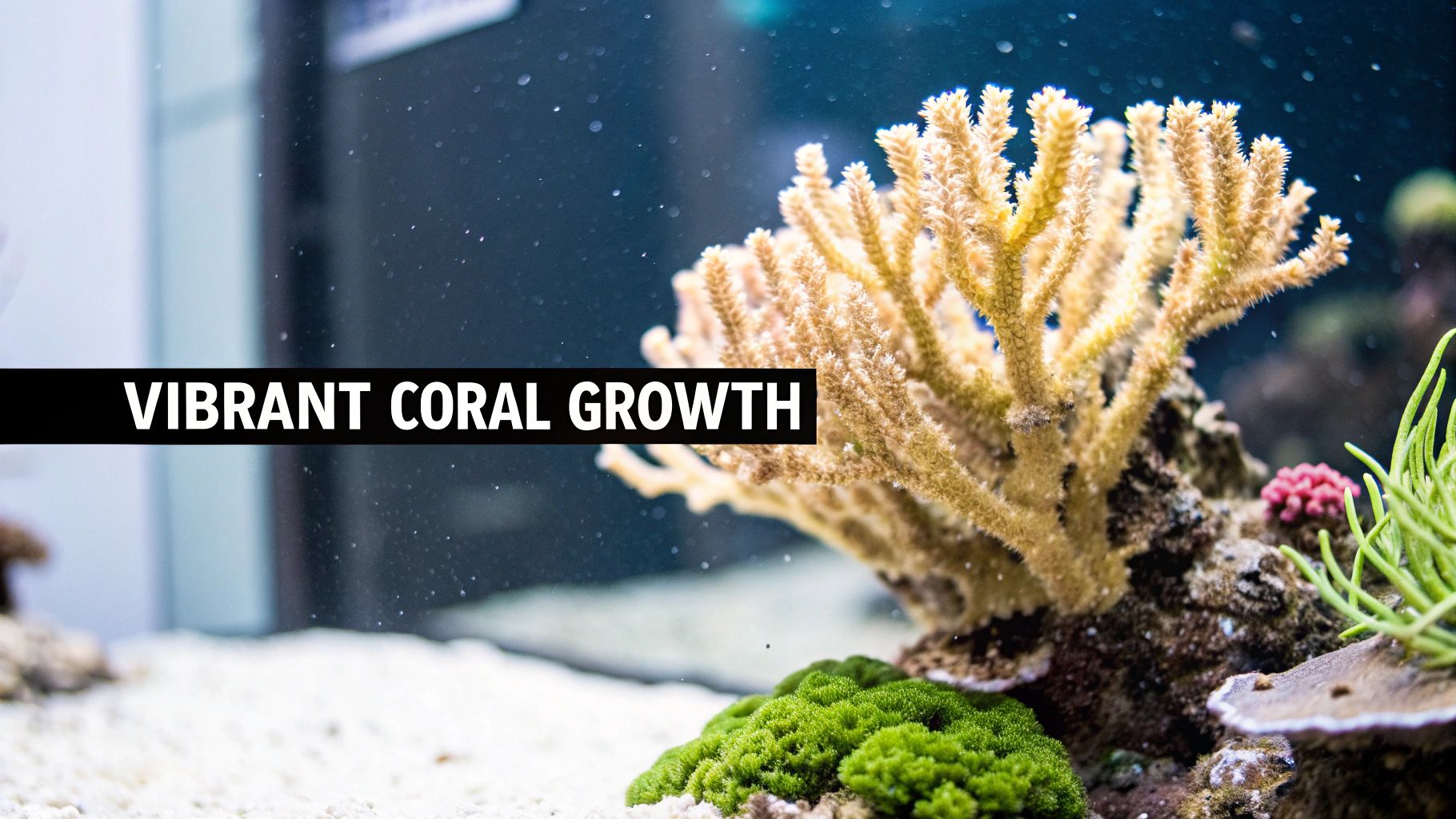
This is where the magic really happens. Adding live phytoplankton to your aquarium is the moment you see all the benefits we've talked about come to life. It's not just about tweaking water parameters; it’s about giving your reef's inhabitants a direct, nutritious meal and watching them thrive.
For many corals, phytoplankton is a crucial food source that supplements the energy they get from light. You'll often see the results almost immediately after dosing. Corals that were closed up might suddenly show incredible polyp extension, reaching out to grab the tiny, free-floating particles. This is direct feeding in action, and it fuels stronger tissue growth, faster healing, and much richer, more stunning colors over time.
Powering the Entire Food Web
Beyond being a direct meal for corals, live phytoplankton plays an even bigger role—it’s the fuel that runs your tank's entire ecosystem. You can think of it as laying the foundation for a vibrant, self-sustaining food web.
When you add phytoplankton, you kickstart a powerful, positive cycle:
- Fuels Microfauna: The first to benefit are the tiny critters. Copepods, amphipods, and rotifers absolutely feast on phytoplankton, causing their populations to boom.
- Nourishes Fish and Inverts: This explosion of microfauna creates a constantly replenishing, all-you-can-eat buffet for pickier eaters like mandarin dragonets and pipefish, not to mention your corals and other filter feeders.
- Reduces Reliance on Processed Foods: With a healthy, natural food source thriving in the tank, you won't have to rely as much on processed flakes or pellets. Your animals get a diet that’s closer to what they’d find on a natural reef.
By building up the food web from the very bottom, you end up with a more stable, biodiverse, and resilient aquarium. If you want to dive deeper into this critical link in the food chain, check out our guide on live copepods to see how they and phytoplankton work hand-in-hand: https://getpoddrop.com/blogs/blog/live-copepods
The Hidden Benefit of Nutrient Control
While its role as food is front and center, phytoplankton has another trick up its sleeve: natural nutrient management. These tiny algae are alive, and just like any living thing, they need to eat. Luckily for us, their favorite foods are the very things that cause headaches for reef keepers.
Phytoplankton actively pulls dissolved nitrates and phosphates right out of the water to fuel its own growth. In doing so, it essentially starves out nuisance algae, helping to keep your glass and rockwork clean while keeping your water parameters in check.
This process, known as biological nutrient export, is a gentle and effective way to maintain incredible water quality. Instead of just relying on aggressive protein skimming or chemical filter media, you’re using the ocean's own foundational building block to create a balanced system. It’s a tool that both feeds your reef and cleans it at the same time, making live phytoplankton a true game-changer for any serious hobbyist.
Your Practical Guide to Dosing and Feeding
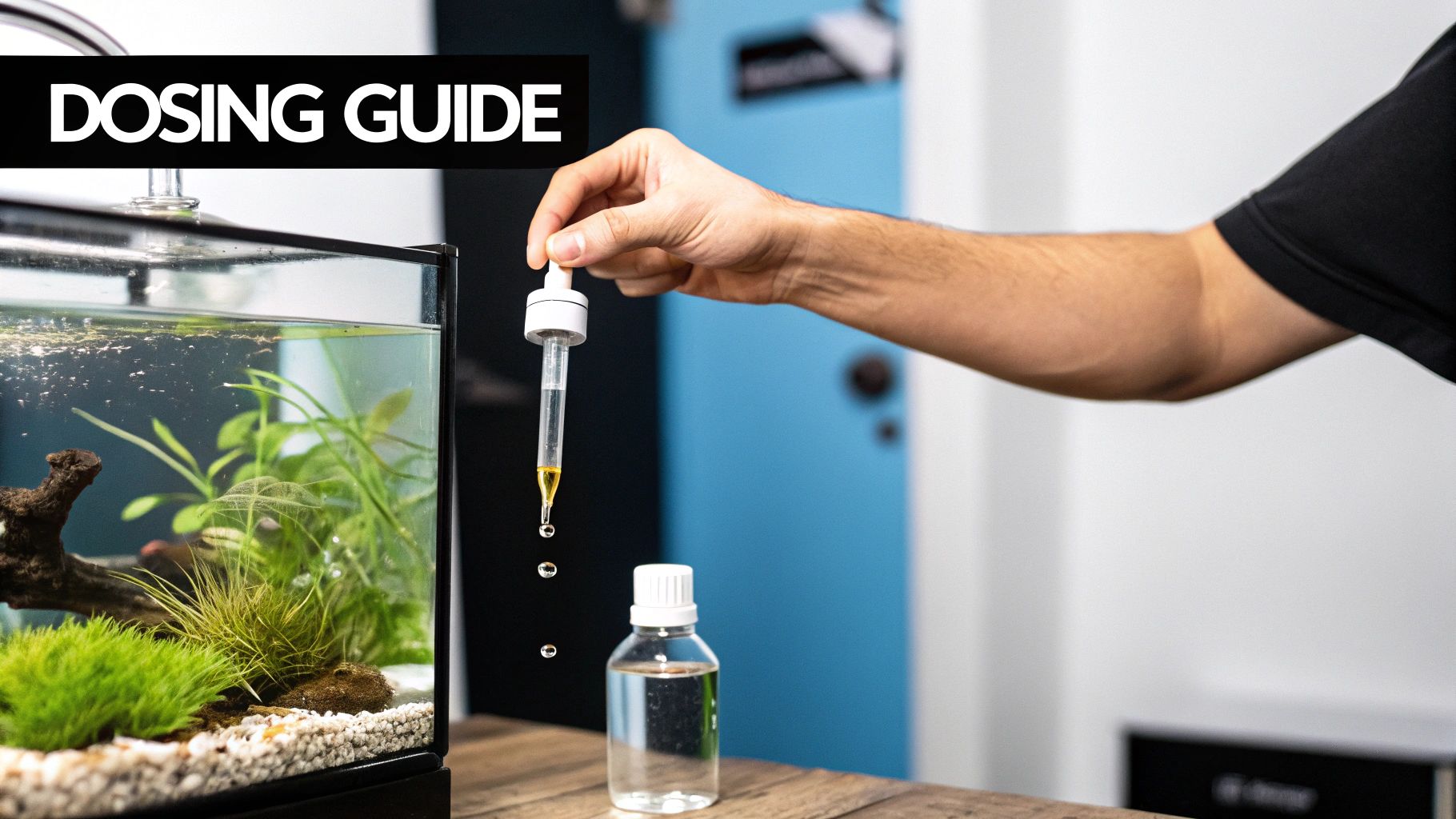
Alright, now for the fun part: actually using live phytoplankton in your reef tank. Dosing isn't rocket science, but a little bit of know-how will get you incredible results without causing problems. The golden rule is to start slow and watch how your tank reacts.
A great starting point for most tanks is 3-5 ml of phytoplankton per 10 gallons of water, dosed daily or every other day. Treat this as your baseline. A tank jam-packed with hungry corals will naturally need more, while a brand new system with fewer inhabitants won't need as much. The idea is to add just enough for everything to get eaten within a few hours.
Choosing Your Dosing Method
You’ve got two main ways to get the goods into your tank. Which one you pick really comes down to your daily routine and whether you prefer to automate things.
- Manual Dosing: This is as simple as it sounds. Just measure out the right amount and pour it into a high-flow area of your tank—in front of a powerhead is perfect. It's an easy way to start and keeps you hands-on with your aquarium's needs.
- Automated Dosing Pump: If you want set-it-and-forget-it consistency, a dosing pump is your best friend. You can program it to deliver tiny, steady amounts throughout the day, which closely mimics how food is constantly available on a natural reef.
No matter which method you use, always remember to shut off your protein skimmer and UV sterilizer for at least an hour after you dose. This crucial step gives your corals and pods a chance to feast before the phytoplankton gets stripped out of the water.
Broadcast Feeding vs. Target Feeding
Most of the time, you'll be "broadcast feeding," which just means adding the phytoplankton directly into the water column. This is the most efficient way to feed the entire ecosystem at once, from your filter-feeding corals right down to the copepods scurrying on the rocks.
However, certain corals with big, fleshy polyps—think Goniopora, Alveopora, or Duncan corals—really appreciate a more direct meal. This is where target feeding comes in. Simply turn off your pumps, use a turkey baster to gently "puff" a small cloud of diluted phytoplankton around the coral, and let it sit for 15-20 minutes before turning the flow back on.
One of the best signs that you've nailed your feeding routine is seeing your microfauna population explode. When you see copepods and other tiny critters swarming all over the glass and rockwork, you know your entire food web is firing on all cylinders.
Out in the ocean, phytoplankton levels aren't constant; they bloom with the seasons. Satellite data has shown these cycles vary all over the world. By mimicking a natural "spring bloom" in your tank with a product like PodDrop, you can trigger some amazing responses. Reefers who try this often see coral polyp extension jump by 40-60% and watch their pod populations multiply, creating a sustainable feast for picky eaters like mandarins and pipefish. If you're curious about the science, you can dive into the research on phytoplankton phenology to learn more about these global cycles.
How to Choose and Store Live Phytoplankton
All the amazing benefits of live phytoplankton only matter if the product you buy is actually alive. The market is flooded with options, and honestly, the difference between a premium, lab-grown culture and a bottle of dead, green-tinted water is night and day. A genuinely live culture is a powerhouse of nutrition; the dead stuff is just organic waste waiting to pollute your tank.
Your mission is to find a product that’s packed with living, breathing cells, not a murky soup of decaying algae. The best suppliers are obsessed with purity, density, and freshness because they know that’s what it takes to fuel a healthy reef ecosystem. When you're checking out a brand, look for clues that they're serious about their cultivation and shipping. It’s the only way to know you’re getting the real deal.
Vetting Your Live Phytoplankton Supplier
Before you click "buy," run through this quick mental checklist. It’ll help you spot the good stuff and avoid wasting money on a product that does more harm than good for your reef.
- Purity and Culture Date: Real-deal suppliers grow their phytoplankton in sterile, controlled lab settings. This isn't a bucket-in-a-basement operation. Always look for a "harvested on" or culture date right on the bottle—freshness is king.
- Packaging and Shipping: Remember, these are delicate, living cells. The phytoplankton should arrive in insulated packaging, shipped quickly to protect it from temperature swings and the rigors of transit. If it shows up hot, it’s likely dead.
- Strain Information: A trustworthy company will tell you exactly what you're getting. They'll clearly list the strains, like Nannochloropsis or Isochrysis, so you know precisely what you’re adding to your tank's food web.
Here's the most critical takeaway: you must buy a living product. As soon as phytoplankton dies, it starts to decompose, releasing nitrates and phosphates right back into your water. That’s the complete opposite of what you're trying to achieve. A live culture actively consumes these nutrients, cleaning your water while it feeds your tank.
Proper Storage and Handling for Maximum Potency
So, you’ve got your hands on a bottle of high-quality live phytoplankton. Great! Now, it's up to you to keep it that way. Proper storage is absolutely essential to maintain its potency and keep the cells alive and kicking.
Refrigeration is non-negotiable. Popping the bottle in the fridge immediately slows the algae's metabolism way down, preserving its nutritional value and extending its life for weeks. When it's time to dose, don't just pour it in. Gently turn the bottle upside down a few times to get the cells back into suspension, as they'll naturally settle. Never shake it vigorously—you can literally burst the delicate cell walls, killing the very thing you're trying to add.
Following these simple rules ensures that every drop you dose is packed with life. For anyone feeling adventurous and wanting a never-ending supply, you can even check out our guide on how to culture phytoplankton at home.
Even when you've got a solid plan, introducing something new like live phytoplankton can sometimes throw your reef tank for a loop. Don't sweat it—these are usually just signs that your little ecosystem is adjusting. Figuring out how to read these signals is all part of becoming a seasoned reefer.
One of the first things you might notice is your protein skimmer going absolutely haywire, bubbling over with wet, sloppy foam right after you dose. That’s your skimmer doing its job a little too well, pulling out all those tasty phytoplankton cells before your corals and copepods get a chance to eat.
The fix is super simple: just turn off your protein skimmer for about an hour after you add the phyto. This gives everything in the tank enough time to feast.
Overdosing and Water Clarity
Ever dose your tank and notice the water looks a bit hazy a few hours later? That's the classic sign of overfeeding. You've simply added more live phytoplankton than your tank's inhabitants can gobble up quickly.
No big deal. Just cut your next dose in half. You can gradually work your way back up as your tank’s population of corals and microfauna grows and their appetite increases.
It's a bit ironic. While we're fine-tuning our little glass boxes, the real oceans are struggling. Marine phytoplankton production is dropping by 0.088% annually because warmer surface waters are trapping nutrients in the deep. This effectively starves the very foundation of the marine food web. It really puts into perspective why using clean, nutrient-dense phytoplankton in our tanks is so important. If you're interested, you can explore more about these ocean dynamics in this detailed study.
The DIY Culture vs. Lab-Grown Purity
It can be tempting to think about growing your own phytoplankton at home. Cheaper, right? Maybe, but it’s a risky game. Home setups are a magnet for contamination—unwanted bacteria, sneaky rotifers, or other algae species can easily crash your culture.
Introduce a contaminated batch to your display tank, and you could be facing a major problem. It’s a gamble that often isn’t worth the savings.
When you buy professionally grown live phytoplankton from a reputable lab, you're getting peace of mind. Products like PodDrop are cultivated in sterile conditions, so you know every bottle is pure, dense, and safe. You get the exact strains you want (Nannochloropsis, Isochrysis, etc.) without any nasty surprises, giving your reef the high-quality fuel it needs to thrive.
Your Live Phytoplankton Questions, Answered
Even when you've done your research, a few questions always pop up. That's a good thing! Getting these details sorted out is what separates a good reefer from a great one. Let's tackle some of the most common things people ask about dosing phytoplankton.
Can I Overdo It and Add Too Much Phytoplankton?
You sure can. If you go too heavy on the dosage, you might notice your water gets a bit cloudy. This is just the unconsumed phytoplankton cells suspended in the water column, and it can cause a temporary nutrient bump.
The trick is to start small and pay attention. A good starting point is about 3-5 ml per 10 gallons of tank volume. If you see any haziness, just pull back on the next dose or skip a day. As your corals, clams, and pods start to multiply, their appetite will grow, and you can slowly increase the amount you add to match.
Is This Going to Cause an Algae Outbreak?
This is probably the number one concern we hear, but it's usually the other way around. Live phytoplankton is actually one of your best allies in the fight against nuisance algae. Think of it this way: your phytoplankton dose and that ugly hair algae are both fighting for the same food—nitrates and phosphates.
By adding a thriving culture of phytoplankton, you're introducing a superior competitor that gobbles up those excess nutrients. It literally starves out the stuff you don't want, helping you keep your glass and rockwork cleaner.
What's the Shelf Life on This Stuff?
When you get a bottle of high-quality, lab-cultured live phytoplankton and pop it in the fridge, it'll stay alive and kicking for several weeks. Every supplier is a bit different, but look for a "harvest date" on the bottle.
For the best nutritional punch, you'll want to use it up within 4-6 weeks of that date. And remember the golden rule: give the bottle a gentle swirl before each use to get the cells back into suspension. Don't shake it like a cocktail—a slow turn or two is all it needs.
Ready to see what a truly live, nutrient-dense food source can do for your reef? PodDrop Live Aquarium Nutrition delivers fresh, lab-grown phytoplankton and copepods straight from our culture tanks to your door.