

A Complete Guide to Ocean Nutrition Prime Reef Flakes
If you've been in the reefing hobby for a while, you've almost certainly come across Ocean Nutrition Prime Reef Flakes. They're a go-to staple for many aquarists because they pack a serious nutritional punch, designed to keep a wide variety of saltwater fish healthy and looking their best. Think of it as a well-rounded daily meal for a bustling community tank.
A Look Inside Prime Reef Flakes
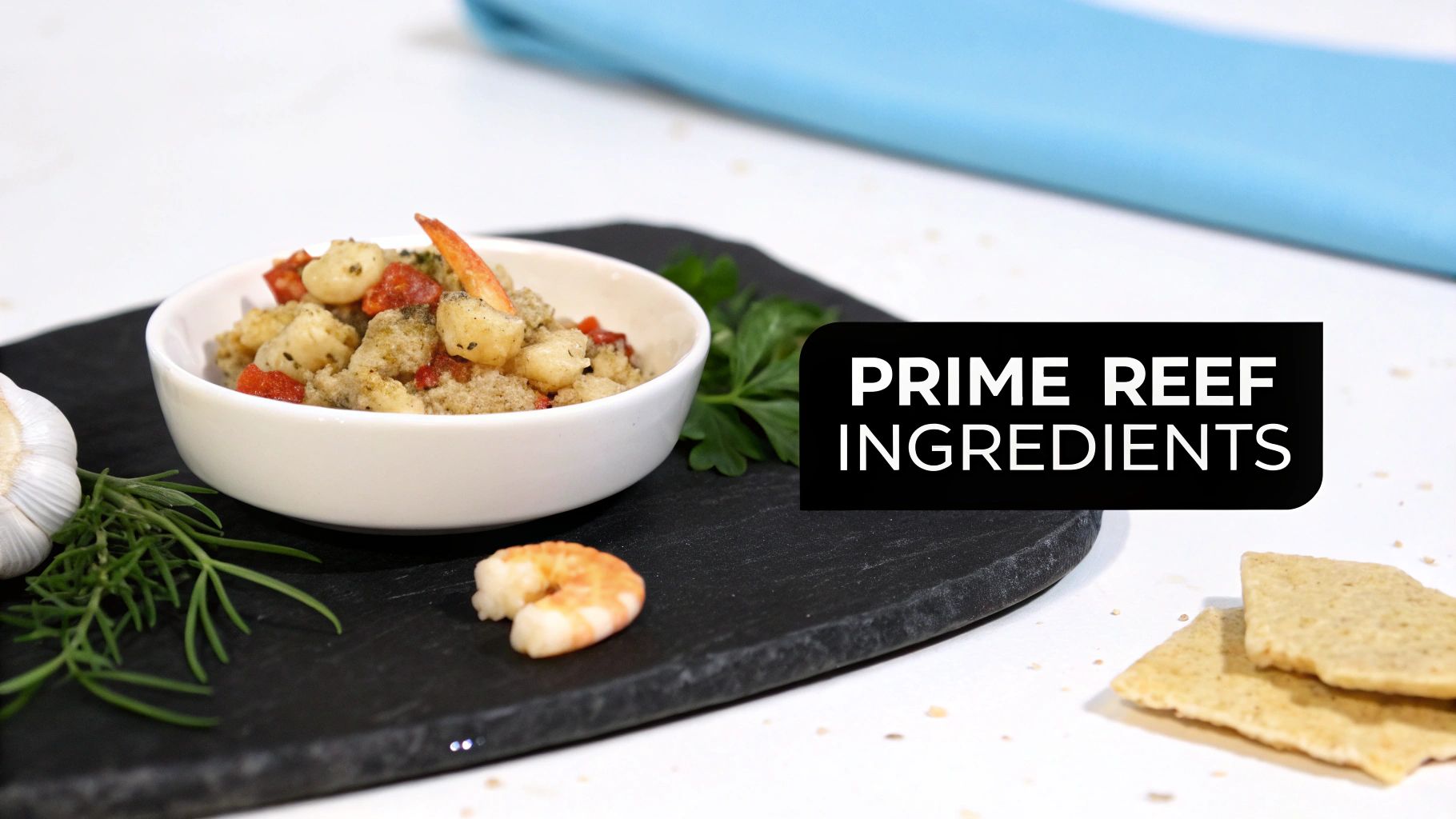
What really sets a quality fish food apart is the thought that goes into the ingredient list. It's not just about filling bellies; it's about providing targeted nutrition. Each component in these flakes has a specific job, from fueling growth to making colors pop.
The demand for premium foods like this is no accident. The aquarium fish feed market was valued at around USD 5,500 million back in 2025 and is expected to grow at a healthy clip of 6.5% each year through 2033. This isn't just a niche hobby anymore; people are invested in giving their aquatic pets the best possible care.
The Protein Powerhouse Core
The backbone of this food is a rich blend of marine proteins. We're talking fresh fish, krill, and shrimp—the good stuff. This provides the essential amino acids that fish need for everything from muscle development and energy to repairing a nipped fin. With a guaranteed minimum protein content of 54%, it’s a fantastic daily driver for most of the omnivores and carnivores in a typical reef setup.
More Than Just Food: Color and Health Boosters
Beyond the basics, Prime Reef Flakes are fortified with some key additives that really take them to the next level. You can think of these as the "superfood" supplements mixed right in.
- Spirulina: This isn't just filler. The blue-green algae is loaded with vitamins and natural pigments that help deepen the blues and greens on fish like Tangs and Wrasses, making them truly stand out.
- Garlic: A long-time favorite in the hobby, garlic is included to help bolster the immune system. It also acts as a fantastic appetite stimulant, which can be a lifesaver for enticing a new, shy, or picky fish to start eating.
- Astaxanthin: Ever wonder how Clownfish and Anthias get those vibrant reds and oranges? This powerful carotenoid pigment is a huge part of it, and it’s mixed right into the flakes to enhance those warm colors naturally.
The table below breaks down these key ingredients and their specific roles, giving you a quick overview of what makes these flakes so effective.
Prime Reef Flakes Nutritional Snapshot
A quick overview of the key nutritional components and their primary benefit for your reef aquarium inhabitants.
| Key Ingredient | Primary Role in Reef Tanks | Fish Species That Benefit Most |
|---|---|---|
| Marine Proteins (Fish, Krill, Shrimp) | Provides essential amino acids for growth, energy, and tissue repair. | Carnivores & Omnivores (Clownfish, Damselfish, Anthias) |
| Spirulina | Enhances blue and green coloration; provides vitamins and minerals. | Herbivores & Omnivores (Tangs, Wrasses, Blennies) |
| Garlic Extract | Boosts immune system function and stimulates appetite in picky eaters. | All species, especially newly introduced or stressed fish. |
| Astaxanthin | Intensifies red, orange, and yellow pigments for vibrant coloration. | Fish with warm colors (Clownfish, Anthias, Flame Angels) |
Ultimately, it’s this thoughtful combination of high-quality proteins and targeted supplements that has made Ocean Nutrition Prime Reef Flakes a trusted staple. They're formulated to do more than just sustain life; they're designed to help your fish thrive.
The goal isn't just to feed your fish, but to nourish them. When you understand what's in their food, you can make smarter choices and build a healthier, more vibrant aquarium. This is the first step in selecting the best saltwater fish food for your unique tank.
The Reality of Using Flake Foods in a Reef Tank
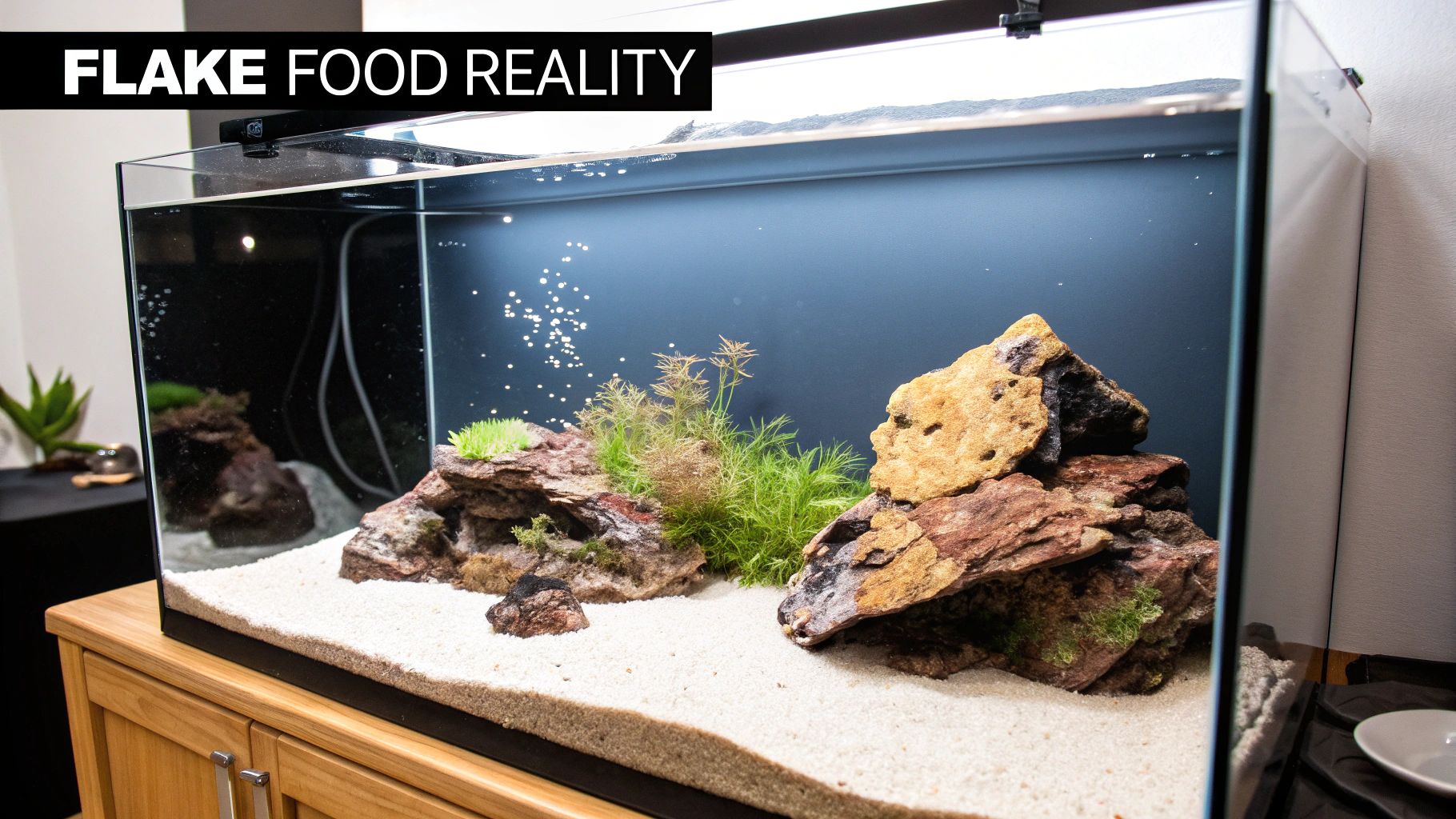
Let's be honest, flake foods are incredibly convenient. For any busy reefer, being able to quickly sprinkle in a balanced meal is a lifesaver. They're a cost-effective, reliable staple that most fish go for without a second thought. There's a reason they're in almost every aquarist's cabinet.
But when you're managing a delicate reef ecosystem, relying only on flakes comes with a few trade-offs. As any seasoned hobbyist will tell you, these dry, processed foods introduce a different set of challenges than a diet of live, natural food.
The Double-Edged Sword of Convenience
The biggest issue? Nutrient pollution. It’s a classic reef-keeping problem. Live foods might hide in the rockwork and live to be hunted another day, but uneaten flakes start breaking down the second they hit the water. In a high-flow reef tank, they get blasted into tiny particles that settle in dead spots on the sandbed or deep within your aquascape.
As they decompose, they leach phosphates and nitrates straight into your water, which is like rolling out the welcome mat for nuisance algae. We’ve all seen it happen: a little too much flake food each day, and suddenly you're battling patches of green hair algae or a slimy film of cyano.
Think of Ocean Nutrition Prime Reef Flakes as a daily multivitamin—it’s an excellent, nutrient-dense supplement that covers the essential bases. But just like in our own diets, a multivitamin can't replace the benefits of whole, unprocessed foods. A truly healthy ecosystem needs both.
Stimulation and Whole-Ecosystem Health
Another thing to consider is how fish actually eat. Flakes just float there, offering a totally passive meal. Fish just grab them from the water column, which does absolutely nothing to engage their natural hunting and pecking instincts that keep them active and healthy.
Even more importantly, flakes don't feed the hidden MVPs of your reef: the microfauna. The copepods, amphipods, and other tiny critters are your unseen cleanup crew, constantly grazing on detritus and algae. They are also a living, breathing food source for your fish and even some corals. A flake-only diet completely skips over this crucial layer of the food web, leaving your tank's biodiversity on the table.
-
Pros of Flake Foods
- Convenience: Super fast and easy to feed, especially on busy days.
- Cost-Effective: Typically much cheaper than frozen or live food options.
- Broad Appeal: Most common aquarium fish will readily accept them.
-
Cons of Flake Foods
- Nutrient Spikes: Uneaten food decays quickly, raising nitrates and phosphates.
- High-Flow Breakdown: Can turn into messy dust before fish can eat it all.
- Lack of Stimulation: Doesn't promote natural foraging or support your pod population.
At the end of the day, flakes are a fantastic part of a well-rounded feeding plan. But seeing them as the only option can create long-term imbalances. The real secret is to use them strategically alongside the living nutrition your reef is truly built to run on.
Why Flakes Alone Won't Work for Fussy Eaters
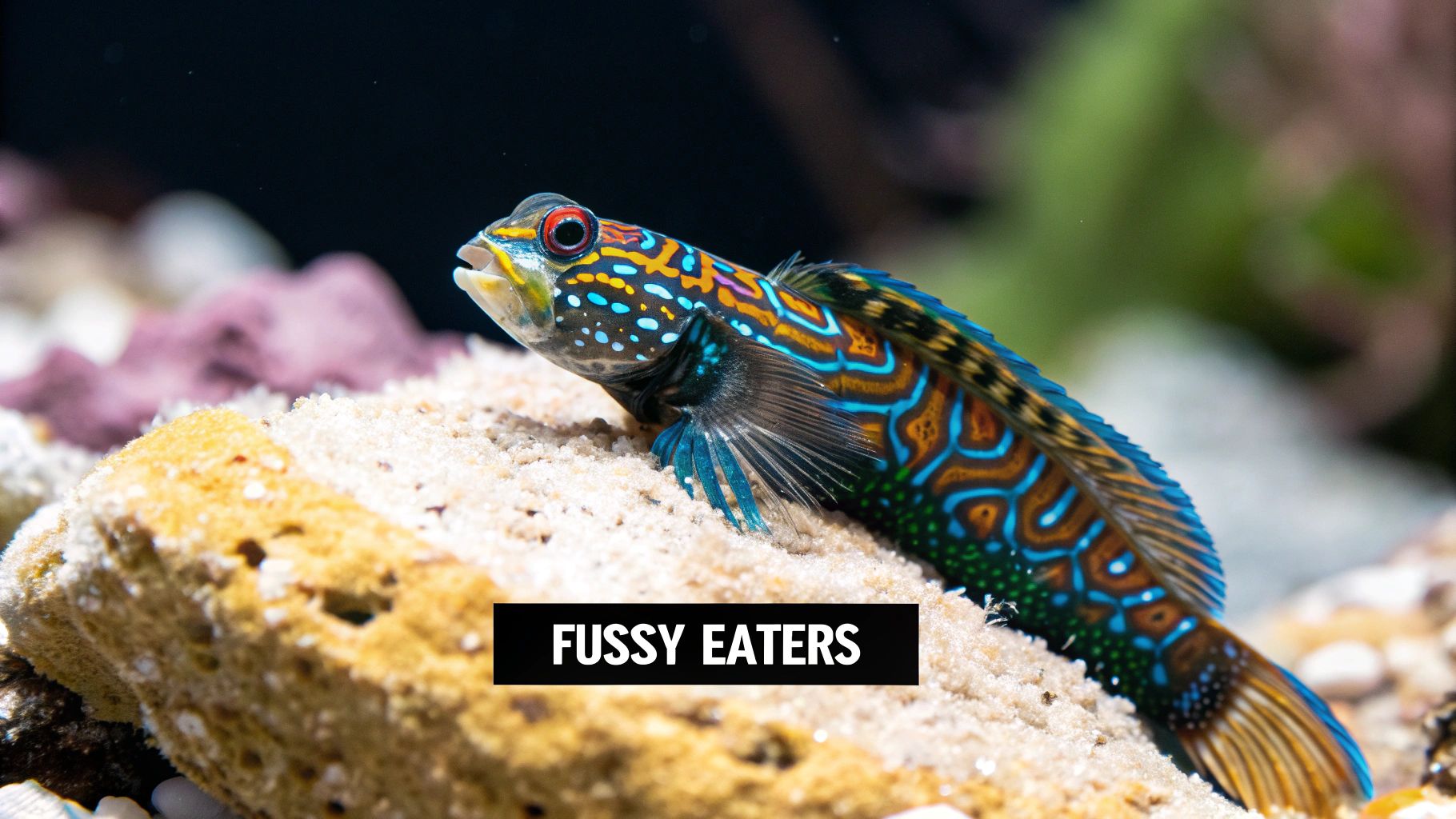
It’s a sight that breaks every reefer’s heart: a gorgeous Mandarin Dragonet or a quirky Scooter Blenny, getting thinner by the day, ignoring everything you offer. You might see one peck at a flake of Ocean Nutrition Prime Reef Flakes, and for a second, your hopes soar. But that little peck is usually just curiosity, not real feeding.
The hard truth is, these fish aren't just being picky. They are biologically hardwired to eat in a completely different way.
These guys are micro-predators. Out on the reef, their entire day is spent hunting for tiny, live crustaceans like copepods and amphipods crawling all over the rockwork. They meticulously pick off thousands of individual pods, a constant, active grazing behavior that just can’t be replaced by a few flakes floating past them.
Everything about them, from their tiny mouths to their digestive tracts, is built for this one job. A flake, no matter how packed with nutrients, doesn't wiggle, skitter, or dart away. It doesn't trigger the ancient, instinctual feeding response that the jerky movement of a live copepod does.
The Hunting Instinct Mismatch
For a Mandarin, food isn’t something that just appears; it’s a target to be pursued. They simply don't have the instinct to look up and recognize a floating particle as a meal. Even on the rare chance they do eat a flake, their gut isn't really optimized to break down such a concentrated, dry food source.
This fundamental mismatch is why a flake-only diet is almost a guaranteed failure for these incredible animals. They absolutely need a living, reproducing population of microfauna to browse on all day long to keep up with their fast metabolism.
Think of it this way: for a micro-predator, a reef tank without a healthy copepod population is a barren wasteland. You can drop the most gourmet steak on the desert sand, but if it doesn't move and act like prey, the lion won’t recognize it as food. It’s the same principle.
The Growing Market for Specialized Nutrition
This biological reality is driving a big shift in the aquarium hobby. We're seeing a huge demand for both top-tier prepared foods and live nutrition. The global fish food market, which includes great products like Ocean Nutrition Prime Reef Flakes, was valued at a massive USD 4.62 billion in 2025 and is on track to hit USD 6.95 billion by 2032.
This boom isn’t just about more people keeping fish; it shows a deeper, more sophisticated understanding among hobbyists that one food doesn't fit all. You can dive deeper into the trends shaping the fish food market to see how specialized nutrition is growing. Live foods like copepods hold their ground because they fill a crucial role that no processed food can.
If you want to successfully keep these specialist fish, there are a few non-negotiables:
- You must establish a thriving pod population. This is the bedrock of their diet and the single most important factor for success.
- Supplement with live food regularly. Keep that food source dense and readily available by seeding your tank with products like PodDrop.
- Use flakes for your other tank mates. Flakes are fantastic for the less demanding omnivores and carnivores swimming in your reef community.
At the end of the day, keeping a Mandarin, Pipefish, or Scooter Blenny isn't just about owning a fish—it's about becoming the caretaker of a miniature ecosystem. It takes a real commitment to cultivating a living food web where these amazing hunters can do what they were born to do.
Avoiding Common Water Quality Problems
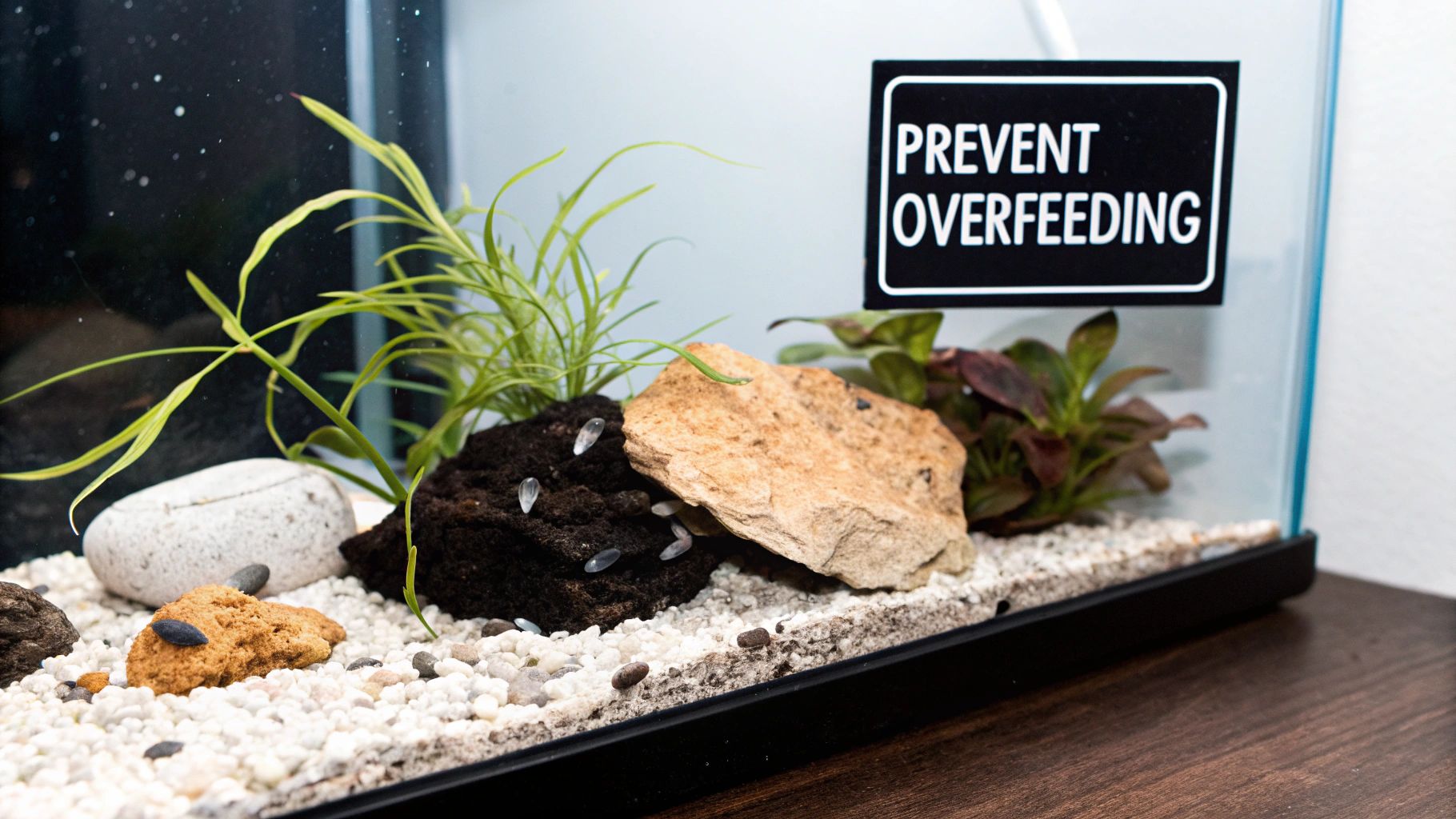
In a reef tank, how you feed is every bit as important as what you feed. Even a top-shelf food like Ocean Nutrition Prime Reef Flakes can create a mess if you're not careful. The problem isn't the food itself; it's the leftovers.
Your aquarium is a tiny, closed ecosystem. Every single flake your fish miss, along with their waste, becomes fuel for the nitrogen cycle. This is the process where bacteria break down waste, turning it into toxic ammonia, then nitrite, and finally into nitrate and phosphate.
While your tank can handle a little bit of this, a constant flood from overfeeding will quickly overwhelm your biological filter. The result is predictable: ugly algae outbreaks, stressed-out fish, and unhappy corals.
The Overfeeding Danger Zone
It's shockingly easy to overfeed. We've all heard horror stories about the "vacation feeder disaster," where a well-meaning friend dumps a week's worth of food in at once, causing a massive ammonia spike. But while that’s an extreme example, it's the slow, steady, day-to-day overfeeding that gets most hobbyists.
This gradual nutrient creep is what fuels that frustrating green hair algae on your rocks or the slimy red cyano that takes over your sand bed.
Here's a simple rule of thumb that works wonders: the "60-second rule." Only feed what your fish can completely finish in about one minute. If you still see flakes floating around after that, you've added too much.
Adopting this mindful approach keeps excess food from rotting and polluting your water. If you're already battling high nutrients, it’s worth learning how to reduce nitrates in your saltwater aquarium to get things back on track.
Spotting the Early Warning Signs
The real secret to keeping your water pristine is catching problems before they spiral. Your tank will give you clues that your nutrient levels are starting to climb.
- Glass Needs Cleaning More Often: Scraping the glass every day instead of every few days? That's a classic sign of excess nutrients fueling algae growth.
- First Sighting of Nuisance Algae: That first little patch of hair algae or cyano is a clear signal to rethink your feeding routine.
- Water Appears Less "Crisp": This one is subtle, but you know it when you see it. If your water just doesn't have that polished, crystal-clear look, it might be a bacterial bloom feeding on extra organics.
By watching for these signs and sticking to a disciplined feeding plan, you can get all the benefits of Ocean Nutrition Prime Reef Flakes without throwing your reef’s delicate balance out of whack.
Building the Ultimate Reef Feeding Strategy
Ask any seasoned reefer, and they'll tell you the secret to a stunning tank isn't finding one "magic bullet" food. It’s about building a smart, layered feeding strategy that nourishes every single critter in your little ecosystem, from the biggest tang to the tiniest pod. This is where the sheer convenience of a top-tier flake food like Ocean Nutrition Prime Reef Flakes perfectly complements the raw power of live nutrition.
Think of the flakes as the reliable foundation of your feeding plan. They're the daily bread, so to speak—a consistent, high-protein meal that keeps your community fish vibrant, healthy, and active. But a truly thriving reef is so much more than just well-fed fish; it's a bustling, self-sustaining world in miniature.
That's where live copepods and phytoplankton steal the show. They introduce the "living hunt," providing a constant, natural food source that stimulates your fish and corals while fueling the entire food web from the ground up. Marrying these two approaches ensures that every level of your aquarium gets exactly what it needs to flourish.
Crafting a Synergistic Feeding Schedule
The real art is creating a feeding rhythm that provides stability without overwhelming your system with excess nutrients. Just dumping food in at random is a recipe for algae blooms and water quality headaches. By alternating between your staple flakes and live foods, you start to mimic the natural ebb and flow of a wild reef.
This combined approach has really become a cornerstone of modern reefkeeping. It’s no surprise that both high-quality processed foods and live feeds are driving huge growth in the aquarium nutrition world. The global fish food market hit an impressive USD 2.1 billion in 2023 and is expected to climb at a 5.7% rate through 2032. Live foods, in particular, saw a massive surge in popularity last year as more hobbyists learned to blend the convenience of flakes with the biodiversity of live prey.
Here’s a simple blueprint to get you started.
The Blueprint for Balance: A successful feeding plan uses flakes for predictable, targeted nutrition for your fish, while live foods work in the background to maintain a self-sustaining population of microfauna. This dual strategy supports even the pickiest eaters, keeps your active hunters engaged, and even benefits your corals, leading to a far more stable and vibrant ecosystem.
Sample Weekly Feeding Schedule for a Balanced Reef
Here’s a practical template for integrating Ocean Nutrition Prime Reef Flakes with live nutrition for a thriving reef aquarium. Think of this as a starting point—every tank is different, so watch your inhabitants and test your water parameters, adjusting as needed.
| Day of the Week | Morning Feeding | Evening Feeding | Notes for Success |
|---|---|---|---|
| Monday | Light pinch of Prime Reef Flakes | Small target feeding for corals | Start the week off with a reliable staple meal for your fish. |
| Tuesday | No Feeding | Add live copepods (e.g., PodDrop) | Skipping the morning feed lets fish graze and gives the pods a chance to settle in. |
| Wednesday | Light pinch of Prime Reef Flakes | No Feeding | A simple, predictable flake feeding is all that's needed today. |
| Thursday | No Feeding | Add live phytoplankton | This directly feeds your copepod population and corals, boosting the entire food web. |
| Friday | Light pinch of Prime Reef Flakes | Small amount of frozen food | A little variety keeps your fish interested and provides different nutrients. |
| Saturday | No Feeding | No Feeding | A "fasting" day is great for water quality and gives your cleanup crew time to work. |
| Sunday | Light pinch of Prime Reef Flakes | Observe and spot-feed if needed | Take a good look at your tank and see if anyone needs a little extra before the week resets. |
This kind of balanced routine helps you avoid the nutrient spikes that come from daily overfeeding, all while ensuring your micro-predators have a food source that's constantly replenishing itself. For a deeper look at building this kind of feeding philosophy, check out our guide on holistic reef nutrition.
By integrating Ocean Nutrition Prime Reef Flakes with a living food source, you're graduating from just feeding your fish to truly cultivating a complete, thriving ecosystem.
Got Questions About Prime Reef Flakes? Let's Talk.
Even when you think you've got your feeding routine dialed in, a new food like Ocean Nutrition Prime Reef Flakes always brings up a few questions. It's totally normal. Getting the little details right is what separates a tank that's just surviving from one that's truly thriving.
So, let's dive into some of the most common things hobbyists ask. We'll get into everything from whether your corals will get anything out of them to how to deal with a fish that turns its nose up at them. Think of this as the practical, real-world advice you need to use these flakes like a pro.
Will My Corals Eat These Flakes?
This is a great question, and the answer isn't a simple yes or no. Directly? Absolutely not. Corals can't "eat" a flake. Their mouths are tiny, built to snatch microscopic goodies like copepods and phytoplankton out of the water. A big, flat flake just won't work.
But there's a fascinating indirect benefit. When your fish chow down on the flakes and digest them, their waste releases nitrates and phosphates. In small, manageable amounts, corals use these compounds as nutrients. It’s like your fish are fertilizing their own little garden. Just remember, this is a secondary bonus, not a primary food source. Your corals still depend on you for direct feeding with the right foods, plus powerful lighting to fuel their photosynthesis.
Here's the bottom line: Ocean Nutrition Prime Reef Flakes are fuel for your fish. Healthy, well-fed fish then play their part in a balanced ecosystem that helps support vibrant corals. The flakes are a piece of the puzzle, not a direct meal for your polyps.
How Do I Keep Flake Food From Going Stale?
This is a big one. The moment you open that container, the clock starts ticking. Oxygen and humidity immediately start breaking down the essential vitamins and fatty acids in the food. A year-old container of flakes is basically fish junk food compared to a fresh one.
Keeping it fresh is simple if you follow a few rules:
- Lock It Down: Always screw the lid on tight. No exceptions. This is your best defense against air.
- Cool and Dark Is Your Friend: Store the container in a cabinet, far away from the heat and moisture of your tank lights and sump.
- Fresh is Best: Try to use up a container within 3 to 6 months. It’s often smarter to buy a smaller jar more frequently than a giant tub that goes stale before you can finish it.
Can I Put Prime Reef Flakes in My Automatic Feeder?
Yep, you sure can. The flakes are uniform enough in size and texture that they work really well in most of the common rotating-drum auto feeders. It’s a fantastic way to keep your fish on a regular schedule, especially if you're heading out of town.
The single most important thing is keeping it dry. If moisture gets in, the flakes will clump into a solid brick, clogging the whole mechanism. Make sure you place the feeder well away from any splashing or areas with a lot of evaporation. And before you leave for a week, run it for a few days to get the portion size just right. An auto-feeder dropping a whole week's worth of food in one go can cause an ammonia spike that could wipe out your tank.
What if My Fish Just Won't Eat Them?
It's always a little stressful when a fish snubs the food you offer. Before you panic, check the easiest thing first: are the flakes old? If they've lost their smell and flavor, a fresh container might be all it takes.
If you just added the fish to the tank, give it some time. It's probably just stressed from the move and needs a few days to feel safe enough to eat. For a fish that’s been in the tank for a while and is suddenly being picky, here's a classic reefer trick: soak a pinch of the flakes in a garlic supplement like Seachem GarlicGuard for a few minutes. Garlic is a natural appetite enhancer that can tempt almost any fish.
But you also have to be realistic. If your Mandarin Goby or Pipefish is ignoring the flakes, it’s not being picky—it literally doesn't see them as food. These are specialized micro-predators. No amount of garlic will change their wiring. For these fish, a thriving, sustainable population of live copepods isn't a suggestion, it's a requirement.
A balanced diet is the cornerstone of a vibrant reef, and integrating high-quality prepared foods with live nutrition gives your tank the best of both worlds. At PodDrop Live Aquarium Nutrition, we provide the fresh, living copepods and phytoplankton needed to create a truly complete ecosystem.
Ready to build a thriving food web? Explore our live nutrition cultures at https://www.getpoddrop.com.