

How long do phytoplankton live: Essentials for Reef Tanks
When people ask how long phytoplankton live, there's often more than one answer, and it’s a bit of a "good news, bad news" situation. The lifespan of a single, microscopic phytoplankton cell is incredibly short, sometimes just a day or two. But the good news is that a culture of phytoplankton—the live, green liquid you buy for your tank—can stay viable and nutritious for weeks.
It's like thinking about a forest versus a single tree. An individual tree has its own lifespan, but the forest as a whole can live on for centuries through constant new growth. A healthy phytoplankton culture works the same way; it's a living, breathing population, not just a static collection of cells.
Understanding Cell Lifespan Versus Culture Viability
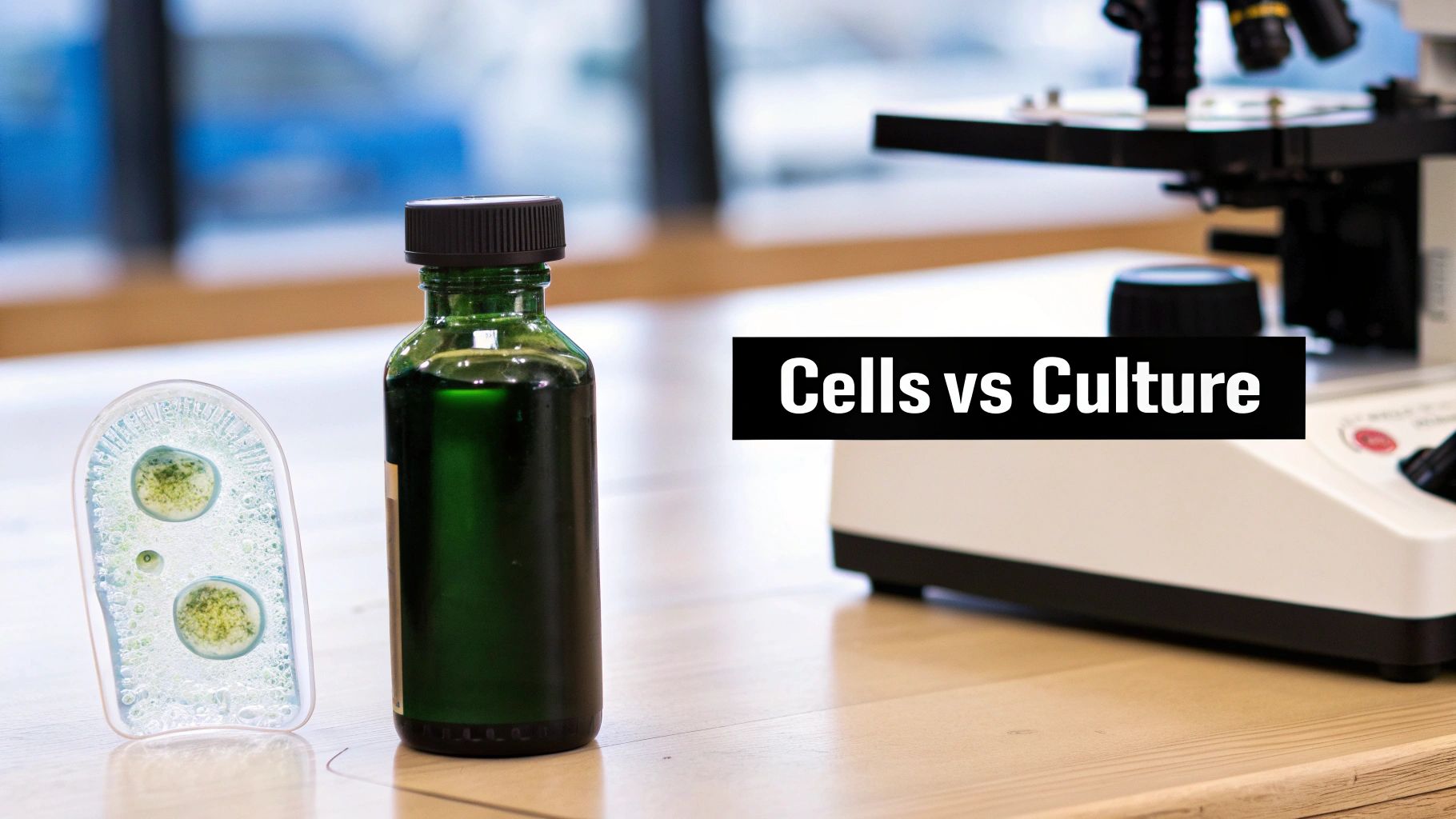
When a reefer asks about phytoplankton life, they're usually juggling two separate ideas: the life of one tiny cell and the usable life of the bottle in their fridge. Getting the difference between these two concepts is the key to feeding your tank effectively.
The Life of a Single Cell
Phytoplankton are built for speed. Out in the ocean, their entire existence is a race to reproduce before something eats them. This means their individual lifespans are fleeting, often lasting just a few hours to a couple of days before they divide into new daughter cells.
In a clean, controlled culture like the fresh Nannochloropsis or Isochrysis used for high-quality aquarium feeds, this rapid division is a good thing. Under perfect conditions, cells will split every 1 to 3 days, constantly refreshing the population. If you want to dive deeper, you can read more about what makes phytoplankton cultures last and the factors that come into play.
The key takeaway here is renewal. A healthy culture isn't a bottle of slowly dying cells. It's a dynamic, living system where new, young cells are always replacing the old ones. This constant regeneration is what keeps the culture potent and packed with nutrition.
The Viability of a Bottled Culture
Now, this is the part that really matters to you, the aquarist. A "viable" culture is one that's still dense, full of life, and hasn't started to crash. When you stick a bottle of live phytoplankton in the fridge, you're essentially hitting the pause button. The cold temperature slows down the cells' metabolism, putting them into a dormant state that preserves their nutritional quality.
A freshly harvested, high-quality bottle of live phytoplankton can easily last 2 to 4 weeks with proper storage. But that's not a hard and fast rule. This lifespan depends heavily on a few critical factors that we'll explore in more detail, such as:
- Temperature: Cold and stable is the name of the game.
- Contamination: Unwanted bacteria or competing algae can ruin a culture in no time.
- Nutrient Depletion: Eventually, the cells will use up all the food in the bottle.
Let's break down this difference in a simple table.
Phytoplankton Lifespan At a Glance
The table below gives you a quick summary of the two concepts—the single cell versus the bottled culture—so you know exactly what you're working with.
| Context | Typical Lifespan | Key Influencing Factors |
|---|---|---|
| Individual Cell | 24 to 72 hours | Reproduction rate, light, nutrients, predation |
| Bottled Culture | 2 to 4 weeks (refrigerated) | Storage temperature, contamination, nutrient levels |
Grasping this distinction is the first real step to getting the most out of your phytoplankton. It ensures that every time you dose your tank, you're adding a cloud of living, nutrient-rich food, not just green water.
Meet the Microscopic Powerhouses in Your Tank
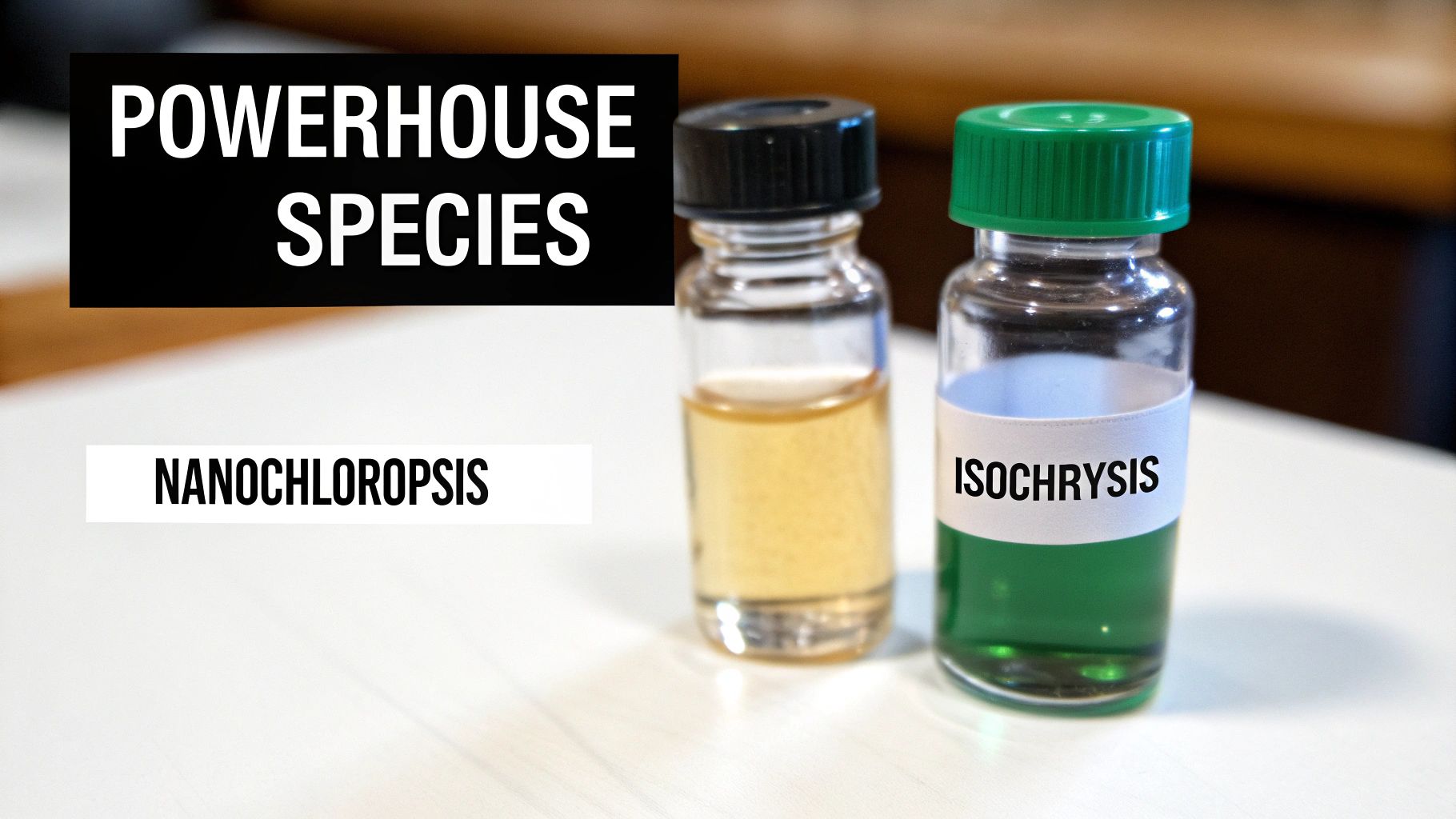
When you get into the world of phytoplankton, you quickly realize that not all microscopic algae are the same. Think of it like a toolkit—you need the right tool for the right job. It’s the same with your reef tank; different phytoplankton species have their own unique personalities and roles. Getting to know them is the first step in understanding how long phytoplankton live and what they can do for your aquarium.
Two of the heavy hitters you’ll see most often in the hobby are Nannochloropsis oculata and Isochrysis galbana. Let's get to know this dynamic duo.
The Nutrient-Scrubbing Workhorse
First up, meet Nannochloropsis oculata. This is a tiny, non-motile green alga, and if it had a job title, it would be "Chief Nutrient Scrubber." This microscopic beast is incredibly good at consuming excess nutrients right out of your water column.
Nannochloropsis is a powerhouse for mopping up nitrates and phosphates, which are the main fuels for nuisance algae. By dosing it, you're essentially adding a beneficial competitor that out-eats the bad stuff, helping keep your water parameters stable. The result is a cleaner, healthier environment for your fish and corals. Its tiny cell size—typically just 2-4 micrometers—also makes it a perfect first meal for rotifers and brand-new copepod nauplii.
The Coral Superfood
Next in the lineup is Isochrysis galbana, often called the "Coral Superfood," and for good reason. This golden-brown alga is famous for its top-tier nutritional profile. It’s absolutely packed with Docosahexaenoic Acid (DHA), an essential omega-3 fatty acid that’s crucial for the health, growth, and coloration of corals.
When your corals, clams, and other filter feeders get a mouthful of Isochrysis, they're getting a direct shot of the healthy fats and lipids they need to really pop. This nutritional boost leads to better polyp extension, faster growth, and those brilliant, jaw-dropping colors we all strive for. It's a non-negotiable part of any serious coral feeding plan.
A blend of different phytoplankton species provides a more complete nutritional profile, much like how a varied diet is healthier for humans. It ensures all the inhabitants of your reef, from copepods to corals, receive the specific nutrients they need to flourish.
A high-quality blend that combines the nutrient-scrubbing power of Nannochloropsis with the superfood benefits of Isochrysis creates a fantastic synergy in your aquarium. For anyone curious about how this plays out in a real tank, learning more about professionally cultured live phytoplankton is a great way to see how you can build a robust food web from the bottom up. It’s all about creating an ecosystem that doesn't just survive, but truly thrives.
The Journey from Lab Culture to Living Nutrition
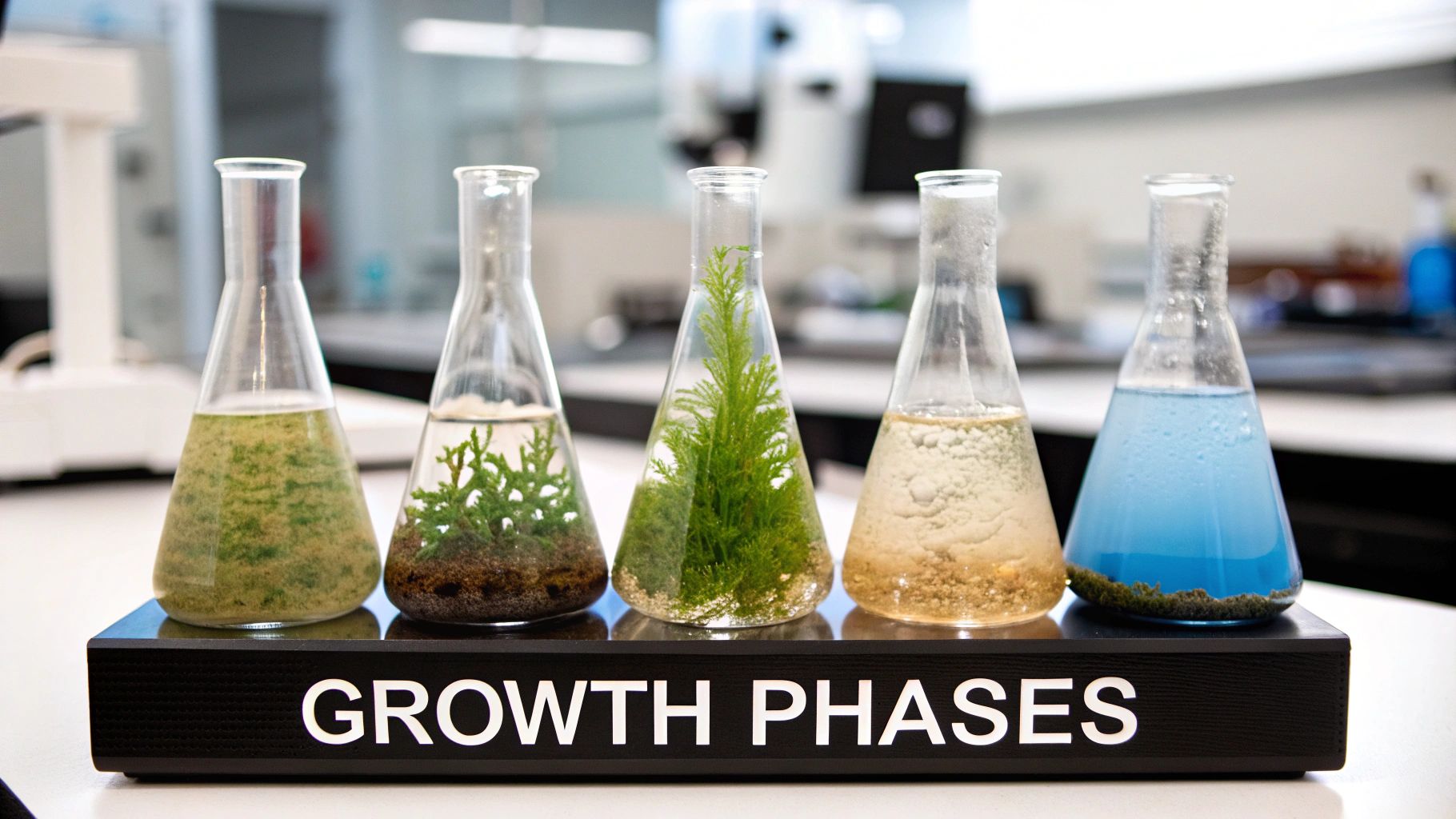
So, what makes a bottle of live phytoplankton a true superfood for your reef tank? It all comes down to timing.
Think of it like picking a strawberry from the garden. Grab it at its peak, and it's bursting with flavor and vitamins. Pick it too early, it's sour and hard; too late, and it’s a mushy mess. A phytoplankton culture goes through a very similar lifecycle, and catching it at that perfect moment is what separates a powerhouse of nutrition from just cloudy green water.
Understanding this journey from a sterile lab flask to your tank is key. It shows you exactly why a freshly harvested, live culture delivers something preserved products just can't touch. You're getting a vibrant, living meal, not a processed one.
The Phases of Culture Growth
Like any population, a phytoplankton culture follows a pretty predictable growth curve. Each stage has its own personality, which directly impacts the culture's density, health, and, most importantly, its nutritional punch. Nailing the harvest time is everything.
-
Lag Phase: This is the "getting settled" period. When you start a new culture, the cells need a moment to adjust to their new home. Growth is slow while they gear up to start dividing.
-
Log Phase (Exponential Growth): This is where the magic happens. With plenty of food and perfect conditions, the cells go into overdrive, dividing and doubling their numbers like clockwork. This is the absolute best time to harvest. The cells are young, healthy, and packed with the essential fatty acids and proteins your reef critters crave.
-
Stationary Phase: Things start to slow down here. The cells are running low on nutrients, and the culture gets crowded. The population plateaus, with cell growth and death rates evening out. The culture is still alive, but it’s past its nutritional prime.
-
Decline (Crash) Phase: This is the end of the road. The food is gone, waste is building up, and the cells begin to die off faster than they can reproduce. A crashing culture isn’t just useless as food—it can actually foul your aquarium water.
Why Peak Harvest Matters
When you get a bottle of phytoplankton harvested during that prime log phase, you're giving your reef the best possible meal. The cells are at their nutritional peak, offering maximum benefit to your corals, copepods, and other filter-feeding inhabitants. This is what sets a premium live product apart; it’s captured at the absolute height of its life-giving potential.
A culture shipped during its peak growth phase ensures you are adding the most potent, bioavailable nutrition possible. It’s not just green water—it’s a dense concentration of living, thriving organisms ready to fuel your reef's entire food web from the bottom up.
Dosing your tank with a culture bottled at this perfect moment means you're introducing a dynamic, living food source. If you're curious about trying this yourself, our guide on how to culture phytoplankton for your reef tank gives you a step-by-step look at managing these growth cycles at home. It’s this focus on timing that injects life into every single drop.
Keeping Your Live Phytoplankton Fresh
Once that bottle of live phytoplankton lands on your doorstep, the clock starts ticking. How you store and handle it makes all the difference, determining whether it remains a powerhouse of nutrition for weeks or crashes and becomes useless in a matter of days. Think of it less like a product and more like a tiny, dormant ecosystem you've been entrusted with.
Four big factors control its lifespan in your hands: temperature, light, nutrients, and contamination. Get these right, and you'll keep your culture vibrant and potent. Get them wrong, and you'll quickly find yourself with a bottle of smelly, green water.
The Big Four: What Keeps Phyto Alive in the Bottle
These four elements are intertwined. Getting one right won't save you if you neglect the others. Let's dig into what your culture needs to stay in peak condition.
1. Temperature: Your Refrigerator is Your Best Friend
This is the big one. Temperature is the single most important factor for preserving your live phyto. Leaving it on the counter at room temperature is a recipe for disaster—it kicks the phytoplankton's metabolism into overdrive. They'll burn through all their energy and nutrients in a frantic race to grow, quickly fouling their own water and crashing the culture.
The solution is simple: get it in the fridge.
The sweet spot for preservation is between 39–46°F (4–8°C). This cold temperature puts the cells into a state of near-dormancy, slowing their metabolism way down. It's like hitting the pause button, preserving their nutritional value for as long as possible.
2. Light: Keep It in the Dark
Yes, phytoplankton are photosynthetic, but that's for when they're actively growing. In the cold, dark confines of your refrigerator, they're meant to be dormant. Light is not their friend during storage.
Exposing a refrigerated bottle to light sends confusing signals to the cells. It can stress them out and, even worse, encourage the growth of unwanted bacteria that might be lurking in the culture. The best practice couldn't be easier: just let the darkness of the fridge do its job.
The Internal Environment: Nutrients and Purity
Beyond the external factors of temperature and light, what's going on inside the bottle is just as crucial. The culture is a closed system with a finite amount of resources and a delicate balance.
-
Running Out of Food: The phytoplankton are suspended in a liquid that contains a carefully measured amount of nutrients. Even in the cold, their slowed-down metabolism still consumes these resources, just very slowly. Eventually, the food will run out, and the culture will naturally begin to decline.
-
Contamination is a Killer: A pure culture is a healthy culture. The moment you introduce outside contaminants—say, from a dirty pipette or by leaving the cap off—you've started a war inside the bottle. Bacteria and other microbes can quickly outcompete the phytoplankton, spoiling the entire batch and turning it into something you definitely don't want to add to your tank.
With careful handling, a blend of live phyto that might typically last 5-14 days can be stretched to 4-6 weeks. Hardy strains like Tetraselmis are known for holding their density for a long time under proper conditions. For more tips from fellow reefers, check out these discussions on maximizing your culture's shelf life and benefits.
How to Properly Store and Use Live Phytoplankton
So, your bottle of live phytoplankton has arrived. Getting the most out of it—both in terms of lifespan and nutritional punch—boils down to a few simple daily habits. Following these steps ensures you’re dosing a vibrant, living food source, not just green-tinted water.
First things first, remember the golden rule: gently swirl, never shake. Shaking the bottle too hard can actually rupture the phytoplankton's delicate cell walls, turning your investment into mush. A gentle swirl once a day is perfect for keeping the cells suspended and preventing them from suffocating in a dense layer at the bottom.
Also, don't forget to let your culture breathe. Just crack the cap open for a second each day to allow for gas exchange. This simple step releases any built-up pressure and helps keep the environment inside the bottle healthy.
Best Practices for Dosing Your Tank
When it comes to feeding your reef, think "little and often." Dosing a small amount every day is far more beneficial than dumping in a large volume once a week. This approach provides a constant, stable food source for your corals and other filter feeders.
Here’s a good place to start, but remember to adjust based on your tank's specific needs:
- Nano Reefs (Under 20 gallons): Aim for 5-10 ml daily.
- Medium Tanks (20-75 gallons): A daily dose of 15-30 ml works well.
- Large Systems (75+ gallons): Start with 30-50 ml per day and observe your inhabitants' response.
One of the biggest advantages of dosing live phytoplankton is that it pulls double duty. Any uneaten cells don't just foul your water; they hang around for a day or two, actively consuming nitrates and phosphates before they're consumed or die off. It's a fantastic two-for-one deal: premium nutrition and a little extra water purification.
Maximizing Nutritional Delivery
To make sure the phytoplankton actually reaches your hungry corals and microfauna, it’s a good idea to turn off your protein skimmer and any fine mechanical filters for about 30-60 minutes after dosing. This gives everything in your tank a fair chance to feast before the plankton gets skimmed out.
Want to create a powerhouse feeding response? Try dosing phytoplankton alongside a healthy population of live copepods. The phytoplankton feeds the pods, which in turn become a super-nutritious meal for your fish and corals, creating a more complete and dynamic food web right in your aquarium.
While a bottled culture will realistically last a few weeks with proper care, the lifespan of phytoplankton in the wild can be wildly different. Some species that form massive blooms may only live for a few hours, while certain planktonic stages have been documented to survive for over five years! A 2025 review noted this incredible range, but for the common strains we use in the hobby, you can expect an average of 3-4 weeks before a culture starts to decline. If you want to see what fellow hobbyists are experiencing, you can check out real-world discussions about bottled phytoplankton survival on Reef2Reef.
Knowing When Your Phytoplankton Culture Is Declining
So, how do you know if that bottle in your fridge is still a vibrant superfood for your corals or if it's past its prime? The good news is you don’t need a microscope. Your own eyes and nose are the best tools you have.
Learning to spot the signs of a dying culture is a critical skill for any reefer. It’s the only way to ensure you’re adding high-quality, live nutrition to your tank, not just polluting the water. Think of it as a quick ‘sniff and swirl’ test you should do every single time you dose.
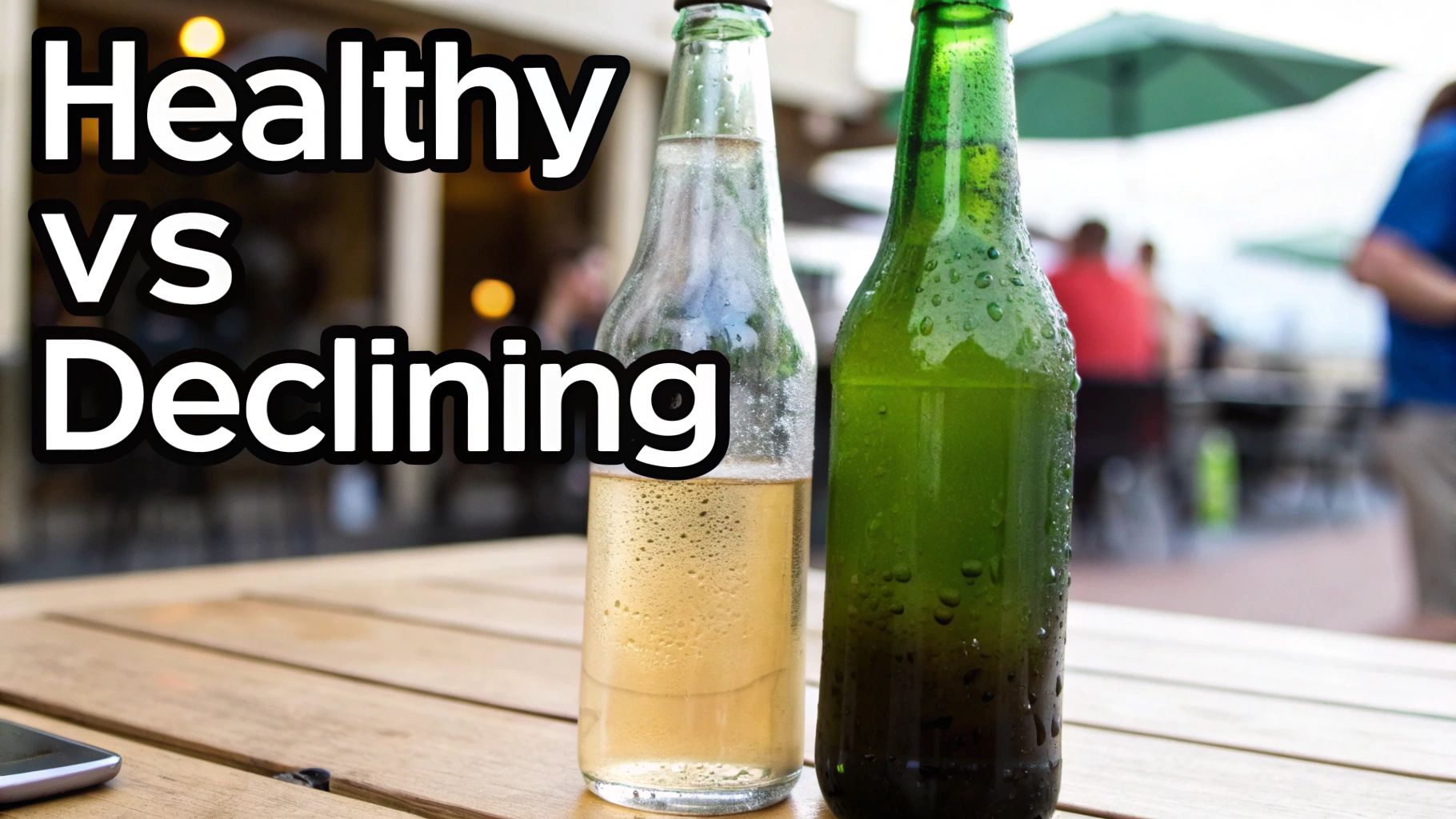
A healthy, thriving phytoplankton culture has a very distinct look and smell. It should have a rich, uniform green or golden-brown color that easily mixes back into suspension with a gentle shake. Pop the cap, and you should get a fresh, earthy, almost briny scent—like a clean ocean breeze.
Red Flags to Watch For
On the flip side, a crashing culture gives off some pretty obvious warning signs. If you spot any of the following, it’s a clear signal that the culture is no longer beneficial and could actually harm your tank's water quality.
Keep a close eye out for these telltale signs:
- Color Fading: The vibrant green turns into a dull, brownish, or murky yellow. This means widespread cell death.
- Clumping and Settling: You see hard clumps forming at the bottom that refuse to swirl back into the liquid. This isn't normal settling; the culture is crashing.
- A Foul Smell: This is the most definitive sign of all. A sour, rotten, or sulfuric smell means bacteria have taken over the decaying phytoplankton. It’s game over.
A healthy culture smells like the ocean; a dead one smells like a problem. Trust your nose—it's one of the most reliable indicators of culture viability and will tell you exactly when it's time for a fresh bottle.
Ultimately, mastering these simple diagnostic checks gives you confidence. You'll know for sure when your culture is at its peak and, more importantly, when it's time to toss it. This guarantees every drop you add is packed with life, fueling your reef ecosystem the way nature intended.
Answering Your Top Questions About Phytoplankton
Even when you've got the basics down, a few questions always seem to pop up. Let's run through some of the most common things reefers ask about phytoplankton lifespan, clearing up any confusion so you can dose your tank with confidence.
Can I Freeze My Live Phytoplankton to Make It Last Longer?
That's a definite no. In fact, freezing live phytoplankton is probably the quickest way to destroy it. Think of it this way: when water freezes, it forms sharp little ice crystals. Those crystals will shred the delicate cell walls of the phytoplankton, killing them instantly.
Once you thaw it out, you don't have preserved, dormant algae. You have a mush of dead cells that will immediately start to decay. Adding that to your tank will only foul your water with nutrients, doing the exact opposite of what you intended. The best way to prolong its life is in the refrigerator—this slows their metabolism way down, putting them in a dormant state without causing any physical damage.
Remember, the goal is to slow down life, not end it. Refrigeration puts the cells into a low-energy, dormant state, preserving their structure and nutritional value for when they enter your aquarium.
Is Sediment at the Bottom of the Bottle a Bad Sign?
Not usually, no. A little bit of settling is perfectly normal, especially with non-motile (non-swimming) species like Nannochloropsis. This is exactly why we recommend a gentle swirl every day—it resuspends the cells and keeps them from clumping up at the bottom.
What you do want to watch for is the type of sediment. In a healthy culture, the settled cells will easily mix back into a smooth, uniformly colored liquid with a quick shake. If you see thick clumps, any weird discoloration, or notice a foul smell when you open the bottle, that's a sign the culture is crashing and it's time to toss it.
How Long Does Phytoplankton Survive in My Tank After Dosing?
Once it hits the water, the lifespan of phytoplankton really comes down to one thing: how quickly it gets eaten! Ideally, your corals, copepods, and other filter feeders will get to work on it right away. That’s the whole point.
But any phytoplankton that isn't consumed immediately can stay alive and kicking in your water column for one to three days. While it's floating around, it's not just waiting to be eaten; it's actively pulling excess nitrates and phosphates out of your water. This is one of the biggest perks of using live phyto over dead alternatives—it feeds your tank and helps clean it at the same time.
Ready to provide your reef with the freshest, most potent live nutrition? PodDrop Live Aquarium Nutrition delivers lab-grown, peak-viability phytoplankton and copepods directly to your door. Explore our blends and give your tank the life it deserves at https://www.getpoddrop.com.