

Your Guide to a Thriving Clams Reef Tank
Adding a clam to a reef tank is like introducing a living jewel that also happens to be a fantastic natural filter. They are absolutely stunning, but they do have some specific needs. Getting the light, water chemistry, and flow just right is the key to success. This guide is all about giving you the practical, real-world advice to help your clams not just survive, but truly thrive.
Why Clams Are Such a Great Addition to a Reef Tank
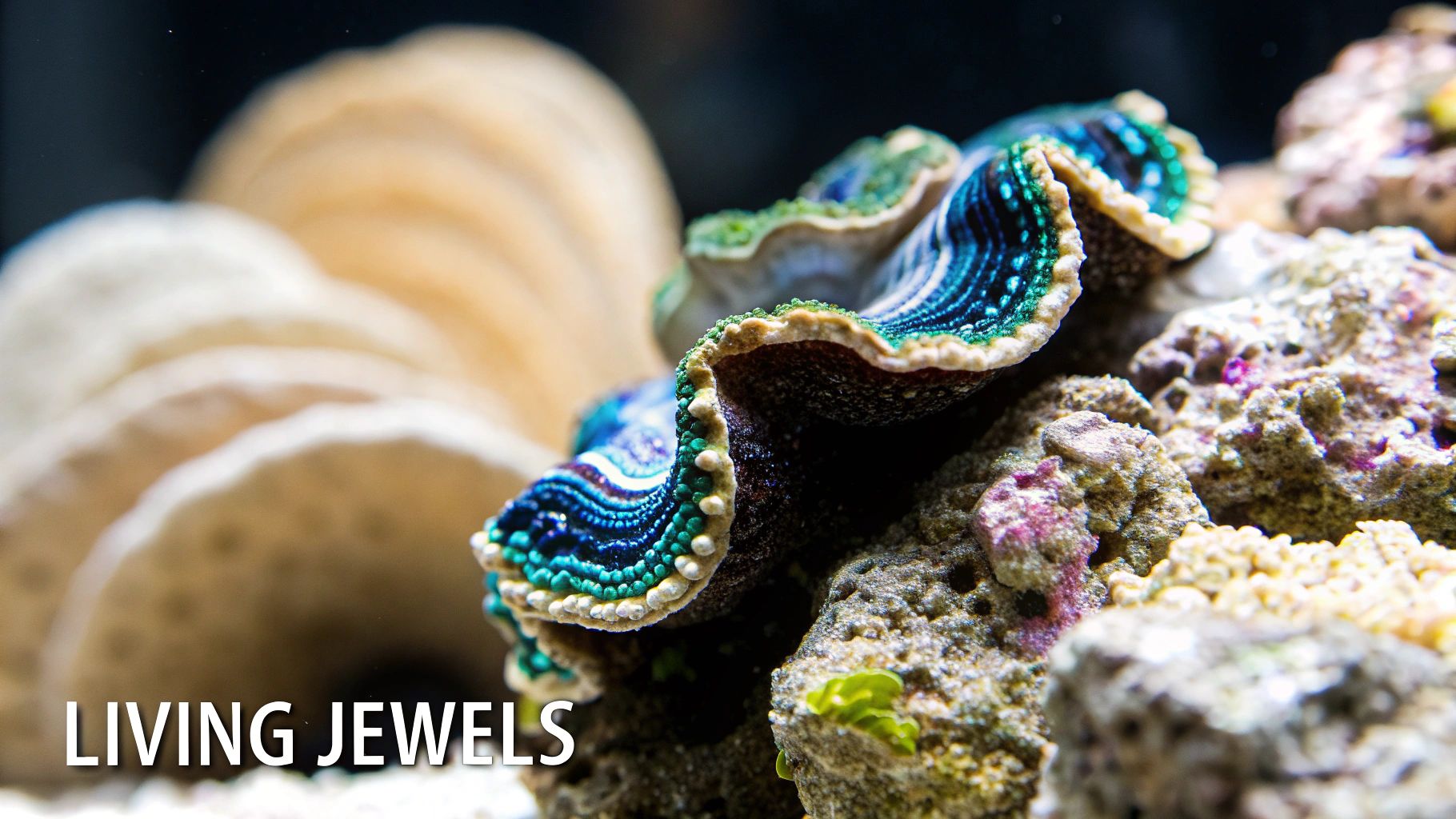
When you bring a Tridacna clam home, you're doing more than just adding another creature to your tank—you're cultivating a piece of living art. The iridescent colors and intricate patterns on their mantles are simply unmatched, and they often become the stunning centerpiece of the entire system. But their beauty is only half the story.
Clams are powerhouse filter feeders. They're constantly siphoning water, pulling out suspended particles and dissolved nutrients like nitrates and phosphates. This isn't just a neat trick; it's a major contribution to a cleaner, more stable environment for everything in your tank. By keeping excess nutrients in check, they help improve water clarity and can even keep nuisance algae at bay.
It seems like more and more reefers are catching on to how incredible these animals are. The global reef aquarium market has been booming, growing from roughly USD 3.33 billion to USD 3.49 billion in a single year. Experts even predict it will climb to USD 5.04 billion soon, which shows just how many people are getting into the hobby. If you're curious, you can find more details on this industry growth at SkyQuest.
The Symbiotic Superpower
So, where do those breathtaking colors come from? It's all thanks to a fascinating symbiotic relationship. Tucked away inside the clam's fleshy mantle are millions of microscopic algae called zooxanthellae. These tiny algae are solar-powered engines, using photosynthesis to convert light into food for the clam. This process provides a huge chunk of the clam's nutrition—sometimes up to 90% or more.
This is precisely why getting your lighting right is absolutely critical. Those brilliant blues, greens, and golds you admire are actually pigments the clam develops to shield itself and its algae partners from getting too much light. Think of it as a built-in, all-natural sunscreen.
A healthy clam is one of the best signs of a well-balanced reef tank. When its mantle is vibrant and it's showing steady growth, you know your lighting, water chemistry, and overall tank stability are dialed in.
What This Guide Covers
Let's cut through the myths and intimidating stories you might have heard. Keeping clams can be straightforward if you know what you're doing. This guide breaks it all down into simple, actionable steps. We'll walk through:
- Species Selection: How to pick the right clam that fits your tank's capabilities.
- Environmental Needs: Nailing the all-important trio of lighting, flow, and placement.
- Water Chemistry: Keeping your water parameters rock-solid for long-term health.
- Nutrition: When and why supplemental feeding can boost growth and color.
- Troubleshooting: How to spot and fix common issues before they become big problems.
By focusing on these fundamentals, you’ll be well on your way to adding one of these magnificent creatures to your clams reef tank and watching it flourish for years to come.
Selecting a Healthy Clam for Your Aquarium
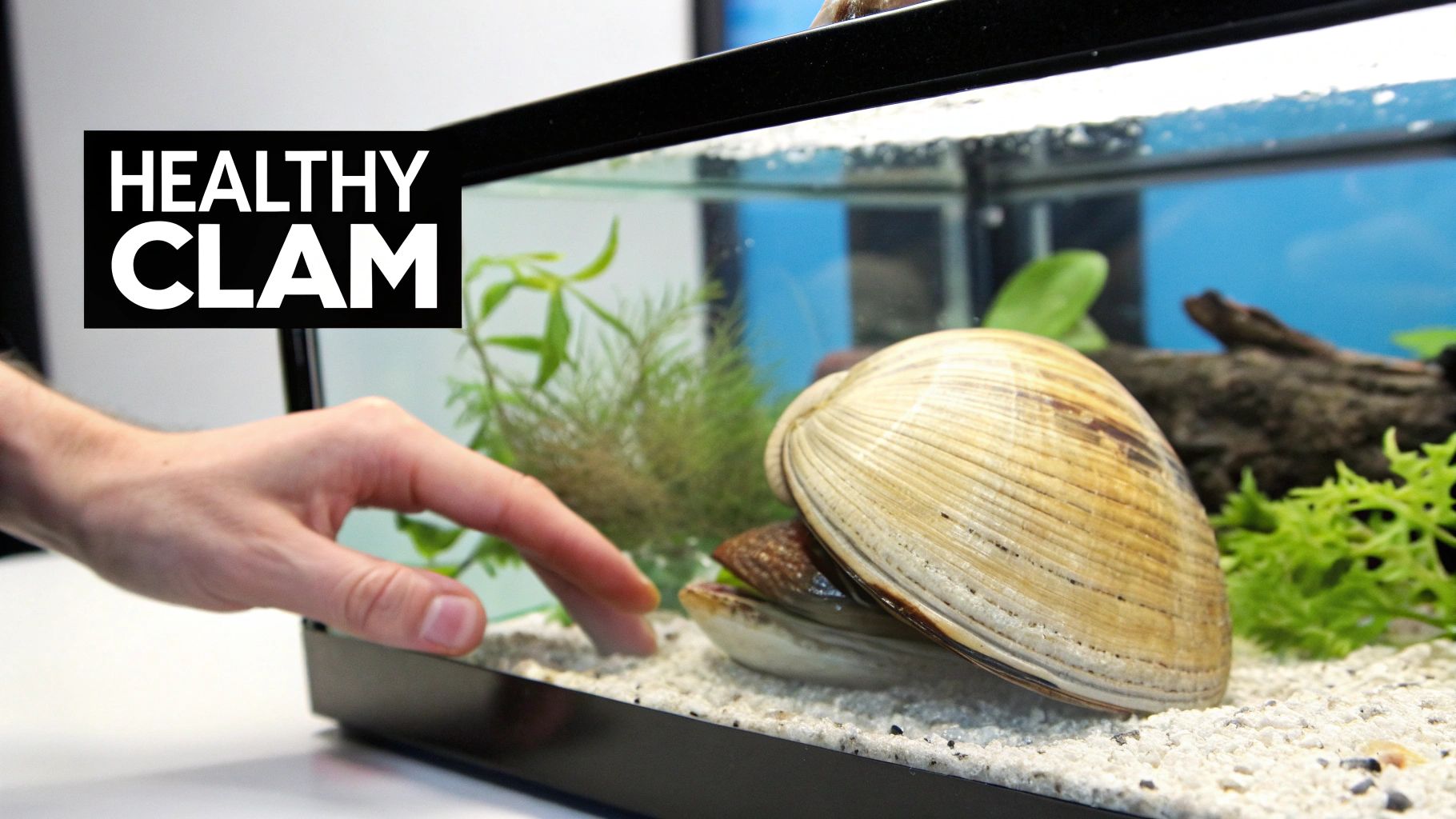
The very first decision you make—which clam to bring home—is hands down the most important one. It's what sets the stage for either a beautiful, thriving addition to your reef or months of frustration. A healthy, robust clam has a fantastic chance of settling into a stable clams reef tank, but a stressed-out specimen might never bounce back. The whole process starts with a good, hard look at the clam before you ever open your wallet.
The first thing I always check is the mantle. This is that gorgeous, fleshy, and colorful part that fans out to catch the light. In a happy clam, the mantle will be fully extended, showing off its rich, even coloration.
If you see a clam with a mantle that looks pinched or shrunken, that's a serious red flag. It’s a classic sign of stress, which could be from anything—bad lighting, poor water quality, or even a brewing illness. It might look like a bargain, but trust me, it's a risk you don't want to take.
The Visual Health Check
Before you commit, give that clam a proper once-over. This isn't just about picking the prettiest colors; it's about looking for solid signs of health. A few minutes of careful observation at the fish store can save you a world of trouble later on.
What to Look For (The Good Signs):
- Vibrant, Fully Extended Mantle: The clam should be wide open, displaying its full, colorful tissue. Look for any tears, pale spots, or blemishes.
- Rapid Defensive Response: This is my go-to test. Gently wave your hand over the clam to cast a shadow on it. A healthy animal will react instantly, pulling its mantle back and starting to close its shell. If the reaction is slow, or worse, nonexistent, walk away.
- Intact Byssal Gland: Take a look at the bottom of the clam. You should see a cluster of tough threads (the byssal foot) that it uses to anchor itself. If this area is damaged or the foot is missing, it means the clam was handled roughly when it was collected or moved.
- Clean Shell: Carefully inspect the shell for any hitchhikers, especially the dreaded pyramid snails. These tiny, cone-shaped pests are parasites that will literally suck the life out of your clam, and they are a nightmare to get rid of once they're in your tank.
Pro Tip: Never, ever buy a clam that is "gaping" open and won't close. This is a tell-tale sign that its main adductor muscle has given up, and the clam is on its last legs. A healthy clam can clamp its shell shut tightly.
Choosing the Right Species for Your Tank
Not all Tridacna clams are created equal. You have to match the clam to your tank's capabilities, and the biggest factor here is lighting. Some species are absolute light-hogs, while others are a bit more laid back.
For instance, the Tridacna crocea (Crocea Clam) and Tridacna maxima (Maxima Clam) are famous for their mind-blowing colors, but they demand incredibly intense light to survive. They naturally bore into rockwork in the wild, so they expect to be blasted with light from above.
On the flip side, species like Tridacna derasa (Derasa Clam) and Tridacna squamosa (Squamosa Clam) are much more forgiving. They’re generally considered hardier and are a great choice for hobbyists who don't have a stadium's worth of lighting over their tank. These guys get bigger and are happy to sit right on the sandbed, making placement a breeze and making them a perfect starting point for your first clams reef tank.
To make it easier, here’s a quick rundown of the most common species you'll encounter.
Beginner Clam Species Comparison
This table offers a quick comparison of the "big four" Tridacna species, highlighting what you need to know to pick the one that best fits your setup.
| Species | Lighting Needs (PAR) | Placement | Max Size | Beginner Friendliness |
|---|---|---|---|---|
| Derasa Clam | 150 - 300 | Sandbed or Low Rock | Up to 24 inches | High |
| Squamosa Clam | 200 - 350 | Sandbed or Low Rock | Up to 16 inches | High |
| Maxima Clam | 250 - 500+ | Mid to High Rockwork | Up to 12 inches | Moderate |
| Crocea Clam | 300 - 500+ | High Rockwork | Up to 6 inches | Low |
By taking your time, performing these health checks, and honestly assessing your tank's capabilities, you can find a gorgeous clam that will thrive for years to come. This careful selection process is the foundation for success with these amazing animals.
Perfecting Your Tank's Clam Environment
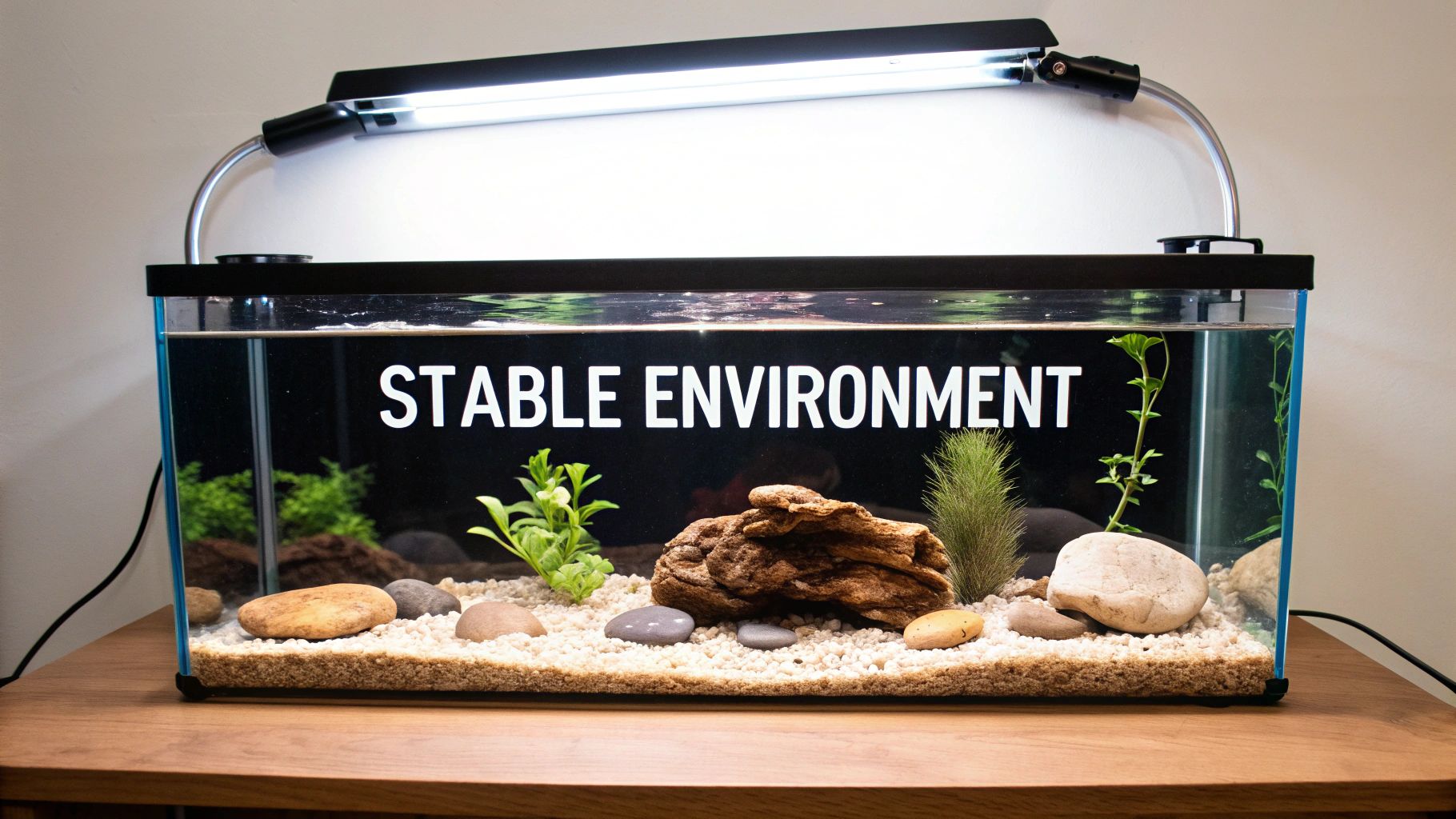
If there's one word that defines success with clams, it's stability. Unlike a hardy soft coral that might shrug off a minor swing in water chemistry, clams are the canaries in the coal mine for a reef tank. They demand consistency, and providing that unwavering environment is the most important thing you can do for their long-term health and eye-popping color.
Think of it like building a house. If the foundation is constantly shifting, cracks are inevitable. For your clam, that foundation is built on three pillars: light, water flow, and chemistry. Getting these right—and keeping them there—is the real secret to a thriving clam.
Mastering Lighting for Your Clam
Lighting is probably the single most critical factor for keeping clams happy. We're not just talking about a bright-looking tank; clams rely on their symbiotic zooxanthellae for food, and those algae need the right kind of light to photosynthesize. This is where the term Photosynthetically Active Radiation, or PAR, comes in.
PAR measures the specific light spectrum that photosynthetic life can actually use. You'll need a quality, full-spectrum LED or T5 lighting setup that can deliver the right PAR numbers to the exact spot your clam will live.
- High-Light Species (Crocea, Maxima): These guys are light-hungry. They need to be placed higher up on your rockwork to get the intense light they crave, typically in a PAR range of 250-500.
- Lower-Light Species (Derasa, Squamosa): A bit more forgiving, these can do quite well on the sandbed or lower on the rocks where PAR is in the 150-300 range.
A huge mistake I see people make is just eyeballing it. A light that looks bright to us might be totally wrong for a clam. The only way to know for sure is to use a PAR meter. Renting or borrowing one for an afternoon is a game-changer that completely removes the guesswork.
Finding the Sweet Spot for Water Flow
Water flow is a classic balancing act. You need enough current to bring nutrients and food past the clam and gently whisk away waste from its mantle. But if the flow is too strong and direct, the clam will clam up (literally), retracting its mantle and preventing it from feeding or getting light.
The goal here is moderate, indirect, and randomized flow. You should never have a powerhead blasting directly at your clam. Instead, arrange your pumps to create a gentle, swirling current that washes over its location. A good rule of thumb: if the clam's mantle is constantly flapping around or looks like it's being pushed to one side, the flow is too strong.
The Bedrock of Water Chemistry
While light and flow are crucial, unstable water chemistry is the silent killer. Clams are constantly building their calcium carbonate shells, a process that strips key elements from your tank's water faster than you might think. Keeping your Alkalinity, Calcium, and Magnesium levels rock-solid isn't just a suggestion; it's mandatory.
Even small, sudden swings in these parameters are incredibly stressful. You should be testing daily, or at least a few times a week, until you get a feel for how quickly your system consumes these elements. Once you know that, you can lock in a consistent dosing routine.
Core Water Chemistry Targets for Clams:
| Parameter | Ideal Range | Why It Matters |
|---|---|---|
| Alkalinity (dKH) | 8.0 - 11.0 | This provides the carbonate clams need to build their shells. Stability is everything—avoid swings over 0.5 dKH per day. |
| Calcium (ppm) | 400 - 450 | The main building block of the shell. It has to be kept in balance with alkalinity to be useful. |
| Magnesium (ppm) | 1300 - 1400 | Helps keep Calcium and Alkalinity from precipitating out, ensuring they're available for your clam to use. |
In a mature clams reef tank, hitting this level of stability almost always means using automated dosing pumps. Trying to do it by hand every day can lead to inconsistencies. This type of equipment is part of a huge hobbyist market—the global aquarium market was valued at USD 6.33 billion one year and is projected to hit USD 8.70 billion, which shows how many of us are dedicated to creating these perfect little ecosystems.
For nutrients, I aim to keep nitrates between 2-10 ppm and phosphates below 0.1 ppm. A great way to manage this naturally is by adding a refugium. You can check out our guide on how to set up a refugium in your sump at https://getpoddrop.com/blogs/blog/refugium-in-sump for some great ideas. By staying on top of these three pillars—light, flow, and chemistry—you'll create an environment where your clam doesn't just survive, it becomes a true centerpiece.
Nutrition for Incredible Growth and Color
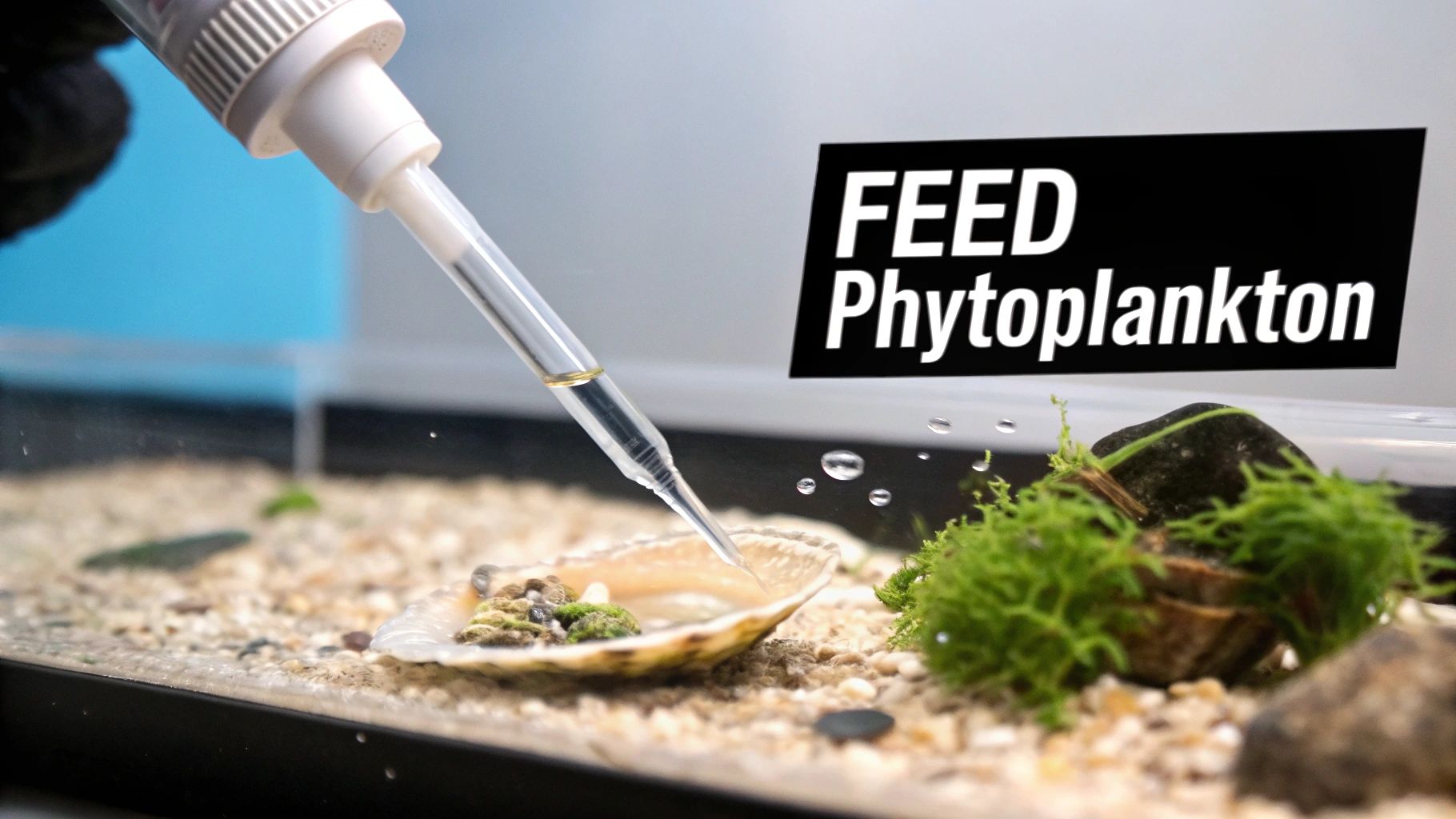
While powerful lighting provides the lion's share of a clam's energy, it's not the whole story. Think of light as the main course. For a clam to go from just surviving to truly thriving—displaying its most intense colors and building a strong shell—it needs that extra nutritional boost.
That boost comes from supplemental feeding, especially with live phytoplankton. It's a common misconception that since clams are photosynthetic, they don't need any other food. But in the ocean, they are constantly filtering tiny particles from the water. Mimicking this in a closed clams reef tank gives them crucial trace elements and fatty acids that light alone can't provide.
This is especially critical for younger, smaller clams. Their symbiotic algae haven't yet built up enough to supply 100% of their energy needs, making supplemental food a make-or-break factor for their development.
The Power of Live Phytoplankton
When it comes to feeding your clam, nothing on the market beats live phytoplankton. These microscopic algae are the very foundation of the marine food web. Unlike bottled, preserved "phyto" products, live cultures deliver a complete nutritional package that's immediately usable by your clam and the rest of your reef.
Live phytoplankton brings a few key advantages to the table:
- Superior Nutrition: Live cells are packed with essential fatty acids (like EPA and DHA), vitamins, and amino acids—nutrients that often break down in processed foods.
- No Nutrient Spikes: Dead or preserved foods can rot and foul your water. Live phytoplankton, on the other hand, will just swim around until it's eaten, preventing nasty nitrate and phosphate spikes.
- Ecosystem-Wide Benefits: Any phytoplankton your clams miss becomes food for your copepods, corals, feather dusters, and sponges. You’re not just feeding one animal; you're supercharging the entire microfauna population.
When you broadcast feed with live phytoplankton, you're not just feeding your clam; you're nourishing the entire food chain in your reef tank. This holistic approach builds a more resilient and biodiverse environment for every inhabitant.
The demand for high-quality live nutrition reflects the hobby's impressive growth. The North American aquarium saltwater fish market, for example, was recently valued at USD 7.8 billion and is projected to grow at 8.5% annually over the next decade. This expanding community understands that premium nutrition is key to a healthy system.
Creating a Simple and Effective Feeding Plan
Getting supplemental feeding into your routine is easy, and the payoff is huge. Remember, consistency is far more important than volume. The idea is to create a light, consistent "haze" of phytoplankton in the water that your clam can filter out over an hour or two.
Here’s a practical approach to get started:
- Shut Down Equipment: Before you add any food, turn off your protein skimmer and any UV sterilizers for about an hour. This keeps the phyto in the water column long enough to be eaten instead of getting skimmed out immediately.
- Dilute the Dose: Mix your live phytoplankton with a cup of tank water. This helps it spread out more evenly instead of getting stuck in one spot.
- Broadcast Feed: Slowly pour the diluted mix into an area of high flow, like right in front of a return pump outlet. This will carry the food throughout the entire tank.
- Observe and Adjust: Start by feeding 2-3 times per week. Watch your clam. You should see better mantle extension and richer coloration over time. Just as important, keep an eye on your water parameters to make sure you aren’t overdoing it.
For a deeper dive into the benefits and different types of phytoplankton, check out our guide on using live phytoplankton for your reef tank. By adding this simple step to your routine, you'll be giving your clam the final piece of the puzzle it needs to become a truly spectacular centerpiece in your clams reef tank.
How to Solve Common Clam Problems
Even in the most stable reef tank, things can go sideways with clams. The real skill is learning to spot the subtle warning signs and acting fast. Think of yourself as a clam detective; just watching how your clam behaves day-to-day is your best weapon for catching problems before they spiral out of control. Small changes in how far the mantle extends, its color, or how quickly it reacts can tell you a whole story about the conditions in your tank.
This section is your go-to field guide for figuring out what's wrong and what to do about it. We'll walk through everything from strange behaviors to the pests that drive hobbyists crazy, giving you clear, practical steps to get your clam healthy again.
Decoding Mantle Behavior: Gaping and Pinching
A clam's mantle is like a health billboard. When it's fully extended and bursting with color, all is well. But any change from that happy state is a clear signal that something's wrong.
One of the scariest things to see is a gaping clam. This is when the shell is wide open, the mantle is pulled way back, and it doesn't even flinch when you cast a shadow over it. Gaping is a five-alarm fire—it often means the clam's adductor muscle is failing from severe stress. The cause could be anything from a major water quality crash to disease or even physical damage.
On the other hand, a pinched mantle is when the clam is mostly shut, with the mantle tissue looking shrunken or sucked in. This is a more common sign of general annoyance or stress. Maybe a fish has been nipping at it, a nearby coral is stinging it, or the water flow is just too harsh. It can also be an early warning that one of your water parameters is drifting.
Quick Action Plan for Mantle Issues:
- Test Your Water, Now: The very first thing you should do is grab your test kits. Check your core parameters: alkalinity, calcium, and magnesium. A sudden swing in one of these is a frequent culprit.
- Look for Pests: Carefully inspect the clam. Pay close attention to the base and the edges of the shell for pyramid snails or other unwanted hitchhikers.
- Observe the Neighbors: Watch your fish and inverts. Is that "reef-safe" wrasse suddenly paying a little too much attention to your clam? Did an emerald crab decide the clam's shell was the perfect new perch?
- Check the Environment: Has a powerhead shifted and started blasting the clam directly? If the clam is new, maybe it's getting scorched by lighting that's too intense.
A healthy clam snaps shut at the slightest shadow. It’s a lightning-fast reaction. If that response is sluggish or completely absent, it's one of the earliest and most reliable signs that you have a problem brewing.
The Menace of Pyramid Snails
Pyramid snails (from the Pyramidellidae family) are public enemy number one for Tridacna clam keepers. These tiny, white, cone-shaped parasites are sneaky. They hide during the day and crawl out at night to feed on the clam's tissue, slowly bleeding it dry. A small infestation can explode in population and kill a clam before you even realize what's happening.
Getting rid of them takes persistence. Start by carefully removing the clam from the tank. Gently scrub the entire shell with a soft toothbrush, focusing on the scutes (the ridges on the shell) where they love to lay their clear, jelly-like egg masses. After a good scrub, you can give the clam a dip in a product like Revive or another coral dip, following the package directions.
For a more natural, long-term solution, some wrasses have a taste for pyramid snails. Fish like the Six Line or Melanurus Wrasse are known predators. Adding one to your clams reef tank can be a great way to keep these pests from ever getting a foothold again.
Handling Clam Bleaching
When a clam expels its symbiotic zooxanthellae due to stress, we call it bleaching. Its once-vibrant mantle will turn pale, translucent, or stark white. The most common reason for this is light shock—taking a clam from a lower-light system and plopping it directly under high-powered LEDs without giving it time to adjust.
If you see your clam starting to bleach, you need to reduce its light exposure immediately.
- Move the clam to a shadier, lower spot in your rockwork.
- If you can't move it, place a piece of plastic window screen over the clam, using some rubble to hold it down.
- Over the course of several weeks, you can gradually remove layers of the screen or slowly move the clam back up until it has fully recovered and acclimated.
Dealing with these issues can be nerve-wracking, but they're often learning experiences. Many common reef tank problems, from pests to nuisance algae, are tied back to nutrient imbalances. You can learn more about tackling one of the most stubborn issues in our detailed guide on how to get rid of cyanobacteria. By watching carefully and responding to what your clam is telling you, you can solve most problems and ensure your living jewel remains a showstopper in your tank for years to come.
Your Clam-Keeping Questions, Answered
Let's dive into some of the questions I hear all the time from fellow reefers. Getting these details right can make all the difference between a clam that just survives and one that truly thrives.
Is It Possible to Keep a Clam in a Nano Tank?
Yes, but it's not for the faint of heart. If you're up for the challenge, you can absolutely keep a clam in a smaller tank, say in the 20-30 gallon range. The key is to stick with smaller species like Tridacna crocea or a very young T. maxima.
The real make-or-break factor in a nano system is stability. A small volume of water can swing wildly in alkalinity, calcium, and temperature, and those fluctuations can be a death sentence for a sensitive clam. You have to be on top of your testing and maintenance game constantly.
You'll also need a surprisingly powerful light to deliver the right PAR, even in a shallow tank. If you’re committed to that level of meticulous care, a clam can be an incredible showpiece in a nano setup.
My Two Cents: Think of a nano clam tank as an "expert mode" challenge. Your success will hinge completely on your ability to keep water parameters locked in, which is just plain harder to do in a small system.
How Can I Tell if My Lights Are Strong Enough?
Honestly, the only way to know for sure is to use a PAR meter. It takes all the guesswork out of the equation and tells you exactly what kind of light intensity your clam will be getting in its specific spot.
If you can get your hands on one, here are the numbers to shoot for:
- For Maxima and Crocea Clams: These guys are light-hungry. You want to be in the 250-450 PAR range for them to really show off their best colors.
- For Derasa and Squamosa Clams: They are a bit more forgiving. A PAR range of 150-300 is plenty, which means you can often place them a little lower in the tank.
No PAR meter? The next best thing is to check the manufacturer's charts for your specific light fixture. You can get a decent estimate by matching the output to your tank's depth. Just remember to always acclimate new clams slowly! Start them low in the tank or use a screen to diffuse the light for the first week or so.
Who Are the Best (and Worst) Tankmates for Clams?
You're looking for peaceful, reef-safe fish and inverts that won't even give your clam a second glance. The goal is a harmonious community where the clam's delicate mantle is never seen as food or something interesting to pick at.
You can't go wrong with these peaceful residents:
- Clownfish
- Gobies and Blennies
- Firefish
- Cardinalfish
- Royal Grammas
Cleaner shrimp and other ornamental shrimp are usually safe bets, too. The fish to absolutely avoid are the known nippers—many angelfish, butterflyfish, and certain wrasses fall into this category. Be warned, even seemingly innocent critters like peppermint shrimp or emerald crabs have been known to irritate a clam’s mantle. My advice? Research every single new addition before it hits the water in your clams reef tank.
How Often Should I Be Feeding Phytoplankton?
For most established reef tanks, feeding live phytoplankton 2-3 times per week is the sweet spot. It gives your clam a noticeable boost in health, growth, and coloration. You're aiming to create a light green haze in the water that the clam can filter out over an hour or two.
A great place to start is simply following the dosage instructions on the bottle for your tank size. Young, small clams benefit the most from this because their internal algae farms (zooxanthellae) aren't fully developed yet and can't cover all their nutritional needs.
Keep an eye on your clam's response. You should see better mantle extension and richer colors over time. Also, watch your nutrient levels to make sure you aren't overdoing it. Consistent feeding provides those crucial fatty acids and micronutrients that light alone just can't, helping you grow a truly stunning clam.
Here at PodDrop Live Aquarium Nutrition, we know that premium live food is the foundation of a vibrant reef. Our fresh, dense phytoplankton cultures provide the perfect nutritional supplement to make your clams and corals pop with color and health. It’s time to give your reef the living energy it's been missing.