

Live Phytoplankton for Reef Tank: Boost Coral Color and Reef Health
Picture your reef tank as a miniature, self-contained ocean. You’ve got the fish, the corals, the stunning rockwork—all the stars of the show. But what’s powering this entire underwater world? The answer is often the most overlooked component: live phytoplankton for reef tank, the very foundation of the marine food web.
The Missing Link for a Flourishing Reef
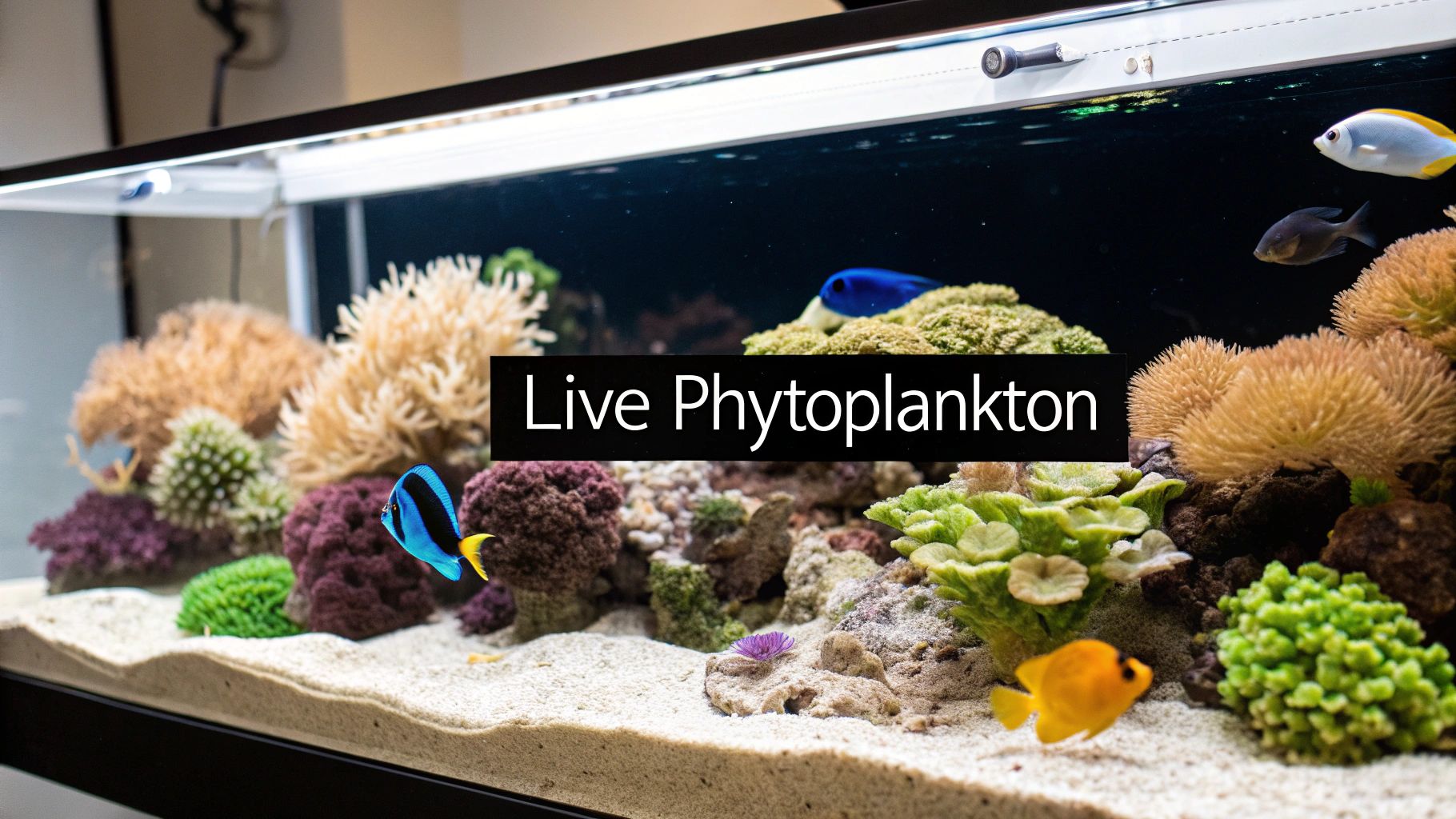
Many of us in the hobby get laser-focused on high-tech lighting and perfect water parameters, and rightly so. They're critical. But in doing so, it's easy to miss the most fundamental piece of the puzzle that exists in the wild. Live phytoplankton isn't just another supplement you pour in; it's the living, breathing base of the entire aquatic food chain.
Think of these microscopic, single-celled algae as tiny solar panels floating in your tank. Through photosynthesis, they take light and simple inorganic nutrients—yes, the same nitrates and phosphates we're always battling—and convert them into a powerhouse of essential fatty acids, vitamins, and proteins. It's nature’s way of turning waste into a perfectly nutritious meal.
Why Live Phytoplankton Is a True Game Changer
So, what makes the "live" part so important? Why not just use a dead, preserved alternative? The key difference is that a live culture is an active participant in your tank's ecosystem, not just a passive food source.
Until they’re eaten, these living cells are still working for you. They continue to swim in the water column, absorbing and processing those excess nitrates and phosphates, which helps keep your water clean.
Here’s a breakdown of how this living nutrition supercharges your tank:
- Direct Food for Corals: Many corals, especially softies and even some SPS, are filter feeders. They literally reach out with their polyps and grab these tiny particles from the water, using them as a direct source of energy for growth and enhanced coloration.
- The Ultimate Copepod Fuel: Live phytoplankton is the number one food source for crucial microfauna like copepods and rotifers. When you feed your phytoplankton, you're really feeding your pod population. This creates a thriving, self-generating food source for picky eaters like mandarin gobies, certain wrasses, and other small predators.
- Natural Nutrient Control: As phytoplankton consumes nitrates and phosphates to live and reproduce, it effectively locks them up. This process serves as a natural form of nutrient export, helping you maintain pristine water quality and starve out nuisance algae.
A thriving reef tank is a balanced ecosystem, not just a collection of beautiful specimens. Introducing live phytoplankton re-establishes the natural food web that underpins the health and stability of wild coral reefs, creating a more resilient and self-sufficient environment.
The industry is catching on. The reef aquarium market, valued at USD 5.85 billion in 2024, is projected to hit USD 13.46 billion by 2033. This surge shows a clear shift towards products that support holistic ecosystem health. You can read more about the growth of the reef aquarium market and its drivers. Adding this foundational ingredient can be the key to unlocking the explosive coral growth and vibrant colors we're all aiming for.
To put it simply, adding live phytoplankton is one of the best things you can do for the long-term health and stability of your reef. Here's a quick look at the main advantages.
Key Benefits of Dosing Live Phytoplankton
| Benefit | Impact on Your Reef Tank |
|---|---|
| Feeds Corals Directly | Promotes polyp extension, accelerates growth, and deepens coloration in many soft, LPS, and SPS corals. |
| Boosts Microfauna | Creates a booming population of copepods and other zooplankton, providing a constant, nutritious food source for fish and inverts. |
| Improves Water Quality | Actively consumes nitrates and phosphates from the water column, helping to control nutrients and reduce nuisance algae. |
| Completes the Food Web | Re-establishes the natural, foundational food source that is often missing in a closed aquarium system. |
By incorporating this single, living element, you're not just feeding your corals—you're nurturing the entire ecosystem from the ground up.
How Phytoplankton Fuels Your Entire Ecosystem
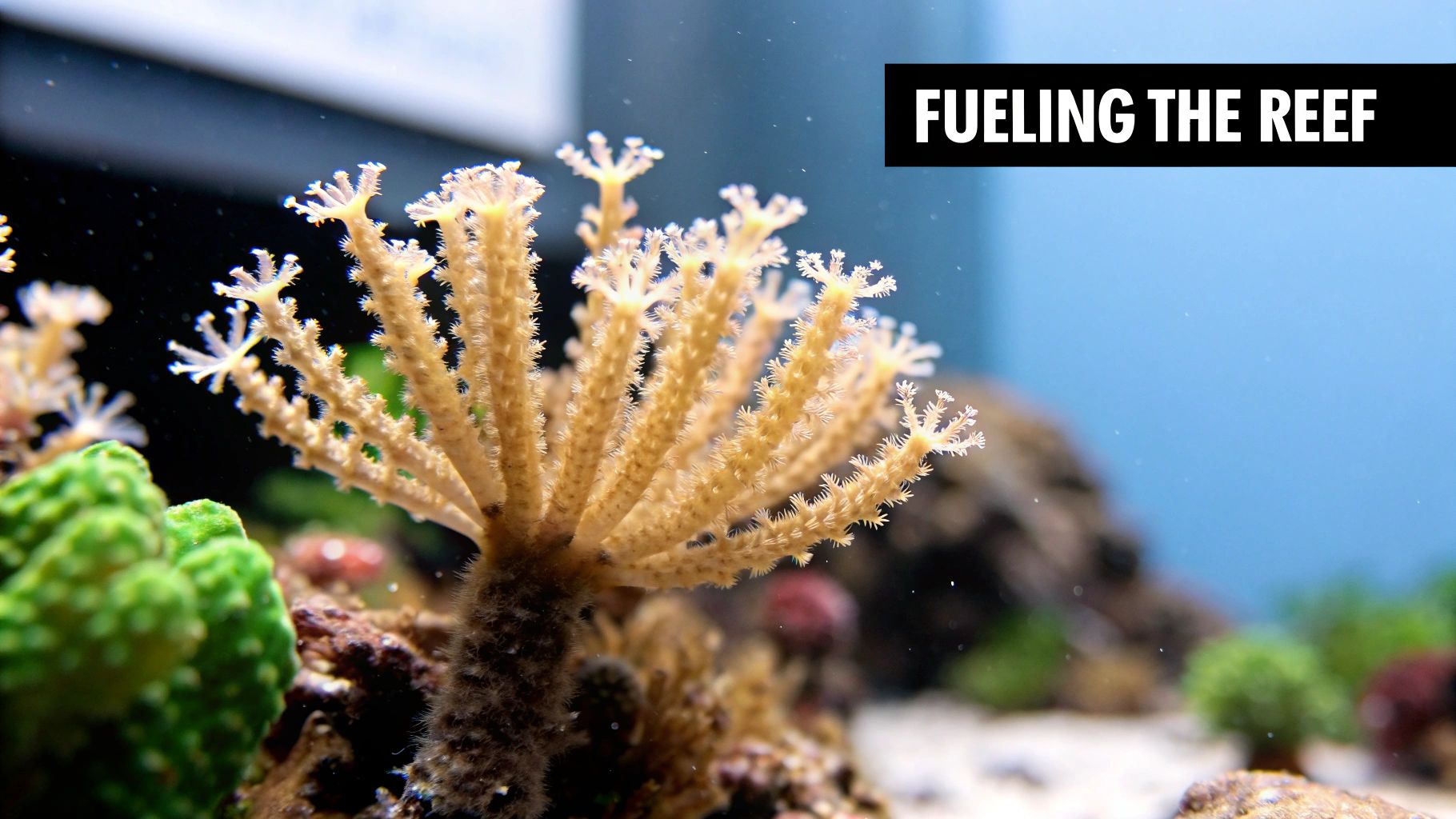
It’s easy to see phytoplankton as just a bottle of green liquid, but its role in your reef tank is so much more. Think of it as the living engine that powers your entire miniature ecosystem. Every single microscopic cell is like a tiny, self-propelled delivery truck that's also a sponge.
As these "trucks" cruise through your water, they actively pull out unwanted nutrients like nitrates and phosphates. Through photosynthesis, they convert that waste into a perfectly packed, nutrient-dense meal. Each cell becomes a biological battery, supercharged with essential fatty acids (EFAs), amino acids, vitamins, and pigments.
This is nature's ultimate recycling program in action. When your corals, clams, feather dusters, and other filter feeders snatch these living cells from the water, they're getting a complete, perfectly balanced meal. This direct feeding is what gives you that incredible polyp extension, faster growth, and those deep, vibrant colors we all chase.
Live Versus Dead: The Active Advantage
This is where the difference between live and dead phyto products becomes crystal clear. A dead phytoplankton product is like a crashed delivery truck. The cargo might still be scattered around, but the truck isn't doing any more work—it's just adding to the nutrient mess in your tank.
A live phytoplankton for reef tank culture, on the other hand, keeps working right up until the moment it gets eaten. The living cells actively swim in the water column, staying suspended and available to your corals for much longer. And all the while, they continue to absorb and process nitrates and phosphates, actively cleaning your water.
Think of it this way: dosing live phytoplankton is like adding a team of microscopic chefs and janitors to your tank. They simultaneously prepare nutritious meals for your inhabitants while cleaning up the leftover waste, creating a healthier and more stable environment for everyone.
This one-two punch—providing top-tier nutrition while actively exporting nutrients—is something no preserved or "dead" product can ever replicate.
Fueling the Microfauna Food Web
Beyond feeding your corals directly, one of the biggest wins from dosing live phytoplankton is how it supports the very foundation of your tank's food web. It is the primary food source for all sorts of zooplankton, especially the copepods and rotifers we want to cultivate.
A steady supply of quality phyto leads directly to a booming copepod population. These tiny crustaceans are, in turn, a critical source of live food for many of your fish and corals, creating a self-sustaining food chain right inside your aquarium.
- Happy Fish: Picky eaters that many of us love, like Mandarin Dragonets, Pipefish, and certain Wrasses, absolutely thrive when they can hunt a constant supply of live pods.
- Healthier Corals: Don't forget that many LPS and even some SPS corals are more than happy to snack on copepods, giving them a protein-rich meal that perfectly complements what they get from phytoplankton and photosynthesis.
- A Cleaner Tank: Copepods are also voracious little janitors, constantly grazing on detritus on your rockwork and sand bed.
By feeding the phytoplankton, you are quite literally feeding your entire ecosystem from the bottom up. For a closer look at their dietary needs, check out our guide on what copepods eat and see just how important this relationship is.
A Diverse Diet for a Diverse Reef
You wouldn’t want to eat only apples for every meal, and neither do your reef inhabitants. Just like different fruits and vegetables offer different vitamins, different strains of phytoplankton offer unique nutritional profiles.
For instance, some strains are packed with DHA (a crucial omega-3 fatty acid) known to make coral colors pop. Others might have a higher protein content that encourages faster growth. This is exactly why multi-species phytoplankton blends are often so much more effective—they provide a well-rounded diet that caters to the specific needs of a much wider range of organisms in your tank.
The industry is catching on, too. The global live phytoplankton market hit USD 358 million in 2024 and is projected to climb to USD 612 million, which just goes to show how vital it’s become in both large-scale aquaculture and home reef keeping. You can learn more about this expanding market and its implications.
Choosing the Right Phytoplankton for Your Corals
Deciding to feed your reef live phytoplankton is a great first step. But the real magic happens when you figure out which specific kind of phytoplankton will get you the results you’re after. Not all these microscopic algae are the same—far from it. Think of them as different superfoods, each offering a unique nutritional punch.
It’s a bit like stocking your own kitchen. You don't just buy a bag labeled "vegetables"; you pick out specific ones for their distinct flavors, textures, and health benefits. In the same way, selecting the right live phytoplankton for reef tank inhabitants is all about matching the strain to the dietary needs of your corals, copepods, and other tiny critters.
This isn't just about dumping in generic green water; it's about precision nutrition. Whether your goal is to supercharge your copepod population for a hungry mandarin goby or to make the colors on your SPS corals pop, there's a phytoplankton strain or blend that’s perfect for the job.
Decoding the Most Popular Phytoplankton Strains
To make a smart choice, it helps to know the main players. Each strain has a different cell size, nutritional profile, and specialty. Let's break down three of the most common and effective types you'll find.
Nannochloropsis Oculata
Often just called "Nanno," this is the undisputed workhorse of the phytoplankton world. It's a tiny, green alga that doesn't swim on its own, and it’s absolutely loaded with Eicosapentaenoic acid (EPA), a crucial omega-3 fatty acid.
Its incredibly small cell size—around 2-4 microns—makes it the perfect meal for the tiniest organisms in your tank. Nanno is the go-to for enriching rotifers and copepods, fueling their growth and reproduction. A healthy pod population means a healthy food source for the rest of your reef.
Isochrysis Galbana
If Nanno is the workhorse, think of Isochrysis as the color-enhancer. This golden-brown alga is famous for its high levels of Docosahexaenoic acid (DHA), another powerhouse omega-3 that is directly linked to promoting vibrant pigmentation in corals.
It’s a bit larger than Nanno, around 4-6 microns, which makes it a fantastic direct food source for many corals and filter-feeding invertebrates. If you're hoping to coax out deeper reds, purples, and blues from your corals, a blend rich in Isochrysis is a must-have.
Tetraselmis Suecica
"Tetra" is the giant of this group, with a much larger cell size clocking in at around 10-14 microns. This green, mobile alga is packed with amino acids and carbs, making it a seriously substantial meal for bigger filter feeders.
Clams, gorgonians, feather dusters, and even the larvae of some shrimp and fish can chow down on Tetraselmis. Its size and hearty nutritional profile make it a critical component of any well-rounded blend designed to feed a diverse reef community.
The best strategy for most reef tanks isn't to rely on a single strain. A top-notch blend combines multiple species to create a "nutritional buffet," offering different cell sizes and nutrient profiles to satisfy every inhabitant, from the smallest copepod babies to your largest clam.
For a deeper look at building the perfect feeding plan, check out our guide to the best phytoplankton for reef tank setups to help customize your strategy.
Phytoplankton Strain Comparison for Reef Aquariums
Picking the right strain or blend can feel a little overwhelming at first, but this table breaks it all down. You can use it to match a phytoplankton's strengths directly to what your reef tank needs most.
| Strain Name | Average Cell Size | Key Nutritional Benefit | Primary Use Case |
|---|---|---|---|
| Nannochloropsis | 2-4 µm | High in EPA, boosts zooplankton | Excellent for culturing copepods and rotifers, nutrient control |
| Isochrysis | 4-6 µm | Rich in DHA, enhances pigmentation | Ideal for direct coral feeding, improving coloration in SPS/LPS |
| Tetraselmis | 10-14 µm | High protein & carbohydrates | Feeds larger organisms like clams, gorgonians, and sea squirts |
By understanding what makes each of these strains special, you can select a live phytoplankton product with confidence. A quality blend will use the unique benefits of each type, delivering balanced nutrition that fuels explosive growth, brilliant coloration, and the overall health of your entire reef ecosystem.
Getting Your Phytoplankton Dosing and Feeding Right
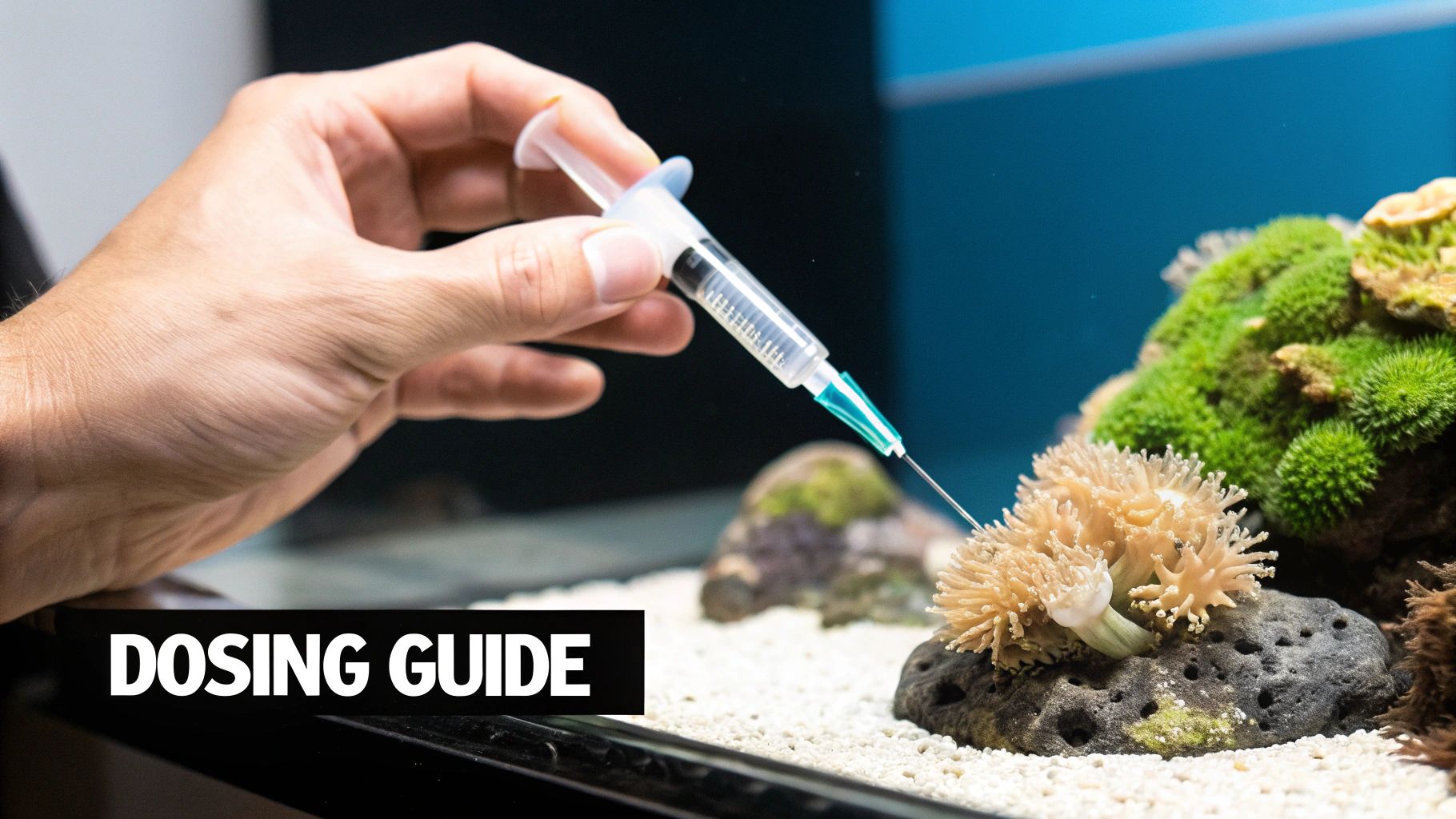
Alright, this is where the magic really happens. Knowing what live phytoplankton for reef tank ecosystems can do is one thing, but getting it into your system effectively is another. It's actually pretty simple, but a few pro tips can make a world of difference. How, when, and how much you dose will determine whether you're just adding a supplement or truly building the foundation of your reef's food web.
The goal is simple: get the phytoplankton to your tank's inhabitants while it's still fresh and ready to be eaten. Whether you're trying to feed the entire tank or just give one specific coral a boost, the right technique turns every drop into powerful nutrition.
Broadcast vs. Target Feeding: Two Tools for the Job
You'll hear reefers talk about two main ways to feed phyto: broadcast feeding and target feeding. They both have their place, and frankly, most of us use a mix of the two.
-
Broadcast Feeding: This is the easiest and most common method. You just pour the phytoplankton into a high-flow area of your tank—think right in front of a powerhead or the return nozzle. The current does the work, spreading it everywhere for all your filter feeders, from copepods scurrying on the rocks to your corals, clams, and feather dusters.
-
Target Feeding: This is a more precise approach. You use a turkey baster or a pipette to gently squirt a concentrated cloud of phytoplankton directly onto a specific coral. It's fantastic for non-photosynthetic corals like Gorgonians that rely entirely on capturing food, or for giving a struggling coral a much-needed direct meal.
For daily use, broadcast feeding is your go-to. It feeds the whole system. Think of target feeding as a specialized tool you pull out when a particular inhabitant needs some extra love.
Finding That Dosing Sweet Spot
Here’s a secret that experienced hobbyists live by: consistency trumps quantity. A small dose every single day is way better than a huge dose once a week. You want to start small, watch your tank, and let it tell you what it needs.
A fantastic starting point is about 1-2 ml of phytoplankton per 10 gallons of water, daily. So, for a 50-gallon tank, you’d start with 5-10 ml each day.
This is where you have to "listen to your tank." Are your corals showing better polyp extension? Are the colors getting deeper? Those are great signs! On the flip side, if the water stays cloudy green for more than an hour after dosing, or you see your nitrates and phosphates start to creep up, you're overdoing it. Just back off the dose a bit until you find that perfect balance.
The idea is for the phyto to be eaten quickly, not to dye your water green. As your tank matures and the population of corals and microfauna grows, you can gradually increase the dose to keep up with their appetite.
Timing and Tips for Maximum Impact
To make sure your corals and critters get the full benefit, timing your dose is key.
-
Dose After Lights Out: Corals are creatures of habit. Many extend their feeding tentacles at night, so dosing about 30-60 minutes after the lights go out means you’re delivering food right when they’re ready to eat.
-
Pause Your Skimmer & UV: Your protein skimmer and UV sterilizer are great at removing waste, but they can’t tell the difference between waste and live phytoplankton. Turn them off for about 60-90 minutes after dosing. This gives your filter feeders a chance to grab the phyto before it gets filtered out.
-
Feed the Pods First: If you’re also trying to boost your copepod population, dose the phytoplankton before adding the pods. This "gut-loads" the copepods, filling them with nutritious phyto, which in turn makes them a superfood for your fish and corals.
Following these simple steps helps you build a robust, self-sustaining food web from the ground up. It’s no surprise that as hobbyists gain a deeper understanding of these natural processes, the global aquarium market—valued around USD 3.79 billion and projected to reach USD 6.21 billion by 2032—continues to grow. People want to create thriving ecosystems, not just glass boxes. To learn more, check out these insights on the rising demand for quality aquarium products and market trends. A consistent dosing routine is a cornerstone of that success, leading to a more vibrant and stable reef.
Culturing Your Own Phytoplankton at Home
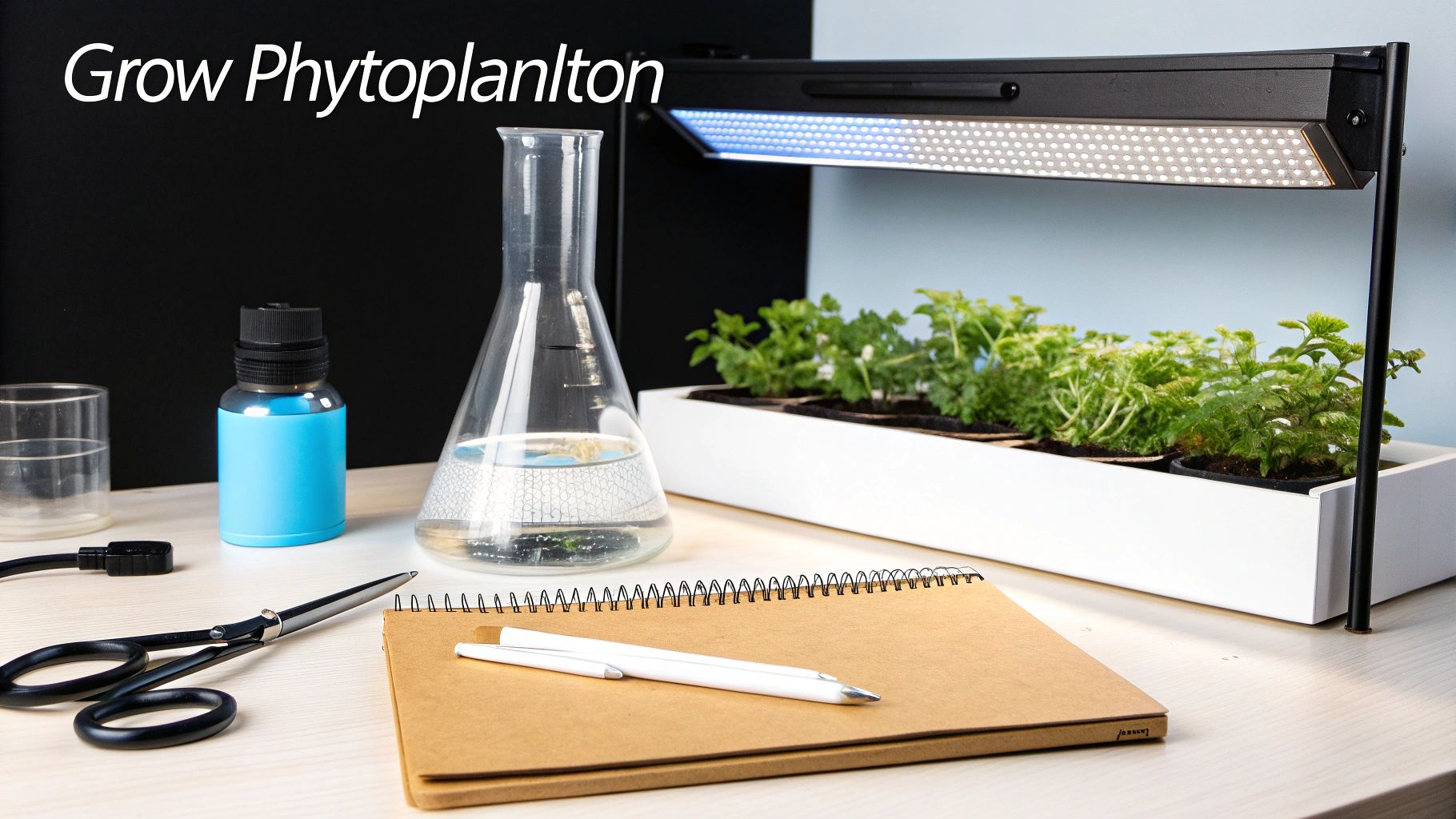
For the truly dedicated reefer, buying bottles of phytoplankton is a great start, but growing your own is a total game-changer. Culturing live phytoplankton for reef tank use is a bit like keeping a sourdough starter for your aquarium. Once you get the hang of it, it's a simple, repeatable process that gives you an endless supply of the freshest, most nutrient-packed food you can get.
Not only is it incredibly cost-effective in the long run, but it also puts you in complete control of the quality and density of what you're putting into your tank. By becoming your own supplier, you'll always have a potent, live food source on hand, ready to fuel your corals and keep your pod population booming. The process might sound a little scientific at first, but it really just boils down to a few key pieces of equipment and a straightforward weekly routine.
Assembling Your Culture Station
Getting started is easier than you think. You don't need a sterile laboratory; a clean corner of a room, a spare closet, or even a dedicated shelf in your fish room will work perfectly.
Here’s what you’ll need to pull together:
- Culture Vessel: The classic choice is a simple 2-liter soda bottle. It's cheap, effective, and the tapered shape helps keep the phytoplankton cells from settling. Of course, you can also buy specialized culture vessels if you want a more pro-looking setup.
- Light Source: A basic LED or fluorescent light is all it takes. The real key is providing consistent light for about 16-18 hours a day, which is easily managed with an inexpensive outlet timer.
- Air Pump and Tubing: A small, low-powered aquarium air pump is used to gently bubble air through the culture. This constant, gentle agitation is crucial for keeping the cells suspended in the water and providing proper gas exchange.
- Fertilizer: You'll need a specialized phytoplankton fertilizer, with Guillard's F/2 formula being the go-to standard. This cocktail provides the specific nutrients these microscopic algae need to multiply like crazy.
- Starter Culture: This is the most important part. Always, always begin with a pure, high-quality starter culture from a reputable source. Starting clean is the single biggest factor in your success.
Your Weekly Culturing Schedule
Once you've got your gear, the weekly rhythm is pretty simple. Just think of it as a cycle: grow, harvest, and restart.
- Start Clean: This is non-negotiable. Sterilize your culture vessel, airline tubing, and anything else that will touch the water. A quick soak in a bleach-water solution, followed by a very thorough rinse with dechlorinated water, does the trick.
- Mix the Water: Fill your vessel with freshly mixed saltwater, aiming for a specific gravity of 1.019-1.022. This slightly lower salinity is the sweet spot for phytoplankton growth.
- Inoculate and Fertilize: Add your starter culture and the correct dose of fertilizer to the saltwater. The water should take on a light green or golden hue.
- Aerate and Illuminate: Get the vessel under your light and start the air pump. You're looking for a gentle, steady stream of bubbles, not a violent boil.
- Grow and Harvest: Over the next 5-10 days, watch as the culture deepens to a rich, dark green. When it looks like pea soup, it’s ready. You can harvest about half to feed your tank, using the other half to kick off your very next batch.
A healthy culture should have a fresh, earthy smell—like a day at the ocean. If you ever catch a whiff of a foul, rotten odor, that's a tell-tale sign of a culture crash. Don't risk it. Dump the whole batch, sterilize everything from scratch, and start over with a fresh starter.
For a more detailed walkthrough, you can find in-depth instructions on how to culture phytoplankton for your reef tank that break down every single step. Following these sterile techniques is the best way to avoid contamination and ensure you get dense, healthy cultures time after time.
Finding High-Quality Live Phytoplankton You Can Trust
When you decide to dose live phytoplankton, you're making a real investment in the health of your entire reef ecosystem. But here's the thing: not all "live" phyto is created equal. The market is flooded with everything from super-potent, lab-grade cultures to bottles that are little more than green-tinted water filled with dead cells and leftover fertilizer. Learning to spot the good stuff is the single most important step to making sure you're adding real nutrition, not just fueling an algae bloom.
Think of it like buying fresh produce at a farmer's market. You instinctively reach for the vibrant, crisp head of lettuce, not the pale, wilted one. The same exact principle applies to phytoplankton. A fresh, dense culture is packed with life and nutritional value, while a low-quality one is useless at best and can even foul your water.
What to Look for in a Live Culture
Your first clue is always visual. A good, potent bottle of live phytoplankton should be so dense that it's opaque. We're talking a deep, rich green (or golden brown, depending on the species blend). If you can easily see through it, that’s a major red flag—it means the cell count is low or the culture is old and dying off. It should look more like pea soup than weak green tea.
Next, get a little obsessive about the details on the bottle. A reputable supplier will be transparent about their process.
- Freshness is Everything: Live phytoplankton is perishable, period. Look for a clearly marked "packaged on" or "harvest date." A recent date means the cells are healthy, metabolically active, and ready to be consumed—not breaking down and releasing ammonia and phosphates into the bottle.
- Refrigerated Shipping: This is absolutely non-negotiable. Phyto has to be kept cool to slow down its metabolism and keep it viable during its journey to you. Any supplier shipping it warm without a cold pack isn't serious about delivering a truly live product.
- The Smell Test: A healthy culture should have a fresh, briny, or slightly earthy smell. If you pop the cap and get hit with a foul, rotten odor, the culture has crashed. Do not, under any circumstances, pour that into your tank.
A high-quality live phytoplankton culture is a living, breathing product. Its value comes from the viability of its cells. Prioritizing freshness, proper shipping, and high density ensures you’re delivering powerful nutrition, not just expensive waste, to your reef.
The Power of Blends from Reputable Brands
Just like you wouldn't eat only one type of vegetable for the rest of your life, your reef tank benefits from variety. A blend of multiple phytoplankton species is vastly superior to a single-strain culture. Why? Because different species offer different nutritional profiles.
One strain might be rich in DHA fatty acids, while another provides unique vitamins or has a smaller cell size perfect for delicate filter feeders. A well-formulated blend covers all the bases, feeding a much wider range of corals, copepods, and other microfauna in your tank.
This is exactly why buying from a specialized supplier who cultures and blends their own products is the way to go. These are the experts who understand the nuances of a reef aquarium's dietary needs. They control the entire process, from maintaining the pure starter cultures to making sure the final blend arrives at your door teeming with life. When you choose a trusted source, you're not just buying a product; you're buying peace of mind that you're providing the foundational nutrition your ecosystem needs to truly thrive.
Common Questions About Live Phytoplankton
Diving into the world of live phytoplankton always brings up a few questions. It’s a game-changer for reef health, and getting the basics down will help you dose with confidence. Let's walk through some of the most common things reefers ask when they first start out.
One of the biggest worries is, "Will this turn my water into green soup?" In a healthy, balanced tank, this is almost never an issue. Your corals, copepods, and other filter feeders are hungry, and they consume the phytoplankton almost as fast as you can add it.
If you do see a green haze that sticks around for more than an hour after dosing, that's just a signal you're adding more than the tank can handle in one sitting. It's an easy fix—simply dial back your daily dose until you find that sweet spot where the water clears up quickly.
Is Phytoplankton a Complete Coral Food?
It's best to think of live phytoplankton as the "vegetable course" for your entire reef ecosystem. It’s packed with a wide range of vitamins, essential fatty acids, and pigments that form the nutritional bedrock for everything in the tank. It’s the ideal food for soft corals, many SPS, clams, feather dusters, and, most importantly, your microfauna population.
That said, it isn't a total replacement for every other food. Your bigger, fleshy LPS corals like a Scolymia or Acanthastrea will still want their "steak dinner" of meatier, particle-based foods. Phytoplankton is the foundation of the food pyramid, not the whole thing.
How to Properly Store Live Phytoplankton
Keeping your phytoplankton culture potent and alive is simple, but you have to do it right. Just stick to these three golden rules:
- Keep It Chilled: Refrigeration slows the phytoplankton's metabolism way down, locking in its nutritional value.
- Never Freeze It: Freezing bursts the cells, killing the culture on the spot.
- Swirl It Daily: A quick, gentle swirl each day keeps the cells from clumping up at the bottom of the bottle.
A good, healthy culture will hold its deep color and have a fresh, ocean-like smell for weeks. If it ever starts to smell foul or rotten, it has crashed and it's time to toss it.
Is a phytoplankton blend really better than a single strain? Without a doubt. Think about our own diets—we're healthier when we eat a variety of foods. The same goes for your reef. A multi-species blend offers a mix of cell sizes and nutritional profiles, creating a "buffet" that can feed a much wider range of tank inhabitants. This ensures everyone from the tiniest copepod nauplii to big filter feeders like clams gets exactly what it needs to thrive.
Ready to add the foundational nutrition your reef has been craving? PodDrop Live Aquarium Nutrition provides premium, multi-species phytoplankton blends, cultured for peak density and freshness. See what a difference truly live nutrition makes. Explore our live phytoplankton and copepod products today.