

Tigriopus Sirindhornae a Complete Guide to Culturing Copepods
Think of a creature that's part tireless janitor, part 24/7 all-you-can-eat buffet for your fish. That’s Tigriopus sirindhornae in a nutshell. This tiny powerhouse of a copepod, often called the 'Thai Pod,' is quickly becoming a non-negotiable for serious reef keepers looking to build a truly self-sustaining ecosystem.
Your Reef Tank's Ultimate Micro-Janitor
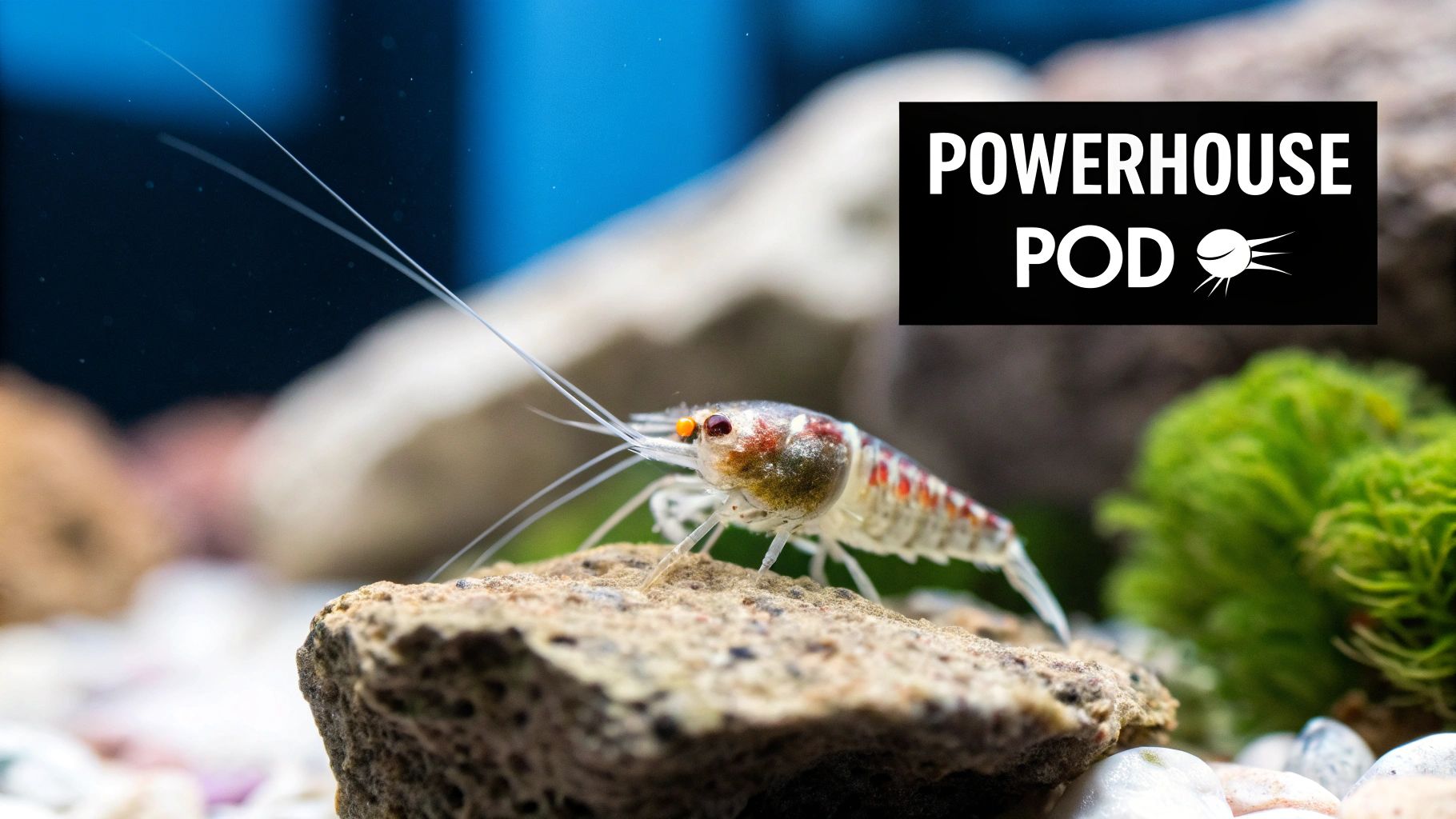
If you've been in the reefing hobby for any length of time, you know stability is the name of the game. Nutrient spikes, waste buildup, and a skimpy natural food web can spell disaster for delicate corals and fish. Adding a population of live copepods is like laying the foundation for a healthy reef, tackling all these problems at once by serving as both a clean-up crew and a constant food source.
Tigriopus sirindhornae is a real standout here because of its sheer toughness. This isn't just another nearly-invisible speck floating in the water; it's an active, robust critter that’s perfectly adapted for the sometimes-chaotic conditions of a home aquarium. Its unique traits make it one of the best choices for establishing a thriving microfauna population right from the start.
Born from Extremes
The secret to this pod’s success is written in its DNA, forged by its original environment. Discovered back in 2007 in the harsh, rocky tide pools along Thailand's Andaman Sea coast, Tigriopus sirindhornae evolved to survive wild swings in its surroundings.
Named to honor Princess Sirindhorn for her dedication to Thai science, this little crustacean can handle salinity ranging from 20-50 ppt. That's a much wider tolerance than many other pods you’ll find, and this natural hardiness is a huge advantage in your tank, making them less likely to crash from minor parameter shifts.
This incredible resilience makes them a fantastic choice for tanks of any age. While more fragile species can struggle to get a foothold, T. sirindhornae hits the ground running.
For the hobbyist, this means less time worrying about your pod culture dying off and a much quicker path to a stable, breeding population. It’s like the difference between planting a delicate orchid and a hardy wildflower—one needs constant coddling, while the other just finds a way to thrive.
More Than Just Fish Food
While they're famous for being the one thing that can tempt picky eaters like Mandarins and pipefish, the benefits of Tigriopus sirindhornae go way beyond being a tasty snack. They are absolute machines when it comes to eating detritus, consuming leftover food, fish waste, and even picking at nuisance algae.
What's really cool is their behavior. They don't just stick to one spot; you'll find them crawling all over the rockwork and swimming in the water column, ensuring every nook and cranny gets cleaned.
In this guide, we'll cover everything you need to know to put this amazing species to work, helping you turn your aquarium into a healthier, more balanced, and more vibrant ecosystem.
Why Tigriopus Sirindhornae is the Go-To Copepod
When it comes to copepods in the reef aquarium world, not all are created equal. You'll find a few different species on the market, but time and again, Tigriopus sirindhornae proves to be the top contender. Think of it this way: while some pods are specialists, T. sirindhornae is the reliable, all-purpose multi-tool every reefer needs in their arsenal.
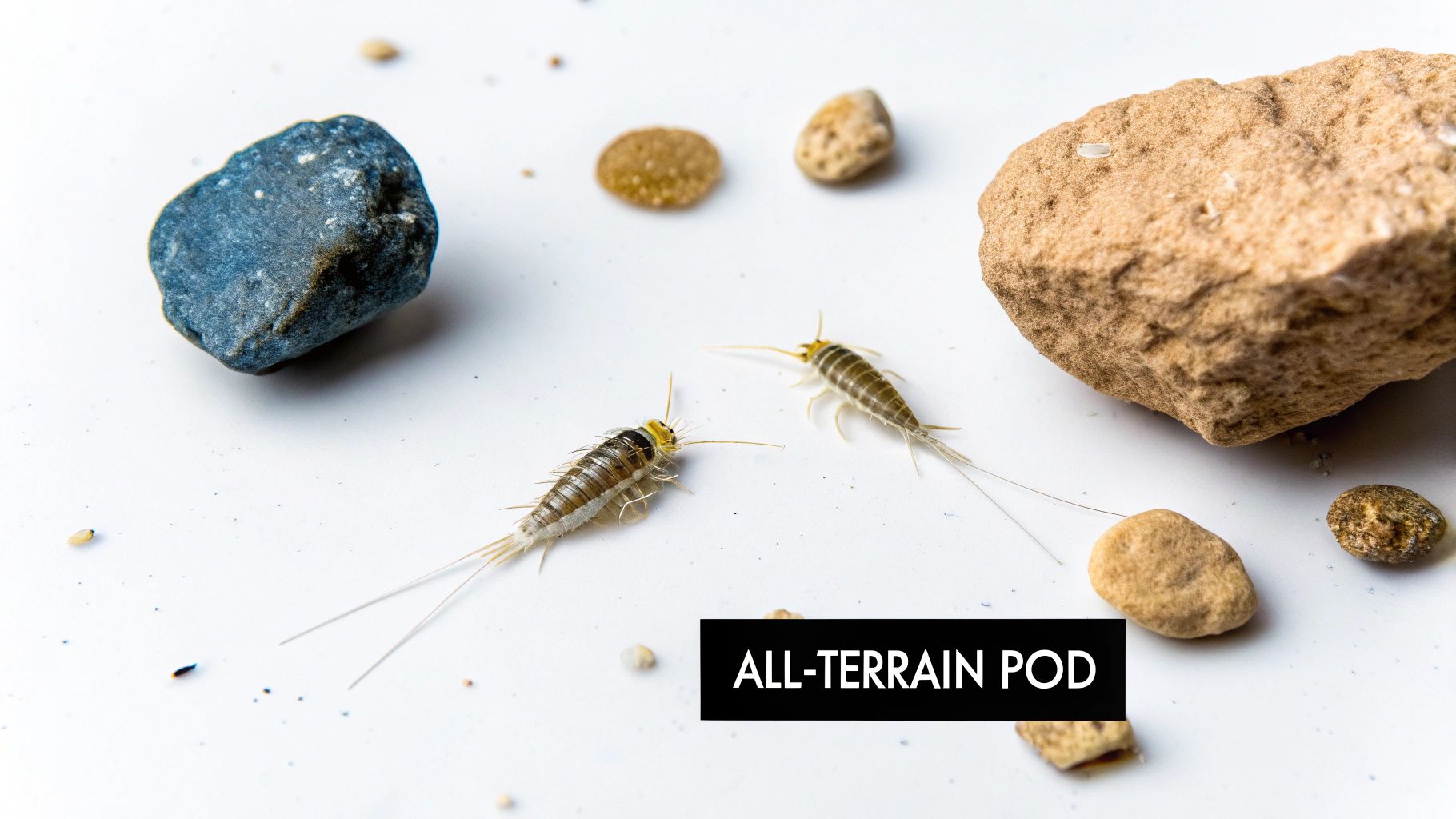
This particular species has a knack for thriving where others might struggle, making it a fantastic choice for building a lasting, self-sustaining population in your tank. Let's break down exactly what sets it apart from the other popular options.
Unmatched Environmental Tolerance
The single biggest advantage of Tigriopus sirindhornae is its sheer toughness. These little guys originally come from Thai tide pools, which means they evolved to handle some pretty wild swings in their environment. That natural resilience translates perfectly to home aquariums, where small shifts in temperature or salinity are a reality.
While its cousin, Tigriopus californicus, is also known for being hardy, T. sirindhornae often tolerates a broader range of conditions without its reproductive rate taking a nosedive. For you, this means a much lower risk of a population crash and a far more stable food source for your inhabitants.
Ultimately, it gives you peace of mind. You can trust that your pod population will keep chugging along even if your tank parameters drift a little.
Think of it this way: Tisbe biminiensis is like a precision instrument—perfect under ideal conditions, but very sensitive. Tigriopus sirindhornae is the rugged field watch—reliable, durable, and built to perform no matter what you throw at it.
Superior Population Growth
A copepod's real value in a reef tank comes down to how fast it can reproduce. This is another area where Tigriopus sirindhornae truly shines. They have a lightning-fast lifecycle and are incredibly prolific. A single female can lay multiple batches of eggs in her lifetime, which can lead to an explosive population boom once they get established.
This rapid turnover is critical for a few key reasons:
- Keeps Demanding Fish Fed: It guarantees a steady stream of nauplii (the larvae) and adults for notoriously picky eaters like Mandarin Dragonets and pipefish.
- Establishes Faster: A tank seeded with T. sirindhornae will have a thriving, visible pod population much more quickly than one with slower-breeding species.
- Bounces Back Quickly: The population can recover efficiently even with heavy predation from fish, ensuring it continues to play its role in your tank's ecosystem.
Because they breed so readily, they are the perfect choice for both seeding your main display tank and for setting up a separate culture to harvest from.
Ideal Size and Behavior
Tigriopus sirindhornae hits the sweet spot when it comes to size. The adults are big enough (around 1mm) to catch the eye of larger fish, while their nauplii are the perfect bite-sized meal for coral polyps and small fish fry. This means they feed your entire reef, from top to bottom.
Their behavior is another key differentiator. Unlike Tisbe pods, which tend to be shy and hide deep within the rockwork, T. sirindhornae is much more adventurous. You’ll often spot them crawling across rocks and glass or zipping through the water column with their characteristic jerky swimming motion.
This "out-and-about" behavior makes them an easy target for your fish, ensuring they actually get eaten. It also means they are actively cleaning detritus and biofilm from more surfaces around the tank, making them a more effective part of your clean-up crew.
Copepod Species Comparison for Reef Aquariums
Choosing the right copepod can feel overwhelming, but comparing their key traits side-by-side makes the decision much clearer. This table breaks down the differences between T. sirindhornae and three other popular species you'll encounter.
| Feature | Tigriopus sirindhornae | Tigriopus californicus | Tisbe biminiensis | Apocyclops panamensis |
|---|---|---|---|---|
| Resilience | Very High (wide temp & salinity range) | High (tolerates fluctuations) | Moderate (prefers stable conditions) | High (euryhaline) |
| Size (Adult) | Medium-Large (~1mm) | Large (~1.2mm) | Small (~0.7mm) | Small-Medium (~0.8mm) |
| Behavior | Benthic & Pelagic (crawls & swims) | Mostly Pelagic (swims) | Mostly Benthic (hides in substrate) | Mostly Pelagic (swims) |
| Reproduction | Very Fast | Fast | Moderate | Fast |
| Best For | All-around feeding & seeding | Feeding larger, active fish | Seeding rockwork, feeding corals | Feeding small fish & corals |
As you can see, while each species has its niche, Tigriopus sirindhornae offers the most balanced and versatile profile for the average reef tank. Its combination of hardiness, breeding speed, and active behavior makes it an unparalleled choice for establishing a robust, multi-purpose microfauna population.
Building Your Home Copepod Farm
You might be surprised at just how easy it is to create a never-ending supply of live food for your reef tank. Culturing Tigriopus sirindhornae doesn't require a high-tech lab or a bunch of expensive gear. In fact, some of the most productive home setups are the simplest. The goal is to build a reliable "pod factory" by getting a few fundamentals right from the start.
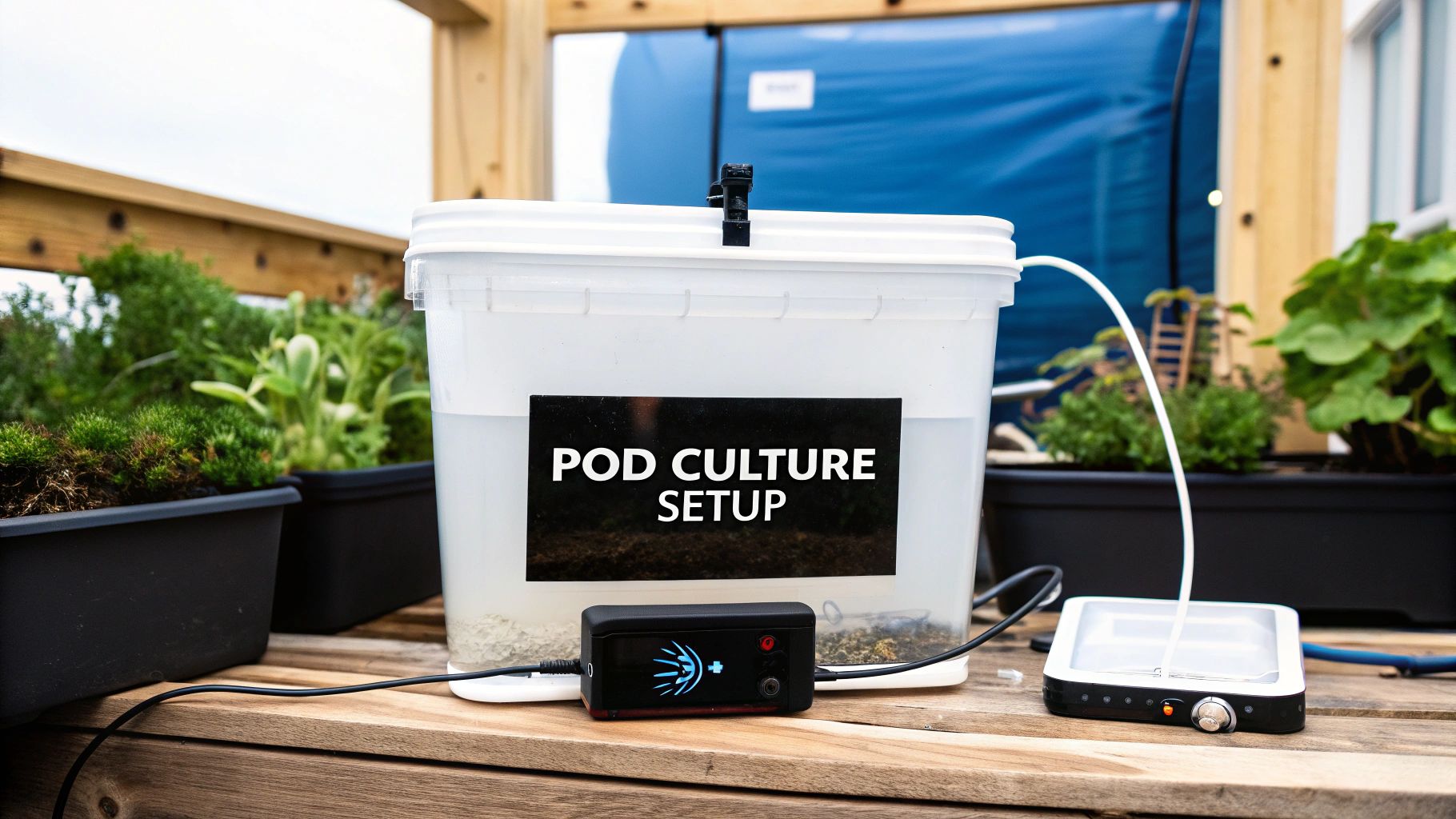
We're aiming for a stable, low-maintenance environment where your copepods reproduce faster than you can harvest them. Let's walk through how to assemble this simple system, from the bucket to the water, to set you up for success right out of the gate.
The Essential Gear List
Forget about complex reactors and fancy glassware. The beauty of a tough-as-nails species like Tigriopus sirindhornae is that you only need a few basic items. Keeping it simple is the key—it means fewer things can go wrong and makes maintenance a total breeze.
Here’s your checklist to get started:
- Culture Vessel: A clean, food-grade 5-gallon bucket is perfect. Clear containers are great for keeping an eye on things, but any opaque bucket will work just fine.
- Air Pump & Tubing: A small, quiet aquarium air pump is all you need. Don't use an airstone—the tiny bubbles can be surprisingly rough on the copepods. Just let the rigid airline tubing bubble gently from the bottom.
- Small Heater: Consistency is what drives reproduction. A simple, adjustable 50-watt aquarium heater will keep the temperature right where it needs to be.
- Light Source: A basic LED light or even a CFL bulb on a timer provides the consistent light schedule needed to grow phytoplankton, the pods' food.
That's it. This simple setup covers the three pillars of a booming culture: a stable home, gentle circulation, and the foundation for a reliable food source.
Mixing the Perfect Water
With your gear ready, the next step is creating the ideal saltwater environment. This is where you set the stage for explosive population growth. It’s a quick process you only have to do once.
First, mix up a batch of saltwater to a specific gravity between 1.019 and 1.022. This slightly lower salinity is the sweet spot for Tigriopus sirindhornae, encouraging them to reproduce faster while also helping to keep unwanted pests out. Always start with RODI water and a quality reef salt.
Next, pop your heater into the bucket and dial it in to maintain a stable temperature between 75-82°F (24-28°C). This warmth mimics the conditions of their natural habitat and dramatically accelerates their lifecycle. More warmth means more pods, faster.
The single most important factor for a successful, long-term culture is starting with a clean, high-quality starter population. Contaminants from other sources can outcompete your Tigriopus sirindhornae or cause a total culture crash down the line.
Finally, set up your light source on a timer for a 12-16 hour daily cycle. The light isn't for the copepods themselves; it's to grow their food—phytoplankton. To keep your pods fat, happy, and packed with nutrients, you'll need a steady supply of this microalgae. For a deeper dive into this, check out our guide on how to culture phytoplankton for your reef tank.
Once your water is mixed, heated, and lit, you’re ready to add your starter culture and officially open for business.
Keeping Your Culture Booming: Feeding and Maintenance
Alright, you've got your culture station set up and the bubbles are rolling. Now comes the fun part: turning that starter bottle into an all-you-can-eat buffet for your reef tank. Growing Tigriopus sirindhornae is less like a science experiment and more like gardening. Give them the right food and a clean home, and they'll handle the rest.
The whole game is about creating a positive feedback loop. Well-fed copepods are breeding copepods. The more they breed, the more food they can eat, and the faster the population explodes. Your job is to find that sweet spot: feeding enough to fuel a population boom without crashing the whole system.
It's a simple rhythm, and once you get it down, you'll have a dense, nutritious harvest ready to go whenever your fish get hungry.
Fueling the Engine: It's All About the Phyto
Let’s be clear: the single most important factor for getting a crazy-high yield is their food. You can find powdered feeds out there, but nothing—and I mean nothing—gets Tigriopus sirindhornae breeding like live phytoplankton. This is their natural superfood, loaded with the essential fatty acids that gut-load the pods and pass that top-tier nutrition on to your fish and corals.
The best way to do this is to feed them a little bit every day. The water itself tells you when it's time. You're aiming for a constant, light green tint, like weak green tea. If the water is totally clear, your pods are starving and reproduction is grinding to a halt. If it looks like pea soup, you've gone too far and are heading for a culture crash.
The Golden Rule of Feeding: Each day, add just enough phytoplankton to bring the water back to that light green color. This one simple visual cue is the secret to preventing overfeeding—the #1 killer of copepod cultures—while making sure your pods have a non-stop feast.
Stick to this, and your simple bucket setup will quickly become a reliable copepod factory.
A Clean Home is a Happy Home: Simple Maintenance
Just like any tank, your copepod culture creates waste. Ammonia builds up, and if you let it go, it will poison the water and shut down all that breeding you've been working for. Luckily, a quick weekly maintenance routine is all it takes to keep things humming along.
The main job is a small water change, but you obviously don't want to toss your precious copepods down the drain. Here’s a super simple way to do it:
- Kill the Bubbles: Turn off your air pump. This lets everything settle, with the pods and gunk sinking to the bottom.
- Siphon from the Top: Grab a piece of rigid airline tubing and carefully siphon about 25-30% of the water from the surface. This removes the cleanest water, leaving most of your pods behind.
- Mix a Fresh Batch: Make some new saltwater at the same salinity as your culture (somewhere between 1.019-1.022). Temperature is key here, too—match it as closely as possible to avoid shocking the population.
- Refill and Restart: Gently pour the clean saltwater back into the bucket and turn your air pump back on.
That’s it. This quick reset pulls out a good chunk of the dissolved waste, keeping the environment healthy and stable for your Tigriopus sirindhornae.
Spotting Trouble Before It Starts
You can tell a lot about your culture by its smell and look. A healthy culture has a clean, almost earthy smell, and the water is a clear, light green. If you notice the water getting cloudy or smelling foul and rotten, you've got a problem. It's almost always a sign of overfeeding and a resulting bacterial bloom. If you catch it, act fast: do an immediate 50% water change using the method above to get things back on track.
Sourced exclusively from Thailand's Lion Pods—the original, royal-endorsed master culture—Tigriopus sirindhornae powers thriving aquariums with unmatched reproductive vigor. This copepod produces clutches averaging 35-45 eggs per sac, hatching into nauplii at rates 50% higher than Tisbe biminiensis under 12:12 light cycles and 26°C. At PodDrop, our lab-cultured bottles pack 5,000-15,000 individuals per dose, capable of driving 200-300% population booms in nano tanks within just 14 days. Watch this video to discover more insights about their incredible breeding potential.
Putting Your Copepods to Work: Harvesting and Seeding Your Tank
Alright, you've done the hard part. Your culture is teeming with life, and now it's time for the payoff—unleashing that nutritious swarm into your aquarium. This is where your efforts translate directly into happier fish, healthier corals, and a more stable, natural ecosystem.
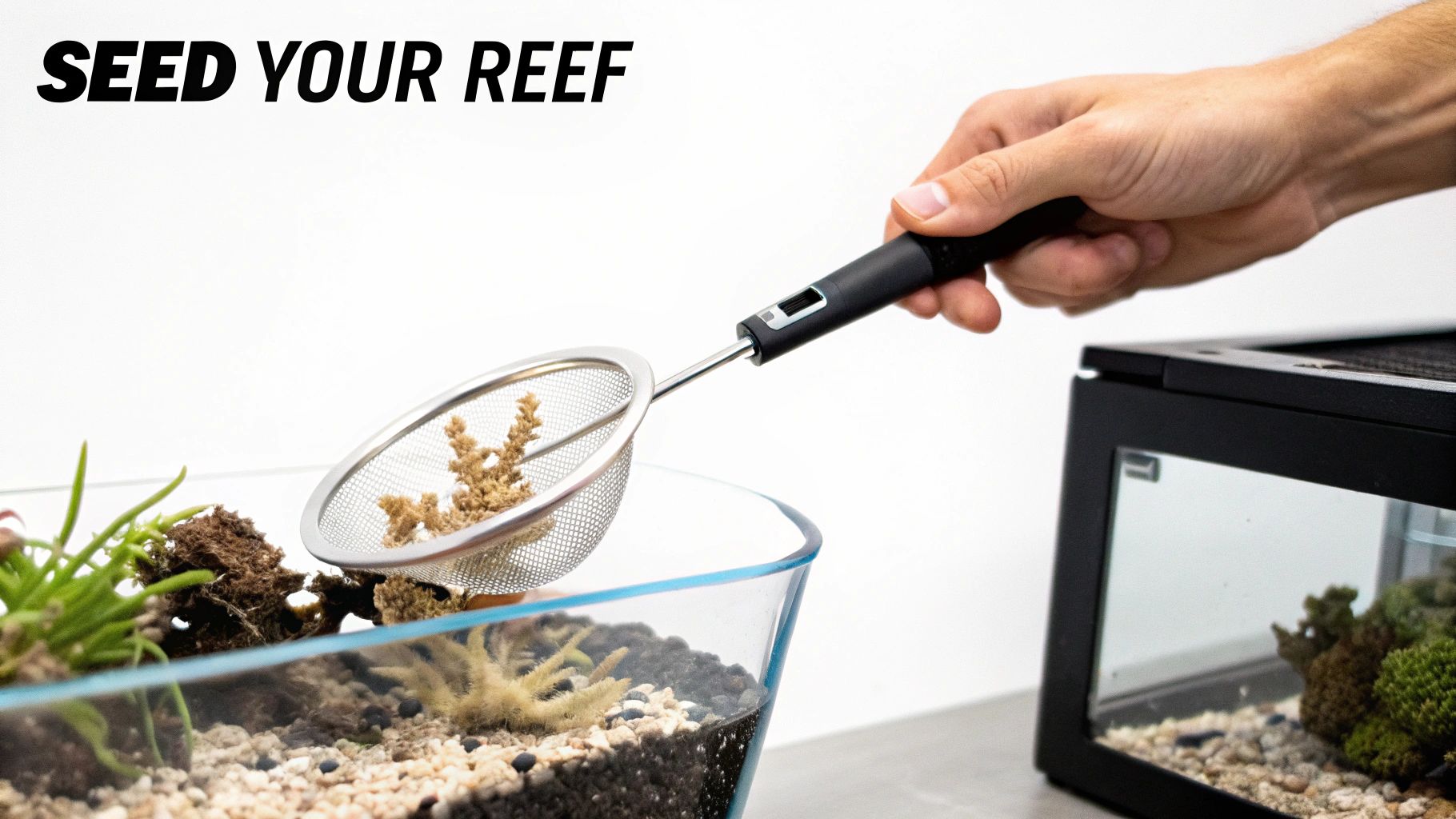
The transfer from culture to tank is simple, but a few pro tips can make a world of difference. It's all about ensuring your pods establish a foothold before they become a quick meal. Let's look at the best ways to collect and introduce them for maximum benefit.
Easy Ways to Harvest Your Pods
You don't need fancy lab equipment to move copepods from your culture into your display tank. The best tool for the job really just depends on what you're trying to accomplish.
For a quick spot-feed, maybe for a finicky mandarin or a hungry coral, nothing beats a simple turkey baster. Just suck up a bit of the culture water dense with pods and gently squirt it right where it's needed. It's direct, fast, and ensures the intended recipient gets first dibs.
If you're doing a larger "seeding" to populate the whole tank, a fine mesh sieve (a 53-micron one works perfectly) is the way to go. Pour the culture water through the sieve to catch the copepods, then you can give them a quick rinse with some fresh tank water before adding them. This prevents you from dumping nutrient-rich culture water into your display.
- Turkey Baster: Perfect for targeted, direct feeding.
- Sieve Method: Best for large-scale seeding without adding old culture water.
Pro-Tip: The goal isn't just to feed your fish for a day, but to establish a permanent, breeding population. Giving the copepods a safe start is crucial for long-term success.
How to Seed Your Reef for a Self-Sustaining Food Source
Harvesting is half the battle; the other half is introducing them correctly. Just dumping them in the front of the tank might work, but a more strategic approach will supercharge their survival rate and help them colonize your live rock and refugium.
First, kill the flow. Turn off your return pump, powerheads, and skimmer for 30 to 60 minutes. This calm period gives the pods a chance to settle into the nooks and crannies of your rockwork instead of being immediately blasted into the water column or sent down the overflow. This guide on how to add copepods to your tank has some great additional pointers on this process.
Timing is everything. Add your pods after the tank lights go out for the night. Most fish are far less active in the dark, giving your new Tigriopus sirindhornae a crucial head start to find shelter and begin exploring their new home.
By making small, regular additions every couple of weeks, you'll build up a dense, self-sustaining population that becomes the foundation of your tank's food web.
Getting Your Culture Back on Track: A Troubleshooting Guide
Even with a species as tough as Tigriopus sirindhornae, things can sometimes go sideways. One day you have a booming culture, and the next, it seems to have stalled out or, worse, completely crashed. Don't panic. The reasons are usually simple, and with a little detective work, you can get your pod factory back in business.
Think of this as your field guide for when things don't go according to plan.
Help! My Culture Crashed
A full-blown "crash" is pretty unmistakable. The water will turn cloudy and milky, and you'll notice a foul, rotten smell. This is the classic sign of a massive bacterial bloom, which happens when there’s way too much uneaten food and waste in the water.
Nine times out of ten, the culprit is overfeeding. If you add more phytoplankton or powdered food than the pods can eat, it just decays. This decay process creates a toxic ammonia spike that wipes out the copepods.
If you see the signs of a crash, you need to act fast to save any survivors.
Emergency Procedure: The first thing you need to do is a massive water change—think 50-75%. Gently siphon water from the top of the container to leave the pods settled on the bottom. Then, refill it with fresh, clean saltwater that matches the culture's temperature and salinity.
Hold off on feeding for at least a day or two after the water change. This gives the system time to stabilize and allows the surviving population to start bouncing back.
Why Is My Culture Growing So Slowly?
What if your culture isn't crashing but just isn't thriving? If you're not seeing the population boom you expected, the problem usually boils down to one of three things.
-
Not Enough Food: Take a look at the water. Is it perfectly clear? If so, your pods are probably hungry. A healthy, well-fed culture should have a consistent, light green tint from the phytoplankton. If it's clear, you're not feeding enough. Gradually increase the amount until that light green haze is stable.
-
The Temperature is Too Low: Tigriopus sirindhornae are most productive in warmer water. If the temperature dips below 75°F (24°C), their metabolism slows way down, and so does their breeding. Double-check your heater to make sure it's holding a steady, warm temperature.
-
Water Quality is Slipping: You don't need a full-on crash for poor water quality to cause problems. A slow, creeping buildup of waste can be enough to put the brakes on reproduction. This is why a regular weekly water change is so important—it keeps the water clean and the pods happy.
It's hard to overstate just how resilient Tigriopus sirindhornae is. This isn't just an observation from hobbyists; it's backed by science. In marine ecotoxicology research, these copepods have shown incredible 80-90% survival rates even after being exposed to toxic heavy metals like copper for 96 hours. This incredible genetic toughness is why PodDrop's cultures can withstand the stress of shipping and arrive with 98% viability, and it's what helps them thrive in your tank when other, more delicate pods might not.
By keeping a close eye on these three pillars—food, temperature, and cleanliness—you can easily diagnose and fix almost any issue, ensuring you have a healthy, productive copepod culture for the long haul.
Your Tigriopus Sirindhornae Questions, Answered
Even with all the details, you're bound to have a few specific questions pop up. I get them all the time. Here are some quick, straight-to-the-point answers to the most common things people ask about raising and using Tigriopus sirindhornae.
How Long Until My Tank Is Crawling with Pods?
You'll be pleasantly surprised. While patience is key in reefing, Tigriopus sirindhornae get to work fast. In a well-established tank with plenty of live rock or a fuge to hide in, you can expect to see a noticeable boom in their numbers in just two to four weeks.
They have a ridiculously fast lifecycle, which means they'll colonize your system much quicker than other copepods. That's a huge plus when you've got hungry fish waiting for a meal.
Can I Get Away with Not Using Live Phyto?
Look, live phytoplankton is the best fuel for the fire if you want explosive growth and the most nutritious pods. It's just a fact. But, you can absolutely culture them without it. High-quality concentrated pastes or a good dry powder feed will get the job done.
Just know that you're trading convenience for quality. Nothing gut-loads your pods with essential nutrients like live microalgae cultures—think Nannochloropsis or Isochrysis. That's the good stuff that gets passed right up the food chain to your fish and corals.
It's not just a small difference, either. Pods raised on live phyto are packed with higher levels of crucial fatty acids (HUFA) like DHA and EPA. This directly translates to better color, health, and vitality for whatever eats them.
Are These Guys Going to Eat My Corals?
Not a chance. These copepods are 100% reef-safe. They pose zero threat to any of your corals or inverts.
Think of them as detritivores. Their job is to eat waste—leftover food, biofilm, and even some nuisance algae. They will never, ever bother healthy coral tissue. They’re a pure benefit, acting as a clean-up crew and a walking fish dinner all in one, helping to create a more stable, natural little ecosystem in your glass box.
How Often Do I Need to Re-Dose My Tank?
Once you've seeded your tank and the population takes hold, you won't need to add more constantly. That said, giving the population a boost every now and then is a great way to keep the gene pool fresh and the numbers high.
If you have a tank full of pod-eaters like mandarins, certain wrasses, or pipefish, they'll be hunting 24/7. For a system like that, I'd recommend adding a fresh culture every two to three months. This keeps the "pasture" from getting overgrazed and ensures your pickiest fish stay fat and happy.
Ready to build a thriving, self-sustaining ecosystem in your aquarium? Start with the best. PodDrop Live Aquarium Nutrition provides lab-cultured, high-density Tigriopus sirindhornae and other premium live feeds to bring your reef to life. Order your pure, potent starter culture today at https://www.getpoddrop.com.