

Your Guide to a Thriving Shrimp Reef Tank
So, you’re thinking about diving into the world of shrimp reef tanks? Fantastic choice. It’s a unique corner of the marine hobby where the little guys—the invertebrates—are the stars of the show. Instead of focusing on flashy fish, we're creating a tiny, intricate world for ornamental shrimp, corals, and all the fascinating microfauna that make a reef tick.
The whole game is about stability. You need to build a secure, consistent environment designed from the ground up for its smallest residents.
Designing Your Ideal Shrimp Reef Tank
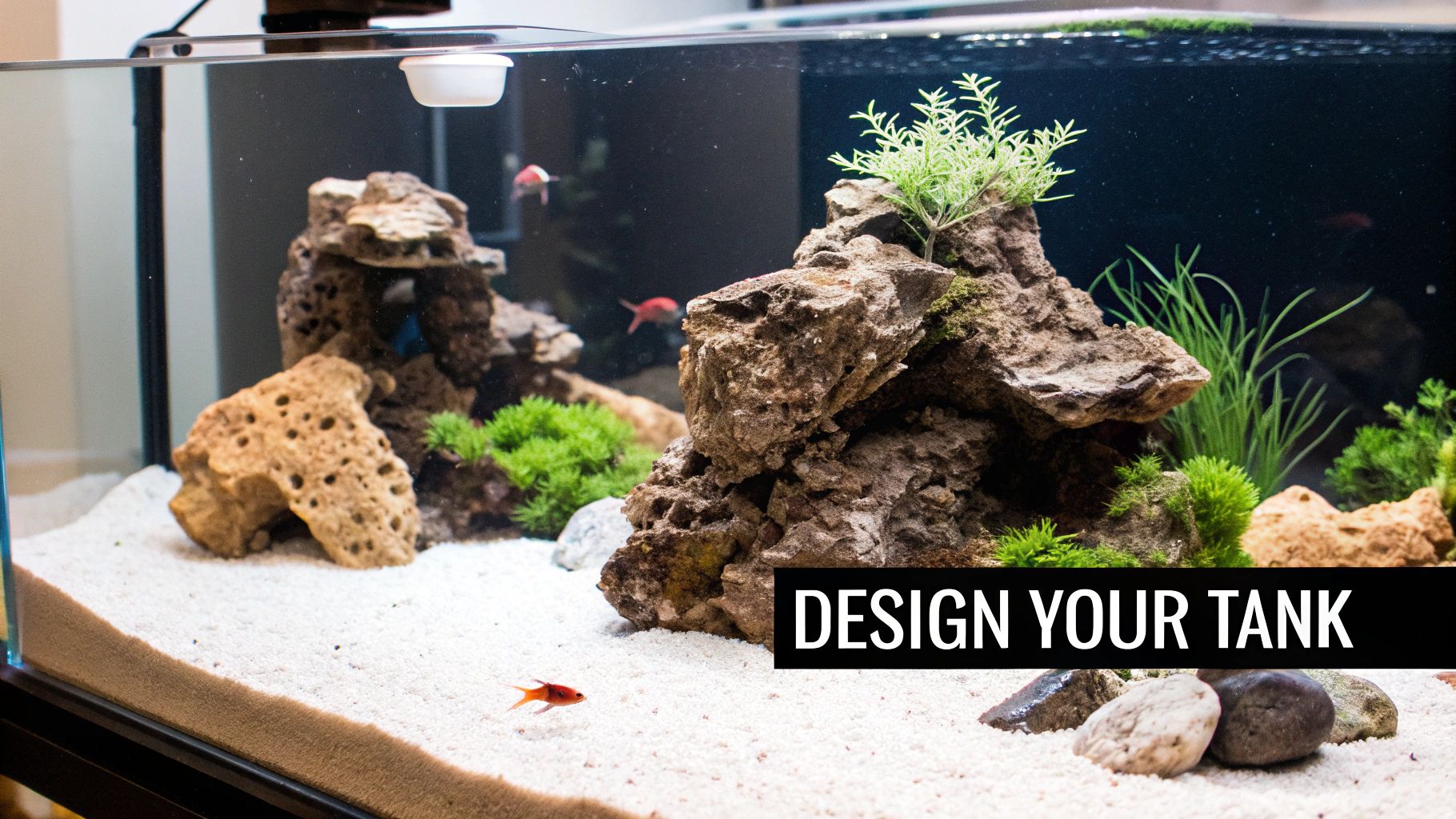
Putting together the perfect shrimp reef tank is all about designing with a purpose. It's a different mindset than you'd have with a big, fish-focused system. Here, we're shifting from wide-open swimming lanes to a world of micro-habitats, complex structures, and a food web that can sustain itself. The foundation you lay down now directly impacts how healthy, active, and successful your shrimp will be at breeding.
Choosing the Right Tank Size
When it comes to shrimp tanks, bigger isn't automatically better. In fact, nano tanks from 5 to 20 gallons are usually the sweet spot. A smaller volume lets you get right up close to observe the subtle behaviors of species like the pulsing Sexy Shrimp or a diligent Cleaner Shrimp. It turns the tank from just a box of water into an immersive window into their world.
A smaller footprint also makes it much easier to establish a really dense population of copepods and other microfauna—a critical, natural food source. It creates a concentrated ecosystem where your shrimp can constantly graze on nutritious, live food.
Aquascaping with Purpose
Your rockwork isn't just for looks; it’s the entire world for your shrimp. The goal here is to build a complex structure loaded with hidey-holes. Shrimp are at their most vulnerable right after they molt, which is when they shed their old exoskeleton to grow.
A well-designed aquascape packed with small caves, ledges, and crevices gives shrimp the security they need to molt safely. Honestly, this one factor can make a huge difference in their survival rate and will encourage them to act more naturally.
Don't just stack a few big rocks. Use smaller pieces of live or dry rock to create an intricate network of passages. This approach not only looks more interesting but also maximizes the surface area for beneficial bacteria and algae to colonize, which boosts your tank’s biological filter and its food supply.
Selecting the Perfect Substrate
The substrate you choose is another critical piece of the puzzle. It’s the visual foundation, sure, but it's also a functional part of your little ecosystem. You have a few great options, each with its own perks for a shrimp-focused tank.
-
Live Sand: This stuff comes pre-seeded with the good bacteria and microorganisms you want. It gives your nitrogen cycle a head start and helps establish microfauna from day one. A shallow sand bed of about an inch is all you need.
-
Aragonite Sand: A classic for a reason. Aragonite helps buffer your pH and alkalinity by slowly releasing calcium and carbonates—the very minerals shrimp need to build strong exoskeletons. It also has a clean, bright look that makes colorful shrimp really stand out.
-
Crushed Coral: While you see it less in modern setups, crushed coral can still work. Its porous nature offers a massive surface area for bacteria, but be warned: it tends to trap detritus more easily than finer sands.
For most dedicated shrimp reefs, a fine to medium-grain aragonite sand strikes the best balance between function and aesthetics.
The Power of a Refugium
If there's one upgrade that will have the biggest impact, it's adding a small refugium. A 'fuge is just a protected area, usually in a back chamber or sump, where you can cultivate beneficial critters without them getting eaten.
Think of it as the engine of your tank’s ecosystem. It’s the perfect place to grow macroalgae like Chaetomorpha, which is a powerhouse at exporting nutrients like nitrates and phosphates. More importantly, it becomes a five-star hotel and breeding ground for live foods like copepods and amphipods. These little guys reproduce like crazy in the refugium and then get slowly swept into the main display, providing a constant, self-renewing buffet for your shrimp. It’s a game-changer.
Getting Your Tank Stable and Healthy
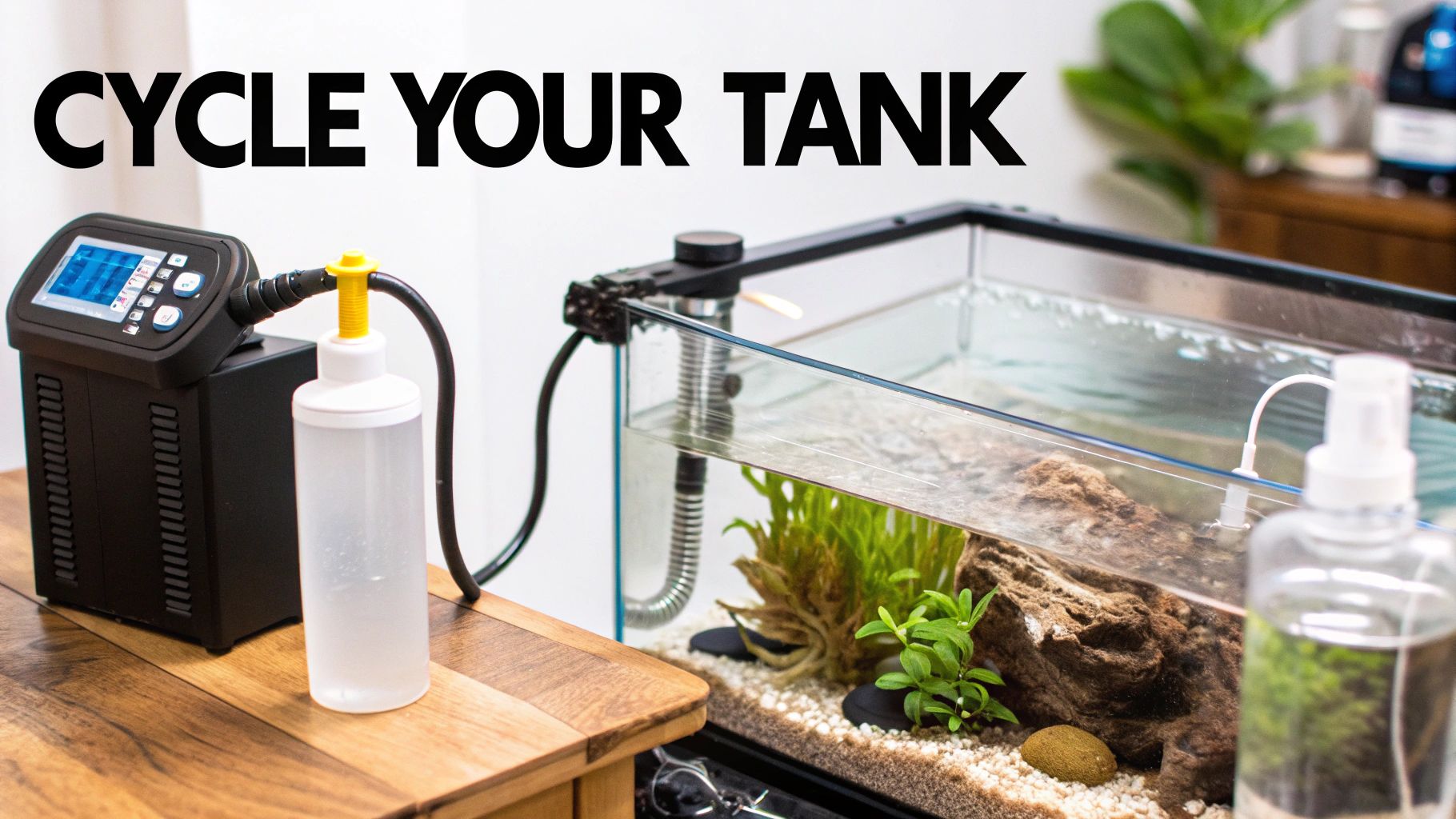
If there's one virtue you absolutely must have in this hobby, it's patience. Rushing the initial setup is the single biggest reason new tanks crash and burn. We’re not just filling a glass box with water; we're building a living, breathing ecosystem from the ground up. That means giving the good guys—the beneficial bacteria—all the time they need to get established.
The All-Important Nitrogen Cycle
Before you even think about adding a shrimp, your tank has to be "cycled." This is non-negotiable. The nitrogen cycle is the biological engine that turns toxic waste from your animals into something far less harmful. Without it, your tank quickly becomes a toxic soup.
Here's the breakdown of how it works:
- Ammonia (NH3) shows up: This comes from waste, leftover food, and any other organic stuff that breaks down. It’s highly toxic.
- Bacteria #1 gets to work: A specific type of beneficial bacteria eats the ammonia and converts it into nitrite (NO2). This is also extremely toxic.
- Bacteria #2 takes over: A second group of bacteria consumes the nitrite and turns it into nitrate (NO3). Nitrate is much less toxic and is either removed with water changes or used as food by macroalgae.
Your mission is to grow a massive, invisible army of both bacteria types before any animals arrive. A "fishless cycle" is the kindest and most controlled way to do this. You just need to "ghost feed" the empty tank by adding an ammonia source—a tiny piece of shrimp from the grocery store or a few drops of pure ammonia works great—and then wait for the bacteria to multiply.
Nailing Your Water Parameters
Once your tank is officially cycled (meaning you can add ammonia and see it completely processed to zero ammonia and zero nitrite within 24 hours), it's time to shift your focus to stability. Shrimp are far more sensitive to swings in water chemistry than most fish.
These are the numbers you're aiming for. Get them right and, more importantly, keep them steady.
| Parameter | Optimal Range | Why It Matters for Shrimp |
|---|---|---|
| Salinity | 1.024 - 1.026 sg | Essential for proper molting and hydration. |
| Temperature | 76-78°F (24-26°C) | Drives their metabolism and keeps them healthy. |
| pH | 8.1 - 8.3 | Affects shell development and other biological functions. |
| Alkalinity | 8 - 12 dKH | Buffers pH, preventing dangerous swings, and provides carbonates for shell growth. |
The real enemy in a shrimp reef tank isn't one bad parameter reading; it's swinging parameters. A rock-solid pH of 8.1 is infinitely better than one that bounces between 8.0 and 8.4 all day. Stability is everything.
Filtration: Your Tank’s Life Support
Your filter is what keeps the water clean mechanically, chemically, and biologically. For a smaller shrimp tank, you’ve got a couple of solid options, each with its own perks.
A good old hang-on-back (HOB) filter can work wonders. Just make sure you get one with a big chamber for media so you can customize it. Ditch the pre-packaged cartridges—they’re a waste of money and you end up throwing away your beneficial bacteria every time you change them. Instead, pack it with a sponge and some quality biological media.
If you have a bit more room or an all-in-one style tank, a sump or a rear-chamber filtration system is the way to go. This is where you can build a true ecosystem powerhouse. Dedicating a chamber to a refugium lets you grow macroalgae and cultivate a thriving population of copepods, creating a natural filter and a self-generating food factory all in one. To see how to set one up, check out our complete refugium in sump guide for a thriving reef tank.
The Auto Top-Off: Not a Luxury, a Necessity
When water evaporates from your tank, the salt gets left behind, and your salinity climbs. In a nano tank, this can happen fast, creating a dangerous spike. This is precisely why an auto top-off (ATO) system is an absolutely essential piece of gear.
An ATO uses a sensor to monitor the water level and automatically adds fresh reverse osmosis deionized (RO/DI) water from a reservoir to compensate for evaporation. This one device will do more to keep your salinity stable than anything else, protecting your delicate shrimp from osmotic shock and creating the consistent environment they need to thrive.
Choosing Your Shrimp and Peaceful Tankmates
This is where the real fun begins—picking the inhabitants that will bring your little ecosystem to life. Choosing the right shrimp and their tankmates is about more than just looks; it's about building a tiny, functional community where everyone gets along and has a job to do.
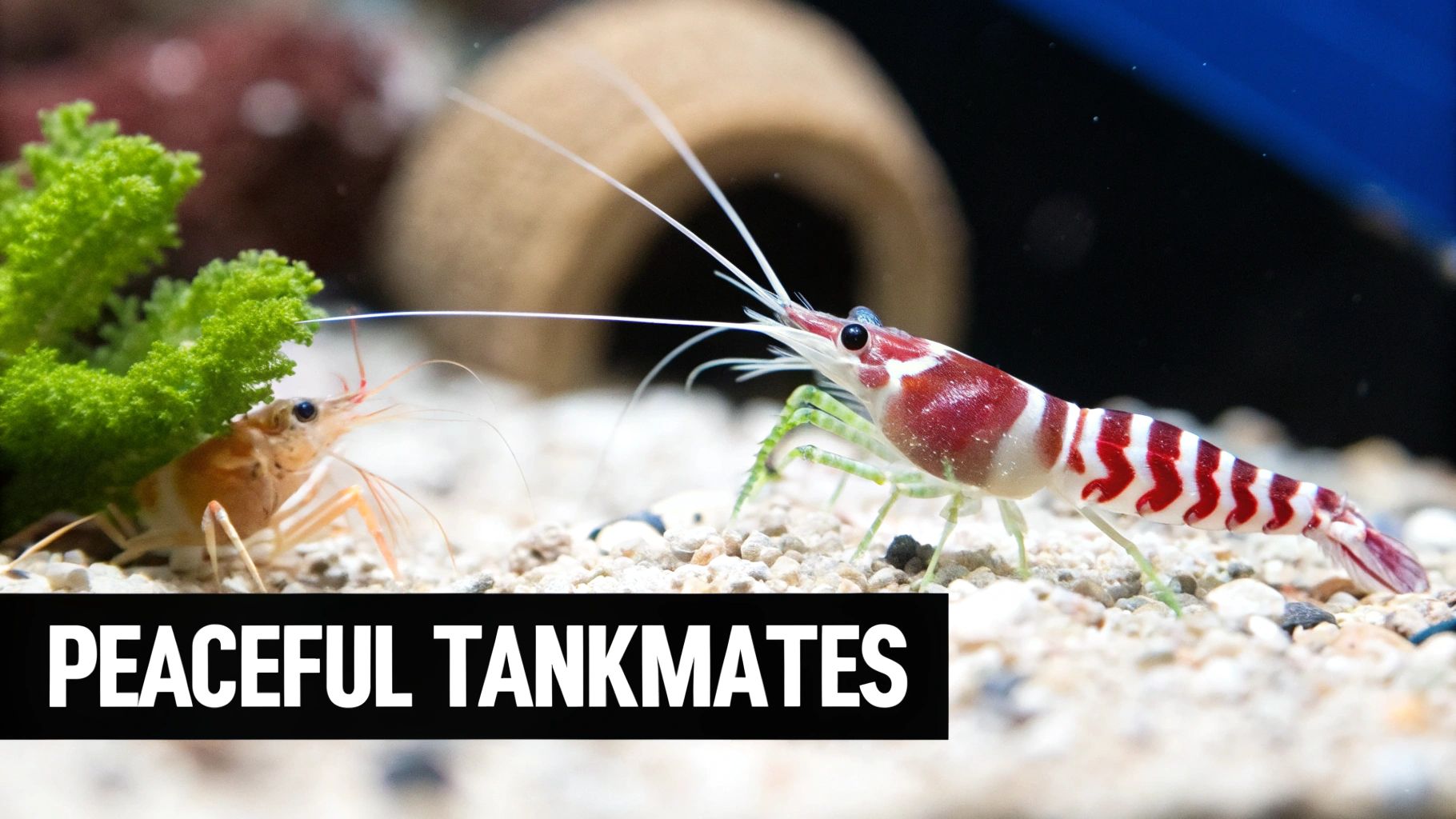
From the tireless cleaners that keep your fish healthy to the specialized pest-hunters that protect your corals, the right crew can make your tank more stable, fascinating, and self-sufficient. Planning this community carefully is the secret to a lively, low-stress reef tank where your shrimp can thrive instead of hide.
Core Shrimp Species for a Healthy Reef
Not all shrimp are created equal in the reefing world. Some are famous for the services they provide, while others are just plain cool to watch. Starting with a few of these "worker" species is a great way to build a solid foundation for your invertebrate community.
-
Skunk Cleaner Shrimp (Lysmata amboinenesis): This is the classic cleaner shrimp for a reason. With its bold yellow body and iconic red-and-white stripes, it’s impossible to miss. These shrimp will actually set up "cleaning stations," waving their long antennae to signal fish that they're open for business, then proceed to pick off parasites. They are incredibly active and a true joy to observe.
-
Peppermint Shrimp (Lysmata wurdemanni): If you've ever battled the pest anemone Aiptasia, you know why this shrimp is a reefer's best friend. Peppermints are famous for their appetite for these pesky invaders. They tend to be a bit more shy than cleaners, often doing their best work after the lights go out, but their value in keeping your rockwork pristine is immense.
-
Sexy Shrimp (Thor amboinensis): Don't let the name fool you—these tiny shrimp are named for the constant, sashaying waggle of their tails. They are fascinating to watch but are best kept in small groups of three or more. They often take up residence in a mini carpet anemone or among the polyps of certain LPS corals. Their miniature size makes them a perfect, peaceful choice for nano reefs.
Pro Tip: If you're adding multiple shrimp species, try to introduce them all at once. This helps prevent any single shrimp from becoming overly territorial and claiming the entire tank before the others have a chance to settle in.
The Impact of a Good Cleaning Crew
It’s not just a theory—cleaner shrimp really do make a difference. One study found 85% fewer parasitic infections in notoriously delicate fish like mandarins and pipefish when cleaner shrimp were present at a density of roughly one per ten gallons. It’s a perfect example of a specialized role strengthening an entire ecosystem.
Of course, shrimp can't do it all. A truly effective cleanup crew needs diversity to tackle different types of waste. Snails are fantastic for managing algae and keeping the sand bed clean. For a deep dive into the best options, check out our guide to saltwater tank snails for a thriving reef.
Shrimp Species and Reef Tank Roles
To help you decide, here's a quick rundown of some popular shrimp, what they do, and who they play nice with.
| Shrimp Species | Primary Role | Temperament | Best Paired With |
|---|---|---|---|
| Skunk Cleaner Shrimp | Fish parasite removal, general cleaning | Bold & active | Small, peaceful fish like clownfish, gobies, firefish |
| Peppermint Shrimp | Aiptasia pest control | Reclusive, nocturnal | Peaceful fish that won't mistake them for food |
| Sexy Shrimp | Ornamental, symbiotic | Peaceful, social (in groups) | Nano fish, other sexy shrimp, host anemones |
| Blood Red Fire Shrimp | Parasite removal, ornamental | Shy, often hides | Calm tankmates, best in low-traffic tanks |
| Harlequin Shrimp | Asterina starfish predator | Peaceful but specialized | Other peaceful inverts; requires a starfish diet |
This table should give you a solid starting point for building a functional and peaceful shrimp community.
Selecting Safe and Peaceful Tankmates
The number one threat to your shrimp will almost always be their fishy neighbors. So many common reef fish—especially hawkfish, dottybacks, and many wrasses—are natural-born crustacean hunters and will view your expensive shrimp as a very expensive snack.
The key is to think small and gentle. You want fish with tiny mouths and calm dispositions that won't relentlessly stalk your inverts. Fish that stick to the upper water column or peacefully sift sand are usually your safest bets.
Here are a few great choices that almost never cause trouble:
| Safe Tankmates | Why They Work Well |
|---|---|
| Small Gobies | Species like Clown Gobies and Neon Gobies are simply too small to pose any threat. |
| Firefish | These fish are notoriously timid, stick to open water, and completely ignore invertebrates. |
| Clownfish | Tank-bred Ocellaris and Percula clowns are generally peaceful and tend to stay near their host. |
On the other hand, some fish are practically guaranteed to cause mayhem. Even if a fish seems small, its predatory instincts can kick in unexpectedly. Always, always research a fish's temperament before adding it to your shrimp tank. Avoiding the known shrimp-eaters from day one is the single most important step you can take to protect your cleanup crew.
Fueling Your Reef with the Right Nutrition
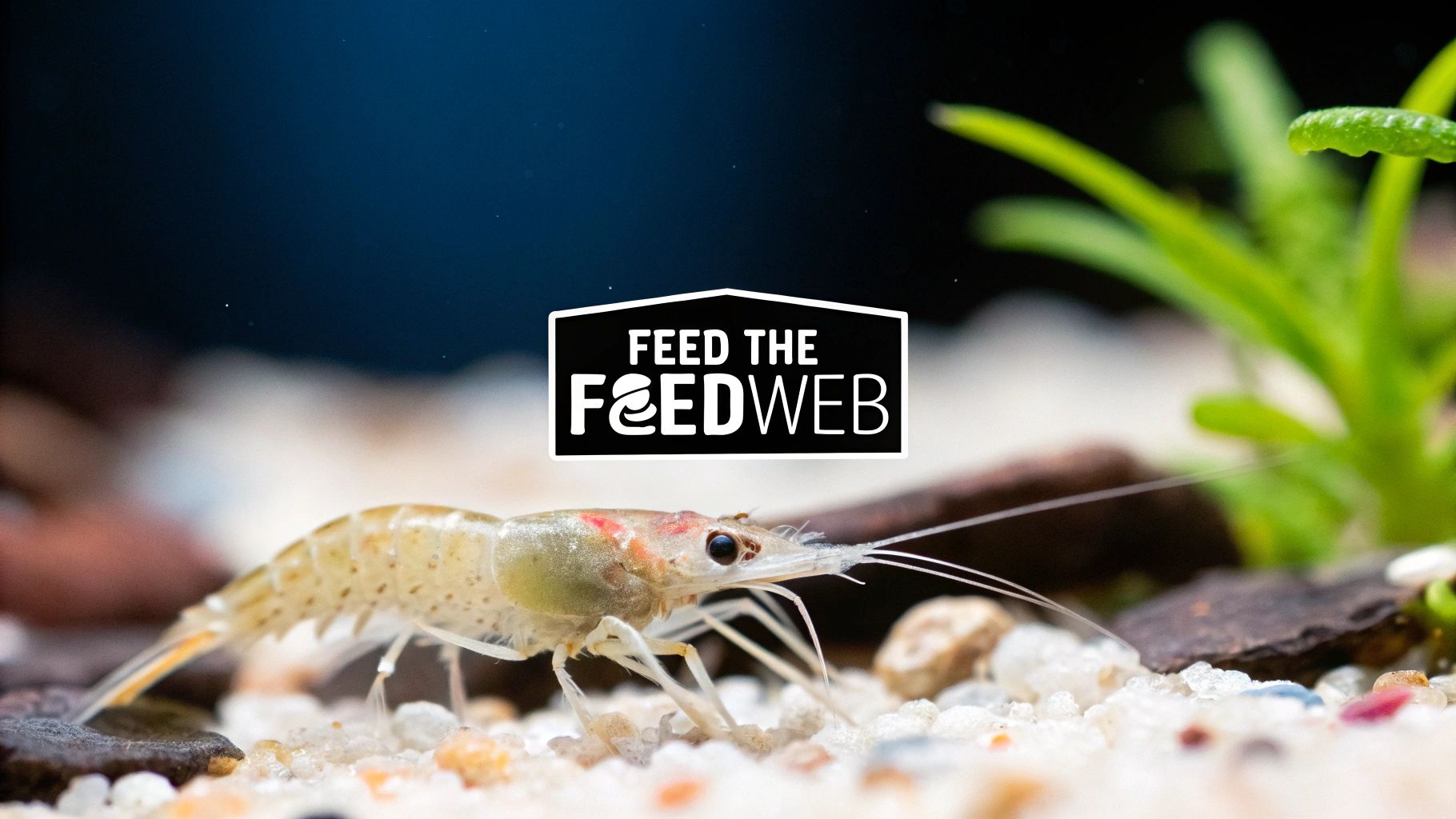
A thriving shrimp reef tank runs on much more than just pellets and flakes. While prepared foods certainly have their place, the real secret to getting vibrant, self-sufficient shrimp is to build a living food web right inside your aquarium.
This isn't just about dropping food in; it's about nourishing the entire ecosystem from the ground up. The foundation of it all? A booming population of microfauna. For shrimp, live copepods are the engine that drives their health—they're a perfect, bite-sized food source, rich in essential fatty acids and always available for grazing, just like in the wild.
The Power of Live Copepods
Copepods are more than just shrimp snacks; they're a critical link in the reef food chain. When you seed your tank with live pods, you're establishing a continuous, self-sustaining food source that gets your shrimp foraging naturally. This constant availability of top-tier nutrition is directly tied to better health, more frequent breeding, and successful molts.
Different copepod species also fill unique roles in your tank, which is why a good mix is key.
- Tisbe biminiensis: These are tiny, bottom-dwelling pods that reproduce like crazy. They’re a fantastic choice for seeding a new tank and providing a steady meal for shyer, bottom-dwelling critters.
- Tigriopus californicus: A bit larger and more active, you’ll often see these reddish pods swimming in the water column. This makes them an easy target for more active hunters, and they’re packed with pigments that can really make the colors on your shrimp and corals pop.
- Apocyclops panamensis: This species is incredibly hardy and reproduces fast, tolerating a wide range of tank conditions. Their resilience makes them a brilliant addition to round out any pod population.
By introducing a blend of species, you build a more robust microfauna population that covers different zones of the tank. The result is that all your inhabitants, from the boldest fish to the shyest shrimp, get access to this vital nutrition.
Completing the Food Chain with Phytoplankton
So, what keeps the copepods going? That's where phytoplankton comes in. These microscopic marine algae are the absolute base of the aquatic food web. Dosing your tank with live phytoplankton, especially nutrient-dense strains like Nannochloropsis, directly feeds your copepod population and fuels their reproduction.
This creates the perfect nutritional loop: phytoplankton feeds the copepods, and the copepods feed your shrimp and everything else. It’s a win-win. Not only are your animals getting the best food possible, but the phytoplankton also helps with nutrient export by consuming nitrates and phosphates from the water.
Establishing this phytoplankton-to-copepod food chain is the single most effective way to create a stable, natural, and low-maintenance feeding strategy for your shrimp reef tank. It transforms your aquarium from a closed box into a dynamic micro-ecosystem.
For a great real-world example, look at the peppermint shrimp (Lysmata wurdemanni). Hobbyists have long used them for natural pest control, reporting up to a 95% reduction in Aiptasia anemones within just 4-6 weeks of adding a single pair to a 20-gallon nano reef. This success is directly tied to a diet rich in live copepods and phytoplankton. In fact, tanks supplemented weekly with 10,000 copepods per gallon see 40% higher shrimp survival rates and consistent molting cycles every 2-3 weeks.
A Practical Feeding Schedule
Getting this food web started is surprisingly straightforward. A great way to begin is by seeding your tank with a high-quality blend of live copepods, like the mix found in PodDrop Live Reef Nutrition, to get a breeding population established.
Here’s a simple weekly schedule to get you going:
- Initial Seeding: After the lights go out, add a concentrated bottle of mixed copepod species to your tank and refugium. This gives them a chance to find hiding spots and settle in before they get hunted.
- Weekly Phytoplankton Dose: Two or three times a week, add a dose of live phytoplankton. This feeds your pods and any filter-feeding corals you might have.
- Monthly Pod Boost: To keep the population dense and diverse, add a smaller "booster" dose of copepods about once a month.
This simple routine ensures a constant supply of live food, making you less reliant on processed options and creating a much healthier, more natural environment for your shrimp. For a deeper dive into their feeding habits, check out our guide on what shrimp eat in the ocean.
Long-Term Care and Troubleshooting Common Issues
Once your shrimp reef tank is up, running, and stocked, your job description changes. You’re no longer the architect; you're the gardener. The whole game shifts from frantic building to patient cultivation.
Long-term success isn't about dramatic, last-minute rescues. It's about creating a simple, consistent routine that prevents problems from ever taking root. A beautiful, stable tank is the result of small, regular efforts adding up over time. This proactive approach keeps your water parameters locked in and your shrimp happy and stress-free, which is truly the holy grail of reefkeeping.
Creating a Sustainable Maintenance Schedule
In this hobby, consistency beats intensity every single time. A massive, multi-hour cleaning session once a month does more harm than good, often shocking the system. A few simple tasks done weekly will yield far better results. Your routine doesn't need to be a chore; it just needs to be regular.
A straightforward schedule that works for most people looks something like this:
- The Weekly Reset: This is your foundation. Plan on a 10-15% water change with freshly mixed saltwater that matches the tank’s temperature and salinity. While you're at it, test your core parameters—alkalinity, nitrate, and phosphate are the big ones. A quick scrape of the glass and a glance to ensure your heater and auto top-off are running correctly rounds out the week.
- The Monthly Check-Up: Go a little deeper once a month. This is the time to really look at your equipment. Give your filter media a good rinse (always in the old tank water you're siphoning out!), clear any gunk from pump intakes, and recalibrate any monitoring probes you might be using. It's also a perfect opportunity to get your eyes on the rockwork and hunt for any emerging pests.
The single most powerful maintenance tool you have is your own observation. Seriously. Spend five minutes every single day just watching your tank. Are your shrimp out and about, actively grazing? Are their colors looking sharp? Noticing a small change in behavior is the best early-warning system you could ever ask for.
Solving Common Shrimp Problems
Even the most meticulously cared-for tank can hit a bump in the road. When issues pop up, the trick is to know what to look for, stay calm, and work the problem methodically.
Why Did My Shrimp Have a Bad Molt?
This one is tough to see. A failed molt, where a shrimp gets stuck in its old exoskeleton, is one of the most common and heartbreaking things that can happen. And nine times out of ten, it’s a direct result of unstable water chemistry.
Sudden swings in salinity, temperature, or—most critically—alkalinity and calcium levels throw a wrench in the delicate biological process of molting. If you see this happen, your first move should be to test your water immediately and confirm your auto top-off is functioning perfectly. Rock-solid stability is the only real preventative measure.
Where Did My Shrimp Go?
Shrimp can be incredible escape artists and masters of camouflage. But if one has been MIA for more than a day or two, it’s time to play detective. The usual suspect is an unsafe tankmate you thought was peaceful. Many fish are opportunistic, and a sleeping shrimp can look like an easy meal.
The other common scenario is that the shrimp passed away and the cleanup crew did its job very efficiently. Snails, crabs, and other scavengers can make a body disappear before you even knew it was gone. If you suspect this is the case, it's wise to test your ammonia to make sure the system processed the extra bioload without a spike.
Dealing with Pests Like Aiptasia
Ah, Aiptasia. These pesky anemones are the bane of reefers everywhere. The good news is that Peppermint Shrimp have a well-earned reputation for gobbling them up. The catch? It can be a bit hit-or-miss. Success often depends on the exact species of shrimp and whether they have easier food to snack on. If the shrimp aren't cutting it, your next best bet is manual removal with a dedicated Aiptasia-killing paste.
The Power of a Quarantine Tank
Let me be blunt: a separate quarantine (QT) tank isn't a luxury item. It is your single most effective defense against absolute catastrophe. Every single fish, coral, or invert you bring home is a potential Trojan horse, capable of introducing devastating diseases like ich or pests like Aiptasia into your beautiful display tank.
Setting one up is incredibly simple. A basic 5- or 10-gallon tank with a heater and a seasoned sponge filter is all it takes. By isolating every new arrival for a solid 4-6 weeks, you give yourself the chance to observe them for any signs of trouble. If something pops up, you can treat it in the QT without nuking the ecosystem you've worked so hard to build. It’s a tiny investment that protects your entire investment.
Your Shrimp Reef Tank Starter Checklist
Getting organized is half the battle when you're diving into a new shrimp reef tank. Think of this checklist as your pre-flight rundown—it pulls everything together so you have all your gear ready to go before you even think about adding water. Breaking it down this way keeps the whole process from feeling overwhelming.
Essential Hardware
This is the life-support system for your tank. Get this right, and everything else becomes much, much easier.
- The Tank: A nano tank between 5-20 gallons is the sweet spot. It's large enough to be stable but small enough to feel intimate and manageable.
- Lighting: You'll want a quality LED light that's capable of growing corals or macroalgae. Don't skimp here; good light is crucial.
- Heater: A reliable heater with a built-in thermostat is non-negotiable. You’re aiming to lock in a stable 76-78°F.
- Filtration: A simple hang-on-back filter works great, but a tank with a built-in rear chamber or sump gives you more flexibility and hides the equipment.
- Auto Top-Off (ATO): I can't stress this enough—an ATO is a game-changer for nano tanks. It keeps your salinity rock-solid by replacing evaporated water, which is critical for sensitive shrimp.
Setup and Cycling Supplies
These are the building blocks of your tank's environment and the foundation for your all-important biological filter.
I've learned this the hard way: having all your supplies on hand before you start prevents so much frustration. This initial phase is all about patience. It sets the stage for a healthy, thriving ecosystem down the road.
- Substrate: Aragonite or "live" sand works perfectly to buffer your pH and provide a natural-looking base.
- Rock: Dry or live rock is what you'll use for your aquascape. This provides the structure for your corals and tons of surface area for beneficial bacteria.
- Salt Mix & RO/DI Water: Start clean, stay clean. Always use a quality salt mix and purified RO/DI water.
- Test Kits: You absolutely need reliable kits for Ammonia, Nitrite, Nitrate, pH, Alkalinity, and a way to measure Salinity (a refractometer is best).
Initial Livestock and Nutrition
Now for the fun part! Once your tank is cycled and stable, it’s time to think about the first inhabitants.
- Shrimp & Snails: Your chosen shrimp species and a good cleanup crew (think various snail species) are your first additions.
- Live Foods: Start your tank's food web off right from day one. A few bottles of live copepods and phytoplankton, like PodDrop Live Reef Nutrition, will seed the tank and create a self-sustaining food source.
To make things even clearer, here’s a full checklist you can use as your shopping list. Having everything ticked off before you start will make the entire setup process smooth and enjoyable.
Essential Equipment and Supply Checklist
| Category | Item | Key Consideration |
|---|---|---|
| Hardware | Aquarium (5-20 Gallons) | Choose a size that fits your space and budget; all-in-one systems are great for beginners. |
| Hardware | LED Lighting | Ensure it's rated for coral or macroalgae growth, not just for viewing fish. |
| Hardware | Heater with Thermostat | Select a wattage appropriate for your tank volume (e.g., 50w for a 10-gallon). |
| Hardware | Filtration System | Hang-on-back, internal, or sump-based. Simplicity is often best for nanos. |
| Hardware | Auto Top-Off (ATO) | An absolute must for maintaining stable salinity in small tanks. |
| Setup Supplies | Substrate (Aragonite/Live Sand) | A 1-2 inch sand bed is ideal for shrimp and beneficial bacteria. |
| Setup Supplies | Rock (Live or Dry) | This forms your aquascape and is the primary home for your biological filter. |
| Water & Testing | Quality Reef Salt Mix | Stick with a reputable brand for consistency. |
| Water & Testing | RO/DI Water Source | Your own unit is best long-term, but buying from a local fish store works too. |
| Water & Testing | Test Kits | Get individual kits for Ammonia, Nitrite, Nitrate, pH, and Alkalinity. |
| Water & Testing | Salinity Measurement Tool | A refractometer is far more accurate than a hydrometer. |
| Livestock | Chosen Shrimp Species | Research their specific needs before purchasing. |
| Livestock | Cleanup Crew (Snails) | A mix of species (Nassarius, Cerith, Trochus) covers different cleaning duties. |
| Nutrition | Live Copepods | Seed the tank early to establish a reproducing population. |
| Nutrition | Live Phytoplankton | This is food for your copepods and filter-feeding corals. |
With this list in hand, you're not just buying equipment—you're gathering the components for a vibrant, living ecosystem. Now you're truly ready to begin.
Of course. Here is the rewritten section, crafted to sound like it was written by an experienced human expert, following all the provided guidelines and examples.
Common Questions About Shrimp Reef Tanks
Getting into a shrimp-focused reef tank is an awesome journey, but it's natural for a few questions to pop up along the way. Let's tackle some of the most common ones I hear from fellow hobbyists to help you keep your tiny ecosystem humming.
How Many Shrimp Can I Really Keep In My Nano Tank?
When you're working with a nano reef, it's all about quality over quantity. For the really small, social guys like Sexy Shrimp (Thor amboinensis), you'll want to keep them in a little posse of three or more. They feel much safer and act more naturally in a group.
If you're looking at larger species like a Skunk Cleaner or a Peppermint Shrimp, a single one or a mated pair is usually the sweet spot for any tank under 20 gallons. Squeezing more in just invites trouble.
The real goal isn't to hit a specific number but to create a balanced micro-habitat. Overstocking is a quick way to cause turf wars and stress, forcing everyone into hiding as they all compete for the same limited food and real estate.
Why Are My Shrimp Always Hiding?
It's a classic situation: you add new shrimp, and they vanish. First off, don't panic. Hiding is perfectly normal for the first few days as they get their bearings and feel out the new environment.
But if they stay hidden, it's time to do some detective work. It usually comes down to one of a few things:
- Secret Bullies: That "peaceful" fish might have a dark side. The best way to catch a culprit is to observe the tank after the main lights go out. You might be surprised who is harassing your shrimp.
- Not Enough Cover: If your rockwork is too open and exposed, your shrimp will never feel secure enough to come out and explore. Adding some more complex rock with small caves and crevices can make a world of difference for their confidence.
- Post-Molt Vulnerability: Right after a shrimp molts, its new shell is soft and squishy, leaving it completely defenseless. It's in their nature to lay low for a day or two until their armor hardens up. You'll often find the empty molt and think the worst, but they're likely just tucked away safely.
Is Drip Acclimation Really Necessary For Shrimp?
Yes. One hundred percent. If you take away only one piece of advice, let it be this: do not skip or rush drip acclimation. Shrimp are incredibly sensitive to swings in water parameters, especially salinity and pH. A slow, steady drip over 60 to 90 minutes is the best tool we have to prevent osmotic shock.
Rushing acclimation is probably the number one killer of new shrimp. Taking that extra hour to slowly let them adjust gives their delicate systems a fighting chance. It's a small investment of patience on day one that pays off massively in their long-term survival.
By giving them a gentle introduction, you're not just helping them survive the move—you're setting them up to truly thrive in their new home.
Ready to build a vibrant, self-sustaining food web for your shrimp? PodDrop Live Aquarium Nutrition provides the fresh, high-quality live copepods and phytoplankton your reef needs to flourish. Establish a natural feeding cycle and watch your shrimp thrive. Start seeding your ecosystem by visiting https://www.getpoddrop.com today.