

A Guide to Reef Tank Invertebrates for a Thriving Aquarium
When you picture a thriving reef tank, what comes to mind? Most people think of the fish—the vibrant tangs and clownfish—or the stunning architecture of the coral. But the real MVPs, the unsung heroes keeping that entire miniature world in balance, are the invertebrates.
They're the cleanup crews, the gardeners, and the live-in chefs. From a humble snail scraping algae off the glass to a pistol shrimp tirelessly excavating its burrow, these creatures are the engine of a healthy aquarium. Learning to appreciate their roles is the difference between simply having a tank and cultivating a true ecosystem.
The Hidden Workforce of Your Reef Tank Ecosystem
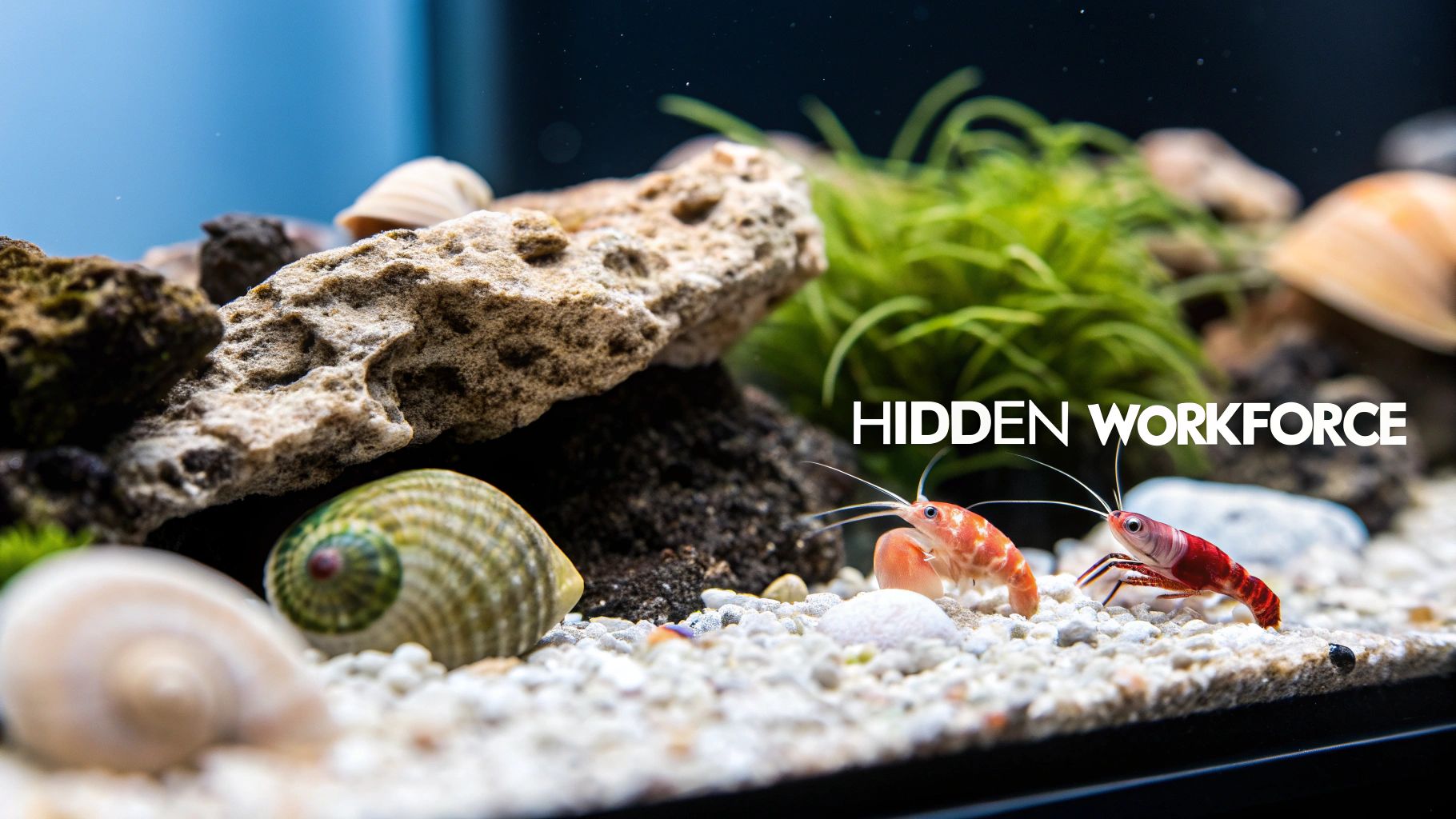
Think of your reef tank as a bustling city. The fish and corals get all the attention, but the reef tank invertebrates are the ones doing the essential jobs that keep the city from grinding to a halt. Without them, waste piles up, ugly algae takes over, and the whole system starts to crash.
These critters fill critical jobs that fish just aren't built for. Their combined efforts make your tank far more stable and resilient, which means less work for you and healthier inhabitants all around.
And the hobby knows it. The global marine aquarium trade is a massive $2.15 billion industry, with about 55 million organisms sold each year. A huge chunk of that number is invertebrates, which just goes to show how vital they are.
Why Every Reef Tank Needs Invertebrates
A solid population of inverts isn't just a nice bonus; it's a core requirement for any successful reef tank. They're constantly working for you in a few key ways:
- The Algae Patrol: Herbivorous snails and crabs are always on the move, grazing on film algae, hair algae, and other nuisances that would otherwise cover your glass and rockwork.
- The Cleanup Crew: Detritivores like Nassarius snails and hermit crabs are the ultimate scavengers. They seek out leftover food and organic waste, breaking it down before it can foul your water.
- The Live Food Factory: Microscopic critters like copepods are the foundation of the reef's food web. A healthy population provides a constant, nutritious buffet for corals and picky fish.
A well-stocked cleanup crew and a thriving microfauna population are the twin pillars of a low-maintenance, biologically stable reef aquarium. They handle the small, daily tasks that prevent big problems from developing.
Ultimately, these organisms are so much more than just janitors. They are a critical piece of the complex food web you're trying to build in your glass box. As you'll see when you learn more about why copepods are essential for your reef tank's success in our expert guide, investing in a diverse team of invertebrates is one of the smartest moves any reefer can make.
Assembling Your Reef Tank Cleanup Crew
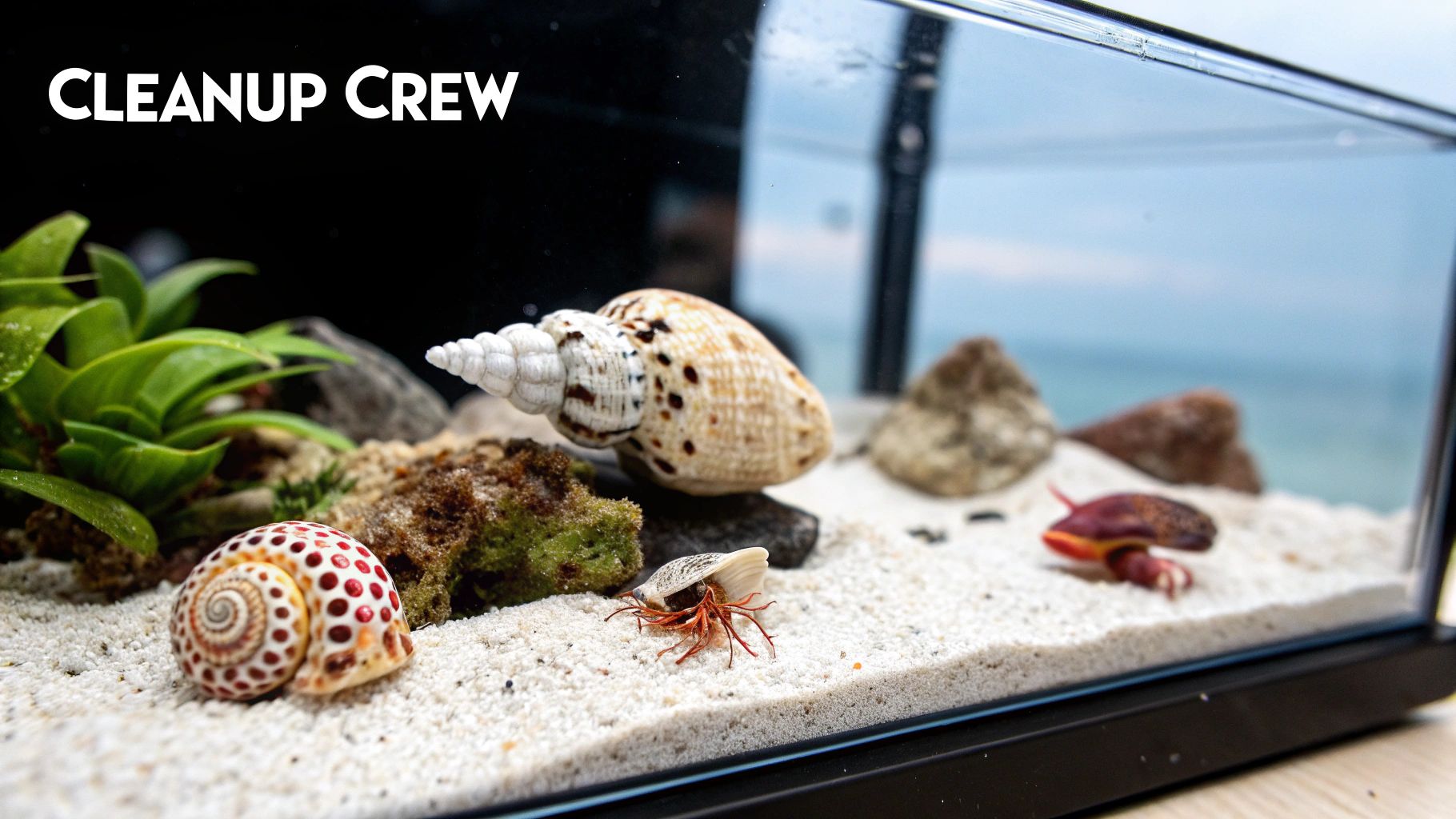
Building a truly effective cleanup crew isn't about just tossing in a handful of random snails and crabs. It's more like recruiting a highly specialized team for a critical mission. Each member needs a specific job description. To create a balanced, self-sustaining system, you have to stop thinking "algae eaters" and start thinking in terms of function.
The demand for these functional reef tank invertebrates is absolutely massive. Globally, the reef aquarium trade is a $12 billion industry, and a staggering $5 billion of that comes directly from the sale of fish and invertebrates like corals, sponges, and crustaceans. The U.S. alone brings in millions of these critters every year, which just goes to show how central they are to the hobby. If you're curious, you can find more insights on the global invertebrate trade over on exoticaesoterica.com.
The Algae Annihilators
This is your frontline defense. They’re the crew that battles the inevitable green, brown, and red films that want to coat every single surface in your tank. Think of them as your 24/7 glass cleaners, rock scrubbers, and sand polishers, working tirelessly to keep nuisance algae from taking over.
Their work is relentless and essential. Without a solid crew of herbivores, algae can quickly smother corals and turn your vibrant reef into a green, sludgy mess. The secret here is diversity. Different snails and urchins have different tastes and prefer to work in different zones of the tank.
- Trochus Snails: These guys are absolute workhorses on the glass and rockwork, mowing down film algae with incredible speed. A huge plus is their ability to flip themselves back over if they fall—a surprisingly common and fatal problem for other snails.
- Astrea Snails: Perfect for cleaning rockwork, they have a knack for getting into all the little nooks and crannies. The one big downside? If they fall onto the sand, they’re usually stuck on their backs.
- Sea Urchins: An urchin like a Tuxedo or Pincushion is a powerhouse against tougher stuff, even scraping desirable coralline algae off the glass. Just be warned, they're like little bulldozers and can knock over any loose coral frags.
If you're dealing with a specific algae nightmare, check out our in-depth guide on hair algae eaters for marine tanks for some targeted solutions.
Thinking about which snail is right for which job? It can be confusing. Here's a quick comparison to help you choose the best recruits for your tank's specific needs.
Popular Cleanup Crew Snail Comparison
| Snail Type | Primary Diet | Typical Tank Location | Self-Righting Ability | Reef Safe? |
|---|---|---|---|---|
| Trochus Snail | Film algae, diatoms | Glass, rockwork | Excellent | Yes |
| Astrea Snail | Film algae | Rockwork, glass | Poor | Yes |
| Cerith Snail | Film algae, detritus, diatoms | Sand bed, rockwork, glass | Good | Yes |
| Nassarius Snail | Detritus, leftover food | Buried in sand bed | Excellent | Yes |
| Nerite Snail | Film algae, diatoms | Glass, rockwork | Poor | Yes |
| Fighting Conch | Detritus, cyanobacteria | On and in sand bed | Good | Yes |
This table should give you a better idea of how to build a diverse snail crew where everyone has a distinct role, from the glass-scrapers to the sand-sifters.
The Detritus Demolition Squad
Next up is your waste management team. All that leftover fish food, fish waste, and other decaying organic gunk—collectively known as detritus—has to go somewhere. This team's job is to find and eat it before it can break down and spike your nitrates and phosphates.
A good detritus crew is what keeps your sand bed from turning into a nutrient bomb. By constantly stirring and sifting the substrate, they keep it looking clean, feeling oxygenated, and functioning properly.
- Nassarius Snails: These snails are the undisputed champions of sand bed maintenance. They bury themselves completely until they smell food, then erupt from the sand like tiny zombies, churning the substrate as they go.
- Fighting Conchs: Don't let the name fool you; these are peaceful sand-sifters. They move with a unique "hopping" motion that does a fantastic job of aerating the top layer of your sand bed.
- Cerith Snails: A great all-rounder, these snails work on the sand bed as well as the lower parts of your rocks and glass. They’ll eat detritus and a wide variety of algae films.
A common mistake is to dump a huge cleanup crew into a brand-new, sterile tank. Always stock your crew slowly. Let their numbers grow to match the amount of available food. It’s far easier to add more janitors later than it is to watch your first recruits starve.
The Pest Patrol
Finally, you need a specialized unit to handle the bad guys. These are the unwanted hitchhikers and pests that can sneak their way into your tank on live rock or coral frags. This team is made up of targeted predators that can control specific problems before they explode into full-blown infestations.
Think of this team as your biological security detail. While a good quarantine process is your best defense, some pests are bound to slip through the cracks. Having a natural predator on patrol gives you a constant, living line of defense.
- Peppermint Shrimp: Famous for their appetite for the dreaded pest anemone, Aiptasia. A small group can often wipe out an infestation, saving you from having to use chemical treatments.
- Emerald Crabs: These crabs are one of the few critters known for reliably eating bubble algae, a persistent nuisance that most other herbivores won't touch.
- Bumble Bee Snails: Tiny but mighty, these carnivorous snails will actively hunt down and consume pest vermetid snails, which can seriously irritate your corals with their slimy mucus nets.
By assembling your crew with these specialized roles in mind, you create a powerful, natural maintenance system that works for you. Your tank won’t just look cleaner—it will be a more stable and resilient biological system, making your entire reefing journey more successful and a whole lot more fun.
Fueling Your Reef with Microfauna
Look past the flashy cleanup crew for a moment. A truly healthy reef tank is powered by an army you can't even see. This microscopic world is run by tiny crustaceans, mainly copepods and amphipods, that we just call "pods." These aren't just specks floating in the water—they are the absolute bedrock of your tank's food web.
Imagine your aquarium's ecosystem as a food pyramid. At the very bottom, you have producers like phytoplankton. The pods are the next level up. They spend their days grazing on nuisance microalgae and detritus, turning waste into a protein-packed, bite-sized meal for fish, corals, and everything in between. A booming pod population is the real secret behind keeping notoriously picky eaters like mandarin dragonets and certain wrasses fat and happy.
This push for creating self-sustaining food sources is a huge part of why the reef aquarium market is thriving. It was valued at $6.76 billion globally and is on track to hit $12.35 billion by 2030. Hobbyists are getting serious about building natural ecosystems, and a healthy population of reef tank invertebrates like copepods is what makes it all work. If you're curious about the industry's growth, you can discover more insights about reef aquarium trends on techsciresearch.com.
Your In-Tank Microfauna Factory
So, how do you get this microscopic livestock operation going? The best way, by far, is with a refugium. Think of it as a safe house for your pods. It’s a dedicated space, usually a chamber in your sump, where they can live and breed without being hunted down by your fish and corals.
By setting up a small, protected area with a bit of macroalgae (like Chaetomorpha) and a deep sand bed, you create the perfect breeding ground. With no predators around, the pods multiply like crazy. A portion of this constantly growing population then gets swept into the main display, providing a steady, 24/7 stream of live food. This simple step turns your sump from a box for equipment into a food-producing powerhouse.
Seeding and Replenishing Your Pod Population
Whether you're starting a tank from scratch or giving an established one a boost, you have to add a starter culture of pods. This is called "seeding." A sterile tank won't magically spawn a pod population—you need to introduce them.
To get your aquarium seeded effectively:
- Pick the right pods: Different species have different jobs. Tisbe pods, for example, are homebodies that stick to the rockwork and substrate. This makes them fantastic detritus eaters and a great food source for bottom-dwelling fish. Tigriopus pods are larger and tend to swim more in the water column, making them an easy snack for fish.
- Add them after dark: Most fish are less active at night. If you add your copepods after the lights go out, you give them a much better shot at settling into the rocks and refugium before they become a midnight snack.
- Pause the heavy filtration: For the first few hours after adding pods, turn off equipment like protein skimmers and filter socks. This prevents your brand-new pod population from getting sucked out before they can find a place to hide and multiply.
Your pod population isn't a "set it and forget it" feature. It’s a living, fluctuating part of your ecosystem. A new fish, a change in feeding, or other factors can cause the population to dip, requiring you to replenish it periodically to maintain a stable food source.
To keep your microfauna thriving, you have to feed them. The number one food for copepods is phytoplankton—microscopic marine algae. Regularly dosing high-quality, live phytoplankton not only feeds your corals and filter feeders directly but also supercharges your pod population, giving them the fuel they need to reproduce. If you're the DIY type, you can even check out our guide on how to culture phytoplankton for your reef tank. When you manage this tiny ecosystem, you're providing the fundamental energy that powers the health and vibrancy of your entire reef.
Building a Peaceful Invertebrate Community
Creating a gorgeous reef tank is one thing, but orchestrating a peaceful one? That's a whole different ball game. The world of reef tank invertebrates is packed with personalities, from shy, docile grazers to downright opportunistic predators. Just tossing them all in and hoping for the best is a classic recipe for disaster—one that often ends with a prized snail becoming a hermit crab's next home or an aggressive shrimp turning your favorite coral into a punching bag.
The real key to avoiding this underwater drama is understanding the temperament and natural instincts of each species before you add them. This lets you get ahead of problems before they even start, ensuring every creature you introduce is a positive addition to the community. Think of yourself as the city planner for your own aquatic metropolis, carefully zoning neighborhoods and managing interactions to keep the peace.
Getting this right from the start saves you a ton of stress, money, and the heartache of losing an animal you've grown to love. By learning the rules of engagement, you can build a dynamic yet stable ecosystem where every single inhabitant can truly thrive.
Understanding Temperaments and Territories
Look, not all invertebrates play by the same rules. Some are loners who fiercely guard their turf, while others are totally harmless socialites. The first step in preventing a full-blown turf war is simply recognizing these core differences. An Emerald Crab, for example, is usually a chill algae-eater, but it can get grumpy and aggressive if it feels crowded or hungry, sometimes taking nips at slow-moving fish or even corals.
It's a similar story with the popular Peppermint Shrimp. While they're fantastic at wiping out pest anemones like Aiptasia, some can develop a taste for the soft tissue of LPS (Large Polyp Stony) corals. It's not a guarantee, but it's a known risk. On the flip side, you have the Skunk Cleaner Shrimp, which is almost universally peaceful and will happily set up a "cleaning station" for any fish that swims by.
A huge mistake I see people make is assuming "reef safe" automatically means "invertebrate safe." A creature might leave your corals completely alone but will absolutely hunt down other members of your cleanup crew. Always research how a new addition will interact with everyone in the tank, not just the corals.
Common Invertebrate Conflicts to Avoid
Some rivalries are so common in reef tanks they've become legendary cautionary tales. Knowing these classic matchups will help you sidestep some of the most frequent (and frustrating) stocking blunders.
- Hermit Crabs vs. Snails: This is the heavyweight championship of invertebrate conflict. As hermit crabs grow, they need bigger shells. If you don't provide a generous, rotating stock of empty, properly-sized shells, they won't hesitate to murder a snail to steal its home.
- Aggressive Shrimp vs. Everyone: Some shrimp species, like the notoriously territorial Coral Banded Shrimp, will attack other shrimp, harass small fish, and even take a swing at your hand during maintenance. They are best kept alone or as a confirmed mated pair.
- Large Crabs vs. Everything: While fascinating, bigger crabs like the Arrow Crab are pure opportunists. They have the strength and claws to snatch and eat small fish sleeping on the sandbed, other shrimp, and just about any mobile invert they can get ahold of.
- Starfish vs. Corals: Don't be fooled by their slow pace. Many ornamental starfish, like the classic Chocolate Chip Starfish, are absolutely not reef-safe. They will actively graze on corals, sponges, and other stationary life, leaving a trail of destruction behind them.
Reef Tank Invertebrate Compatibility Chart
Navigating all these complex relationships can feel a bit overwhelming, I get it. To make your life easier when planning your tank, I've put together this quick-reference chart. It breaks down the general compatibility of popular invertebrates with fish, corals, and each other. Just remember, these are solid guidelines, but individual animals can have their own unique personalities. Nothing beats careful observation in your own tank.
| Invertebrate | Fish Compatibility | Coral Compatibility | Other Invert Compatibility | Notes & Risks |
|---|---|---|---|---|
| Peppermint Shrimp | Safe | Caution | Caution | Generally safe, but rogue individuals may pick at LPS corals or other shrimp. Great for Aiptasia control. |
| Skunk Cleaner Shrimp | Safe | Safe | Safe | Excellent community member. Will clean fish and rarely bothers anything. Can be kept in groups. |
| Emerald Crab | Safe | Caution | Caution | Good for bubble algae. Can become aggressive if underfed. May nip at corals or snails. |
| Scarlet Reef Hermit | Safe | Safe | Caution | One of the most peaceful hermits, but still needs empty shells provided to avoid snail predation. |
| Trochus Snail | Safe | Safe | Safe | Excellent algae eater and peaceful. Vulnerable to predatory hermit crabs if no spare shells are available. |
| Nassarius Snail | Safe | Safe | Safe | Peaceful sand-sifting snail. Stays buried until it smells food. Not a threat to other inverts. |
| Coral Banded Shrimp | Caution | Safe | Not Recommended | Highly territorial. Will likely kill other shrimp species. Keep singly or as a mated pair. |
| Sand-Sifting Sea Star | Safe | Safe | Safe | Peaceful, but requires a large, mature sand bed to avoid starvation. Will consume beneficial microfauna. |
Ultimately, choosing the right mix of invertebrates comes down to research and planning. By using this chart as a starting point and understanding the natural behaviors of the animals you're interested in, you'll be well on your way to building a bustling, harmonious, and truly captivating reef ecosystem.
Mastering Invertebrate Care and Acclimation
Keeping your reef tank invertebrates happy isn’t just about making sure they don’t get eaten. It’s about creating an environment where they can truly thrive, molt, and grow. For a lot of these critters, success starts with the invisible building blocks floating in your water column.
These animals are incredibly sensitive to their surroundings, so getting their care right from the moment they arrive is the secret to long-term success. This really boils down to two core skills: nailing your water chemistry and perfecting a gentle, stress-free introduction to the tank. These aren't just best practices; they are the foundation for preventing stress, disease, and early losses.
The Trinity of Water Parameters
For any invertebrate with a shell or exoskeleton—we're talking shrimp, crabs, and snails—stable water chemistry is non-negotiable. They are constantly pulling minerals from the water to build and strengthen their protective armor. Think of it as a construction project that never, ever stops.
If the essential building materials run out, that project grinds to a halt. The three most critical parameters you need to watch are:
- Calcium (Ca): This is the primary building block for skeletons and shells. You want to aim for a level between 400-450 ppm.
- Alkalinity (dKH): You can think of this as the "cement" that allows invertebrates to actually use the calcium. A stable level between 8-12 dKH is crucial.
- Magnesium (Mg): This element is the great balancer, keeping calcium and alkalinity from precipitating out of the water. Target a level of 1250-1350 ppm.
Invertebrates are often the "canaries in the coal mine" for water quality. If you suddenly see snails dying off or notice your shrimp are struggling to molt properly, it’s a massive red flag that one of these core parameters is dangerously out of whack.
The Art of Slow Acclimation
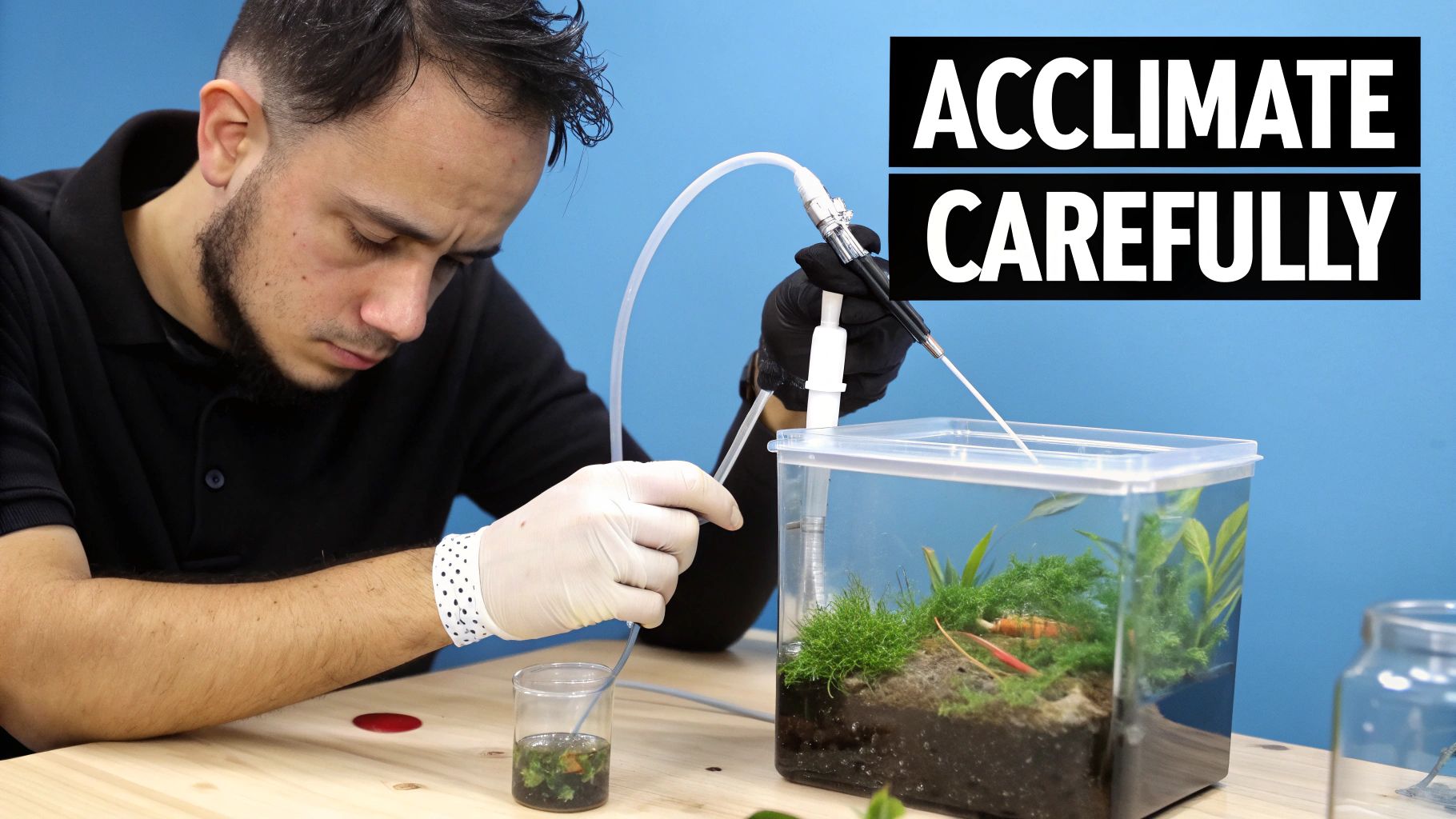
Here’s a hard truth: invertebrates are far less tolerant of sudden changes than most fish. A quick swing in salinity, pH, or temperature can send them into osmotic shock, a condition that is very often fatal. This is exactly why drip acclimation is a mandatory step for almost all reef tank invertebrates, especially for delicate species like shrimp and starfish.
Drip acclimation isn't complicated, but it is vital. It’s the simple process of slowly dripping your tank’s water into the container holding the new arrival over an extended period. This gives the animal's cells enough time to gradually adjust to the new water chemistry, preventing a stressful and dangerous shock to its system.
A Step-by-Step Drip Acclimation Guide
- Prep Your Station: Place the invertebrate and all its bag water into a clean container. Make sure it's fully submerged and position the container below your display tank.
- Start the Drip: Using a piece of airline tubing and a control valve, start a slow siphon from your main tank into the container. You're looking for a drip rate of about 2-4 drops per second.
- Monitor the Volume: Let the water drip until the volume in your acclimation container has at least doubled. For super-sensitive species like a Cleaner Shrimp, tripling the volume is even better. This whole process should take at least 60-90 minutes.
- The Final Move: Once the time is up, gently net the invertebrate and place it in your tank. Never, ever add the bag water to your aquarium—it’s full of waste and potential contaminants.
By patiently following this process, you’re giving your new critters the best possible start in their new home. It dramatically boosts their chances of survival and ensures they can get right to work as a valuable part of your reef ecosystem.
Sourcing and Quarantining New Invertebrates
Protecting the reef tank you’ve poured so much time and effort into starts long before a new creature ever touches the water. Every new snail, shrimp, or crab, no matter how tiny, is a potential trojan horse for pests and diseases. The best defense you have against a full-blown tank invasion is smart sourcing and a quarantine process you stick to without fail.
Think of it as biosecurity for your little slice of the ocean. Whether you're picking up a new addition from your trusted local fish store or ordering from a top-notch online vendor, the buck stops with you. A few weeks of patience right now can save you months of headaches and heartache down the road.
Choosing Healthy Invertebrates
When you're picking out new reef tank invertebrates, your own two eyes are the most important tool you have. A healthy animal is an active one. You want to see snails firmly stuck to the glass, shrimp with their little mouthparts constantly working, and crabs actively poking around for their next meal. An invertebrate that’s just sitting there, looking listless, is a major red flag for stress or illness.
Here are a few tell-tale signs of a healthy invertebrate to keep an eye out for:
- Good Coloration: Bright, vibrant colors are usually a great indicator of good health and a proper diet.
- Intact Appendages: Do a quick check for any missing legs, claws, or antennae. Damage can be a sign of recent fights, rough shipping, or just poor health.
- Responsive Behavior: A healthy shrimp or crab should notice when you get close to the tank. It might scurry away or get defensive, but it shouldn't just sit there motionless.
The single biggest mistake a reefer can make is skipping quarantine to save time. Introducing a single rock flower anemone with Aiptasia on its base can lead to a full-blown infestation that smothers corals and costs a fortune to manage.
The Critical Role of Quarantine
A quarantine tank (QT) isn't just a nice-to-have; it's a non-negotiable piece of gear for any serious hobbyist. It doesn't need to be fancy—a simple 10-gallon tank with a heater and a basic hang-on-back filter will do the job perfectly. This separate, isolated system is where your new arrivals will live for a minimum of 30 days before they're cleared to enter your main display.
This observation period is your chance to spot any unwanted hitchhikers, like pesky Asterina starfish, reef-cementing vermetid snails, or dreaded pest anemones. It also gives the new invertebrate a low-stress place to recover from the ordeal of shipping and get used to your feeding and care routine.
And if you do need to treat for something? It's infinitely safer and more effective to dose a small, isolated tank than it is to dump medication into your main display, where it could easily harm your prized corals and other sensitive inhabitants. By committing to this simple but vital process, you're safeguarding the entire ecosystem you’ve worked so hard to build.
Common Questions About Reef Tank Invertebrates
Let's face it, diving into the world of reef tank invertebrates brings up a ton of questions, especially when things don’t go quite as you planned. From figuring out how many snails you really need to wondering where your copepods vanished overnight, every reefer hits these same bumps in the road.
We get these questions all the time. Think of this as a straightforward chat about the common puzzles you'll encounter, designed to help you solve them before they turn into bigger headaches.
How Many Cleanup Crew Members Do I Need?
This is the big one. You've probably heard the old "one snail per gallon" rule, but honestly, you should just throw that idea out. It’s a misleading shortcut that doesn't account for the most important factor: your tank's actual bioload and algae situation. A sparkling new tank has almost nothing for a huge crew to eat.
A much smarter, more sustainable method is to build your team slowly.
- Start Small: Seriously, start with just a handful. Think one snail for every three to four gallons and maybe a hermit crab for every five.
- Watch and Wait: Give them a few weeks. See what happens. If you're still scrubbing algae off the glass or seeing detritus pile up, you can add a few more critters to the crew.
Here's a piece of advice I always give: It is far, far safer to be slightly understocked with your cleanup crew than overstocked. If you add too many, they'll strip the tank bare and then start starving, leading to die-offs that will absolutely wreck your water quality.
Why Did My Copepod Population Disappear?
You were seeing pods all over the glass, and then one day... poof. They're gone. More often than not, a sudden crash in your visible copepod population has a very simple explanation: you added a new, very hungry predator.
Fish like Mandarin Dragonets, certain wrasses, and even some gobies are absolute machines when it comes to hunting pods. If you introduce one before your microfauna is deeply established and breeding like crazy, that fish can wipe out the population in just a few days.
The fix? You've got to restock the pantry. Seed your tank and refugium with a fresh culture of live copepods—doing it after lights out gives them a fighting chance to hide and start reproducing. To really get them booming, dose live phytoplankton regularly. This gives the copepods a direct food source, helping them rebound and build a sustainable food web for everything in your tank.
Are All Starfish Reef Safe?
Nope. Absolutely not. Getting this wrong is a mistake that can cost you your favorite corals.
While some starfish, like the Sand-Sifting Sea Star, are fantastic for keeping your sand bed clean, many of the beautiful ones you see in stores are aggressive predators. That gorgeous Chocolate Chip Starfish? It will methodically march across your rockwork and eat your corals, sponges, and anything else that can't get away.
Always, always research the exact species of any starfish before it even touches your water. If you can't get a positive ID or find reliable information, the safest bet is to assume it is not reef safe and walk away.
Ready to create a thriving, self-sustaining ecosystem in your aquarium? Fuel your reef's food web with premium live nutrition from PodDrop Live Aquarium Nutrition. Our freshly cultured copepods and phytoplankton are the key to vibrant corals and healthy fish. Give your tank the live advantage.
Explore our live nutrition products and blends at getpoddrop.com