

A Guide to Keeping Reef Aquarium Shrimp
Shrimp in a reef tank are far more than just colorful decorations. They're the unsung heroes, the diligent cleanup crew that keeps your entire aquatic ecosystem in balance. Think of them as the tank's maintenance staff, constantly munching on uneaten food, algae, and detritus to help keep your water pristine. Some, like the famous Cleaner Shrimp, even act as medics for your fish, removing parasites and keeping everyone healthy.
Why Every Reef Tank Needs Aquarium Shrimp
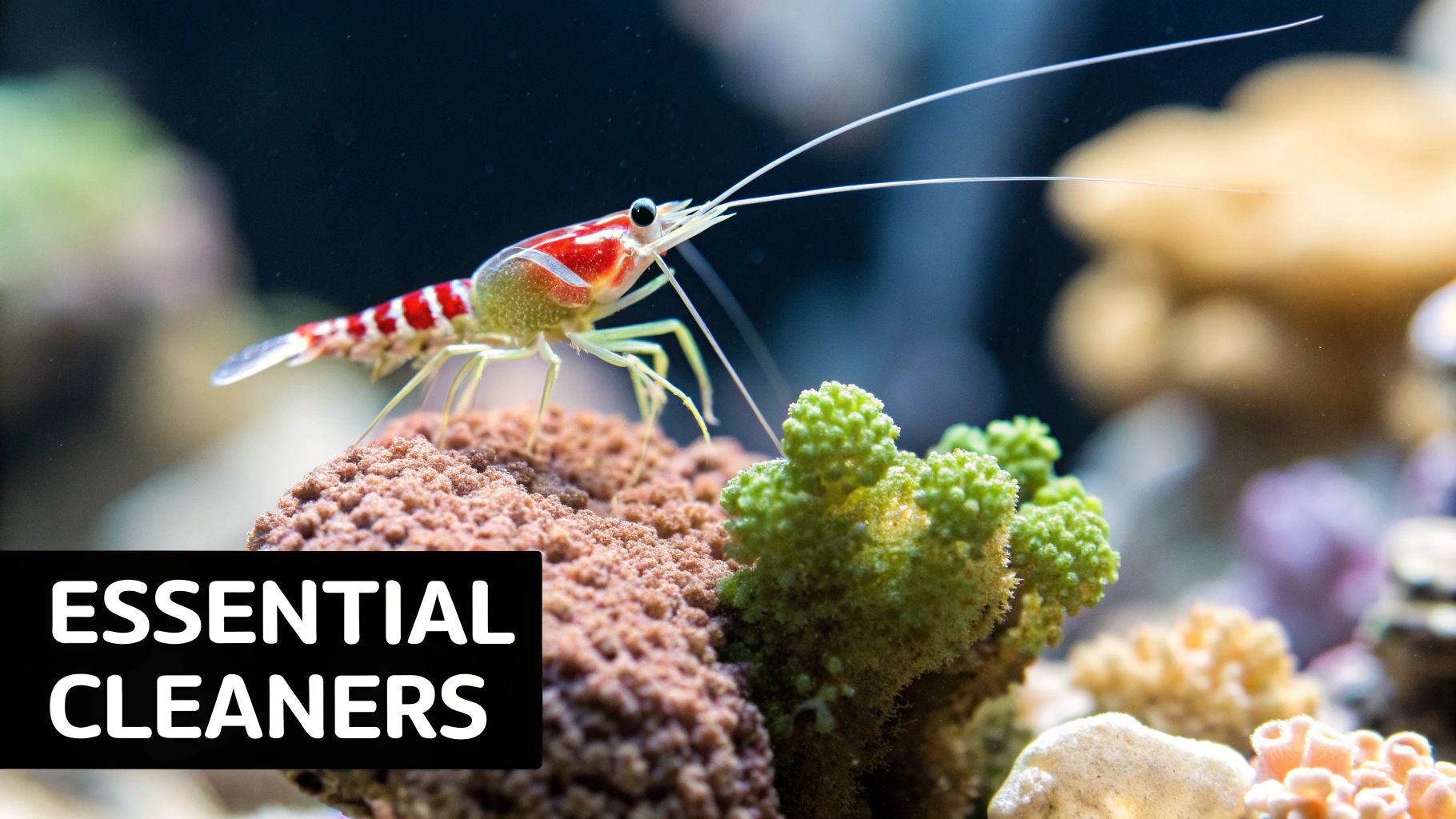
Picture your reef tank as a tiny, self-contained city. The corals are the stunning architecture, and the fish are its busy residents. In this bustling little metropolis, your shrimp are the indispensable sanitation workers and paramedics, working around the clock to keep things running smoothly.
Without them, waste piles up, nuisance pests can get a foothold, and the overall health of your little world starts to slide. They aren't just passive inhabitants; they're actively contributing to the stability and beauty you work so hard to create.
The Functional Roles of Shrimp
Every type of shrimp brings its own unique skill set to the table, like specialists on a highly trained team. Their jobs go way beyond just scavenging; they directly improve the health of your fish and corals while keeping the tank looking sharp.
Here are some of their key roles:
- Pest Management: The Peppermint Shrimp is famous for one thing: its ravenous appetite for Aiptasia, a pest anemone that can quickly plague a reef tank if left unchecked.
- Symbiotic Partnerships: Cleaner Shrimp set up "cleaning stations" where fish will literally line up to have parasites and dead tissue picked off. This is a massive stress-reliever and a natural way to prevent disease.
- Detritus Control: All shrimp are masters at getting into the nooks and crannies of your rockwork, cleaning up leftover food and waste before it can break down and foul your water.
Think of shrimp as the immune system of your reef tank. By controlling pests and cleaning up organic waste, they prevent minor issues from escalating into major health crises for your entire aquatic community.
This crucial role in keeping tanks balanced is a big reason why the hobby is thriving. The global reef aquarium market is on track to hit USD 6.32 billion by 2032, fueled by a growing passion for creating these natural, self-sustaining ecosystems. This dedication is crystal clear when you see that over 70% of hobbyists use cleaner shrimp to support their tanks.
When you add the right shrimp to your aquarium, you're not just buying another animal—you're investing in the long-term health and vibrancy of your entire system. To learn more about putting together the perfect team, check out our guide to the ultimate cleanup crew for your saltwater tank.
Choosing the Right Shrimp for Your Reef Tank
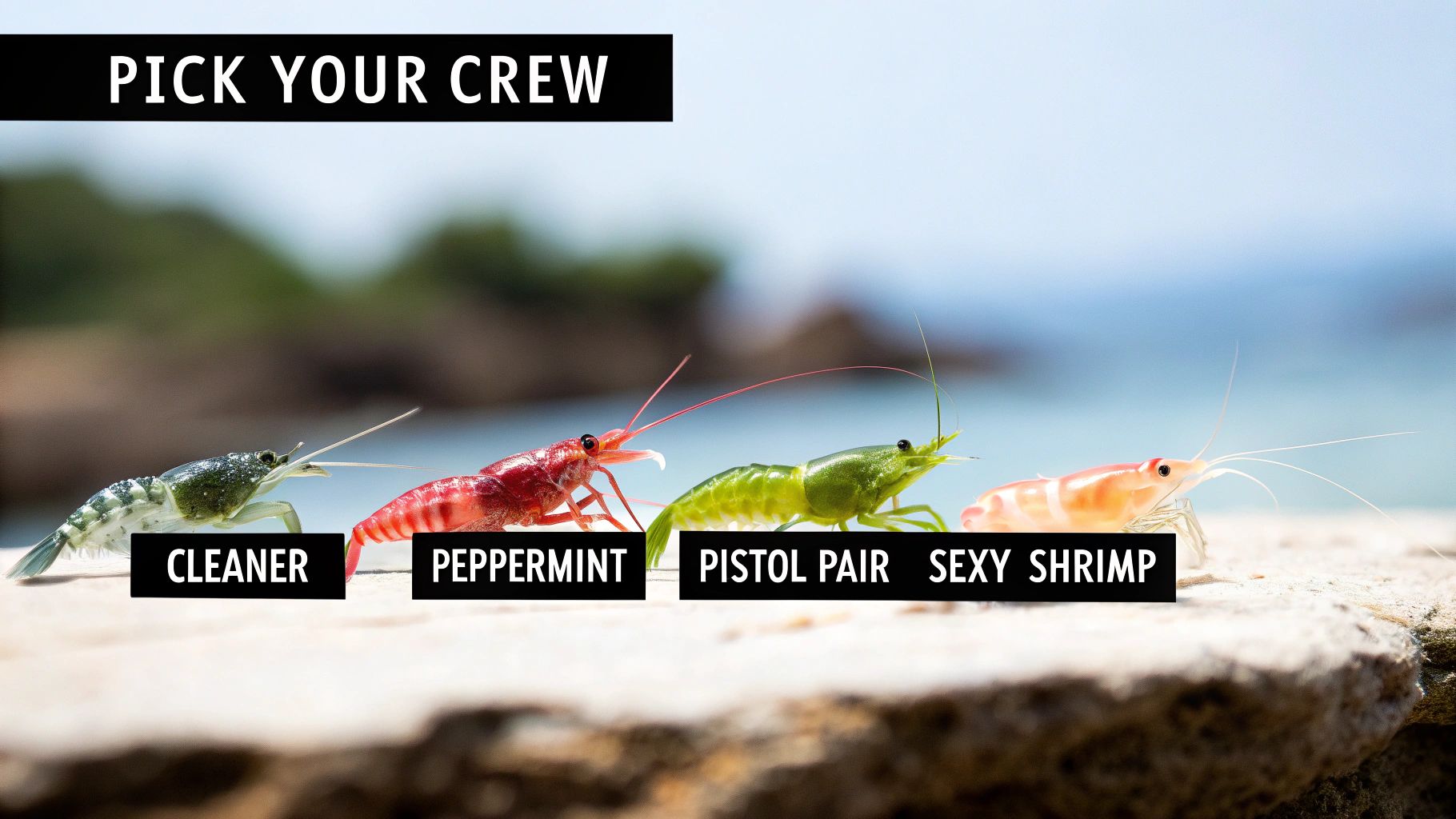
Adding shrimp to your reef tank is about more than just aesthetics. It’s like hiring a specialized crew where each member has a specific, vital job. From pest control to fish healthcare, the right reef aquarium shrimp not only add life and color but become active participants in maintaining your ecosystem's balance.
To build a truly effective and harmonious cleanup crew, you need to understand what each of these little specialists brings to the table. Let's get to know some of the most popular invertebrates you’ll find in the hobby.
The Resident Medic: Skunk Cleaner Shrimp
You can't miss the Skunk Cleaner Shrimp (Lysmata amboinensis). With its flashy red-and-white body and a bold white stripe running down its back, it's one of the most iconic critters in any reef tank. These shrimp are famous for setting up "cleaning stations" where fish literally line up for a check-up.
It’s an amazing thing to watch. The shrimp does a little dance to signal it's open for business, and fish will patiently hover as it crawls all over them, meticulously picking off parasites and dead tissue. This symbiotic service is a huge stress reducer for fish and a natural way to keep diseases at bay. Best of all, they are considered 100% reef-safe and won't bother your corals or other inverts.
The Pest Control Specialist: Peppermint Shrimp
Struggling with the notorious pest anemone, Aiptasia? The Peppermint Shrimp (Lysmata wurdemanni) is your secret weapon. These shrimp have a legendary appetite for this reefing nuisance and can wipe out an infestation that might otherwise require risky chemical treatments. Their semi-translucent bodies, covered in thin red stripes, help them blend right into the rockwork while they hunt.
Now, while they are fantastic at their job, their reef-safe reputation comes with a tiny asterisk. A well-fed Peppermint Shrimp is a model citizen. A hungry one, however, might get brave and nip at soft corals or LPS. The key is to keep them well-fed so they stick to their primary job: pest elimination.
By assigning specific "jobs" to each shrimp, you create a natural, self-sustaining maintenance crew. The Cleaner Shrimp handles fish health, the Peppermint Shrimp manages pests, and other species fill their own unique niches, working together to maintain a balanced system.
The Symbiotic Engineer: Pistol Shrimp
The Pistol Shrimp is less of a janitor and more of a full-blown symbiotic engineer. Species like the Tiger Pistol Shrimp (Alpheus bellulus) are well-known for their incredible partnership with gobies, particularly the Watchman Goby. The shrimp, which is nearly blind, does all the heavy lifting—digging and maintaining a shared burrow. In return, the goby acts as a lookout, warning its shrimp roommate of any danger with a quick flick of its tail.
This relationship is one of the coolest things you can observe in a home aquarium. That "pistol" is its super-sized claw, which snaps shut so fast it creates a tiny bubble that collapses with an audible pop. The resulting shockwave is powerful enough to stun prey or scare off a predator. They're generally reef-safe, but their constant excavation can sometimes bury corals placed too close to the sandbed. You can dive deeper into this amazing pairing in our article on the Watchman Goby and Pistol Shrimp relationship.
The Nano Tank Entertainer: Sexy Shrimp
For anyone with a nano tank, the Sexy Shrimp (Thor amboinensis) is an absolute must-have. These tiny invertebrates get their name from the quirky way they constantly wiggle their tails as they walk. Growing to only about half an inch, they are best kept in small groups where their personalities can really shine.
You’ll often find them hosting in a specific coral, like a Duncan or Mini Carpet Anemone. Their tiny size means they're not a great fit for tanks with larger, predatory fish. But in a peaceful nano setup, a group of five or more creates a mesmerizing, whimsical display. They are completely reef-safe and spend their days scavenging for scraps, adding a ton of character to any small system.
Popular Reef Aquarium Shrimp Comparison
To help you decide, here’s a quick-glance table comparing the roles and requirements of these popular shrimp.
| Shrimp Species | Primary Role | Temperament | Reef Safety | Ideal Tank Size |
|---|---|---|---|---|
| Skunk Cleaner | Fish parasite removal | Peaceful | Completely Safe | 20+ Gallons |
| Peppermint Shrimp | Aiptasia control | Peaceful but opportunistic | Generally Safe | 10+ Gallons |
| Pistol Shrimp | Symbiotic burrowing | Peaceful with partner | Generally Safe | 20+ Gallons |
| Sexy Shrimp | Nano tank inhabitant | Peaceful, best in groups | Completely Safe | 5+ Gallons |
Choosing the right shrimp ultimately comes down to the job you need done and the type of aquarium you're running. Each one brings something unique and valuable to the reef.
Creating a Safe and Stable Shrimp Habitat
Alright, you’ve picked out your shrimp crew. The next step—and it's a big one—is making sure their new home is safe and stable. Building a thriving environment for reef aquarium shrimp goes beyond just getting the water parameters right. It's about crafting a low-stress world where they feel secure enough to molt, forage, and show off those fascinating behaviors we love.
Imagine your tank as a tiny ecosystem. Your shrimp are the small, often shy, residents who need reliable conditions and safe hiding spots to feel comfortable. A sudden swing in water chemistry or the introduction of a bully can quickly turn their paradise into a house of horrors.
The Foundation of Stability: Water Parameters
When it comes to shrimp, stability is king. Seriously. Many hobbyists get caught up chasing a "perfect" number, but what really matters is consistency. Rapid changes are the number one enemy of these delicate invertebrates, often leading to stress, failed molts, and illness.
Think of it this way: slow and steady wins the race. Gradual adjustments are always, always better than sudden corrections.
Here are the key targets to lock in:
- Temperature: Keep your water between 75-78°F (24-26°C). A quality heater connected to a reliable controller isn't a luxury; it's essential for preventing dangerous temperature swings.
- Salinity: Aim for a specific gravity of 1.024-1.026. The biggest culprit for salinity spikes is evaporation. An auto-top-off (ATO) system is your best friend here, as it replaces evaporated water automatically.
- pH: A stable pH between 8.1 and 8.4 is the goal. Don't stress about hitting 8.3 on the dot—focus on preventing it from bouncing around.
- Alkalinity, Calcium, and Magnesium: These "big three" are just as critical for shrimp as they are for corals. They are the building blocks for a new exoskeleton, so keeping them balanced and steady is crucial for successful molting.
Choosing Safe and Compatible Tank Mates
Let's be blunt: to a lot of fish, your new shrimp looks like an expensive, bite-sized snack. Picking the right tank mates is one of the most critical decisions you'll make for the long-term survival of your shrimp.
Many fish that are otherwise considered "reef-safe" are, in fact, notorious shrimp hunters. They might leave your corals alone, but they can decimate your cleanup crew overnight.
Fish to Approach with Caution (or Avoid Entirely):
- Wrasses: Many of the larger, more active wrasses (like the Six Line or Melanurus) are constantly hunting for small crustaceans.
- Dottybacks: Known for being territorial and aggressive, most dottybacks see shrimp as fair game.
- Hawkfish: These guys are ambush predators. They love to perch on the rockwork and watch for unsuspecting prey—including your shrimp—to wander by.
- Large Angelfish and Triggerfish: While not common in most mixed reefs, it goes without saying that these larger fish are definite predators.
A peaceful aquarium is a safe aquarium. Before adding any new fish, take a few minutes to research its compatibility with invertebrates. That little bit of homework can save you the heartache and cost of losing your entire shrimp crew.
The Importance of Rockwork and Shelter
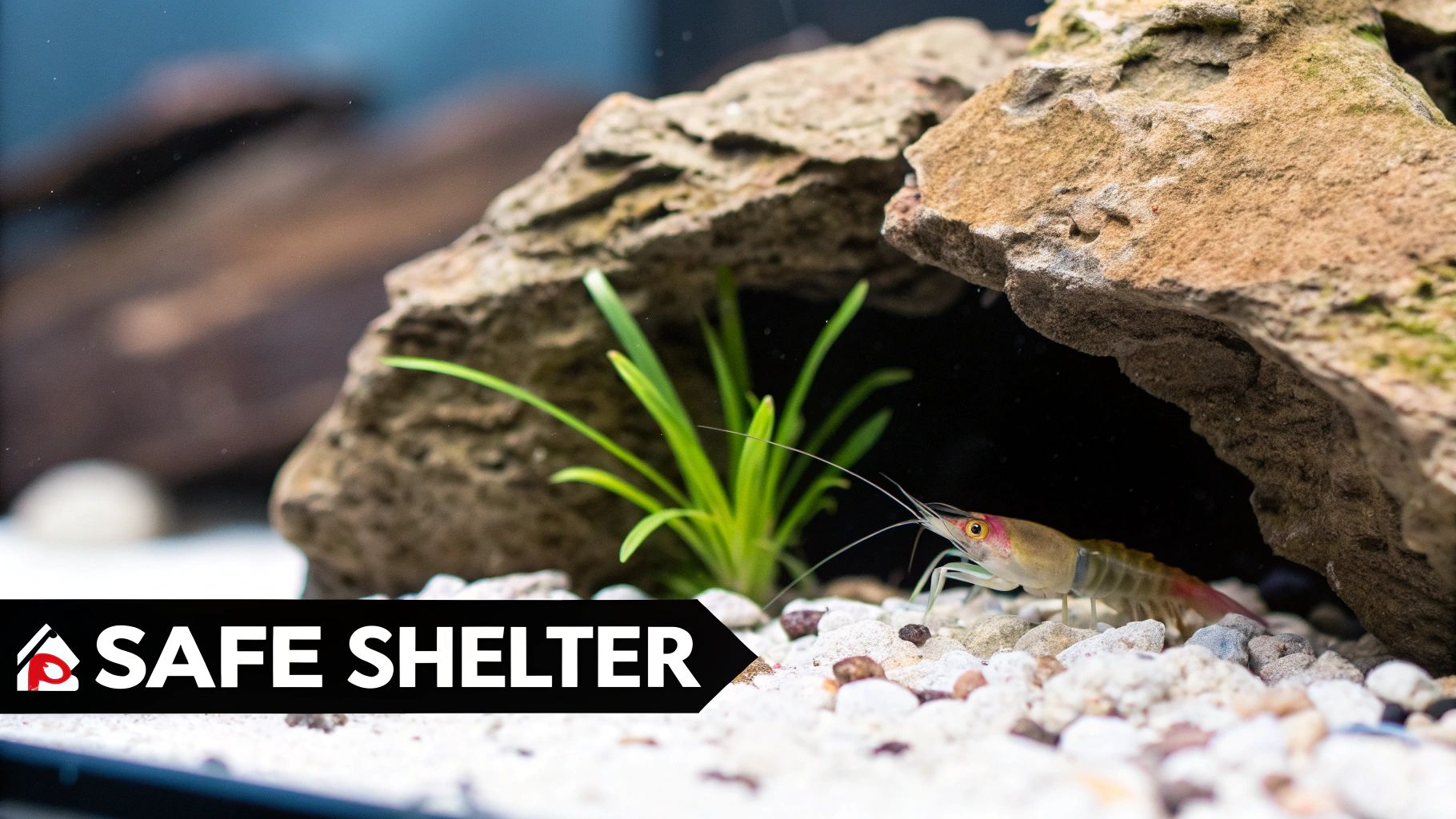
Your aquascape is so much more than just decoration. It’s the architecture of your shrimp's world. A generous amount of live rock with plenty of caves, crevices, and overhangs provides a deep sense of security, which is absolutely vital during molting.
Molting is how a shrimp grows—it sheds its old, tight exoskeleton to make way for a new, larger one. Right after it molts, its new shell is incredibly soft, offering zero protection. This is when the shrimp is at its most vulnerable, and it will instinctively bolt for the deepest, darkest crevice it can find to hide until its new armor hardens.
An aquascape that's too open or sparse leaves them feeling exposed and stressed out. By creating a complex, interesting rock structure, you give your shrimp the confidence they need to come out and do their job, knowing a safe retreat is just a quick flick away. That feeling of security is the final piece of the puzzle in building a habitat where your shrimp don't just survive—they flourish.
Fueling Your Shrimp with a Live Food Web
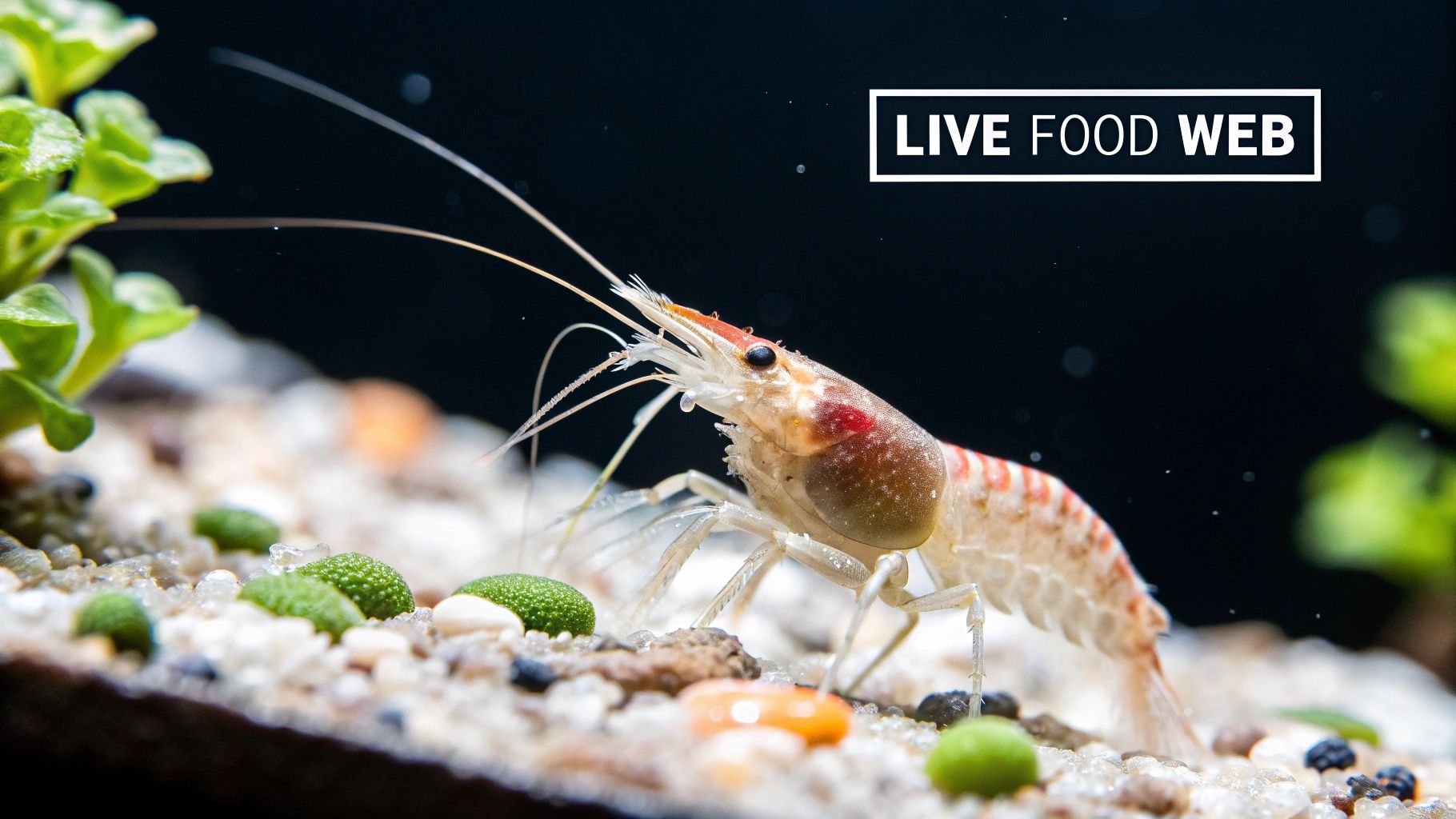
It’s true, your reef aquarium shrimp are incredible scavengers. They’re the janitors of the tank, always on the lookout for a leftover meal. But if you want them to thrive—to show off their deepest colors, behave naturally, and even breed—they need more than just scraps. Relying on leftovers is like feeding a professional athlete fast food; they’ll survive, but they won’t perform at their peak.
The real secret to unlocking their potential is to build a living, breathing food web right inside your aquarium. Think of it less like a feeding schedule and more like cultivating a miniature ecosystem. Processed flakes and pellets have their place, but they're a supplement, not the main course. By introducing live foods, you're not just dropping in a meal; you're sparking a food chain that nourishes everything in the tank, from the corals to the fish.
This approach turns feeding into an act of ecosystem engineering. You’re building a foundation that provides a constant, natural food source, allowing your shrimp to do what they do best: hunt and forage. It's this continuous access to quality nutrition that makes all the difference for their long-term health.
The Power of a Microscopic Food Web
The bedrock of this entire system starts with two microscopic MVPs: phytoplankton and copepods. Phytoplankton are tiny marine algae, literally the base of the ocean's food chain. Think of them as billions of tiny, floating power plants converting light into pure nutrition.
When you add phytoplankton to your tank, you’re essentially feeding the feeders. Copepods swarm to it, gobbling it up and becoming "gut-loaded" with all those essential fatty acids, vitamins, and minerals. This simple two-step process creates the perfect bite-sized, nutrient-packed meal for your shrimp.
A self-sustaining food web is the ultimate form of automated, natural feeding. By seeding your tank with phytoplankton and copepods, you create a continuous cycle where nutritious prey is always available, mimicking the constant foraging opportunities shrimp have on a natural reef.
This ecosystem-first approach has benefits that ripple throughout your entire tank. Well-fed, active shrimp are simply better at their jobs. A 2023 study by the Marine Aquarium Societies of North America actually put numbers to this, finding that tanks with healthy shrimp populations had 25% lower algae outbreaks and 15% higher coral growth rates than tanks without them. It’s a clear demonstration of how a well-fed cleanup crew directly contributes to a healthier, more stable reef.
Choosing Your Live Food Champions
Not just any live food will do. The goal is to establish breeding populations right inside your tank's rockwork and sand bed, creating a self-renewing food source. This is where specific types of copepods really shine.
Key Copepod Species for Your Reef:
- Tisbe biminiensis: These guys are the masters of stealth. As small, benthic (bottom-dwelling) copepods, they live in the tiny crevices of your live rock. Their size makes them a perfect snack for even the smallest shrimp, fish, and coral polyps.
- Tigriopus californicus: A bit larger and sporting a vibrant red color, these pods are incredibly tough. They’re also packed with astaxanthin, a natural pigment that really makes the reds and oranges on your shrimp and fish pop.
- Apocyclops panamensis: If you want a fast-reproducing species that can handle a wide range of tank conditions, Apocyclops is a fantastic choice. They help ensure you’ve always got a steady supply of live food swimming around.
A smart strategy is to introduce a diverse blend of these species. This creates a multi-layered food web, with some pods skittering across the rocks and others swimming in the water column, offering different hunting opportunities for everyone. To really dive into how these critters can transform your tank, you can learn more about the benefits of seeding your tank with live copepods.
Seeding your aquarium with a product like PodDrop isn't just a one-time meal; it's an investment in your tank's future. You’re establishing a permanent, reproducing food source that provides superior nutrition, reduces your reliance on processed foods, and creates a more natural and engaging environment for every single inhabitant.
Troubleshooting Common Shrimp Health Problems
Even with a perfectly maintained tank, you're bound to run into a hiccup or two. When it comes to your reef aquarium shrimp, an ounce of prevention is worth a pound of cure, but knowing how to spot trouble early is what really saves lives.
A healthy shrimp is a busy shrimp. You'll see it confidently scrambling over rockwork, constantly picking at the sandbed, and generally looking engaged with its world. If you notice a shrimp has become lethargic, is hiding more than usual, or its colors look dull and washed out, those are your first clues that something is off.
The Make-or-Break Molting Process
Molting is totally normal and a great sign of growth. Don't be alarmed when you find a perfect, ghostly shell of your shrimp on the sand—that's a good thing! But this is also the single most vulnerable moment in a shrimp's life, and a failed molt is one of the most common reasons they die in our tanks.
If you find a shrimp that seems stuck in its old shell or has died mid-molt, it’s a massive red flag. This almost always points back to a problem with your water parameters or their diet.
- Wobbly Water Parameters: Big swings in salinity, temperature, or your main three (calcium, alkalinity, and magnesium) can throw a wrench in the hormonal signals that control molting.
- Missing Nutrients: A diet that's missing key minerals, especially iodine, can leave a shrimp without the raw materials it needs to form a strong new exoskeleton.
Think of a molt like a high-stakes construction project. If the building materials—stable water chemistry and the right nutrients—aren't available, the whole thing can fall apart. Keeping your parameters locked in isn't just for your corals; it's a lifeline for your inverts.
How to Prevent Most Health Problems
Nearly every issue you'll encounter with shrimp, from bacterial infections to parasites, boils down to two things: poor water quality and stress. A stressed-out shrimp has a weak immune system, making it an easy target for all the nasty bugs that are naturally present in any aquarium. The best defense is a good offense.
The most powerful way to keep your shrimp healthy is to focus on a few key preventative steps.
- Quarantine Is a Must: Never, ever drop a new shrimp straight into your display tank. A separate quarantine tank gives you time to watch for any signs of disease and slowly acclimate them to your system's water without putting your entire tank at risk.
- Acclimate Like You Mean It: Drip acclimation isn't optional. This slow, gradual process is the only way to minimize the shock of changing water chemistry, which dramatically cuts down on that initial, dangerous stress.
- Go for Aquacultured: Whenever you have the choice, buy aquacultured (captive-bred) shrimp. These guys were born and raised for aquarium life, so they're naturally hardier and way less likely to carry the wild parasites and diseases that can hitchhike in on wild-caught animals.
At the end of the day, keeping shrimp healthy comes right back to the core principles of good reef-keeping. If you provide stable water, a safe environment with lots of places to hide, and a nutrient-rich diet with plenty of live food, you’re creating a system where your shrimp don't just get by—they flourish.
Stocking Strategies for Any Size Aquarium
Deciding who gets to move into your new reef is easily one of the most exciting parts of the hobby. When it comes to your reef aquarium shrimp, though, the question isn't just "how many?" It's about carefully building a peaceful, functional community. Your tank's size is the single biggest factor guiding this decision.
In smaller setups, less is definitely more. Crowding a nano tank is a surefire way to start turf wars and spike stress levels, turning your little slice of the ocean into a free-for-all. Larger tanks, on the other hand, give you the real estate to host multiple species, letting each one do its job without getting in another's way.
Blueprints for Nano Reefs
In a tank under 30 gallons, every single inhabitant matters. You're aiming for maximum personality and utility without crashing your biological filter. Trust me, overstocking is the quickest path to a water quality nightmare in a small system.
Here are a few stocking ideas that have worked well for nano reefers:
- The Solo Specialist: A single Skunk Cleaner Shrimp is a fantastic choice. It’s not just an invertebrate; it becomes a centerpiece, actively interacting with your fish, providing a valuable cleaning service, and adding a ton of color and movement.
- The Entertainer Troupe: For a really peaceful tank, a small group of three to five Sexy Shrimp is hard to beat. They’ll often take up residence in a specific coral or anemone, and you'll get lost watching their unique tail-waggling dance.
- The Pest Patrol Partner: One lone Peppermint Shrimp can be a total lifesaver, hunting down pesky Aiptasia with a vengeance. The key is to keep it well-fed with other foods so it doesn't get tempted to nip at your prized corals.
Building a Diverse Crew for Larger Aquariums
Once you get into tanks of 40 gallons and up, the possibilities really open up. You have enough space to build a more complex and specialized cleanup crew. The secret here is to pick species that stick to their own turf and have chill personalities to keep the peace.
Think of stocking a large reef like casting a play. You need a diverse cast of characters, each with their own part to play, who can share the stage without upstaging each other. A well-planned crew works together to create a stunning, healthy ecosystem.
You can even build a team tailored to your tank’s specific needs. Imagine a "Community Cleanup" crew: a pair of Skunk Cleaner Shrimp to look after fish health, a Pistol Shrimp and Goby pair to manage the sandbed, and a Peppermint Shrimp for pest duty. This kind of combo ensures every level of the tank is covered by an expert, helping everything thrive.
Your Reef Shrimp Questions Answered
When you're diving into the world of reef tanks, a whole lot of questions pop up about shrimp. It makes sense—these little critters are fascinating, but you want to make sure you're doing right by them and your reef. Let's tackle some of the most common things reefers ask.
Are All Shrimp Actually "Reef-Safe"?
This is probably the most important question, and the answer is a hard no. It's a classic rookie mistake to assume any shrimp you see at the store will be a model citizen in your reef. You really have to do your homework on the specific species.
- The Good Guys: You can't go wrong with species like the Skunk Cleaner Shrimp or the ever-popular Sexy Shrimp. They are completely trustworthy and won't give your corals a second glance.
- The Mostly Good Guys: Then you have shrimp like the Peppermint Shrimp. They're brilliant for munching on Aiptasia, but a hungry one might get bold and start nipping at coral tissue. The trick is to keep them well-fed and they'll usually leave everything else alone.
- The Villains: Steer clear of certain species. The Camel Shrimp, for instance, is notorious for being a coral-eater and has no place in a mixed reef.
A few minutes of research before you buy can save you a world of headache and protect your precious corals. Always double-check compatibility.
How Often Do My Shrimp Need to Be Fed?
Your shrimp are fantastic scavengers, constantly picking at leftover fish food and tidbits they find. But just because they're cleaning up doesn't mean they're getting a complete diet. If you want them to thrive—to show their best colors and stay active—you need to be a little more intentional.
Spot-feeding a good protein-based food a couple of times a week is a solid start. But honestly, the best way to feed them is to let them feed themselves, just like they would in the ocean.
Think of it as setting up a permanent, all-you-can-eat buffet. By seeding your tank with a healthy, breeding population of live copepods, you're giving your shrimp a constant supply of natural food to graze on. This is what they're built to eat.
This isn't just great for your shrimp; it creates a more robust micro-ecosystem that benefits everything in your tank, from your fish to the corals themselves.
Help! My Shrimp Shed Its Skin. Is It Okay?
Totally normal! Finding what looks like a perfect, ghost-like copy of your shrimp lying on the sand can be a little jarring the first time you see it. But it’s actually a great sign. This is called molting, and it’s how your shrimp grows.
Don’t rush to remove the empty shell (the molt). It’s packed with calcium and other valuable minerals. Just leave it in the tank; other critters will likely snack on it, recycling those nutrients right back into your system. To help your shrimp molt successfully, the most important thing you can do is keep your water parameters stable, especially calcium and alkalinity.
Can I Keep Different Kinds of Shrimp Together?
You can, but you have to be smart about it. The success of a mixed-shrimp household really comes down to your tank size and the specific species you choose. In a larger tank with tons of rockwork and hiding spots, peaceful types like Skunk Cleaners and Peppermints can often live together just fine. The space allows them to carve out their own territories without stepping on each other's toes.
However, some shrimp are just plain bullies. The Coral Banded Shrimp is a prime example—it's incredibly territorial and will almost certainly hunt down and kill any other shrimp it shares a tank with. Always, always check compatibility charts and make sure you have plenty of nooks and crannies for everyone to feel secure.
To build that vibrant, self-sustaining food web that keeps your shrimp happy and healthy, check out PodDrop Live Aquarium Nutrition. Seed your reef with life today.