

Mandarin Fish Care A Guide to Thriving Dragonets
Proper mandarin fish care really boils down to one make-or-break factor: a constant, living supply of food. These fish are what we call specialized micro-predators. They almost exclusively hunt and eat live copepods, which makes them a true expert-level challenge requiring a mature, established aquarium teeming with tiny life.
The Reality of Keeping a Mandarin Dragonet
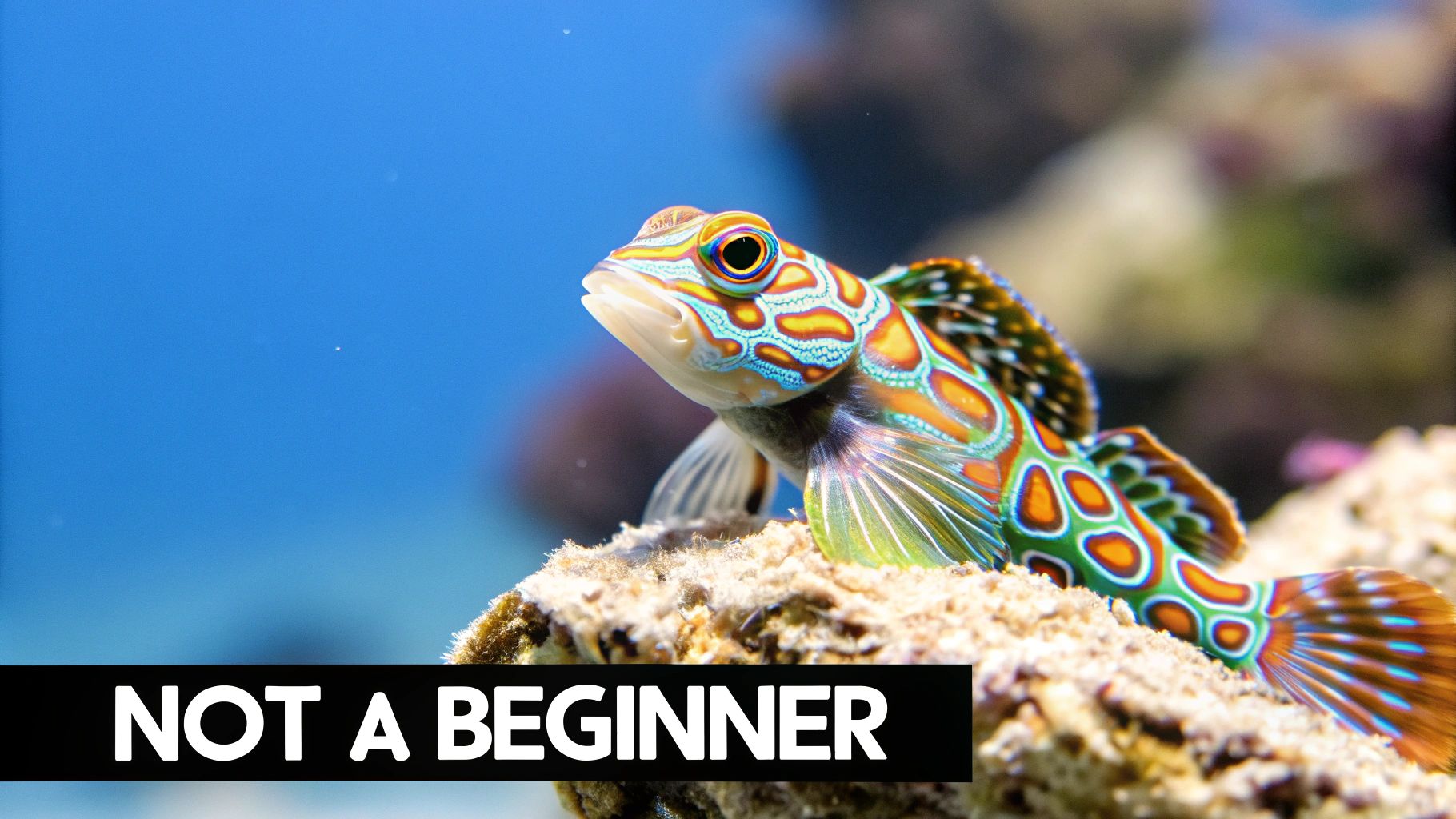
It’s no mystery why the Mandarin Dragonet (Synchiropus splendidus) is one of the most sought-after fish in the saltwater hobby. With its wild patterns of electric blue, bright orange, and deep green, it looks more like a piece of psychedelic art than a fish. But that stunning beauty hides a demanding, unforgiving secret: a very specific diet.
The number one reason these gorgeous fish don't make it in home aquariums is simple: starvation. Unlike most marine fish that will eventually take to flakes or frozen foods, the vast majority of mandarins will only recognize live, moving prey. They are perpetual grazers, spending every waking moment picking at the live rock and sand, hunting for tiny crustaceans like copepods and amphipods.
More Than a Fish—An Ecosystem Custodian
Thinking about keeping a mandarin requires a total shift in mindset. You're not just adding a fish to a tank; you're cultivating an entire ecosystem just to support it. A new or immature aquarium is basically a food desert for a mandarin, and it will wipe out any starter population of pods in just a few weeks.
Success hinges on establishing what I call a "living pasture" long before the fish even enters the tank. This means a few things are non-negotiable:
- A Mature Tank: Your aquarium needs to be up and running for at least 6-9 months, maybe even longer. This gives a robust, self-sustaining copepod population time to establish itself naturally.
- Tons of Live Rock: The porous, complex surfaces of live rock are the perfect breeding ground and hiding place for microfauna. This is where the food lives and reproduces, creating a renewable food source.
- A Refugium: This is your secret weapon. A refugium is a protected zone, usually in the sump, that serves as a dedicated copepod factory, safe from any predators in the main display.
The real key to happy mandarin ownership is proactive food cultivation. You have to stop thinking about feeding the fish and start focusing on feeding the food that feeds the fish. This approach turns your aquarium from a glass box into a sustainable, living habitat.
Setting Realistic Expectations
Before you fall in love and bring one home, you have to be honest with yourself about the commitment. This is absolutely not a "set it and forget it" kind of fish. It demands a patient aquarist, someone who genuinely enjoys the small details of building a balanced ecosystem.
The reward, though, is incredible. Watching a healthy mandarin thrive is a true testament to your reef-keeping skills. Their slow, deliberate hunting behavior is mesmerizing to watch, but you'll only see it happen in an environment that was carefully and patiently prepared to support them for the long haul.
To give you a clear picture of what's needed, here’s a quick-reference chart summarizing the most critical care parameters for a Mandarin Dragonet.
Mandarin Fish Care Quick Reference Chart
| Care Parameter | Ideal Range / Requirement | Critical Note |
|---|---|---|
| Minimum Tank Size | 30 gallons | Larger is always better for pod population stability. |
| Aquarium Maturity | 6-9+ months old | This is non-negotiable. The tank must have an established microfauna population. |
| Water Temperature | 75-81°F (24-27°C) | Stable temperatures are key to reducing stress and supporting pod reproduction. |
| Salinity | 1.023-1.025 sg | Consistency is more important than hitting a specific number within this range. |
| pH | 8.1-8.4 | Maintain stable pH to support both the fish and the microfauna. |
| Diet | Live Copepods & Amphipods | The fish must have a constant supply of live food to graze on all day. |
| Temperament | Peaceful | They are slow and easily outcompeted for food. Avoid aggressive tank mates. |
| Reef Safe | Yes | They are perfectly safe with corals and will not bother them. |
This table provides a snapshot, but remember that the true secret lies in creating the living ecosystem before the mandarin arrives.
Building a Sustainable Food Factory for Your Mandarin
Here’s the absolute truth about keeping a mandarin fish: success starts long before you even think about bringing one home. The secret isn't really about the fish itself. It's about creating a living, breathing ecosystem that serves as both its home and a never-ending buffet.
Think of it like trying to raise a cow on a patch of concrete—it just won’t work. Your aquarium has to first become a lush, thriving pasture packed with microfauna.
This is why a mature aquarium is non-negotiable. We're talking about a tank that's been up and running for a bare minimum of 6 to 9 months. This crucial period allows microscopic life, especially the all-important copepods and amphipods, to establish dense, breeding populations. Dropping a mandarin into a brand-new, sterile tank is a death sentence. It will hunt down every last pod in a matter of weeks and then slowly starve.
Designing a Copepod Paradise
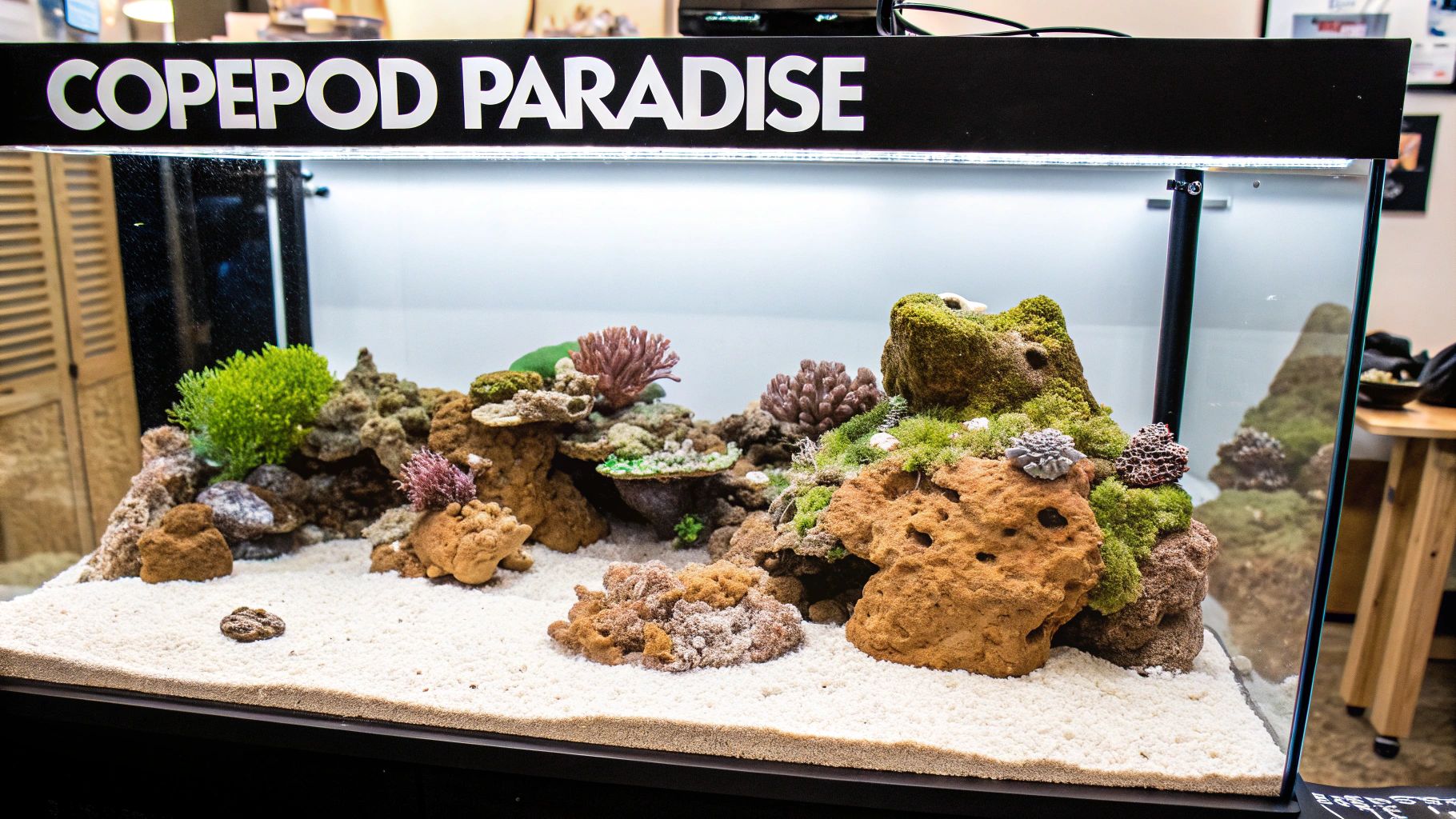
To give your mandarin the best chance, you need to design your tank to be a literal "copepod paradise." The goal is to maximize the surface area where these tiny crustaceans can live, breed, and hide from their primary predator—your mandarin. This means creating a complex landscape with countless nooks and crannies where their food source can flourish.
Two structural elements are absolutely key here:
- Abundant Live Rock: This is the cornerstone of any mandarin-friendly setup. Good, porous live rock is like a sprawling apartment complex for copepods, offering protection and a surface for the biofilm they graze on.
- Deep Sand Bed (DSB): A sand bed of at least 2-3 inches creates another massive habitat for different types of pods and worms. You’ll see your mandarin spending its days meticulously picking through the top layer, hunting for its next tiny meal.
Think of your rockwork and sand bed as the soil of a farm. The richer and deeper the soil, the more life it can support. For a mandarin, this "living soil" is the difference between just surviving and truly thriving.
The Refugium: Your Secret Weapon
While a well-designed display tank is a great start, a refugium is the ultimate ace up your sleeve. A refugium is a dedicated, protected space—usually a chamber in your sump—that’s connected to your main system. It’s a safe-haven food farm, completely isolated from the hungry fish in your display tank.
Here, you can grow macroalgae like Chaetomorpha and toss in some extra live rock rubble. This creates a predator-free zone where your copepod population can absolutely explode. As they reproduce, a steady stream of larvae and adult pods gets carried into the main tank, providing a constant, 24/7 food supply. If you really want to supercharge your pod production, you can even dive into how to culture copepods at home a simple guide to feeding and care.
Ideal Tank Size and Flow
Sure, some seasoned hobbyists have pulled off keeping mandarins in smaller tanks, but a larger system gives you a much bigger buffer for error. More volume and surface area mean a more stable and resilient pod population.
- Minimum Tank Size: A 30-gallon tank is the absolute smallest you should consider, and even that requires you to be incredibly diligent about managing the food supply.
- Recommended Tank Size: A tank of 50 gallons or more is what you should really aim for. The larger footprint provides more grazing territory and supports a far more robust ecosystem of microfauna.
Water flow is just as important. Mandarins are slow, methodical swimmers, not athletes. They get tossed around easily in high-flow environments. You need to make sure there are plenty of calm spots around the rocks and sand bed where they can comfortably hover and hunt without fighting a current. A gentle, meandering flow is perfect.
Mastering the Live Food Supply Chain
This is it. The single most critical piece of the puzzle for successful mandarin fish care is getting a handle on their food source. These fish are what we call obligate micro-predators, which is a fancy way of saying they must hunt tiny, live prey to survive. In your tank, that means one thing: a constant, self-sustaining population of copepods.
Unlike most of the fish in your tank, mandarins almost never recognize pellets or frozen food as edible. Their feeding response is hardwired to the specific, jerky movements of live pods scooting around the rocks. This is the heartbreaking reason so many mandarins starve to death in tanks that look perfectly clean and healthy. If there isn't a thriving pod population, there is literally nothing for them to eat.
Choosing Your Copepod Workforce
To build a food web that can keep up with your mandarin's appetite, you need to seed your tank and refugium with the right kinds of copepods. Different species hang out in different parts of the tank, so using a mix is key to making sure every nook and cranny is a productive "pasture." Think of it like planting a field—a diverse blend of grasses is always more resilient and provides better coverage.
Two of the heavy hitters in the hobby are Tisbe and Tigriopus.
- Tisbe biminiensis: These are your foundational pods. They're small, reproduce like crazy, and prefer to live deep within the rockwork and substrate. This benthic (bottom-dwelling) behavior makes them the perfect meal for mandarins, who spend all day methodically picking over those exact surfaces.
- Tigriopus californicus: Often just called "Tig" pods, these guys are larger, reddish, and tend to swim around in the water column a bit before settling. Their bigger size packs a nutritious punch, and their active swimming can trigger a feeding response in even the most stubborn mandarins.
By starting your system with both, you create a dynamic buffet that populates the tank from top to bottom. If you want to dive deeper into the best options for your specific setup, it's worth taking a few minutes to start comparing popular copepod species for marine aquariums.
The goal here isn't just to add food. It's to establish a population so dense and reproductive that it can easily handle the constant grazing from your mandarin. You are kickstarting a perpetual, 24/7 food factory right inside your aquarium.
Feeding the Food: Gut-Loading Your Pods
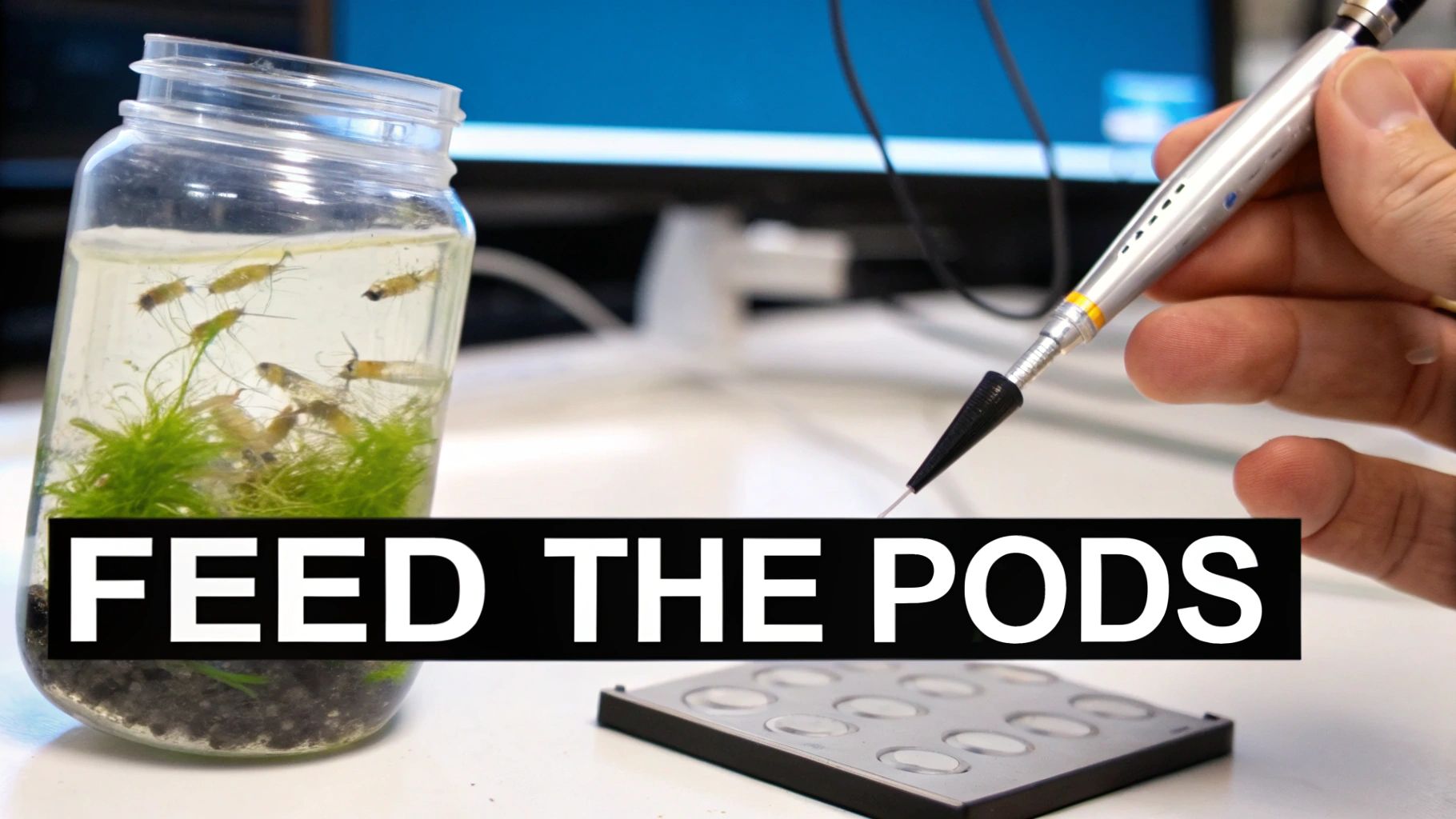
A common mistake is to just dump in some copepods and hope they figure it out. But remember, your copepods need to eat, too! And a well-fed, healthy copepod is a much more nutritious meal for your mandarin. This whole process is called gut-loading, and it's the real secret to raising a plump, vibrant dragonet.
The number one food source for copepods is phytoplankton—microscopic marine algae. By regularly dosing your tank and refugium with live phytoplankton, you're directly feeding your pod population. This gives them the fuel they need to reproduce quickly and ensures they are packed with the essential fatty acids (like DHA and EPA) your mandarin needs to truly thrive.
Think of phytoplankton as the fertilizer for your copepod farm. A steady supply keeps the entire food chain humming along, from the tiniest algae all the way up to your prize fish. Products like PodDrop Live Aquarium Nutrition are made for this exact job, delivering high-quality, live phytoplankton strains that fuel explosive pod growth.
Seeding Strategy for Long-Term Success
Just dumping a bottle of pods into the main display isn't the best play. Many will become an expensive snack for your other fish and inverts before they ever get a chance to reproduce. A smarter approach is to make sure they find safe harbor first.
Here’s a simple, step-by-step method to seed your system effectively:
- Target the Refugium First: Your refugium is a predator-free zone. Add at least half of your new copepods directly in there. They can settle into the macroalgae and rock rubble and start multiplying without any pressure.
- Dose the Display After Dark: Add the rest of the pods to your main tank well after the lights have gone out. Most fish are less active at night, giving the pods a much better chance to scurry into the rockwork and sand bed.
- Turn Off Pumps and Filters (Temporarily!): When adding pods, it’s a good idea to turn off your return pump, skimmer, and powerheads for 30-60 minutes. This stops them from getting immediately sucked into the filter or blown around, letting them settle where they need to be.
- Repeat as Needed: Especially in a newer system, or if you notice your mandarin is looking a bit thin, don't be afraid to re-seed the tank every few weeks. This will bolster the population until it truly becomes self-sustaining.
The Challenge of Prepared Foods
You'll hear stories about captive-bred mandarins learning to eat prepared foods, and while they have a better shot at it, you should never count on it. The vast majority of mandarins, particularly wild-caught ones, will completely ignore frozen or pellet food. Their brains are simply hardwired to hunt for tiny, moving prey.
Trying to train a mandarin can be a long and often frustrating process. Some hobbyists have managed it by using a turkey baster to gently puff frozen baby brine shrimp near the mandarin's mouth, but even this is a long shot that requires incredible patience.
For this reason, a thriving live copepod population should always be considered the primary and essential food source. If your mandarin happens to accept prepared foods, view it as a bonus—a supplemental treat, not its core diet. Your focus must stay locked on maintaining that live food supply chain. It's the only reliable path to long-term success on your mandarin fish care journey.
Choosing Peaceful Neighbors for Your Mandarin
A mandarin dragonet is a slow-motion marvel. It glides across the rockwork in its own little world, meticulously hunting for copepods and seemingly oblivious to the chaos that can erupt in a reef tank. This peaceful, almost Zen-like nature is what makes them so captivating, but it’s also their biggest vulnerability.
Putting the wrong fish in with a mandarin is a recipe for disaster. They can be bullied, stressed, and most importantly, starved. Think of your mandarin as a quiet librarian trying to eat in a crowded, noisy cafeteria. The faster, more aggressive fish will snatch up all the food before the librarian even gets a chance. Your job as the aquarist is to create a calm, harmonious community where your mandarin can graze without fear.
Ideal Tank Mates for a Harmonious Reef
The best neighbors for a mandarin are fish that are just as chill as it is. We're looking for species with small mouths that have zero interest in the tiny copepods your mandarin relies on. They should be calm swimmers that won't turn the tank into a frantic racetrack, which would only stress the mandarin into hiding.
Here are a few fantastic choices for a mandarin-friendly tank:
- Small Gobies and Blennies: Species like Clown Gobies, Neon Gobies, and Tailspot Blennies are perfect roommates. They're small, peaceful, and tend to perch on rocks or glass, completely ignoring the mandarin's private stash of pods.
- Firefish: These guys are elegant and a bit shy. They hover gracefully in the water column, grabbing bits of food that float by, and will pay absolutely no attention to your bottom-dwelling mandarin.
- Certain Clownfish: A pair of classic Ocellaris or Percula Clownfish is usually a safe bet. They tend to stick close to their anemone or host coral and couldn't care less about what's happening down on the sandbed.
- Royal Grammas: While they can be a little grumpy about anyone entering their favorite cave, their territorial squabbles are usually aimed at similar-looking fish. They'll leave a wandering mandarin alone.
If you're setting up a new tank with a mandarin in mind, building this peaceful community from the start is the key to success. For more ideas, our guide to starter fish for saltwater tanks can help you build a peaceful foundation from day one.
Fish Species to Avoid at All Costs
Knowing who not to add is just as critical as knowing who to add. Aggressive feeders and territorial bullies will make your mandarin’s life a living nightmare, leading directly to stress and starvation. One bad decision here can undo months of hard work.
Absolutely steer clear of these types of fish:
- Most Wrasses: Many popular wrasses, especially the Six Line or Melanurus, are relentless pod hunters. They are your mandarin's number one competitor and will strip the rockwork clean of copepods in no time.
- Dottybacks: Famous for their electric colors and equally bold attitudes. Dottybacks are notoriously territorial and will bully a slow, gentle mandarin relentlessly.
- Aggressive Damselfish: While some damsels are okay, many—like the Domino or Three-Stripe—turn into little tyrants as they get older and will harass anything that comes near their turf.
- Large, Boisterous Fish: Fast swimmers like most Tangs and opportunistic predators like hawkfish create a high-stress environment. They'll also outcompete the mandarin for any food that hits the water.
Building the right community isn't just about avoiding fights; it's an act of proactive protection. The goal is to create an environment so peaceful that your mandarin never has to worry about competition, allowing it to graze confidently and thrive.
A well-chosen community ensures your mandarin can live its best life. Here’s a quick-glance table to help you plan.
Mandarin Fish Tank Mate Compatibility
| Tank Mate Category | Recommended Species | Species to Avoid | Reasoning |
|---|---|---|---|
| Gobies & Blennies | Clown Gobies, Neon Gobies, Tailspot Blennies | Lawnmower Blennies (can compete for algae if pods are scarce) | Most are small, peaceful bottom-dwellers that ignore mandarins. |
| Wrasses | Possum Wrasse (with caution) | Six Line, Melanurus, Yellow Coris Wrasse | Most wrasses are direct and aggressive competitors for copepods. |
| Clownfish | Ocellaris, Percula | Maroon Clownfish | Smaller clownfish species are generally peaceful; Maroons can be highly aggressive. |
| Damsels | Blue/Green Chromis (in groups) | Domino, Three-Stripe, Yellowtail Damsels | Many damsels become extremely territorial and aggressive with age. |
| Other Fish | Firefish, Royal Gramma, Cardinalfish | Dottybacks, Hawkfish, most Tangs | Choose calm fish that occupy different tank zones and don't have aggressive feeding habits. |
Choosing tank mates wisely is one of the most impactful decisions you can make for your mandarin's long-term health.
Can You Keep More Than One Mandarin?
Seeing a pair of mandarins is an incredible sight, but it's a challenge best left to seasoned aquarists with massive tanks. Male mandarins are fiercely territorial and will fight to the death. The only way to keep more than one is to have a confirmed, bonded male-female pair.
Even then, you absolutely need these three things:
- A confirmed, bonded pair (not just two random mandarins).
- A very large tank—think 100+ gallons—with a ridiculously large and well-established pod population to support both.
- Complex, mature aquascaping with tons of rockwork to give them separate territories.
Without these exact conditions, the constant stress and fighting will likely be fatal for one or both of them. For the vast majority of hobbyists, sticking to a single, happy mandarin is by far the wisest and most rewarding approach.
How to Select a Healthy Mandarin Fish
Bringing home a healthy mandarin fish is the single most important step you can take. It’s the difference between a thriving, active hunter and a fish that struggles from day one. A robust specimen adapts faster, hunts more actively, and is far more resilient to the inevitable stress of a new environment. Knowing what to look for can save you weeks of heartache and frustration.
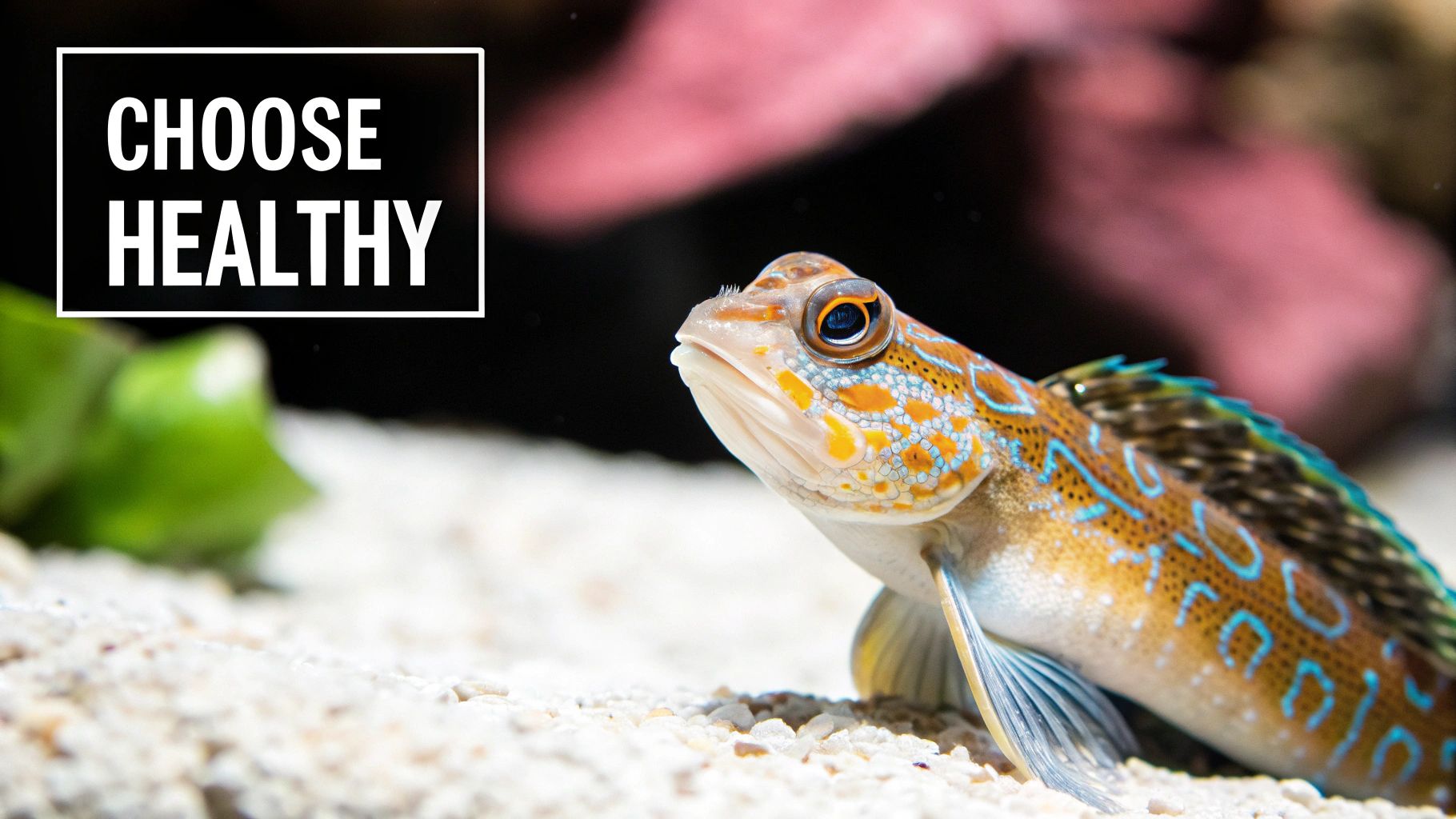
When you're at the fish store, become an observer. The visual cues a mandarin gives off are a direct window into its health. You’re looking for a plump, rounded abdomen, which is a dead giveaway that it has been eating well recently. Its eyes should be clear and bright, with no cloudiness or swelling.
Here’s a quick mental checklist:
- Rounded Abdomen: A full stomach is a great sign. A pinched or sunken belly is a major red flag.
- Active Hunting Behavior: The fish should be confidently moving across the live rock, constantly pecking and searching for copepods.
- Intact Fins and Skin: Look for clean fins with no tears and skin free of any spots, lesions, or unusual marks.
Key Questions to Ask Your Local Fish Store
Don't be shy—a good local fish store (LFS) will appreciate an informed customer. For instance, ask if they can demonstrate a feeding or if you can just watch the fish for a while. Inquiring about their quarantine process and where they source their fish from can tell you a lot. Your goal is to spot a shy, stressed, or unwell individual before you bring it home.
Arm yourself with a few direct questions:
- Can I see the dragonet hunt for live pods in the tank?
- How long has this particular fish been in your store?
- What quarantine steps do you follow for new arrivals?
Visuals and questions tell part of the story, but the fish's origin—wild-caught versus captive-bred—has a massive impact on its future. Captive-bred mandarins are simply more accustomed to aquarium life from the start and are often conditioned to accept a wider variety of foods beyond just copepods.
Captive-bred specimens are hardier, more ethical, and far more likely to thrive in home aquariums. They start with a huge advantage.
Choosing Captive-Bred for Ethical Success
Opting for a captive-bred mandarin is a win-win. You're supporting sustainable practices that reduce pressure on wild reef populations, and you're getting a fish that is better prepared for the challenges of aquarium life. This decision dramatically increases your chances of success right from the beginning.
Interestingly, this sustainable approach is creating new opportunities. Mandarin fish farming has emerged as a low-cost, profitable venture for small-scale farmers in coastal villages, requiring minimal land or heavy machinery. You can learn more about these mandarin fish farming opportunities on krishijagran.com.
Before making the final decision, take a peek at the store's tank parameters. Ideally, the water should have a temperature between 75–81°F (24–27°C) and a salinity of 1.023–1.025 sg. A fish coming from a stable environment will have a much smoother transition into your own.
Once you get your new mandarin home, the observation continues. Give it 24–48 hours to settle in. A well-chosen fish will quickly start to explore its new home, begin hunting, and show minimal signs of stress. By following these steps, you're setting your mandarin up for a long and healthy life.
Key Takeaways for Selecting Healthy Fish
- Inspect Live Feeding: Always confirm the fish is actively hunting. Watching it peck at live rock for pods is the best proof of health.
- Choose Captive-Bred: Prioritize captive-bred mandarins whenever possible. They are hardier and more likely to accept prepared foods.
- Ask the Right Questions: Get the backstory. Inquire about quarantine, how long the fish has been in the store, and see if they’ll do a feeding demonstration.
- Check Tank Conditions: Make sure the store’s water parameters (temperature and salinity) are in the ideal range to ensure a low-stress transition.
Happy reefing
Of course. Here is the rewritten section, crafted to sound like a genuine human expert, following all your specific instructions and style examples.
Got Questions About Your Mandarin? We've Got Answers.
No matter how perfect your setup is, questions are going to pop up. It's just part of the journey with these incredible little fish. Let's tackle some of the most common things fellow hobbyists run into, because getting these right can be the difference between a happy dragonet and a whole lot of stress.
The big one, naturally, is always about food. How can you really know if your mandarin is eating enough? The simplest way is to look at its belly. A well-fed, healthy mandarin will always have a slightly rounded stomach. It's a dead giveaway.
If you see a stomach that looks pinched in, concave, or "sucked in," that's a huge red flag for starvation. It means the pod population in your tank just can't keep up, and you need to add more live copepods right away. Also, just watch its behavior. A happy mandarin is a busy mandarin, constantly pecking at rocks and sand all day long, always on the hunt.
Can You Really Keep a Mandarin in a Nano Tank?
Look, is it technically possible? Yes. But keeping a mandarin in a nano reef (anything under 30 gallons) is incredibly difficult, and honestly, I don't recommend it for most people. A single mandarin can wipe out the entire food supply in a small tank in just a few days, leaving it with nothing.
Making it work in a nano means you're committing to a nearly constant resupply of live copepods. It takes an extremely dedicated reefer. A larger, mature tank with a solid, established refugium gives you a much bigger buffer and is far more forgiving for both you and the fish.
Is it worth paying extra for a captive-bred mandarin? Every single penny. They are worlds hardier, they're already used to aquarium life, and they are much, much more likely to eventually take prepared foods. Plus, buying captive-bred supports sustainable practices that help protect wild reefs.
What if your mandarin is always hiding? If it's a new addition, that's pretty normal. Give it some time. Mandarins are cautious by nature, so make sure your rockwork is complex, with plenty of caves and shady overhangs where it can feel safe. It should get bolder as it settles in.
But if a fish that was once active suddenly goes into hiding all the time, that's your cue to play detective. Check for any tank mate bullying or do a full round of water tests to see if a parameter shift is stressing it out.
The absolute key to long-term mandarin health is keeping its live food source thriving and abundant. PodDrop Live Aquarium Nutrition makes it easy, delivering high-quality, live copepods and phytoplankton right to your door. This ensures your reef's "pasture" is always fully stocked for grazing. Learn more and order your live cultures today.