

Live Copepods Near Me: Find Local Sources for live copepods near me
When you're on the hunt for "live copepods near me," your journey will likely take you to a few key places: your trusted local fish store (LFS), specialized aquaculture suppliers that offer local pickup, and even fellow local hobbyists. Tapping into these local veins is one of the best moves you can make to minimize shipping stress and get a fresh, thriving culture into your reef tank.
Your Search for Local Copepods Starts Here
Finding high-quality live copepods nearby can sometimes feel like a treasure hunt, but it's well worth the effort. It's hands-down the best way to ensure the health of these tiny, delicate organisms. Sourcing pods in your area isn't just about a quick online search; it's about plugging into your local reefing community and finding suppliers who genuinely care about freshness.
The biggest win here is avoiding the shipping gauntlet. Drastically reducing transit stress has a massive impact on the viability of a culture before it even sees the inside of your tank.
When you buy locally, you get a direct pipeline of premium nutrition for your corals and picky micro-feeders. This ensures they're getting the most active and nutrient-packed food possible. Your options typically boil down to three main avenues:
- Local Fish Stores (LFS): Often the most convenient first stop, especially when you need pods now.
- Aquaculture Suppliers: Some of the bigger players offer local pickup, giving you access to professional-grade cultures without the shipping gamble.
- Hobbyist Networks: This is where the real gems can be found. Tapping into local reef clubs or forums can uncover fresh, home-cultured pods that are often more affordable.
Local Copepod Sourcing Options at a Glance
To make your decision easier, here's a quick rundown of what to expect from each local source. Each has its pros and cons, so the "best" option really depends on your immediate needs and what's available in your area.
| Source | Typical Availability | Quality & Purity | Best For |
|---|---|---|---|
| Local Fish Stores (LFS) | Often in stock, but can be inconsistent. | Varies widely. Some are excellent, others less so. Purity can be a concern. | Immediate needs and convenience when you're in a pinch. |
| Aquaculture Suppliers | Consistent, high-volume stock. Usually requires pre-ordering for pickup. | Generally excellent. Professionally cultured for purity and density. | Seeding a new tank or a large-scale restock where quality is paramount. |
| Local Hobbyists | Hit-or-miss. Depends on who is culturing and has extra to sell. | Can be fantastic, but vetting is key. Often well-acclimated to local water. | Finding affordable, fresh cultures and connecting with experienced reefers. |
Ultimately, having a mix of these options at your disposal is the ideal scenario. Your LFS is great for emergencies, while a trusted local hobbyist or supplier can be your go-to for planned tank seeding.
Why Sourcing Locally Matters
Choosing to find live copepods near you does more than just give your aquarium a boost. It supports the local businesses and passionate hobbyists who are the lifeblood of the reefing community. You get the priceless opportunity to inspect what you're buying, ask questions face-to-face, and build relationships with knowledgeable people. That direct connection is something you just can't get from an anonymous online purchase.
Supporting local sources ensures you're getting copepods that haven't been subjected to days of temperature swings and being tossed around in a box. This freshness translates directly into a higher survival rate and a much more successful seeding of your aquarium's ecosystem.
If you find yourself in a situation where local options aren't available, don't worry. For more tips on vetting online sellers, our guide to buying live copepods for sale online can help you navigate that world.
The demand for top-tier live nutrition is booming right alongside the hobby itself. The global aquarium market, which drives the need for suppliers like us at PodDrop Live Aquarium Nutrition, was valued at USD 18.38 billion in 2025 and is expected to jump to USD 36.35 billion by 2035. This incredible growth underscores the rising popularity of saltwater reef tanks, especially considering that over 60% of all aquarium setups are in homes. You can dig into the numbers in this aquarium market report.
Decoding What Your Local Fish Store Actually Has in Stock
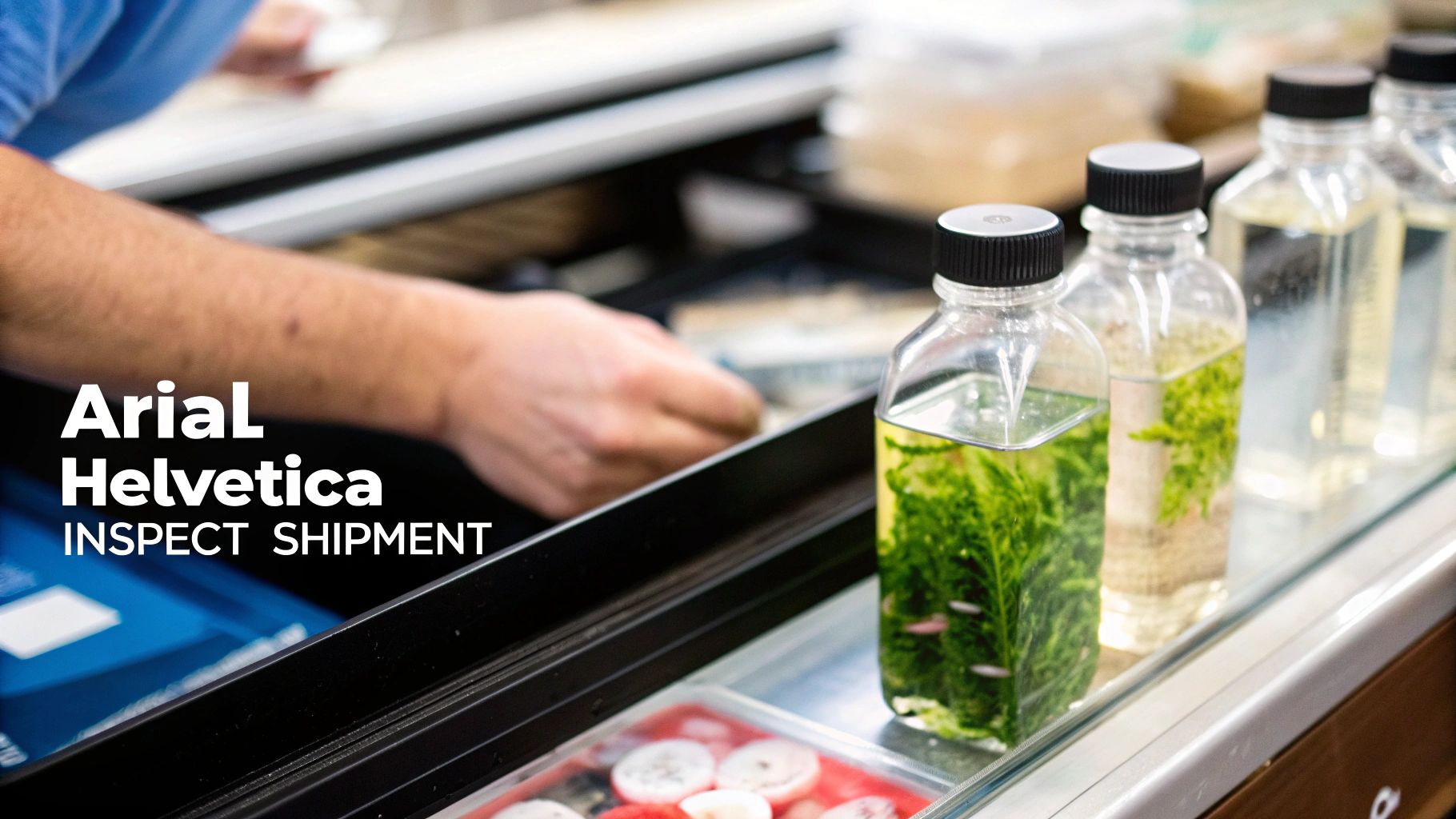
Your Local Fish Store (LFS) is usually the quickest way to get your hands on some pods, but I've learned the hard way that the quality can be a real coin toss. Some shops are absolutely meticulous about their live foods. Others... not so much. Learning to spot the difference is the secret to getting your money's worth and, more importantly, adding a healthy, thriving population to your reef.
The first thing I always do is a quick visual check. Don't just grab the first bottle; pick one up and hold it to the light. You want to see a flurry of tiny, whitish specks zipping around. If you mostly see a layer of gunk at the bottom with little to no movement, that’s a huge red flag. It’s likely a dead or dying culture. Put it back.
The Questions You Need to Ask
Don't be shy about chatting with the staff. A knowledgeable employee is a goldmine of information, but if they look at you with a blank stare when you ask about pods, that tells you everything you need to know about how they prioritize live foods.
Here are the three non-negotiable questions I ask every single time:
- "When did you get this shipment in?" Freshness is everything. Copepods don't last forever in those little bottles, so you need a culture that arrived in the last few days. Anything over a week old is a serious gamble I'm not willing to take.
- "What species is this?" Any decent LFS should know if they're selling Tisbe, Tigriopus, or a blend. This isn't just trivia; it's critical for matching the pods to what your tank and its inhabitants actually need.
- "How are you guys storing these?" The only right answer is refrigeration. If the bottles are just sitting on a warm, brightly lit shelf, their nutritional value and survival rate are tanking by the minute.
I live by this rule: A great local fish store treats its live copepods with the same care it gives its most expensive fish. If the bottles are dusty and forgotten in a corner, it's time to walk away and find a better source.
Knowing Which Pods to Pick
Beyond just finding a live culture, knowing the species helps you buy with a purpose. Many stores sell generic "pod" blends, which can be fine, but discerning shops will carry specific types for different jobs in your ecosystem.
- Tisbe biminiensis: Think of these as the ground crew. They're tiny, they stick to the rocks and sand, and they are fantastic for seeding a refugium. They’ll work tirelessly as a clean-up crew, munching on detritus and leftover food.
- Tigriopus californicus: These are the big, reddish pods you can easily see swimming in the water. Their jerky, frantic movements are like a dinner bell for picky eaters. If you have a mandarin dragonet or a pipefish, this is what you want.
So, if your main goal is to finally get that mandarin fat and happy, a bottle of Tigriopus is the obvious choice. But if you're setting up a new tank and want to build a robust, self-sustaining microfauna population from the ground up, a Tisbe-heavy blend is a much smarter long-term investment. Knowing the difference puts you in control.
Choosing The Right Copepod For Your Reef Tank
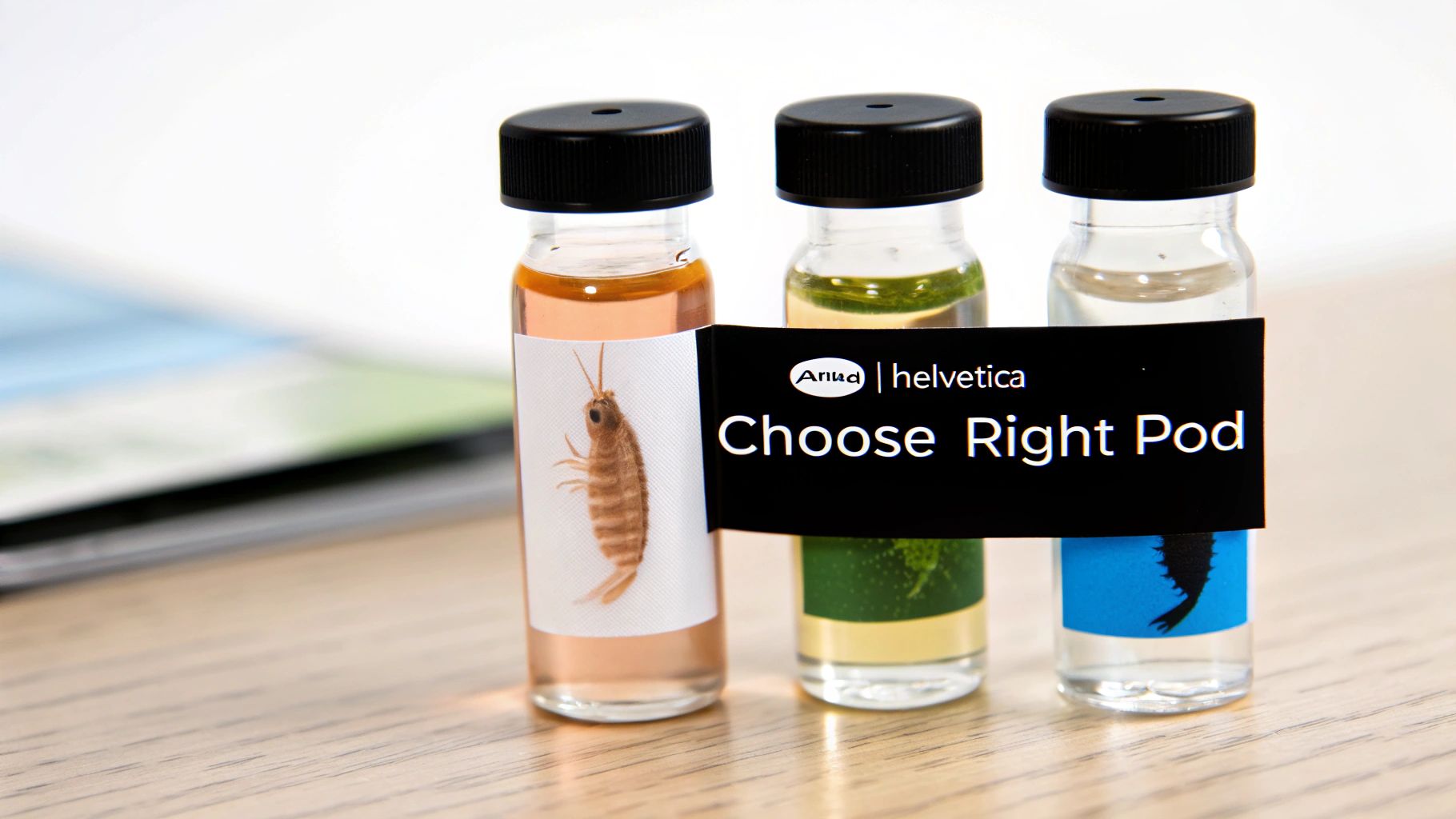
When you start looking for live copepods, you quickly realize that not all pods are created equal. It's the key to unlocking your reef tank's full potential. Picking the right species is like choosing the right tool for a job; each one has a specific purpose and excels in a different part of your underwater ecosystem. Get this right, and you're not just feeding your fish and corals—you're actively building a healthier, more diverse habitat.
One of the biggest distinctions you'll hear about is benthic (bottom-dwelling) versus pelagic (free-swimming) copepods. This isn't just nerdy reef-talk; it directly affects where these critters will live and what role they'll play. Honestly, combining both types is a pro move. It creates a much more complete and resilient food web that populates every nook and cranny of your aquarium.
Match The Pod To The Purpose
Let’s break down the most common species you'll run into and what they’re best at. Think of this as your cheat sheet for bringing home the perfect population for your tank's unique needs.
-
For the Detritus Cleanup Crew - Tisbe biminiensis
These are your benthic workhorses. Tisbe pods are tiny, tough, and love to hang out in the rockwork and sandbed. They are fantastic detritivores, constantly munching on waste and leftover food, which helps keep your substrate sparkling and nutrient levels down. Because they breed quickly and stay out of the water column, they’re perfect for seeding a new tank or a refugium. -
For the Picky Eaters - Apocyclops panamensis
If you have a notoriously finicky fish like a mandarin dragonet or a pipefish, Apocyclops is an absolute game-changer. These pods are small, packed with nutrition, and have a unique swimming motion that seems to flip a switch in a predator's brain. They also handle a wide range of temperatures and salinities, making them incredibly resilient additions. -
For a Hearty, Visible Meal - Tigriopus californicus
Often just called "Tiggs," these are the larger, reddish-orange pods you can actually see zipping around in the water column. Their size and active nature make them an irresistible snack for corals and fish. While they are a fantastic direct food source, they are less likely to establish a large, breeding population in a busy display tank compared to something like Tisbe.
A great way to approach this is to think about your tank's maturity and goals.
A diverse blend is almost always the best starting point for a new nano reef. It introduces multiple species that fill different ecological niches, creating a balanced micro-ecosystem from the get-go. For an established tank with hungry corals, a nutrient-rich culture paired with phytoplankton can deliver more immediate feeding benefits.
The table below breaks down the strengths of each common species to help you make the best choice for your specific setup.
Matching Copepod Species to Your Reef Tank's Needs
| Copepod Species | Primary Benefit | Life Stage | Ideal For |
|---|---|---|---|
| Tisbe biminiensis | Detritus Control & Seeding | Benthic (bottom-dwelling) | New tanks, refugiums, and keeping the sandbed clean. |
| Apocyclops panamensis | Feeding Finicky Fish | Pelagic (free-swimming) | Mandarin dragonets, pipefish, seahorses, and NPS corals. |
| Tigriopus californicus | Direct Coral & Fish Food | Pelagic (free-swimming) | Broadcast feeding hungry LPS/SPS corals and small fish. |
| Tigriopus sirindhornae | Targeted High-Nutrition Feeding | Pelagic (free-swimming) | Nutrient-dense food source for boosting coral color and growth. |
| Pod Blends | Overall Biodiversity | Benthic & Pelagic | Seeding any tank to establish a robust, multi-level food web. |
Choosing the right pod isn't just about a single benefit; it's about building a complete, self-sustaining ecosystem that supports every inhabitant.
The Bigger Picture Of Live Nutrition
The growing focus on live foods is part of a larger shift toward more natural, responsible reefkeeping. This is mirrored in the aquarium market's incredible growth—valued at USD 5.43 billion in 2025 and projected to hit USD 7.26 billion by 2029. This boom helps specialized suppliers like us at PodDrop innovate, with single-species options like Tigriopus sirindhornae now used in over 50% of advanced reef setups for targeted feeding strategies.
Knowing what makes each species tick empowers you to make smarter choices for your tank. To get even more granular, check out our guide comparing popular copepod species for marine aquariums. It’ll give you the confidence to pick the exact pods that will make your reef truly come alive.
Beyond the big-name stores and online suppliers, there's a goldmine of fresh, affordable copepods often hiding in plain sight: your local reefing community.
Think about it. The people who are passionate enough to culture their own pods often have a surplus to share or sell. Buying from a fellow hobbyist doesn't just get you an incredibly fresh culture; it connects you with experienced reefers right in your own backyard. It’s a win-win.
So, where do you find these folks? The best starting points are usually online forums and social media groups dedicated to the hobby in your city or region. A quick search for "[Your City] Reef Club" on Facebook or browsing the local club forums on sites like Reef2Reef will almost always turn up active communities. These are the places where members are constantly trading corals, swapping gear, and, you guessed it, selling live foods.
Making a Safe and Smart Connection
Once you find someone offering live copepods, it pays to do a little friendly due diligence. This isn't a retail transaction with a guaranteed return policy, so you'll want to gather some intel to make sure you’re getting a quality product and not accidentally introducing something nasty into your tank.
Here are a few essential questions to ask before you commit:
- What species are you culturing? This is your first checkpoint. You need to know if their pods are a good match for your specific goals, whether that's seeding a fuge or feeding a picky mandarin.
- What are you feeding them? This is a huge one. The ideal answer is high-quality, live phytoplankton. It means the pods are gut-loaded with nutrients, and you won't be dumping low-quality food that could just turn into nitrates in your system.
- How long has the culture been running? An established, long-running culture is a great sign. It tells you the hobbyist has a stable, successful method down and isn't just selling off a brand new, potentially weak, batch.
A hobbyist who is genuinely excited to tell you all about their setup is a massive green flag. If they can rattle off the species, their feeding routine, and the specifics of their culturing process, you can be confident they take pride in what they're producing. That's the kind of passion that leads to a healthy culture.
This peer-to-peer exchange is really the heart and soul of the saltwater hobby. It’s part of a high-growth segment in a booming industry, with the overall aquarium market projected to climb from USD 9.61 billion in 2025 to USD 20.86 billion by 2035. For dedicated reefers, including those using our PodDrop products, this means more innovation is on the horizon. It's especially relevant since over 40% of hobbyists report using live feeds like Apocyclops panamensis for specific jobs like detritus control. You can discover more insights about these market trends and see how they're shaping the hobby.
What to Look for During Pickup
When you meet up to grab your pods, give the container a quick visual once-over, just as you would at any store.
The water should be clear, maybe with a faint green tint if it's been dosed with phytoplankton. You should be able to see tiny, active specks swimming around. Steer clear of any culture that looks cloudy, has a foul smell, or shows a thick layer of dead gunk at the bottom.
Tapping into your local network is one of the best ways to source live copepods near you while building some great connections in the hobby.
Getting Your New Copepods Settled In
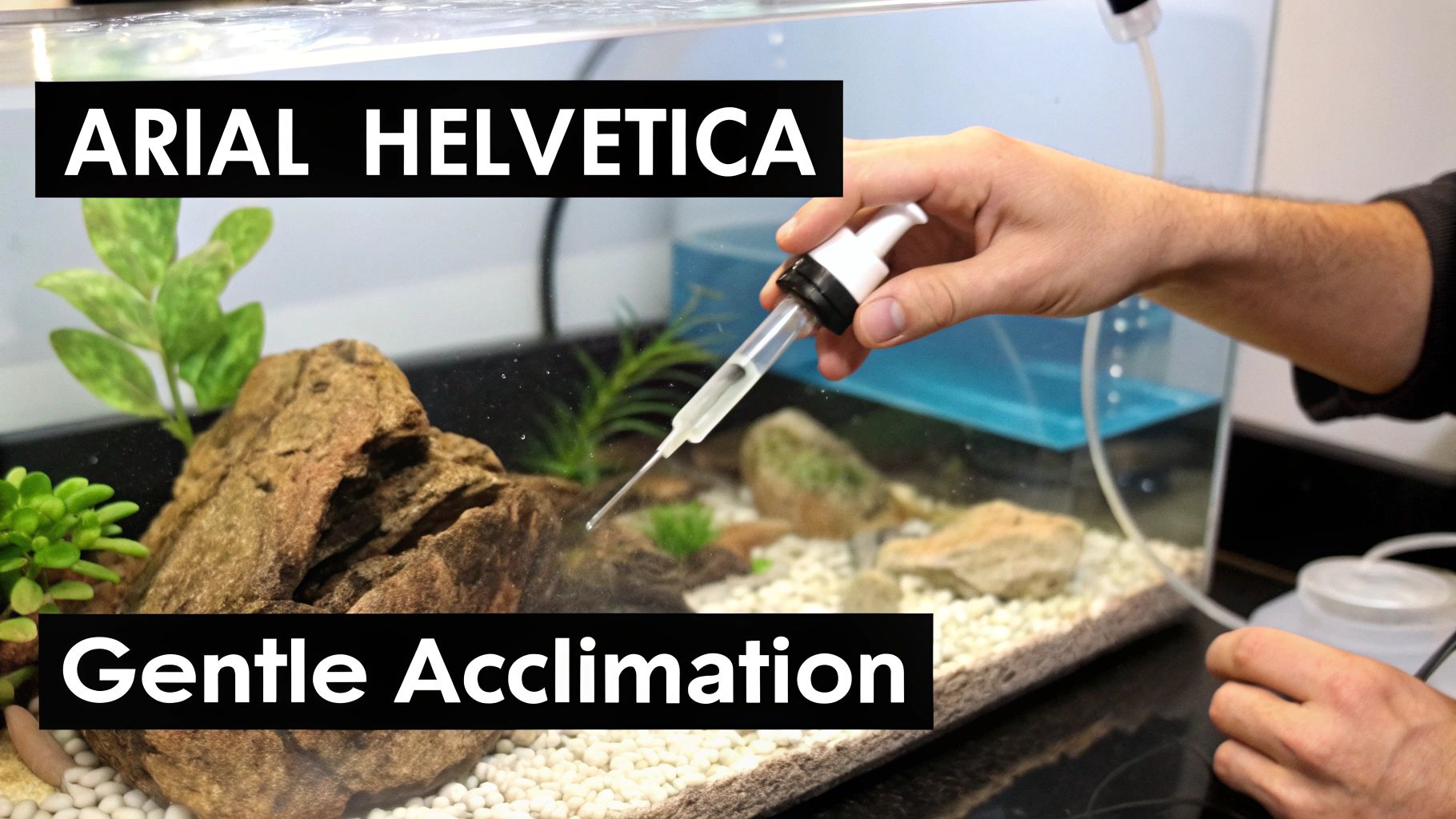
You've done the hard part and found a great local source for live copepods. Now for the most critical step: the introduction. It’s tempting to just pour the bottle straight into your display tank, but that's a classic rookie mistake. Doing so often turns your valuable investment into a very expensive, very quick snack for your fish.
The real goal here is to give these tiny critters a fighting chance to find shelter, get their bearings, and start reproducing. A gentle, well-timed introduction is everything.
Acclimation and the "Lights Out" Trick
First things first, let's get them acclimated. Just float the sealed bottle or bag in your sump or tank for about 15-20 minutes. This super simple step lets the water temperature in the container slowly match your system's, avoiding any sudden shocks. Drastic temperature swings can be lethal to copepods.
Once the temperatures are equalized, timing is everything. Wait until your tank lights are completely off for the night. Adding your copepods in the dark is the single best thing you can do for them. It gives them the cover of darkness to disperse and find safe little nooks in your rockwork and sandbed.
In a brightly lit tank, your fish and even some corals will spot the new arrivals immediately and wipe them out before they can establish a foothold. The "lights out" method is non-negotiable if you want to maximize survival rates.
This approach actually mimics their natural behavior. In the wild, tons of zooplankton species use the darkness to migrate and avoid predators.
Strategic Placement for a Booming Population
Where you add the pods is just as important as how. While you can add them directly to your display, pouring them into a refugium or a quiet, low-flow section of your sump gives them a protected space to multiply without pressure.
- The Refugium is Prime Real Estate: If you have one, your refugium is the absolute best starting point. It’s a safe harbor, packed with macroalgae and free from the hungry mouths in your main tank.
- Seed the Rocks Directly: In the display tank, use a turkey baster or a piece of airline tubing to gently release the copepods right into the cracks and crevices of your live rock. This puts them exactly where they need to be to hide out and get comfortable.
- Hit the Pause Button: Before you add them, briefly turn off your pumps, skimmer, and UV sterilizer. Let everything stay off for about 30 minutes after you’ve added the pods. This keeps them from being immediately sucked into the filter or blown all over the tank.
Taking these few extra minutes is the difference between your new copepods becoming a one-time meal and becoming a permanent, breeding part of your reef’s ecosystem. For an even deeper dive into these techniques, our guide on how to add copepods to your tank for a thriving reef has you covered.
Got Questions About Buying Live Copepods?
Even after you've found a local source, a few questions are bound to pop up. It's completely normal. Getting straight answers is the best way to feel good about your purchase and make sure your tiny new crew thrives. Let's dig into what reefers usually ask right before they buy.
How Can I Tell If the Copepods Are Healthy?
When you’re standing in a store or meeting up with another hobbyist, your eyes are your most important tool. A healthy, booming culture is pretty obvious once you know the signs.
First thing's first: hold the bottle or bag up to a light. What you want to see is a blizzard of tiny, whitish specks zipping around, often in a frantic, jerky swimming pattern. Give the container a gentle swirl—they should scatter and immediately get back to their energetic dance.
Take a look at the water and the bottom, too. A culture with hardly any gunk settled at the bottom is a great sign. The water itself should be clear or have a slight greenish tint, which is usually a good thing, indicating there’s some nutritious phytoplankton in there with them. Steer clear of any container that looks cloudy, has a nasty smell, or shows a thick layer of dead pods at the bottom. Those are all deal-breakers.
How Many Copepods Do I Need for My Tank?
The right number of pods really boils down to your tank's size and what you're trying to accomplish. Are you jump-starting the microfauna in a brand-new system, or are you serving dinner to a picky fish? The answer totally changes the game plan.
Here’s a simple way to think about it:
-
Seeding a New Tank: If you're building a food web from scratch in a new tank or refugium (say, up to 30-40 gallons), a starter population of 5,000 to 10,000 pods is a fantastic starting point. This gives them enough numbers to establish a breeding colony before they get eaten into oblivion.
-
Direct Feeding: Is the goal to feed a notoriously fussy eater, like a mandarin dragonet in a mature tank? You'll likely need to add pods pretty regularly. Starting with a larger bottle ensures your fish gets a solid meal right off the bat while also seeding the rockwork for future snacks.
-
For Larger Systems: For tanks pushing past 100 gallons, buying in bulk or grabbing a few large bottles at once is your best bet. You need to get the population density high enough from day one to kickstart a truly self-sustaining food web.
Is Culturing My Own Copepods a Better Option?
Diving into DIY copepod culturing can be an amazing long-term move, especially if you have high-demand fish and want to save some money. But let's be real—it’s a commitment. It requires dedicated space, some basic equipment, and, most importantly, consistency.
The setup is usually pretty simple: a separate container like a bucket or small tank, an air stone for gentle water movement, and a steady supply of live phytoplankton to feed them. The catch is that you have to be on top of feeding the culture and doing partial water changes to prevent it from crashing.
For a lot of us, the convenience and guaranteed purity of professionally raised copepods just makes more sense. When you need a specific, high-quality species like Apocyclops panamensis for that one finicky fish, buying from a trusted source is almost always the more reliable way to go.
Should I Buy a Single Species or a Blend?
This is a classic reefing debate, and the best answer really hinges on your goals for the tank. Both single-species cultures and diverse blends have their own distinct advantages.
Single-species cultures are perfect when you have a specific job in mind. For example, if your main mission is to clean detritus from your sandbed and live rock, a bottle of benthic Tisbe pods is a precision tool for that exact task. Their lifestyle is perfectly matched to the job.
Blends, on the other hand, offer a more well-rounded, holistic approach to building your tank's ecosystem. A good blend will combine multiple species that fill different roles—some will crawl on the rocks, others will swim in the water column as an easy meal for fish and corals, and some will burrow into the sand. This biodiversity creates a far more resilient and robust food web, making your aquarium feel more like a complete, natural environment.
Ready to introduce a thriving, diverse population to your reef? At PodDrop Live Aquarium Nutrition, we provide professionally cultured, high-density copepod blends and single-species options to meet any reef tank's needs.