

Live Copepods For Sale Online A Complete Buyer's Guide
When you start searching for live copepods for sale online, you're taking the first real step toward transforming your reef tank. It’s the move that turns a simple glass box into a vibrant, self-sustaining ecosystem. These tiny crustaceans are the unsung heroes behind brilliant corals, active fish, and crystal-clear water, serving as both a live, always-on food source and a microscopic cleanup crew.
Why Buying Live Copepods Online Is A Reef Tank Game Changer
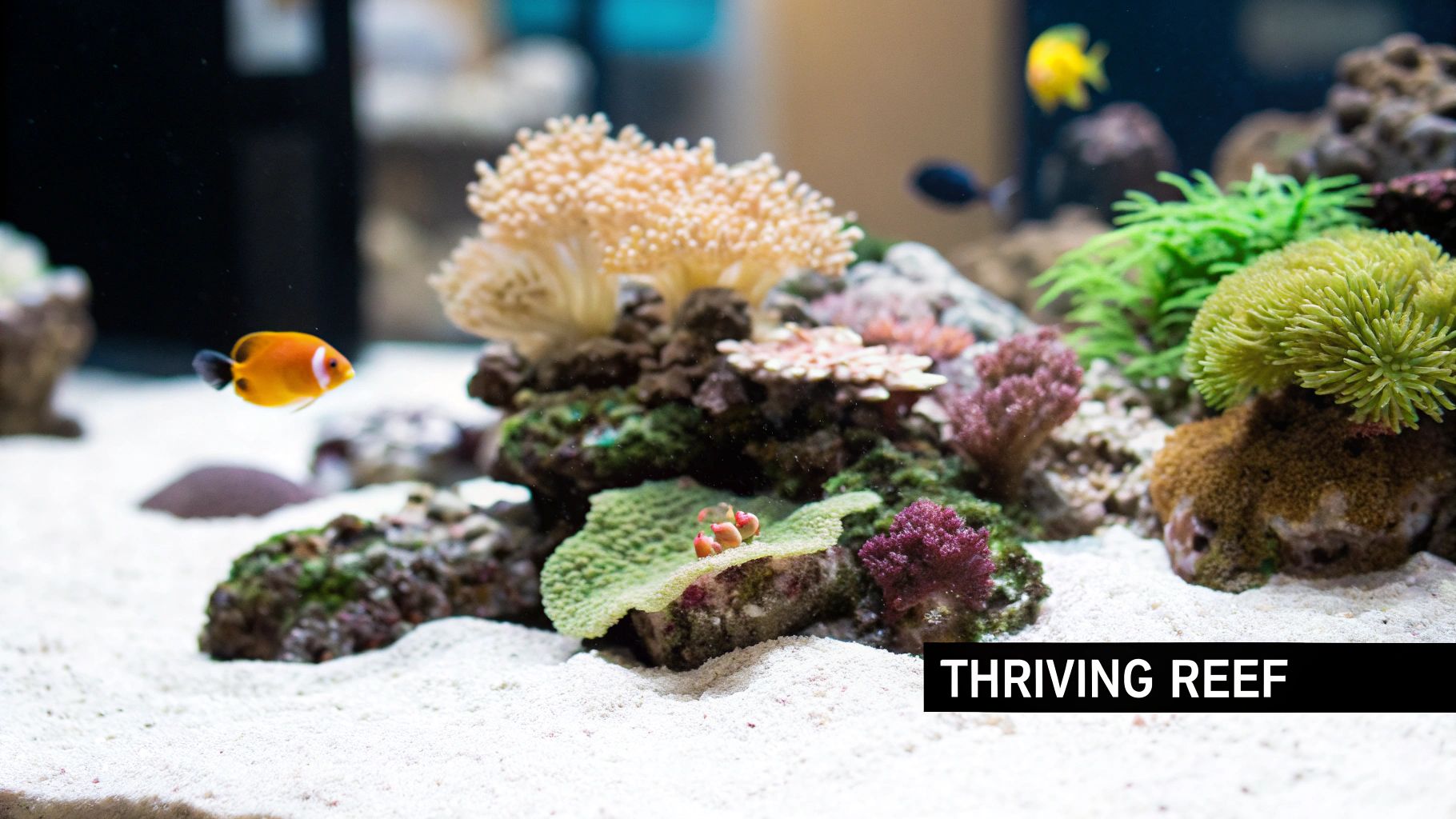
Ever look at a reef tank that seems impossibly perfect? The coral colors are electric, the fish are practically glowing with health, and everything just works. The secret usually isn't some complicated dosing schedule or expensive piece of gear. More often than not, the real foundation of that success is completely invisible. It’s a bustling, microscopic world of live foods, and copepods are the star players.
Moving past flakes and pellets to establish a living food web is a fundamental leap in reef keeping. It's the difference between simply feeding your fish and truly nourishing your entire ecosystem. When you buy live copepods online, you aren't just getting another bottle of fish food; you're investing in the very engine that makes a healthy reef run.
The Foundation Of A Stable Ecosystem
Picture your aquarium as a miniature city. Your fish and corals are the residents, but the copepods are the essential workers keeping everything going behind the scenes. They’re the sanitation crew, constantly consuming detritus and nipping nuisance algae in the bud. They're also the 24/7 farmer's market, providing a steady stream of fresh, nutritious meals. Without them, the city quickly starts to break down.
This process of introducing a thriving population of tiny critters is called seeding. I'd argue it's one of the single most important things you can do for the long-term stability of a saltwater tank. A well-seeded tank is more resilient, needs less hands-on cleaning, and can support a much wider variety of life. The payoff for building this foundation is huge:
- A Self-Replenishing Food Source: Copepods breed right inside your tank, creating a sustainable food supply for notoriously picky eaters like Mandarin Dragonets, certain wrasses, and anthias.
- Superior Nutrition: Live pods are loaded with highly unsaturated fatty acids (HUFAs) and other nutrients that are critical for fish immunity, intense coloration, and even triggering coral spawning.
- Natural Detritus Control: They are little eating machines, gobbling up leftover food and fish waste before it has a chance to foul your water and fuel ugly algae blooms.
- Enhanced Biodiversity: A healthy pod population is the base of a complex food web, creating a more natural, balanced environment that truly mimics a slice of the ocean.
By seeding your tank with live copepods, you are essentially kickstarting a natural food chain. This creates a buffer against instability and provides a constant source of high-quality nutrition that processed foods simply cannot replicate.
This guide is here to pull back the curtain on finding the best live copepods for sale online. We'll walk through choosing the right species for your goals, knowing what to look for when they arrive, and the best ways to get them established in your tank for maximum impact. You'll quickly see these tiny creatures not as just another purchase, but as a critical investment in the beautiful, thriving piece of the ocean you're building.
Understanding The Different Copepod Species For Your Aquarium
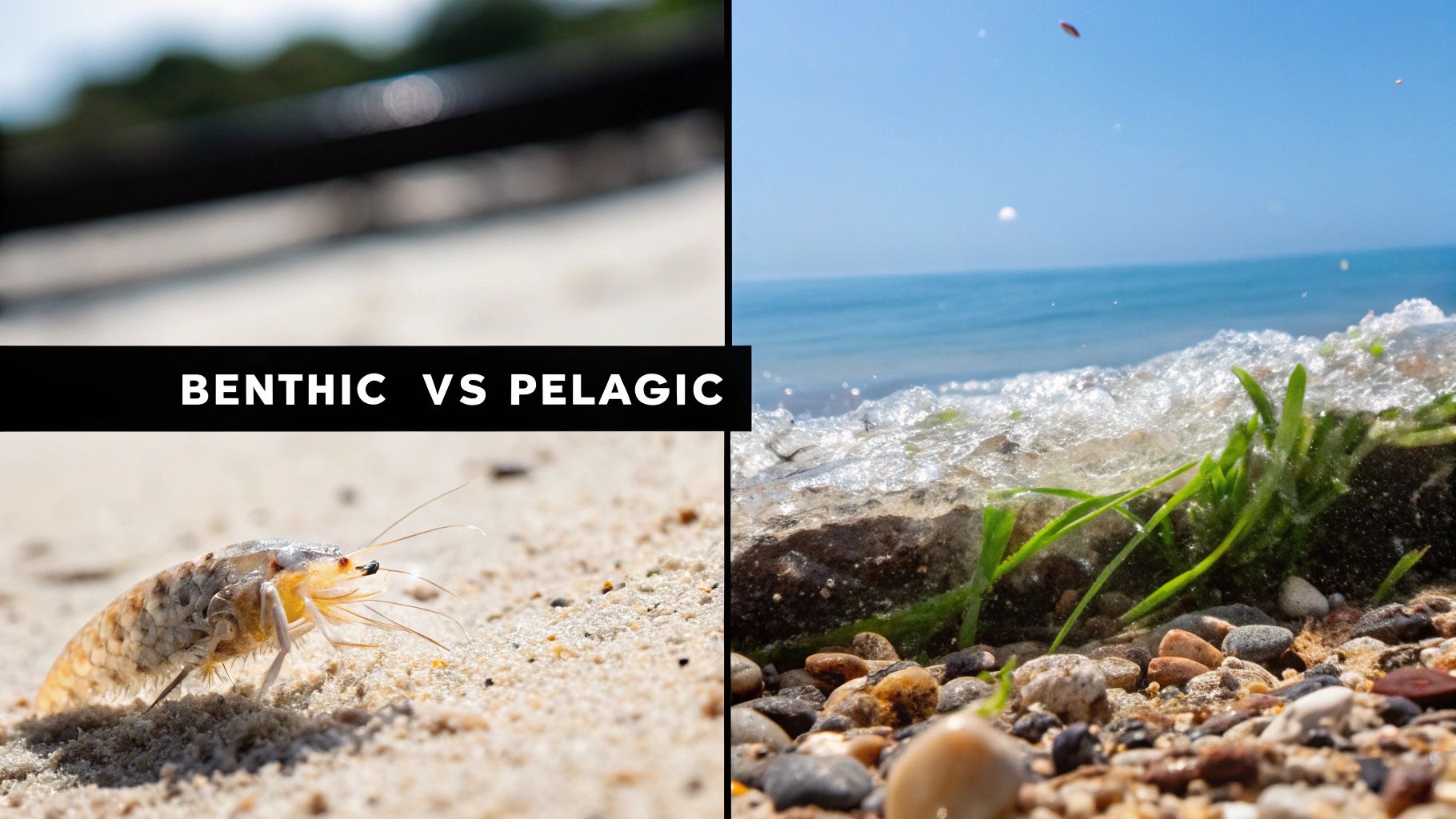
When you first start looking for live copepods online, the different species names can feel like a foreign language. But it gets a lot easier when you stop thinking of them as scientific names and start thinking of them as specialized workers for your aquarium's clean-up crew.
The most important thing to understand is that each species has a specific "job" and prefers to live in a particular part of your tank. To get the best results, you need to hire the right crew for the job.
Copepods are broadly sorted into two groups based on where they spend their time: benthic and pelagic. Grasping this simple difference is the key to everything.
- Benthic Copepods: Think of these as your ground crew. They are the crawlers, living and breeding directly on your live rock, sand bed, and even the aquarium glass. They spend their days picking away at detritus and nuisance algae films.
- Pelagic Copepods: These are the swimmers. They live their lives up in the water column, zipping around in the current. This makes them a fantastic, constantly available food source for corals and fish.
A truly healthy and resilient reef tank ecosystem needs both. The ground crew keeps the tank looking sharp, while the swimmers provide a non-stop, nutritious buffet that rains down on your corals and fish.
H3: Meet The Benthic Ground Crew
Benthic copepods are your secret weapon for establishing a permanent, breeding population right inside your display tank. These are the pods that picky eaters like Mandarin Dragonets and Leopard Wrasses spend all day hunting.
The undisputed champion here is Tisbe biminiensis. These little guys are detritivores, meaning they're experts at eating decaying organic matter—think leftover fish food, fish waste, and all that ugly film that grows on your rocks and sand. They're your microscopic polishers.
Because they stick to surfaces, they’re perfectly positioned for slow-moving, methodical hunters. Their constant presence makes them the ideal foundation for a self-sustaining food source. If your goal is to support a picky fish, starting with a healthy population of Tisbe is non-negotiable.
H3: Introducing The Pelagic Swimmers
While the benthic pods hold down the fort on the ground, pelagic species bring life and energy to the open water. These are the copepods that often get swept out of a refugium and into the main display, triggering a feeding frenzy.
The two most popular pelagic species you'll run into are Tigriopus californicus and Apocyclops panamensis.
- Tigriopus californicus (Tiger Pods): These are the big, bold members of the pod family. They're larger, have a distinct reddish-orange color, and their jerky swimming motion is like a dinner bell for many fish. They are also incredibly hardy and breed like crazy, which makes them perfect for stocking a refugium.
- Apocyclops panamensis: Smaller but unbelievably resilient, Apocyclops are reproduction machines. They have an extremely fast life cycle, which allows them to build up dense populations in no time. Their tiny size makes them an excellent meal for filter-feeding corals and even the smallest fish fry.
By combining a benthic species like Tisbe with pelagic ones like Tigriopus and Apocyclops, you create a multi-layered food web. This ensures that every part of your tank, from the deepest crevices in your rockwork to the open water, is teeming with life and a reliable food source.
H3: Choosing The Right Copepod Species For Your Reef Tank
With a few key species to choose from, picking the right ones really boils down to your specific goals for your tank. This quick-reference table breaks down the "job description" for each of the main players.
| Species | Primary Role | Best For | Key Benefit |
|---|---|---|---|
| Tisbe biminiensis | Detritus Cleaner | Seeding a display tank, feeding picky eaters like Mandarins. | Establishes a permanent, breeding population on rocks and sand. |
| Tigriopus californicus | Refugium Seeder | Stocking a refugium, feeding larger fish and LPS corals. | Large size and jerky movement trigger a strong feeding response. |
| Apocyclops panamensis | Population Booster | Rapidly seeding a system, feeding corals and small fish fry. | Extremely fast reproduction rate creates a dense food source. |
Think about what you need most. Are you trying to clean up detritus, fatten up a Mandarin, or just broadcast-feed your corals? Knowing the answer helps you hire the perfect candidate for the job.
For a long time, culturing these tiny animals at scale was incredibly difficult, something reserved for huge aquaculture facilities. Thankfully, major breakthroughs in culture techniques changed everything. One U.S. Southern Regional Aquaculture Center study documented systems capable of producing around 22 million eggs per day with an impressive 49% hatch rate.
This boom in efficiency made it possible for vendors to offer clean, lab-grown, single-species bottles directly to hobbyists like us. Exploring the different single-species copepods available can help you tailor your selection precisely to your tank's unique needs.
Single Species vs. Diverse Blends: Which is Right for Your Tank?
When you’re ready to buy copepods, you’ll quickly run into a fundamental choice: should you get a single, specialized species or a dynamic, multi-species blend? It’s a bit like stocking a toolkit. Do you need a precision screwdriver for one specific job, or a versatile multi-tool that handles a little bit of everything?
Going with a single species is a targeted approach. You have a specific problem to solve or a particular fish to feed, and you’re picking the exact right tool for the job. On the other hand, a blend is all about building a robust, self-sustaining ecosystem. It’s like hiring an entire work crew, with each member bringing a different skill to the table.
Both strategies are great, but they’re meant for different situations. Let's break down when you'd choose one over the other.
The Strategic Value of a Single Species
Sometimes, you need a specialist. A single-species culture is your go-to when you have a clear, immediate goal and want to throw everything you've got at it. This is your precision strike.
Here are the most common reasons to go with a single species:
- Feeding Picky Eaters: Got a Mandarin Dragonet or a Scooter Blenny? These fish are famous for needing a constant supply of pods to graze on. The best way to keep them fat and happy is to establish a dense, breeding population of benthic (bottom-dwelling) copepods right on the rock and sand where they hunt. A concentrated dose of Tisbe biminiensis is the most direct route to building that personal buffet for them.
- Supercharging Your Refugium: If you want to turn your 'fuge into a non-stop food factory, you need a species that's tough and reproduces like crazy in that protected space. Adding a bottle of Tigriopus californicus will kickstart a booming population, with their offspring consistently spilling over into your display tank to feed everything.
- Targeted Cleanup Duty: Is detritus building up on your sand bed? Introduce a species known for its massive appetite for organic gunk. Tisbe pods are fantastic for this, acting like a microscopic cleanup crew that gets into all the nooks and crannies.
Choosing a single species lets you pour your resources into the exact biological function your tank needs most. It’s a focused solution for a specific challenge, ensuring you get the perfect "worker" for the job.
This method puts you in the driver's seat, allowing you to build your tank’s microfauna population piece by piece. You could start with a foundation of Tisbe in your main tank and, later on, add Tigriopus to the sump to cover all your bases.
The Power of a Diverse Copepod Blend
While single species are specialists, a diverse blend is the ultimate generalist. This is your strategy for building a complete, resilient food web from day one. It’s like jump-starting an entire ecosystem. A good blend combines benthic crawlers with pelagic swimmers, making sure every corner of your aquarium—from the sand bed to the open water—is populated and productive.
This multi-species approach comes with some serious perks:
- Total Niche Coverage: A blend guarantees you have pods living everywhere. You'll have swimmers in the water column for corals and fish like anthias, and crawlers on the rocks and sand for your wrasses and gobies. It means a constant, varied food source is available for every single inhabitant.
- Built-In Resilience: Aquarium conditions can fluctuate. One species might slow down if the temperature shifts, but another might thrive. Having multiple species creates a more stable population that can roll with the punches, ensuring you always have a healthy stock of live food.
- A Varied, Nutritious Diet: Different copepods offer slightly different nutritional profiles. A blend provides a more balanced diet for your fish and corals—much like how we’re healthier eating a variety of foods instead of the same meal every single day.
It's become common wisdom among reefing experts to "boost" an aquarium with a fresh blend at least once a year. This helps reset the balance, as some pod species will naturally start to dominate over time. This idea actually mirrors what commercial fish hatcheries have been doing for years, where multi-species feeds are proven to improve the survival and growth of larval fish.
And thanks to a mind-blowing 1,800% increase in aquaculture productivity over the last decade, high-quality, pest-free blends are now readily available from reliable online vendors. You can dive deeper into these advancements in this Southern Regional Aquaculture Center report on marine copepod culture.
What To Expect When You Order Live Copepods Online
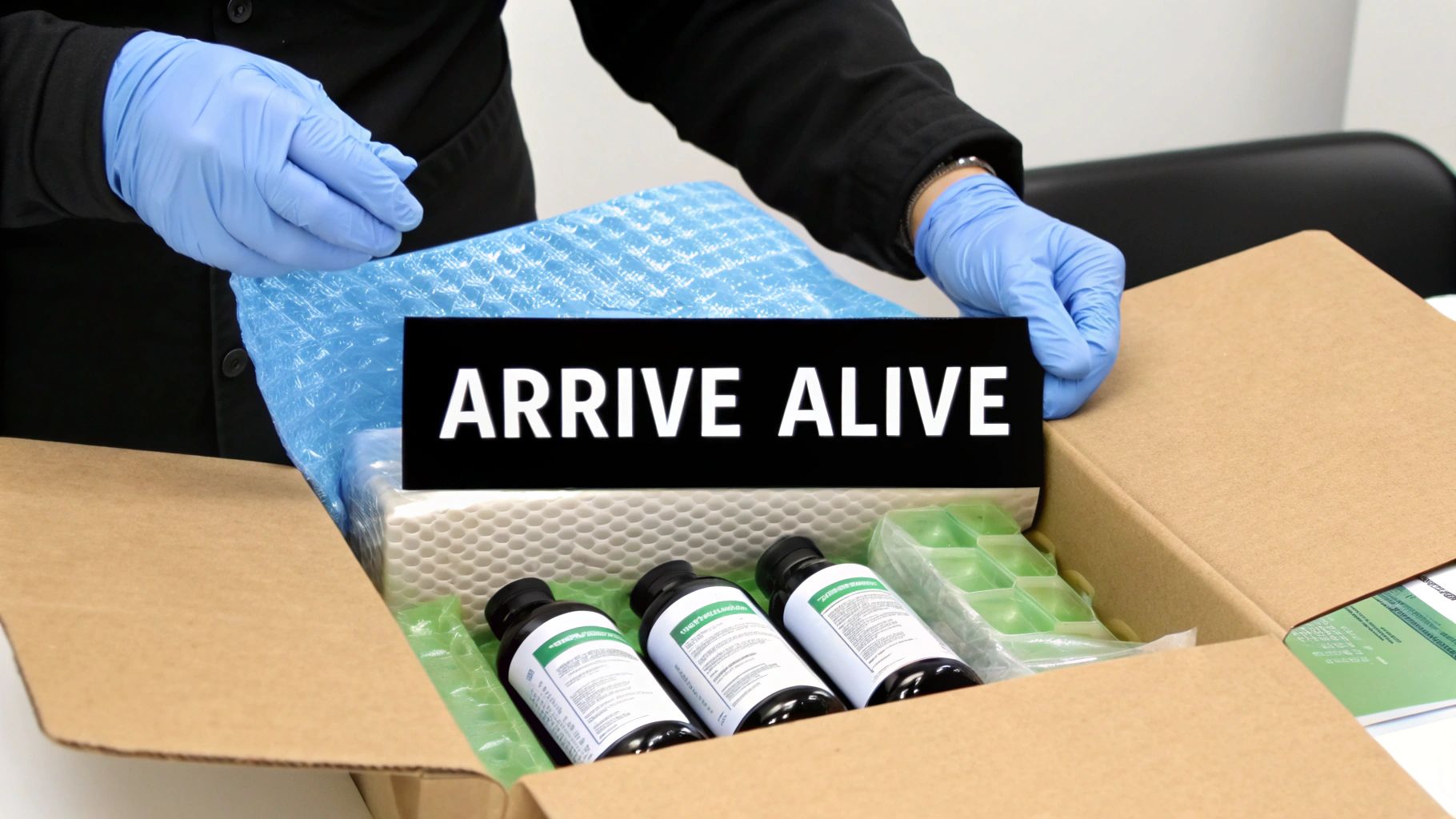
Ordering live creatures online for the first time can be nerve-wracking. You hit the "buy" button and then cross your fingers, hoping a box of healthy, wriggling critters actually shows up. When you're looking for live copepods for sale online, the best suppliers get it. They've fine-tuned their whole operation to make you feel confident from the moment you order to the second you open the box.
This isn't like buying a new filter or a powerhead. It’s a delicate dance of logistics, all centered on keeping tiny, fragile animals safe and sound. Once you understand the steps involved and the guarantees that protect your purchase, you can relax, knowing your investment will arrive ready to get to work in your tank.
From The Lab To Your Doorstep
The journey begins long before your package ever hits a delivery truck. The top online sellers run professional aquaculture labs where copepods are grown in clean, controlled conditions. This is what lab-cultured really means—it's your insurance policy against introducing pests, parasites, or nasty invasive algae into your system.
Every single batch of copepods goes through a strict purity test. This means someone is looking at samples under a microscope to make sure the bottle contains only the species you paid for, at different stages of life, and with zero contaminants. This is a huge quality control step that sets the pros apart from backyard sellers.
A "purity-tested" culture is more than just a marketing term; it's a promise. It’s the guarantee that you're adding only beneficial life to your reef, without the risk of hitchhikers like Aiptasia, pest anemones, or harmful bacteria that often come with wild-collected pods.
As soon as you place your order, the clock starts ticking. The copepods are packed carefully into breathable bags or bottles with just enough food and oxygen to keep them healthy on their trip.
Smart Shipping For Live Animals
Getting live animals from point A to point B takes more than just a box and a shipping label. This is where you can really tell if you're dealing with a reliable company.
Here’s what a professional shipping setup looks like:
- Temperature Control: Your copepods will arrive in an insulated box. Depending on the weather, you'll find a small heat or cold pack inside to keep the temperature stable and protect them from freezing or cooking during their journey.
- Strategic Shipping Days: Most reputable suppliers, including PodDrop, only ship on certain days of the week (like Mondays and Wednesdays). This isn't random. It’s done on purpose to make sure your package doesn’t get stuck in a warehouse over the weekend, which is the number one killer of live shipments.
- Fast Transit: Good sellers only use expedited shipping, usually 2-day or overnight services. The less time the copepods spend in a box, the better.
This level of care is what makes a solid "Arrive Alive Guarantee" possible. This is the seller's pledge that your pods will show up alive and well. Make sure you read the fine print, though. Most guarantees require you to be home for the first delivery attempt and to report any problems within a few hours. To see a great example, check out this comprehensive live arrival guarantee policy to get an idea of what a good one looks like.
When the box arrives, open it up right away. Take a look at the bottles—you should see tiny specks swimming around. Don't panic if they seem a little sluggish. They just took a trip across the country! They’ll perk right up once you start the acclimation process, which is the final, critical step to getting them settled into their new home.
Getting Your New Copepods Settled In: Acclimation and Dosing
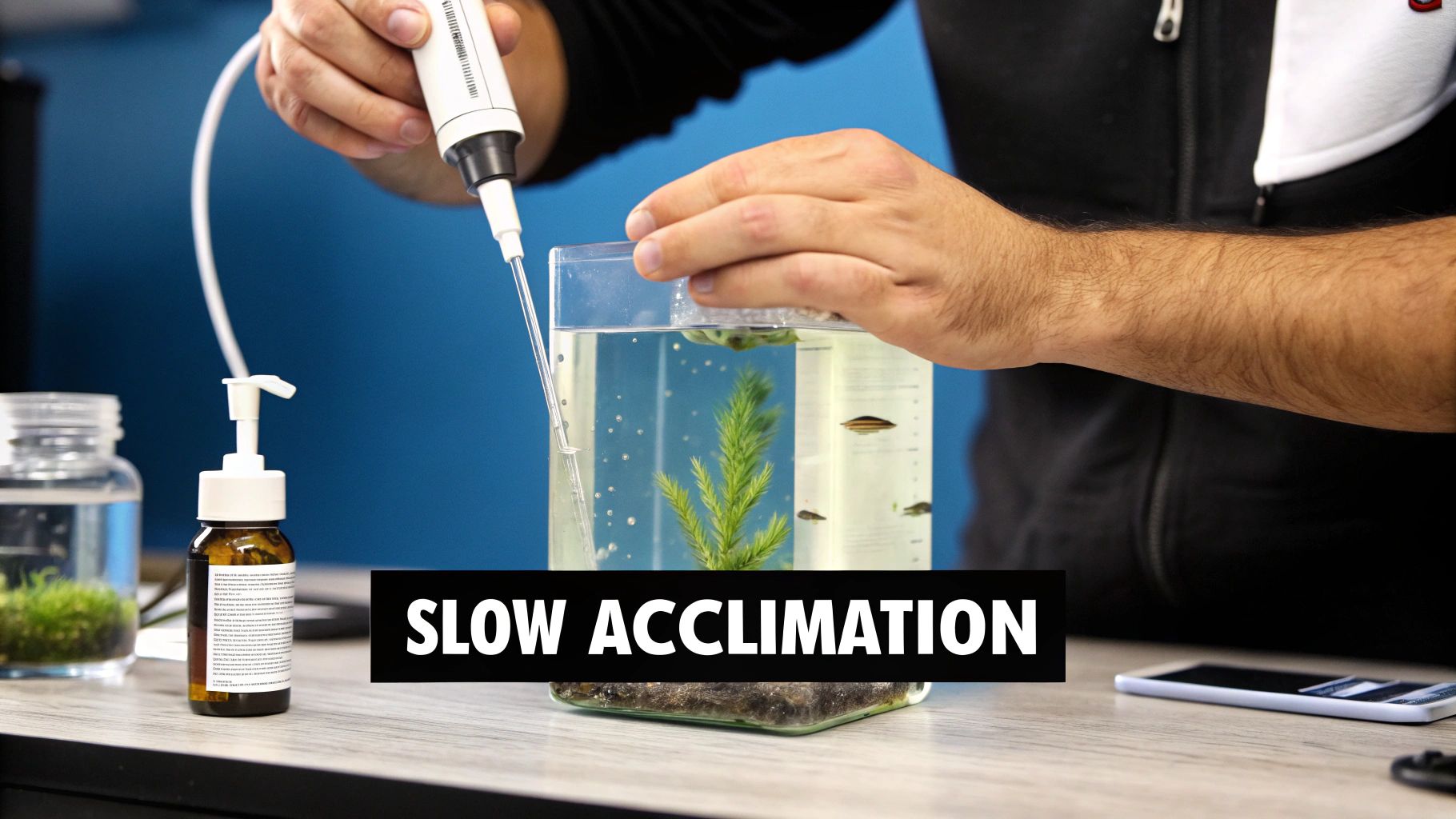
Alright, the package has arrived! Your live copepods are here, and you're just moments away from adding this incredible micro-fauna to your reef. But hold on—this last step is the most critical. Rushing the introduction can shock the pods and waste your money.
Think of it like bringing a fish home from the store. You wouldn't just toss it in, right? Copepods, while tough, are just as sensitive to sudden shifts in temperature and water chemistry. A proper acclimation gives them a gentle transition into their new world, setting them up to get to work right away.
Acclimation: A Gentle Introduction
The whole point of acclimation is to slowly let the copepods adjust to your tank's specific water parameters. It’s a simple process that dramatically reduces the risk of temperature or osmotic shock.
Here's the tried-and-true method that works every time:
- Lights Down: Kill the main lights over your aquarium. Bright light can stress the pods out and essentially ring the dinner bell for any fish waiting for a snack.
- Float the Bottle: Pop the sealed bottle right into your sump or the main display tank. Let it float for a good 15-20 minutes. This is the most important part—it slowly equalizes the water temperature inside the bottle with your tank's temperature.
- Slowly Mix the Waters: Now, open the bottle. Using a turkey baster or even just a small cup, add a little bit of your tank water to the bottle every few minutes. Do this for about 10-15 minutes. This gradually gets them used to your system's specific salinity and pH levels.
That’s it! After this careful introduction, they’re ready for the main event. You've just maximized their survival rate and ensured you're getting the full value of your purchase.
Dosing: Strategy Matters
How and when you add the pods to the tank makes a huge difference in establishing a breeding population. The goal is simple: give them a chance to find cover before they get eaten.
The absolute best way to do this is the "lights out" method. Always add your copepods well after your tank lights have shut off for the night. This gives them hours of darkness to spread out, find nooks and crannies in your rockwork, and settle into the substrate without being hunted.
Pro Tip: When you add your pods, shut off your return pump, skimmer, and any UV sterilizers for at least an hour. This buys them precious time to find a home instead of getting sucked straight into your filtration.
We cover this in much more detail in our guide on how to add copepods to your tank.
Where to Add Them: Tailoring Your Dose
There's no single right way to pour them in. The best spot depends entirely on what you're trying to accomplish.
- Seeding a New Tank: If you're starting fresh or have a nano tank, just pour the whole bottle right into the display. This gets them everywhere, colonizing the sand, rock, and glass.
- Boosting an Existing System: For an established tank, a split dose works wonders. Pour half into your refugium—this protects the core breeding population. Pour the other half into the display tank to feed your fish and corals.
- Target-Feeding Picky Eaters: Got a Mandarin or a Scooter Blenny? Use a turkey baster to gently squirt a concentration of pods right onto the rocks where your finicky fish likes to graze.
One final trick: dose some high-quality phytoplankton right along with your pods. This gives your new arrivals an immediate food source, fueling their journey and helping to kickstart the breeding cycle in their new home.
Cultivating A Sustainable Copepod Population In Your Tank
When you add live copepods to your aquarium, you’re doing more than just feeding your fish. You’re graduating from a simple tank keeper to a true ecosystem manager. The real goal isn't a one-off snack for your inhabitants; it's about establishing a permanent, self-sustaining population that becomes the living, breathing engine of your entire reef.
This long-term mindset is what separates a pretty tank from a truly thriving one. You're essentially partnering with nature to build a resilient micro-food web from the ground up. It all starts with giving your new pods a fighting chance to multiply before they get eaten.
Create Safe Havens For Reproduction
The biggest immediate threat to your new copepods is predation. To nearly every fish, coral, and invertebrate in your tank, they look like a delicious, bite-sized meal. If you want a lasting population, you have to give them a safe place to reproduce, away from the constant pressure of hungry mouths.
The gold standard here is a refugium. This protected area, typically in your sump, is a predator-free zone that acts as a microfauna factory. Fill it with some live rock rubble and macroalgae like Chaetomorpha, and you've just created a perfect, tangled maze where pods can breed undisturbed.
Don't have a refugium? No worries. You can achieve the same effect by creating a "pod hotel" right in your display tank. Just take a small mesh bag, fill it with porous bio-media or rock rubble, and tuck it away in a low-flow corner. It works like a charm.
The principle is simple: give them a protected breeding ground. A bustling refugium or pod hotel becomes a biological engine, constantly seeding new generations of copepods into your main display to feed your entire system.
Fuel The Entire Food Chain
Just like everything else in your tank, copepods need to eat to thrive and reproduce. Their number one food source is phytoplankton—the microscopic algae that form the very foundation of the ocean's food web. By regularly dosing a high-quality live phytoplankton, you're basically giving your copepod population a super-charged energy drink.
Think of it this way: adding copepods is like planting the seeds, but dosing phytoplankton is the sun and fertilizer that makes them grow. This simple step ensures explosive growth and keeps the entire food chain humming, which benefits everything from your pods to your corals and other filter feeders. It turns your initial purchase into a perpetual source of live nutrition.
The demand for live nutrition like this has exploded. Between 2015 and 2024, the ornamental fish market grew into a massive industry, projected to hit USD 14.52 billion by 2033. This has turned products like live copepods from a niche enthusiast item into a staple consumable, highlighting just how crucial a sustainable in-tank food source is for modern reefing. You can dive deeper into this topic with this comprehensive guide to copepods from Bulk Reef Supply.
Got Questions? Let's Talk Copepods
Diving into the world of live copepods for the first time? You've probably got a few questions. That’s a good thing! Getting solid answers is the best way to feel confident you're making the right move for your reef tank. Let's clear up some of the most common things hobbyists ask when they're ready to buy copepods online.
How Many Pods Do I Actually Need?
For seeding a new tank, a good rule of thumb is one bottle (which usually has 2,000 to 5,000 pods) for every 10-20 gallons of water. If you have a larger, more established system, that same ratio works great for giving your existing population a serious boost. The idea is to hit the ground running with a big enough group so they can establish themselves before your fish start snacking.
So, if you have a little nano tank under 15 gallons, one bottle is probably all you need. For a classic 50-gallon reef, grabbing two or three bottles is a smart move. It gives them a much better shot at spreading out and starting to multiply right away.
How Often Should I Add More?
Once you’ve seeded the tank, think about adding a "booster" dose every 6 to 12 months. This is a fantastic way to keep the genetic pool fresh and maintain a mix of species. It's natural for one type of pod to start dominating over time, and a fresh batch helps hit the reset button.
Now, if you've got some real pod-hunters in there—like a Mandarin Dragonet or a hungry wrasse—you'll likely need to restock more often. Maybe every 3 to 4 months. The best way to know? Just watch your tank. If you're not seeing as many little critters scurrying on the glass at night, that's your cue to order a fresh supply.
Do I Need a Refugium for Copepods to Survive?
Nope, not at all. A refugium is like a five-star, predator-free resort for copepods, but they can absolutely thrive in any reef tank with plenty of live rock and a decent sand bed.
The nooks and crannies in porous live rock are perfect little hideouts where they can breed in peace. To give them the best chance in a tank without a 'fuge, just follow these simple steps:
- Dose after dark: Wait until the main tank lights have been off for a while.
- Kill the current: Shut off your return pumps and skimmer for at least an hour.
This gives the pods a few hours to scatter and find safe spots before the lights come on and the fish wake up looking for breakfast.
Can Copepods Overpopulate My Tank?
This is one thing you never have to worry about. It's pretty much impossible for copepods to overpopulate or cause any harm. Their numbers are naturally kept in check by two things: how much food is available (algae and detritus) and how many fish and corals are eating them.
Honestly, seeing a huge copepod population is one of the best signs of a healthy, balanced reef. They're the ultimate cleanup crew and a super nutritious, live food source. If you see a lot of them, give yourself a pat on the back—it means your little ecosystem is thriving.
Ready to build a thriving, self-sustaining ecosystem in your reef tank? PodDrop delivers lab-cultured, purity-tested live copepods directly to your door, guaranteed to arrive alive and ready to work. Start building your tank's foundation today.