

Live Copepods for Sale Near Me Your Ultimate Buyer's Guide
When you type "live copepods for sale near me" into a search bar, what you're really looking for is freshness. You're hunting for a vibrant, wriggling culture that will immediately get to work in your saltwater aquarium. The best way to get that is either through a local fish store you trust or from an online specialist who has their shipping process absolutely dialed in.
Success really hinges on minimizing transit time. That's the whole game. How long those delicate little critters spend in a bag directly impacts their health and how many survive the journey to your tank.
Why "Near Me" Makes All the Difference
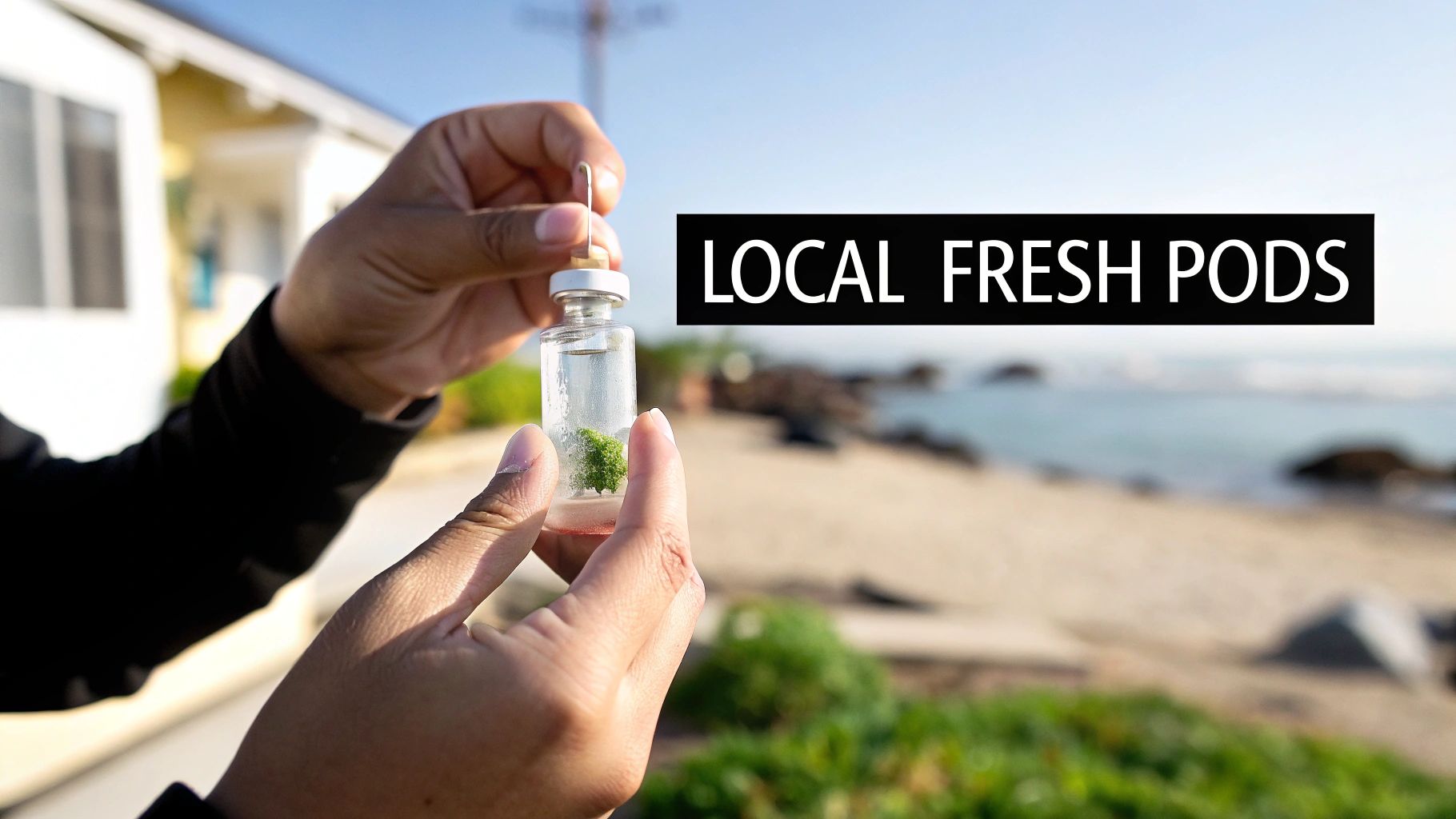
Live copepods aren't just another fish food; they're living, breathing micro-crustaceans that form the foundation of a healthy reef ecosystem. Unlike a scoop of frozen mysis or a pinch of pellets, their value is directly tied to their vitality when they hit your water.
A long, stressful trip with wild temperature swings can cause a massive die-off. If that happens, you’ve just bought an expensive little bottle of ammonia-leaching waste, not a thriving starter culture. This is why proximity—or a shipping operation that’s so fast it feels local—is the single most important factor.
A shorter journey means less stress on the copepods. It’s that simple. More of them arrive alive, active, and ready to start exploring and reproducing in your tank. Whether you're seeding a refugium for a self-sustaining food source or trying to keep a picky Mandarin Goby fat and happy, a healthy starting population is non-negotiable.
The Real Impact of a Fresh Pod Population
Getting a fresh, lively batch of copepods delivers benefits a stressed-out, depleted culture just can't match. A good batch gets to work instantly, munching on detritus, cleaning up nuisance algae, and becoming a five-star meal for your corals and fish.
- Better Seeding Success: More live arrivals means the population can establish itself and start reproducing much faster. You get to a self-sustaining colony in weeks, not months.
- Higher Nutritional Value: Stressed or dying pods lose their nutritional punch fast. A fresh culture delivers the maximum payload of those essential fatty acids that make fish and corals pop with color and health.
- Less Risk to Your Tank: Dumping a bottle with a lot of dead copepods can cause a mini-cycle, spiking ammonia and phosphates. That's the last thing your delicate corals need.
The goal isn't just to add pods to your tank; it's to introduce a breeding colony. A healthy, minimally stressed culture is infinitely more likely to reproduce, creating a sustainable food web that will support your entire reef for months, or even years, to come.
Let’s Redefine "Local"
In today's reefing world, the idea of finding "live copepods for sale near me" has evolved. It's not just about the brick-and-mortar shop down the road anymore.
Plenty of specialized online suppliers have perfected their logistics. They can get a culture to your door in 24-48 hours, often packed so well that the pods are in better shape than the ones that have been sitting on a local store's shelf for a week.
This guide is here to help you navigate both of these "local" options. We'll break down how to find the freshest, most viable live nutrition for your aquarium, whether you're picking it up yourself or having it delivered.
Navigating Your Buying Options: Local Stores vs. Online Specialists
When you're ready to get some pods, you're looking at two main paths: the classic trip to your local fish store (LFS) or ordering from a dedicated online breeder. In a way, both can be your "near me" source, but they offer completely different experiences and, more importantly, different results for your reef tank. The best choice really boils down to what you prioritize—instant gratification, peak quality, or a wider selection.
There's no denying the appeal of the LFS. You can walk in, grab a bottle of copepods, and have them in your tank that same afternoon. For an impatient reefer (and let's be honest, that's most of us), that instant fix is a huge plus.
But that convenience can come with a serious downside. You have no real way of knowing how long that bottle has been sitting on the shelf, the conditions it's been kept in, or when the culture was actually harvested. Plus, the selection is usually pretty sparse, often limited to just one or two common species that might not be the best fit for your tank's specific needs.
The Rise of Online Copepod Specialists
Online breeders have totally changed the game. For hobbyists who put quality above all else, they've become the new "local." These aren't just resellers; they are specialists who focus on one thing: culturing high-purity, vibrant, and dense populations of microfauna.
The demand for this kind of premium nutrition is exploding. The global market for live copepods has swelled to USD 187 million, a clear sign that reefers are moving toward more sustainable, natural ways to feed their delicate animals. We're understanding the incredible value of high-quality live foods, and the market's projected growth shows just how essential these specialized suppliers have become.
When you order from a dedicated online source, you're not buying old stock. You're getting a culture that was likely harvested and packed just hours before it shipped. This freshness is the single biggest factor in establishing a successful, breeding population in your tank.
Local Fish Store vs. Online Specialist: A Quick Comparison
So, how do these two options really stack up against each other? Think of it this way: your LFS might be a great pit stop for an emergency feeding, but ordering from an online specialist is a strategic investment in the long-term biodiversity of your entire reef ecosystem.
Here’s a head-to-head look at what you can expect.
| Feature | Local Fish Store (LFS) | Online Specialist |
|---|---|---|
| Species Variety | Often limited to one or two common species like Tigriopus. | Wide selection of species (Tisbe, Apocyclops) and curated blends. |
| Freshness | A gamble. Pods could be weeks old, with questionable viability. | Typically harvested and shipped the same day for peak freshness. |
| Purity & Density | Risk of contamination or low counts per bottle. | High-purity cultures with guaranteed minimum counts. |
| Information | Basic advice from generalist staff. | Expert guidance on species selection, acclimation, and ongoing care. |
| Availability | Instant, but stock can be inconsistent. | Consistent availability, shipped directly to your door. |
| Cost | Can seem cheaper upfront for a single bottle. | Often better value long-term due to higher density and viability. |
Ultimately, both have their place. An LFS is perfect for a quick fix, but for those of us serious about building a robust, self-sustaining micro-ecosystem, the purity, freshness, and diversity offered by online specialists are simply unmatched. You can dive deeper into the benefits by reading our guide on the best places to find live copepods for sale. While your LFS is a valuable resource, today's online suppliers are the definitive answer for finding the absolute best copepods "near me."
Matching Copepod Species to Your Aquarium's Goals
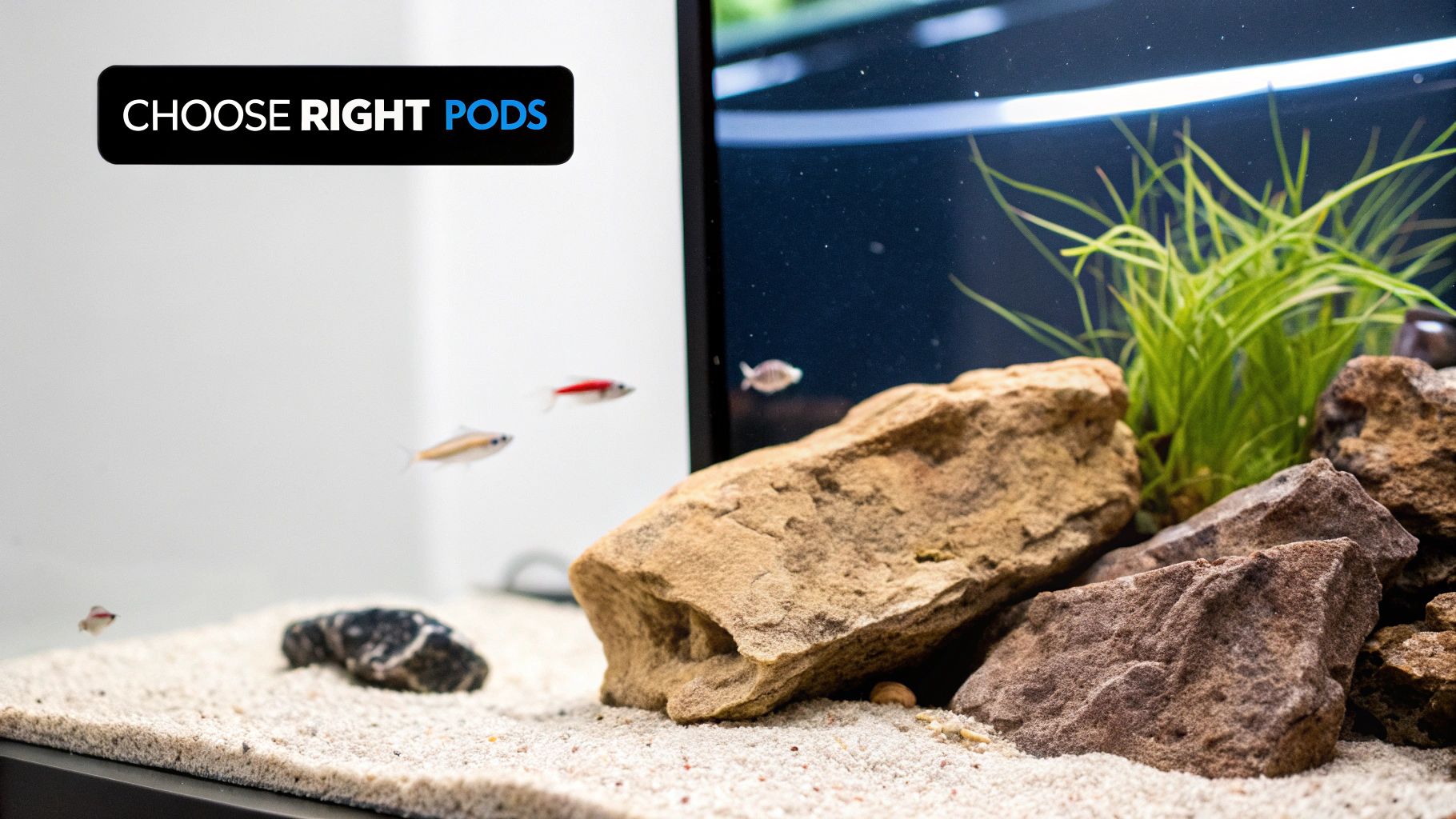
When you start searching for "live copepods for sale near me," it’s tempting to grab the first bottle you see. But here’s a secret from the trenches: the real magic happens when you do a little matchmaking. Choosing the right copepod species can completely transform your reef, turning a simple purchase into a strategic upgrade for your entire ecosystem.
So, before you buy, ask yourself: what’s the primary goal? Are you trying to fatten up a notoriously picky Mandarin? Do you want to establish a permanent, self-sustaining food source? Or are you waging war on detritus and that ugly film algae? Each mission points to a different type of pod, each with its own quirks and habits.
For Finicky Feeders Like Mandarins and Wrasses
If you're keeping demanding fish like Mandarin Dragonets, Scooter Blennies, or certain wrasses, your number one priority is getting a breeding population of pods established on the sandbed and rockwork. These fish are constant grazers, hunting for tiny critters all day long. For this job, Tisbe biminiensis is the undisputed champion.
- Behavior: Tisbe are benthic, which is just a fancy way of saying they live and breed right on surfaces. They love hanging out in the nooks and crannies of your live rock and sand.
- Benefit: This keeps them squarely in the strike zone for bottom-dwelling hunters, ensuring your fish have a constant buffet right where they look for it.
- Reproduction: These little guys are prolific breeders. Once you get a colony going, they can create a self-sustaining food web that supports even the hungriest fish.
Adding Tisbe isn't just dropping in a single meal; it's a long-term investment in your fish's health and natural behavior. Their small size and knack for staying hidden allow the population to explode, even with predators actively hunting them.
Think of it this way: free-swimming pods are like a single meal delivered to the front door, while establishing a Tisbe colony is like planting a perpetual vegetable garden right in your kitchen. One is a temporary fix; the other provides sustainable, long-term nutrition.
For General Tank Health and Detritus Control
Maybe your main objective is less about feeding a specific fish and more about boosting overall water quality and keeping the tank looking sharp. Copepods are absolute workhorses for your clean-up crew, constantly munching on waste before it can break down and fuel nuisance algae.
Some studies suggest that a healthy pod population can slash nuisance microalgae by up to 70% while keeping detritus in check. A single dose from a good supplier seeds your tank and refugium with hundreds of these tiny janitors, immediately boosting biodiversity.
For this kind of all-around cleaning duty, two species really shine:
- Apocyclops panamensis: A bit larger and more active, these pods cruise around both in the water and on surfaces. They have a massive appetite for detritus and film algae.
- Tigriopus californicus: Often called "Tig" pods, these are the big, reddish copepods you might see scurrying around. They're incredibly hardy and make a fantastic, nutritious snack for larger fish and corals, all while scavenging for waste.
The Power of Multi-Species Blends
For the vast majority of reef tanks, the smartest play isn't to pick just one species. It’s to introduce a diverse blend. A multi-species culture, like PodDrop's Reef Rain or Ultimate PodDrop, creates a far more robust and balanced micro-ecosystem.
This approach seeds every corner of your aquarium. You'll have pods living in the rockwork, others cruising the sandbed, and some swimming in the water column. This diversity builds a more resilient food web and provides varied nutrition for all your corals and fish. For a deeper dive, our article on comparing popular copepod species for marine aquariums breaks it all down. Ultimately, a good blend is the most effective way to support your entire reef from the ground up.
So, you're ready to add some live copepods to your tank. Great move. But before you rush out and grab the first bottle you see, let's talk about quality. When you're searching for live copepods for sale near me, you'll quickly realize that not all suppliers—or their pods—are created equal.
A bad batch can be a complete waste of money. Even worse, it could introduce pests or diseases into the pristine ecosystem you've worked so hard to build. To avoid that headache, you need to know what to look for, whether you're at your local fish store (LFS) or browsing online.
Think of yourself as a detective. You're searching for clues that point to a healthy, dense, and pure copepod culture. This means looking at everything from the bottle's date to the company's shipping policies.
What to Ask at Your Local Fish Store
When you’re standing in front of the copepod display at your LFS, a few smart questions can tell you everything you need to know. Don't just grab a bottle and go; have a quick chat with the staff.
Here’s what I always ask:
- "When did you get this shipment in?" Freshness is everything. If those pods have been sitting on a shelf under warm store lights for a week or more, their numbers and nutritional value have likely taken a serious nosedive.
- "How do you store these?" Good stores know copepods need to be kept cool and in the dark. A dedicated refrigerator is the gold standard. This slows down their metabolism and keeps them healthy until they hit your tank.
- "Is there a harvest or packaging date on the bottle?" The best suppliers date their products. If there’s no date to be found, it’s a bit of a red flag. You have no idea how old that culture really is.
A store owner who’s serious about their livestock will have no problem answering these questions. If they seem cagey or don't know the answers, it might mean live foods aren't their priority, and the quality could be questionable.
Vetting Online Copepod Specialists
Buying online opens up a world of specialized breeders, but your detective work just shifts to their website and customer reviews. The top-tier online suppliers are usually aquaculturists who are incredibly proud of their work, and they aren't shy about showing it.
Here are the green flags to look for on their site:
- Guaranteed Species Purity: The supplier should be able to guarantee you're getting only the species you ordered, whether it's Tisbe biminiensis or Tigriopus californicus, with no unwanted hitchhikers.
- Transparent Shipping Practices: They should have their shipping days listed clearly and use proper packaging. We're talking insulated boxes with cold or heat packs depending on the season. Look for expedited shipping options—you don't want your pods sitting in a hot warehouse over the weekend.
- A Clear Live-Arrival Guarantee: A supplier who trusts their product and their packing methods will always stand by it. Look for a clear, no-nonsense policy explaining what happens if the pods don't make the journey alive.
The best suppliers aren't just hobbyists bagging up some extra pods; they are professional cultivators. They're part of a sophisticated industry that's growing right alongside the global aquaculture market. This isn't a cottage industry anymore—it involves over 4,000 companies focused on constant innovation to deliver lab-grade products to your door. You can discover more insights about the booming aquaculture market that drives this level of quality.
This degree of professionalism is what separates the real breeders from the casual sellers. Don't forget to dig into authentic customer reviews, too. Look past the simple "great product" comments and find ones that talk about the density of the pods, the quality of the packaging, and how the company handled any issues. Those details will give you the real story.
Getting Your New Copepods Settled In
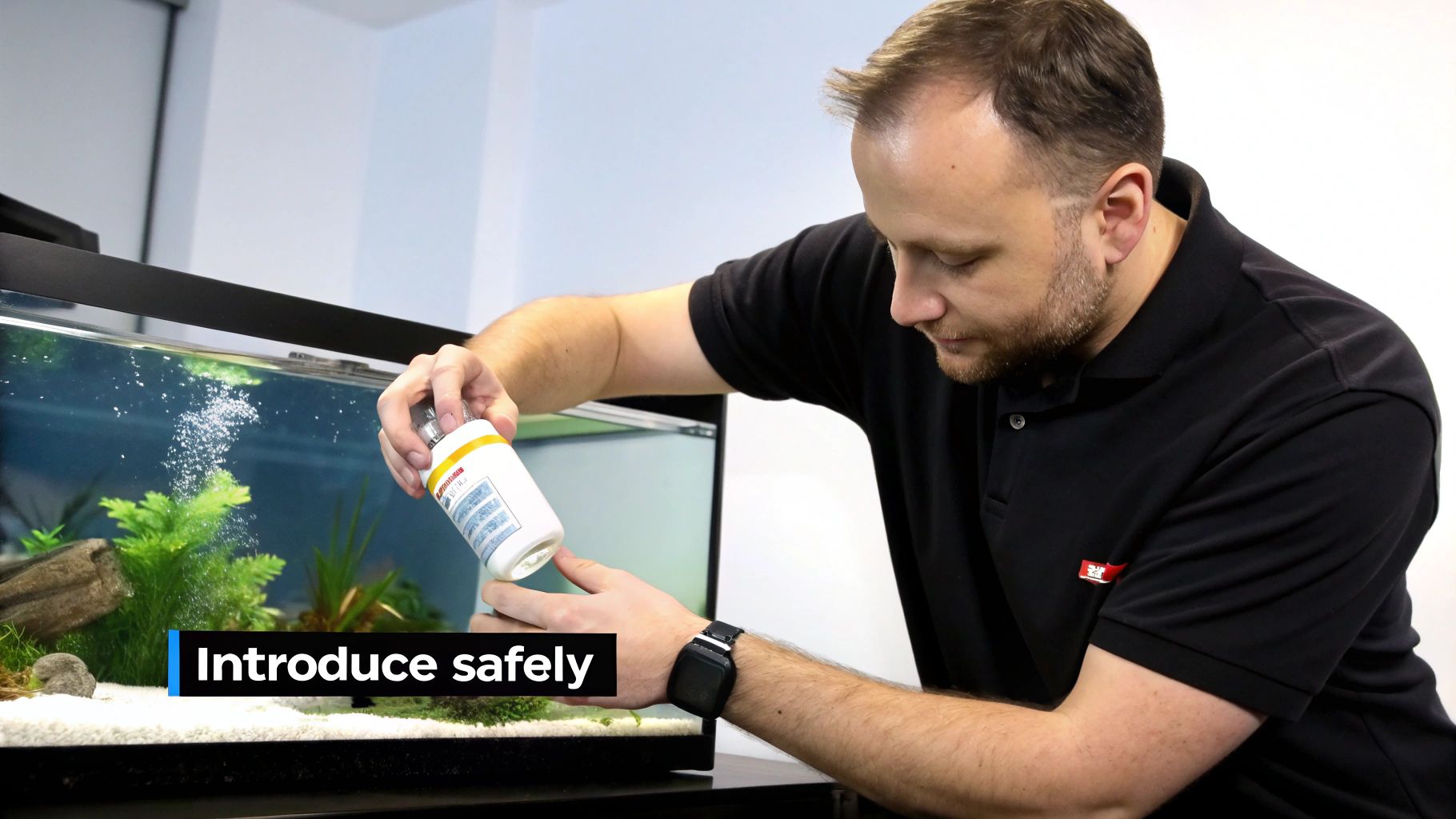
Alright, your pods have arrived and you're ready to introduce them to their new home. This is the critical moment. Getting this part right is the difference between giving your fish an expensive snack and establishing a self-sustaining population that will feed your reef for months.
First things first, give the bottle or bag a quick look. Hold it up to a light and you should see tiny little specks zipping around. That's your proof of a healthy, active culture. Don't panic if you don't see a massive swarm—many of the most beneficial pods are incredibly small and might be settled at the bottom.
A Simple Acclimation for a Smooth Transition
Copepods are tough little critters, but they hate sudden temperature swings. Just dumping them straight from the shipping container into your tank can cause thermal shock, which is a quick way to lose a good portion of your investment.
Thankfully, acclimation is dead simple.
Just float the sealed bag or bottle right in your aquarium or sump for about 15-20 minutes. That's it. This gives the water inside the container plenty of time to slowly match your tank's temperature, avoiding any nasty shocks. There's really no need for a complicated drip acclimation like you'd do for fish or coral; this is all they need.
Pro-Tip: The absolute best time to add your copepods is after your main tank lights have gone out for the night. This gives them the cover of darkness to spread out and find hiding spots in your rockwork and sand before your fish wake up and start hunting.
Strategic Placement: Are You Seeding or Feeding?
Where and how you pour the pods into your system is just as important as the acclimation. Your strategy here should be guided by your main goal.
- To build a breeding population: If you're playing the long game and want to establish a permanent, breeding colony, pour the entire contents directly into your refugium. This is their safe zone—a predator-free haven where they can multiply and create a steady stream of new pods that will naturally overflow into your display tank.
- To feed your fish directly: If you're looking to give a specific inhabitant, like a Mandarin Dragonet or a finicky wrasse, an immediate meal, then pour the copepods right into the display tank. Try to add them near dense rockwork to give at least some of them a fighting chance to hide and settle in where those types of fish naturally forage.
Following these simple steps ensures that the time and money you spent tracking down quality live copepods pays off. It maximizes their survival rate and gives the culture the best possible start. For an even more detailed walkthrough, our complete guide on how to add copepods to your tank breaks down everything you need to know to cultivate a thriving reef ecosystem.
Got Questions About Buying Live Copepods? We've Got Answers.
Even after you've done your homework, a few questions always seem to pop up right before you hit "buy" on your first batch of copepods. That's completely normal. Getting these last few details sorted out can be the difference between a smart investment and a frustrating one, so let's clear up some of the most common questions I hear.
How Many Copepods Do I Actually Need?
This is probably the number one question, and the honest answer is: it depends on your tank size and what you're trying to accomplish. The goal isn't just a one-time snack for your fish; it's to establish a breeding population before the predators can pick them all off.
Think of it like starting a campfire. You need enough kindling to get a real blaze going.
- For smaller tanks (under 30 gallons): One standard bottle is usually enough to seed a refugium or the main display and get a colony rolling.
- For larger systems (30+ gallons): I'd strongly recommend starting with at least two bottles, maybe more. This is especially true if you have notorious pod-eaters like wrasses or a Mandarin you need to keep fed.
It's always better to slightly over-seed your tank at the beginning. You want to give the pods a fighting chance to reproduce faster than they get eaten. Skimping at the start often leads to the population getting wiped out before it ever takes hold.
The real objective is to hit a critical mass where the copepod birth rate outpaces the death-by-fish rate. A strong starting population gives them a massive head start in that race, making a self-sustaining food web a reality, not just a hope.
Will I Be Able to See the Copepods in the Bottle?
Yes, but you might need to know what you're looking for. Some species are much harder to spot than others.
The tiny, bottom-dwelling Tisbe pods, for example, are practically invisible and love to hang out at the very bottom of the bottle. If you just glance at it, you might think it's empty. The trick is to give the bottle a gentle swirl and then hold it up to a bright light. You'll see thousands of tiny white specks zipping around like dust motes in a sunbeam.
On the other hand, larger species like Tigriopus are much easier to see. They have a distinct reddish color and are much more active swimmers.
Don't panic if the bottle doesn't look like a seething mass of bugs. A healthy, dense culture is what matters. Once you add them to your tank, give it a few days. You’ll start spotting them all over your glass and rockwork, and that's when you know they're settling in.
Should I Get a Single Species or a Blend?
This really comes down to your specific goal for adding pods in the first place.
A single-species culture can be the perfect tool for a specific job. Let's say you just bought a Mandarin Dragonet and you know it loves to hunt on the sandbed. Buying a pure culture of Tisbe is a fantastic, targeted approach to establish its primary food source right where it hunts.
However, for the vast majority of reef tanks, a multi-species blend is almost always the better choice. Why? Diversity. Blends like our PodDrop combine different types of copepods that fill different roles in the tank.
- Some will live on the rocks.
- Some will burrow in the sand.
- Others will swim freely in the water column.
This variety creates a more natural, complete, and resilient food web. It provides different types and sizes of food for everyone in your tank, from your pickiest fish to your corals. It's the closest you can get to replicating the rich microfauna of a natural reef.
Ready to kickstart a thriving, self-sustaining ecosystem in your aquarium? PodDrop Live Aquarium Nutrition offers lab-cultured, high-purity copepods and expertly curated blends to bring your reef to life. Explore our selection and get life delivered right to your door at https://www.getpoddrop.com.