

A Guide to Buying Live Copepods For Sale Online
On the hunt for live copepods for sale? You've just found the cornerstone of a truly thriving reef tank. These tiny, living crustaceans are so much more than just fish food; they are a complete ecosystem support system in a bottle, essential for creating the kind of balanced, vibrant marine world every reefer dreams of.
Why Your Reef Tank Needs Live Copepods
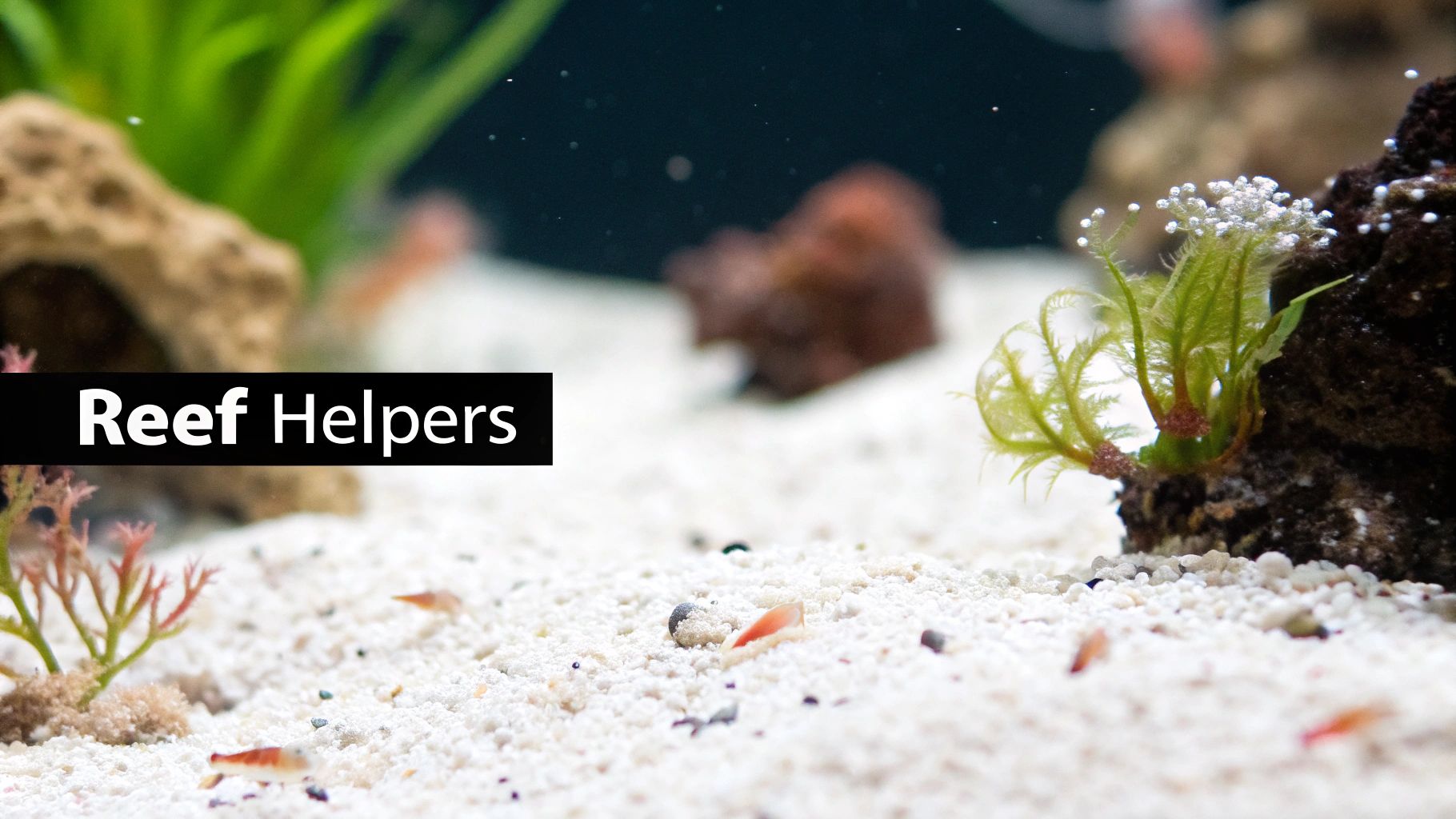
Picture a microscopic clean-up crew working tirelessly, day and night, to keep your aquarium pristine. Now, imagine that same crew is also a nutritious, self-sustaining food source for your most delicate fish and corals. That’s the two-for-one power you get when you introduce a healthy population of live copepods. They are the unsung heroes that bridge the gap between a tank that just survives and one that truly flourishes.
At their core, copepods are the base layer of the ocean's food web. In your tank, they graze relentlessly on detritus, leftover fish food, and nuisance microalgae. They're basically converting waste into a valuable source of nutrition. This natural housekeeping service is a huge help in keeping your water parameters stable by preventing the buildup of nitrates and phosphates, which means a cleaner, healthier home for everything in your tank.
The Foundation of a Healthy Food Web
Think of your reef tank like a miniature, bustling city. Your fish and corals are the flashy residents, but the copepods are the essential workers keeping everything running smoothly—managing waste and distributing food. Without them, the whole system can get out of whack. Adding live copepods is like seeding your tank with this critical workforce.
Their constant movement and reproduction create a living, breathing pantry for your tank's inhabitants. This is an absolute game-changer, especially for those notoriously finicky eaters that turn their noses up at frozen or flake food.
- Mandarin Dragonets and Pipefish: These stunning fish often starve in captivity without a constant supply of live pods to hunt.
- Corals: You'll see many corals extend their polyps to snatch passing copepods, which provide essential fatty acids that fuel incredible growth and color.
- Filter Feeders: Clams, feather duster worms, and other invertebrates also get in on the action, filtering free-swimming pods right out of the water.
It's no surprise that creating these natural ecosystems is catching on. The global live copepods market has shot up to a value of USD 187 million, driven by dedicated hobbyists like us. This demand is being met by advanced aquaculture that allows for the clean, controlled cultivation of key species like Tisbe, Tigriopus, and Apocyclops, so you know you're getting a pure, viable product.
By establishing a reproducing copepod population, you're building a more resilient and self-sufficient ecosystem. This means less manual cleaning and supplemental feeding for you, allowing your reef to function more like its natural counterpart in the wild.
Investing in a quality culture of live copepods is one of the single most effective things you can do for the long-term health and beauty of your reef. To really dive into their impact, check out our guide covering the top 10 benefits of adding live copepods to reef aquariums. They bring life in every single drop, turning a simple glass box into a dynamic, living ecosystem.
Choosing The Right Copepod Species
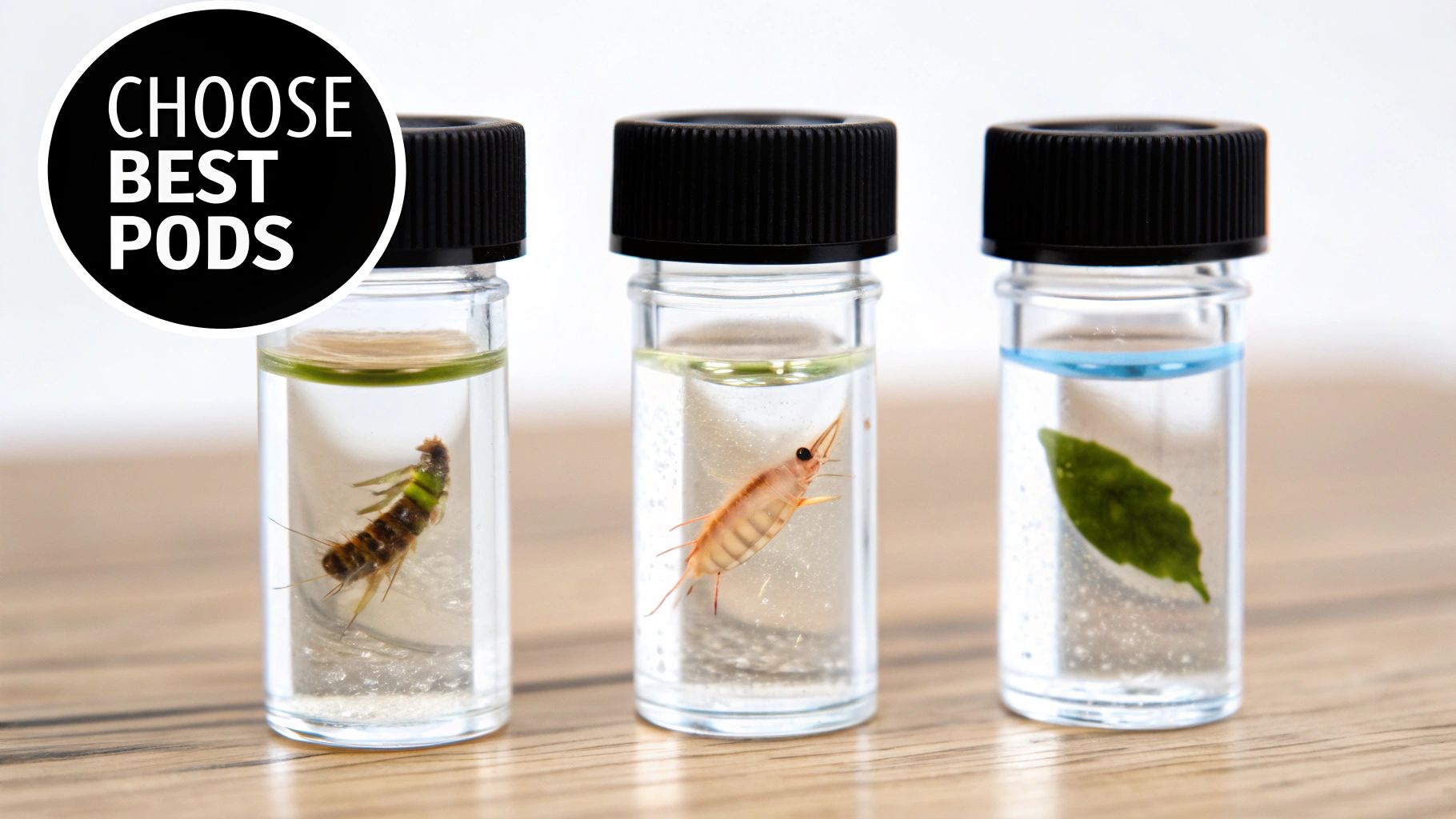
When you start shopping for live copepods for sale, it's easy to assume they're all the same. But that's a bit like saying all tools are hammers. Each species is a specialized instrument, perfectly adapted for a different job inside your tank. Getting the right one is the secret to seeing the results you're after.
Are you trying to keep a notoriously picky Mandarin Dragonet fat and happy? Or is your goal to kickstart a refugium, turning it into a self-sustaining food factory? The copepod that excels at one of these tasks isn't always the best for the other. A little bit of knowledge here goes a long way in making sure your investment pays off.
Match The Pod To Your Goal
First things first: what are you trying to accomplish? Different copepods live in different parts of the tank, a concept biologists call ecological niches. Some are bottom-dwellers (benthic), crawling all over your rockwork and sand, while others are free-swimmers (pelagic), zipping through the water column.
- For Feeding Finicky Fish: If you're keeping demanding eaters like Mandarins, Pipefish, or certain Wrasses, you need pods that are nutritious, noticeable, and easy to hunt. These fish spend their days grazing on surfaces, looking for their next meal.
- For Seeding a Refugium: To establish a breeding population that constantly feeds your display tank, you need a species that reproduces like crazy and thrives in the protected, algae-rich environment of a 'fuge.
- For Detritus and Algae Control: Looking for a cleaner tank? You'll want a species known for its nonstop appetite for detritus, fish waste, and the ugly films that can coat your rocks and glass.
This is where you can see the real impact. A high-quality 5ml portion of pods can introduce 600–900 of these micro-cleaners and fish-feeders into your system, instantly boosting your reef's biodiversity. As they get to work, you'll see a noticeable drop in nuisance microalgae.
Meet The Most Popular Species
Let's get to know the main players. Each has its own personality and skillset that makes it a star in the right situation.
Tigriopus californicus (Tig Pods)
These are the heavyweights of the copepod world. They're larger, have a distinct reddish-orange color, and their jerky swimming motion is like a dinner bell for fish. Their size makes them the absolute perfect choice for direct feeding.
Tisbe biminiensis (Tisbe Pods)
Tiny, tough, and incredibly fast breeders, Tisbe are the ultimate seeding pods. They are almost entirely benthic, spending their days crawling on every surface, cleaning as they go and laying tons of eggs. Their tiny babies (nauplii) are also the perfect bite-sized meal for corals and other filter feeders.
Apocyclops panamensis (Apo Pods)
If you're looking for a hardy, all-around player, Apocyclops is it. These guys can handle a wide range of temperatures and salinity levels. They also split their time between swimming in the water and crawling on surfaces, making them a great choice for boosting overall biodiversity and feeding a variety of tank inhabitants.
The goal isn't to find the single "best" copepod species, but to find the best species for your tank. Often, a blend of different types gives you the most bang for your buck, covering all your bases from cleaning crew to fish food.
If you want to go even deeper, our guide on comparing popular copepod species for marine aquariums breaks down the pros and cons in even more detail.
Copepod Species Guide At A Glance
To make things even easier, here's a quick cheat sheet. This table compares our live copepod species to help you choose the perfect match for your aquarium's specific needs, from feeding picky fish to establishing a self-sustaining microfauna population.
| Copepod Species | Primary Use Case | Life Stage | Habitat | Best For |
|---|---|---|---|---|
| Tigriopus | Direct feeding picky fish | Adult & Nauplii | Water column/Benthic | Mandarin Dragonets, Wrasses, larger fish |
| Tisbe | Seeding tanks & refugiums | Adult & Nauplii | Benthic (surfaces) | Establishing a long-term food source, corals |
| Apocyclops | General biodiversity boost | Adult & Nauplii | Pelagic/Benthic | All-purpose seeding, feeding small fish |
| Blends (Multiple) | Complete ecosystem support | Varies | All areas | New tanks, high-demand reefs, maximum benefit |
Use this as your starting point, and you'll be well on your way to picking the perfect pod population to help your reef thrive.
The Power Of Blends And Phytoplankton
Why bring just one tool to a job when you can have the whole toolkit? Sure, choosing a single copepod species can be a great way to hit a specific target, but a curated blend of multiple species offers a complete, balanced solution for your entire reef ecosystem. It's the difference between eating only broccoli versus enjoying a varied, nutrient-rich diet.
Just like a balanced diet keeps us healthy, a diverse copepod population makes for a healthier tank. Different species fill unique ecological niches, meaning they live, eat, and breed in different parts of your aquarium. This natural division of labor ensures every corner of your tank gets the attention it needs.
Some species are benthic, meaning they spend their lives crawling on the sand bed and live rock, munching on detritus right where it settles. Others are pelagic, actively swimming up in the water column where they become a perfect, bite-sized meal for fish and corals. A quality blend combines these specialists to create a comprehensive clean-up crew and a dynamic, multi-level food source.
A Nutritional Shower For Your Reef
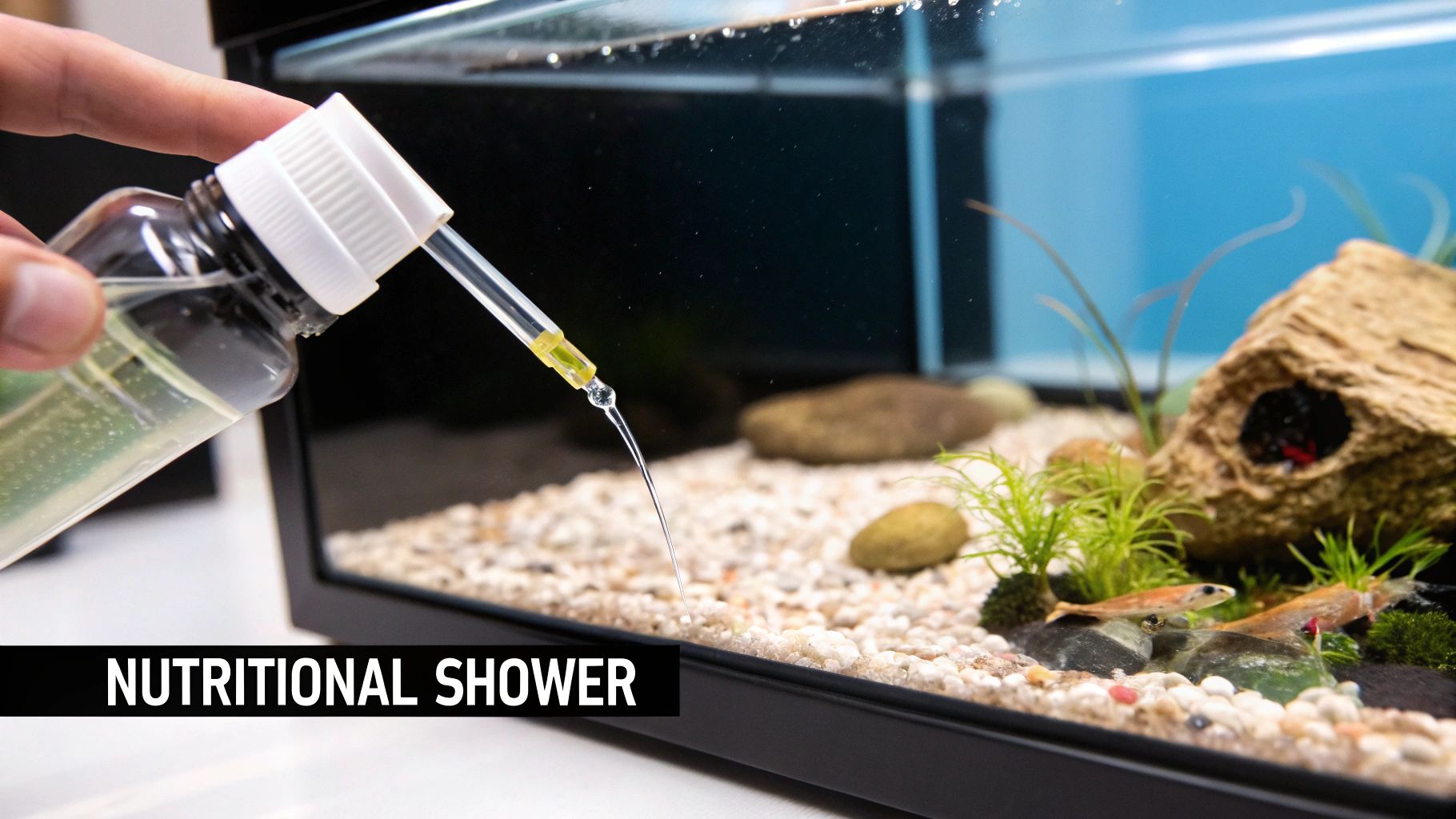
The real magic happens when you find live copepods for sale that come packed with live phytoplankton. This one-two punch creates a powerful synergy that benefits your aquarium from the moment you pour it in. The phytoplankton isn't just a snack to keep the pods alive during shipping; it's a primary food source that directly nourishes a huge range of your tank's inhabitants.
When you add a blend of copepods and phytoplankton, you’re basically giving your reef a "nutritional shower." This all-in-one solution provides immediate and long-term benefits.
- Immediate Coral Feeding: Corals, sponges, clams, and other filter feeders immediately get to work, feasting on the free-floating phytoplankton.
- Sustained Pod Nutrition: The phytoplankton provides an ongoing food source for the copepods, fueling them to reproduce and establish a thriving, self-sustaining population.
- Gut-Loaded Nutrition: As the copepods gorge on the phytoplankton, they become "gut-loaded" with nutrients. When your fish and corals eat these pods, they get a double dose of high-quality nutrition.
This synergistic relationship transforms a simple addition into a powerful ecosystem booster, maximizing the health and biodiversity of your entire system.
The Phytoplankton Advantage
Phytoplankton forms the absolute base of the marine food web. These tiny, single-celled algae are jam-packed with essential fatty acids (like EPA and DHA), vitamins, and amino acids that are critical for growth, vibrant color, and resilience in marine life. In fact, studies show that corals fed a diet rich in live prey and phytoplankton can exhibit 25% faster growth compared to those relying solely on their symbiotic algae.
The combination of diverse copepod species and live phytoplankton is one of the most effective ways to replicate the natural nutrient flow of a wild reef. It ensures that every trophic level, from the smallest filter feeder to the largest fish, receives the specific nutrition it needs to thrive.
By introducing this combination, you’re not just feeding your tank; you’re building a more complete and self-sustaining food web from the ground up. This approach is the key to unlocking the stunning colors and robust health you see in professional displays. To fully appreciate this dynamic, it’s helpful to understand the best phytoplankton for a reef tank and how different strains contribute. The right blend supercharges your copepod population and directly feeds your corals, making it a cornerstone of advanced reef keeping. This integrated strategy is the secret to moving beyond a simple aquarium and cultivating a truly living ecosystem.
What To Expect When You Buy Copepods Online

Ordering live critters online can feel like a roll of the dice, especially if it's your first time. We get it. You're not just buying a product off a shelf; you're investing in a living, breathing part of your aquarium's ecosystem. That uncertainty is exactly why we've spent years perfecting a process to get healthy, thriving cultures from our labs straight to your front door.
This isn't like ordering a new pump that can bake on the porch for a few hours. Live copepods are delicate passengers, and their journey has to be carefully managed. From the second you click "buy," our entire system is geared toward one thing: maximizing their viability and minimizing any stress.
Our mission is to make buying live copepods for sale feel as reliable and worry-free as picking up a bag of salt from your local fish store. Let’s pull back the curtain so you know precisely what happens next.
Our Shipping And Packaging Protocol
It all comes down to timing and protection. We culture and pack every single bottle to order. That means your pods aren't just sitting on a shelf waiting for a label—they're harvested fresh, specifically for your tank.
To make sure they get to you in peak condition, we stick to a strict shipping schedule. All orders go out on Mondays and Wednesdays. Why? It's simple: this schedule all but guarantees your package won't get stranded in a hot (or cold) warehouse over a weekend. This timing is one of the most critical parts of the whole process.
Once harvested, your order is packed with materials designed for the job:
- Insulated Liners: Think of this as a high-tech cooler for your pods, creating a stable buffer against the wild temperature swings that happen in transit.
- Temperature Control: Depending on the season and where you live, we’ll tuck in a small, specialized heat or cold pack to keep the internal temperature just right.
- Eco-Friendly Cushioning: We use sustainable materials to brace the bottles against bumps and drops, making sure everything arrives safe and sound.
This one-two punch of smart scheduling and protective packaging creates a safe little micro-environment for the pods until they land in your hands.
The Arrival And What You'll See
When the box arrives, you’ll find a securely sealed bottle or pouch inside. Now, don't expect it to look like a bag of tiny shrimp. Most copepod species are incredibly small, often appearing as nothing more than tiny white or tan specks—almost like dust—floating in the water.
Pro Tip: The best way to check on your new arrivals is to take the bottle into a dark room and shine a flashlight through the side. You'll see the tiny specks darting and zipping around. That's the surefire sign of a healthy, vibrant culture ready to go.
Bigger species like Tigriopus californicus are easier to spot as little reddish-orange dots, but for the smaller guys like Tisbe, the flashlight trick is your best friend.
Our Arrive Alive Guarantee
Your trust means everything to us. We stand behind our cultures and our shipping methods with an ironclad Arrive Alive Guarantee. This is our promise to you that your investment is completely protected.
In the rare case that your copepods don't make the journey, we will send a replacement, no questions asked. All we need is for you to contact us within a few hours of delivery, usually with a quick photo or video, and we’ll get a new batch out to you immediately. This guarantee takes all the risk out of buying live creatures online, so you can order with total peace of mind.
You’ve invested in your reef's health by getting a bottle of live copepods—now, let's make sure that investment pays off. Getting these tiny critters established isn’t as simple as just dumping them in. A few key steps can skyrocket their survival rate, ensuring they build a thriving, reproducing population instead of just becoming an expensive fish snack.
The goal here is to minimize shock and give the copepods a fighting chance to settle in before becoming a target for hungry fish. Think of it like bringing a new pet home; you want the transition to be as smooth and stress-free as possible. This process is designed to do just that.
Step 1: Acclimate for Temperature
The water inside the shipping bottle is almost guaranteed to be a different temperature than your aquarium. Dumping them straight in causes temperature shock, which can be lethal to these delicate organisms. Acclimation is a simple but absolutely critical first step.
Just float the sealed bottle or pouch in your aquarium's sump or display tank for about 15-20 minutes. This allows the water inside the container to slowly and safely match the temperature of your tank. It's a tiny bit of patience that makes a huge difference in their survival.
Step 2: The "Lights Out" Introduction
Once the pods are temperature-acclimated, timing is everything. The absolute best time to add copepods is after your main aquarium lights have been off for at least an hour. This "lights out" method is your secret weapon.
In the dark, most fish are less active, and some are even asleep. Introducing the copepods during this quiet time gives them a crucial window of opportunity to disappear into the nooks and crannies of your tank.
- Less Predation: Your fish won't immediately spot them and start a feeding frenzy.
- Time to Scatter: The copepods can spread out and find hiding spots in the rockwork and sand bed.
- Encourages Natural Behavior: They can start exploring and grazing without the immediate threat of being eaten.
This head start is often the deciding factor between establishing a reproducing colony and just providing a one-time meal. For best results, also turn off your pumps and powerheads for about 30 minutes. This lets the pods settle onto surfaces instead of getting blasted around the tank or sent straight into the overflow.
Step 3: Strategic Placement and Dosing
Where you pour the bottle actually matters. Instead of just dumping them into the water column, get strategic. The goal is to get them as close to a safe haven as possible, right from the start.
Seeding a Display Tank: Gently pour the contents of the bottle directly over your live rock and sand bed. If you have a particularly sharp-eyed hunter like a wrasse or mandarin, you can even use a turkey baster or a piece of airline tubing to deposit the pods directly into deep crevices where fish can't easily reach.
Seeding a Refugium: This is the ideal scenario. Pour the entire bottle directly into your refugium. This predator-free zone is the perfect breeding ground, allowing the copepod population to explode. From there, they will naturally overflow into your display tank, creating a sustainable, continuous food source.
The concept is simple: give your copepods a sanctuary. A well-seeded refugium or a complex rock structure provides the protection they need to reproduce faster than they are consumed. That's the key to a stable population that benefits your entire reef.
As for how much to add, it really depends on your goal. To seed a new tank, a larger initial dose is best. A common recommendation is one bottle per 20-30 gallons to get things started. For ongoing maintenance or to support a high-demand predator like a mandarin goby, adding a "booster" bottle every month helps keep the population dense and productive.
Common Questions About Live Copepods
Even with the best game plan, jumping in with a new live product like copepods can feel a little uncertain. You're not just adding another bottle of supplements; you're introducing a living, breathing micro-ecosystem into your tank. It's totally normal to have questions.
To help you feel completely confident, we've rounded up the most common questions hobbyists ask when they’re looking for live copepods for sale. Think of this as your go-to guide for the practical stuff—the little details that make a huge difference in getting the absolute best results from your purchase.
How Often Should I Add Copepods to My Aquarium?
There's no single "right" answer here—the best schedule really depends on your tank's inhabitants and what you're trying to achieve. But we can definitely break it down with some solid guidelines.
If you're seeding a new tank or just starting a pod population from scratch, your best bet is to go big on the first dose. This front-loads your system with enough breeding adults to get a self-sustaining colony up and running. After that big introduction, a smaller "booster" bottle every 1-2 months is perfect for keeping the population diverse and thriving, especially if you have pod-hungry fish like mandarins, pipefish, or certain wrasses who are on the hunt 24/7.
On the other hand, if your main goal is direct feeding for corals and other filter feeders, a more frequent schedule is the way to go. Adding a bottle every 2-4 weeks keeps a steady stream of live food drifting through the water, which can trigger some amazing feeding responses from your corals. Your tank will tell you when it's time; if you look at night and don't see those tiny critters scurrying over the rocks and glass like you used to, it's a good sign you need to replenish the troops.
Can I Actually See The Copepods in The Bottle?
Yep, you sure can! But you might need to know what to look for. Most of the copepods we use, especially the super popular Tisbe species and the younger life stages of all types, are incredibly tiny. To the naked eye, they just look like tiny white or tan specks of dust suspended in the water.
Pro Tip for Viewing: Want a good look at your new arrivals? It’s easy. Take the sealed bottle into a dark room and press a flashlight right up against the side. The light will illuminate all the pods, and you’ll see them zipping around with their classic, jerky swimming motion. It's the best way to confirm you've got a healthy, active culture ready to go.
Some of the bigger guys, like Tigriopus californicus, are much easier to spot. They look like little reddish-orange dots and are pretty obvious without any tricks. But rest assured, whether they're easy to see or not, every bottle is packed with a dense concentration of thousands of live, healthy organisms ready to get to work in your reef.
Do I Need a Refugium to Keep Copepods?
A refugium is an amazing tool for growing a massive copepod population, but let's be clear: it is absolutely not a requirement. Copepods are survivors, and they are experts at finding safe places to live and breed right inside a display tank.
In a display-only system, they'll make a home in the countless tiny nooks and crannies of your live rock and deep within the sand bed. These little micro-habitats give them all the protection they need from hungry fish, allowing them to reproduce in peace.
To give them their best shot in a display tank, always add them after the lights have been out for at least an hour. This "lights-out" drop gives them time to find shelter and disperse into the rockwork before your fish wake up and start their morning hunt.
A refugium just puts this whole process on steroids. It’s a predator-free safe zone where the copepod population can explode without any pressure. The pods then naturally overflow into your display tank, creating a constant, self-renewing food source. It's the ideal setup, for sure, but it's far from the only way to succeed.
How Long Can I Store Copepods Before Use?
For the best results and highest nutritional value, you should add your copepods to the aquarium as soon as you can after they arrive. They are at their absolute peak on delivery day.
We get it, though—life happens. If you absolutely have to wait, you can safely store the sealed bottle in the refrigerator for up to one week. The fridge door is usually the best spot, since it stays a little warmer than the back shelves.
CRITICAL: Whatever you do, do not let the bottle freeze. This will kill the entire culture.
When you're ready to use them, pull the bottle out of the fridge and let it sit at room temperature for about 30-60 minutes. This gives the water time to warm up slowly and prevents any temperature shock. Right before adding them to your tank, just gently turn the bottle end-over-end a few times to get the pods, which may have settled on the bottom, mixed back into the water.
Ready to build a more vibrant, self-sustaining reef? PodDrop Live Aquarium Nutrition provides the fresh, lab-grown copepods and phytoplankton your ecosystem needs to flourish. See the difference that real, living food makes. Start seeding your success today at getpoddrop.com.