

Your Guide to Invertebrates for Reef Tank Success
When you picture a thriving reef tank, your mind probably jumps to vibrant corals and dazzling fish. But the real secret to a healthy, stable reef isn't just what you see at first glance—it's the army of tiny janitors, gardeners, and chefs working tirelessly behind the scenes. The best invertebrates for a reef tank aren't just pretty faces; they are the essential workforce that keeps the entire ecosystem in balance.
The Hidden Workforce Driving Your Reef Tank
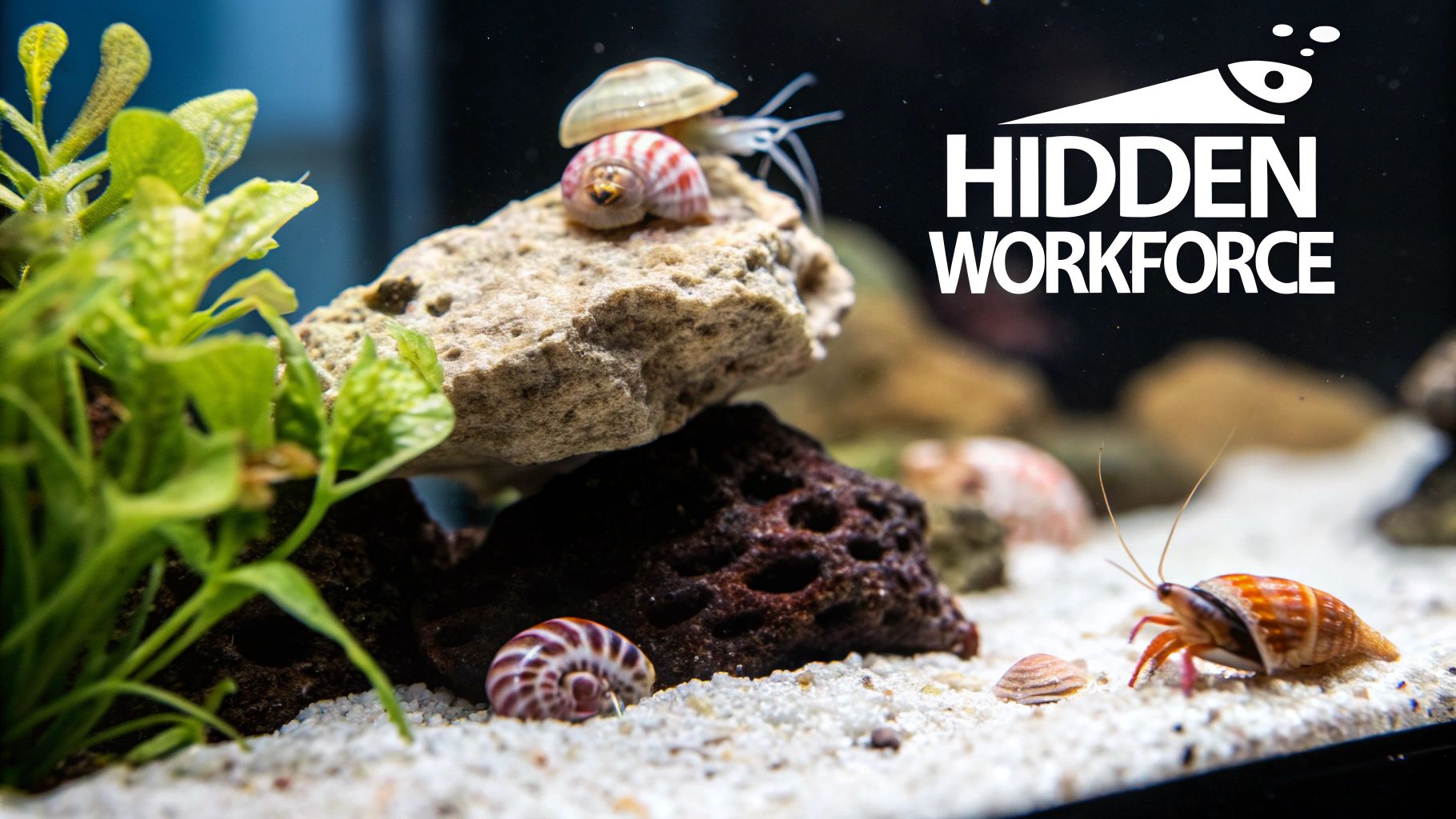
Think of your reef tank like a bustling city. The fish are the flashy celebrities and the corals are the stunning architecture, but the invertebrates are the ones who keep the lights on and the streets clean. They're the sanitation crew, the recycling plant, and the food delivery service all rolled into one. Without this invertebrate cleanup crew, your beautiful city would quickly grind to a halt under a pile of waste.
These creatures are the true foundation of a healthy reef tank, the unsung heroes that prevent common problems before they even start.
The True Engineers of Your Ecosystem
Fish just can't do the jobs these tiny engineers are built for. Invertebrates are nature's elegant solution to the constant battle against waste and algae in a closed system. Their combined efforts lead to a much cleaner tank, healthier inhabitants, and an environment that feels genuinely alive.
This indispensable group breaks down into a few key roles:
- The Cleanup Crew: These are your front-line workers. Snails, crabs, and conchs are constantly grazing on leftover food, detritus, and pesky nuisance algae.
- Ornamental Species: Don't let their good looks fool you. Shrimp and clams add incredible visual interest while also performing specialized tasks, like cleaning parasites off fish or filter-feeding the water column.
- Microfauna: This is the invisible workforce. Microscopic copepods and amphipods are the foundation of your tank's food web, providing a perfect, natural food source for picky fish and hungry corals.
A reef tank without its invertebrates is like a city without its support staff—it simply can't function. They are the biological engine that turns waste into life, keeping the entire system running smoothly.
Reflecting Nature's Complexity
On a natural coral reef, the sheer diversity of invertebrate life is staggering. It's not an exaggeration to say that the vast majority of all species on a reef are invertebrates. One scientific survey documented over 700 different invertebrate species in a single area, a powerful testament to their importance. You can learn more about this incredible biodiversity in reef ecosystems and see how it translates to our home aquariums.
When you carefully select a diverse team of invertebrates for your tank, you're mimicking a small slice of that natural complexity. This doesn't just make your aquarium more stable and resilient; it makes it infinitely more fascinating to watch. Your tank transforms from a static display into a living, breathing miniature world.
Assembling Your Perfect Cleanup Crew
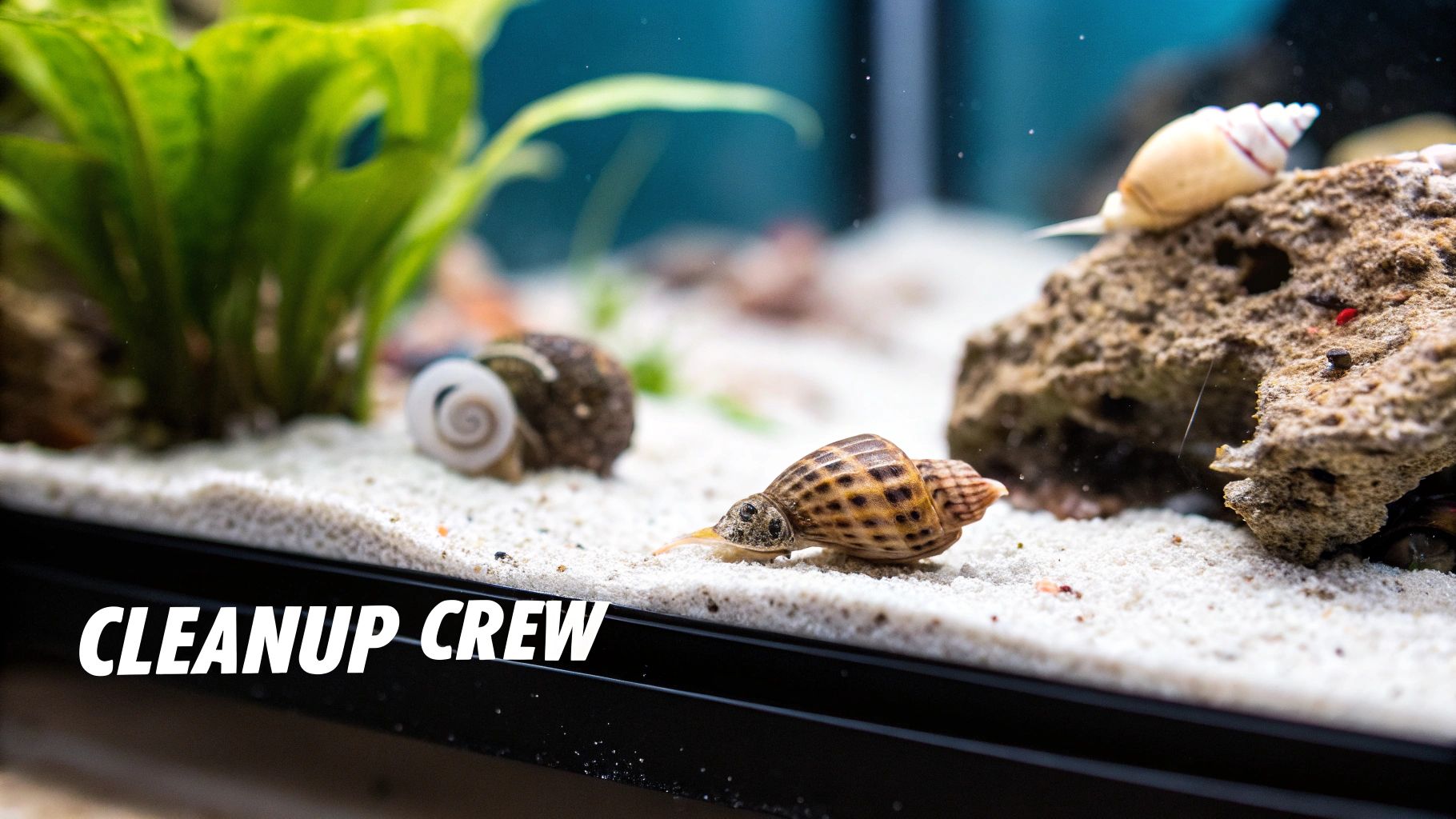
When you hear "cleanup crew," it's easy to picture a single, all-purpose janitor. But for a reef tank, that couldn't be further from the truth. A truly effective crew isn't one animal—it's a specialized team.
Think of it like hiring a professional cleaning service for your home. You wouldn't expect the window washer to also polish the floors and get into every dusty corner. It takes a group of specialists, each with their own job. Building a crew of invertebrates for your reef tank is exactly the same; you’re strategically assembling a maintenance force that covers every surface, substrate, and crevice.
Assigning Roles to Your Crew Members
The secret to a pristine tank is diversity. Different snails, crabs, and conchs have unique appetites and physical traits that make them perfect for specific tasks. Forget a one-size-fits-all approach. Instead, build a team that addresses your tank's specific challenges.
Your crew will tackle a few primary jobs:
- Glass & Rock Cleaners: These are your tireless grazers, methodically scraping away the film algae that clouds up your glass and coats your beautiful rockwork.
- Sand Sifters: This team is the underground crew. They keep the sandbed aerated, preventing nasty gas pockets from forming while gobbling up buried detritus.
- Hair Algae Specialists: Every reefer’s nemesis. Stubborn hair algae requires dedicated specialists with a particular taste for the green stuff.
- Detritus & Leftover Food Eaters: Think of these as the opportunistic scavengers. They swoop in to eat uneaten fish food and waste before it has a chance to rot and foul your water.
By hand-picking members from each category, you create a system of natural checks and balances that keeps everything looking sharp.
Your First-String Algae Eaters
When it comes to keeping glass and rocks sparkling, snails are the undisputed MVPs. They are relentless grazers, working around the clock to consume the films of diatoms and green algae that pop up in every reef tank. But not all snails are created equal.
Trochus snails are an absolute fan favorite, and for good reason. Their pyramid-shaped shell is more than just a cool look—it allows them to easily right themselves if they fall over. It’s a simple but vital survival skill. They are fantastic glass cleaners and will happily work on your rocks, too.
Astrea snails are also algae-eating powerhouses, but they have a fatal flaw: they can't flip themselves back over. If one tumbles into the sand, it's often a death sentence unless you intervene. They're great, but best suited for tanks with very stable rockwork.
Building a cleanup crew is an ongoing process, not a one-time purchase. Start small. You can always add more invertebrates later once you see how they handle your tank's specific nutrient load.
The Substrate and Detritus Team
While your snails are busy polishing the surfaces, another crew needs to get to work on the sandbed. This is where a well-chosen team really shines. Without them, waste and detritus build up in the sand, creating an eyesore and a potential nitrate factory.
Nassarius snails are the undisputed stars of the sandbed. They stay buried most of the time, looking like nothing more than little bumps in the sand. But the second they smell food, they erupt from the substrate like tiny zombies, keeping your sand constantly stirred and aerated.
Cerith snails are another fantastic addition. Their long, corkscrew-like shells let them get into tiny cracks and crevices that other snails can't reach. For larger tanks, a Fighting Conch is a peaceful, sand-sifting bulldozer that keeps deep sandbeds pristine.
If you want to dig deeper, our guide on building the ultimate cleanup crew for your saltwater tank has even more detailed recommendations to help you make the perfect choice.
Choosing the Right Crew for Your Tank
The size and age of your tank are the biggest factors in deciding how to stock your cleanup crew. A brand-new nano tank needs a much lighter touch than a large, established system packed with fish.
To help you get started, here's a look at some of the most popular cleanup crew members and what they do best.
Comparing Top Cleanup Crew Invertebrates
A great cleanup crew is all about having the right specialist for the right job. This table breaks down some of the most common invertebrates, helping you see where each one fits into the team.
| Invertebrate | Primary Role | Ideal Tank Size | Reef Safe? | Notes |
|---|---|---|---|---|
| Trochus Snail | Glass & Rock Algae | 10+ Gallons | Yes | Excellent all-around cleaner; can right itself if it falls. |
| Nassarius Snail | Sand Sifting, Detritus | 10+ Gallons | Yes | Spends most of its time buried, emerging to eat leftover food. |
| Cerith Snail | Detritus, Film Algae | 5+ Gallons | Yes | Great for cleaning sand, rocks, and glass; reaches tight spaces. |
| Blue Leg Hermit Crab | Hair Algae, Detritus | 10+ Gallons | With Caution | Effective scavenger but may occasionally bother snails for shells. |
| Emerald Crab | Bubble Algae, Hair Algae | 20+ Gallons | With Caution | A specialist for specific algae types; can be aggressive if underfed. |
| Fighting Conch | Sand Sifting | 30+ Gallons | Yes | Peaceful and highly efficient at keeping larger sandbeds clean. |
Remember, this is just a starting point. The best cleanup crew is one that evolves with your tank. Start slow, observe, and adjust as needed to create a perfectly balanced ecosystem.
Adding Ornamental and Specialized Invertebrates
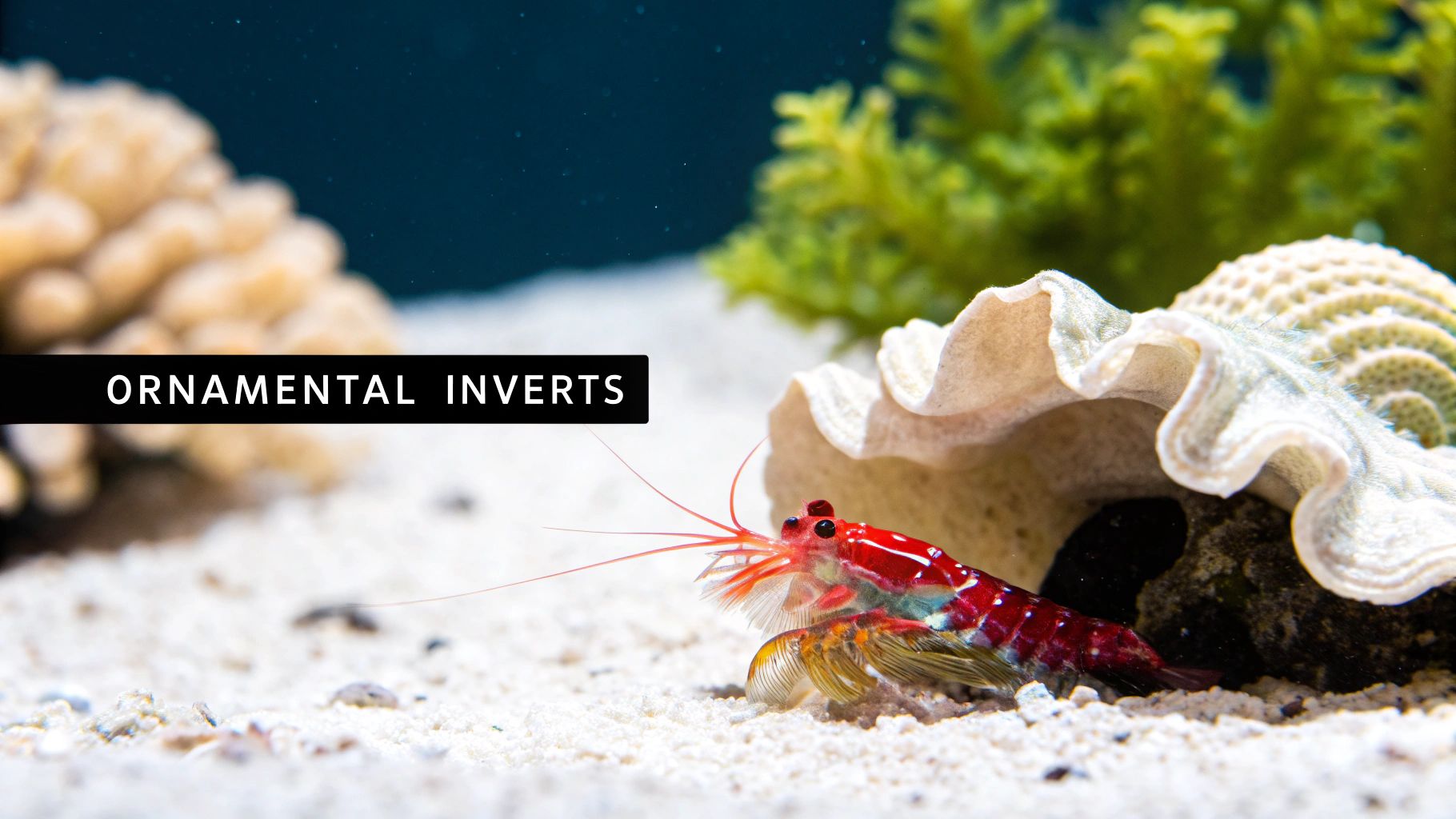
While your cleanup crew is busy working behind the scenes, another group of invertebrates is ready to steal the show. These are the ornamental and specialized species—the showstoppers that bring vibrant color, fascinating behaviors, and unique functions to your reef. This is where you move past simple maintenance and start creating a truly captivating ecosystem.
These creatures are proof that beauty and utility aren't mutually exclusive. They aren't just there to look pretty; they often fill specific ecological roles that make your tank healthier and more stable. Choosing the right ornamental invertebrates for a reef tank is what transforms a simple aquarium into a dynamic slice of the ocean.
The Charismatic Shrimp
Shrimp are, without a doubt, some of the most popular ornamental invertebrates, and it's not hard to see why. Their brilliant colors and constant activity make them endlessly interesting to watch. But they're more than just eye candy—many shrimp also provide valuable services to their tank mates.
- Cleaner Shrimp (Lysmata amboinensis): This is the classic reef shrimp. It’s famous for setting up "cleaning stations" where fish literally line up to have parasites and dead skin picked off. Watching this symbiotic relationship unfold is incredible and genuinely benefits your fish.
- Fire Shrimp (Lysmata debelius): With its deep, blood-red body and striking white spots, the Fire Shrimp is one of the most visually stunning additions you can make. They tend to be a bit shyer than Cleaner Shrimp but are fantastic scavengers.
- Peppermint Shrimp (Lysmata wurdemanni): While its looks are more subtle, this shrimp is a prized specialist. It's one of the very few animals that will actively hunt and devour the pest anemone, Aiptasia, making it both a functional and attractive choice.
If you want to dive deeper into these fascinating crustaceans, check out our dedicated guide to the best shrimp for your reef tank.
Living Filters and Dynamic Flowers
Beyond shrimp, other specialized invertebrates bring entirely unique forms and functions to the reef. These sessile (non-moving) animals add a layer of texture and complexity that perfectly complements corals and live rock.
The Tridacna Clam is one of the most remarkable additions you can make. These stunning bivalves are essentially living, solar-powered water filters. Their vibrant mantles are full of the same symbiotic algae (zooxanthellae) that corals host, allowing them to get energy directly from your lights. As they do this, they're also filtering particulates out of the water column, leading to incredible water clarity.
Feather Duster Worms (Sabellastarte sp.) introduce a touch of graceful, dynamic motion. Their delicate, fan-like crowns unfurl to catch floating bits of food, but they'll snap back into their tubes in a flash if startled. They are peaceful filter feeders that need stable water and a good supply of planktonic food to really flourish.
Adding specialized invertebrates is like bringing in artists and architects for your underwater city. They don't just clean up; they actively build a more beautiful, complex, and resilient environment for everything living there.
Understanding Invertebrate Diversity
The sheer variety of invertebrates available in the hobby is just a tiny glimpse of the immense biodiversity on natural reefs. Real-world reef monitoring programs highlight this complexity; for example, surveys track dozens of distinct invertebrate species, from 59 in the Pacific Northwest to 47 in the South Atlantic States. For us aquarists, understanding this diversity is the key to building a balanced system where every animal has a role to play.
Choosing these specialized animals means doing your homework. Unlike a tough-as-nails Trochus snail, species like Tridacna clams have very specific demands for lighting, water flow, and calcium levels. Always make sure your system is mature and stable enough to support these more sensitive, but incredibly rewarding, inhabitants.
Fueling Your Tank with Live Copepods and Phytoplankton
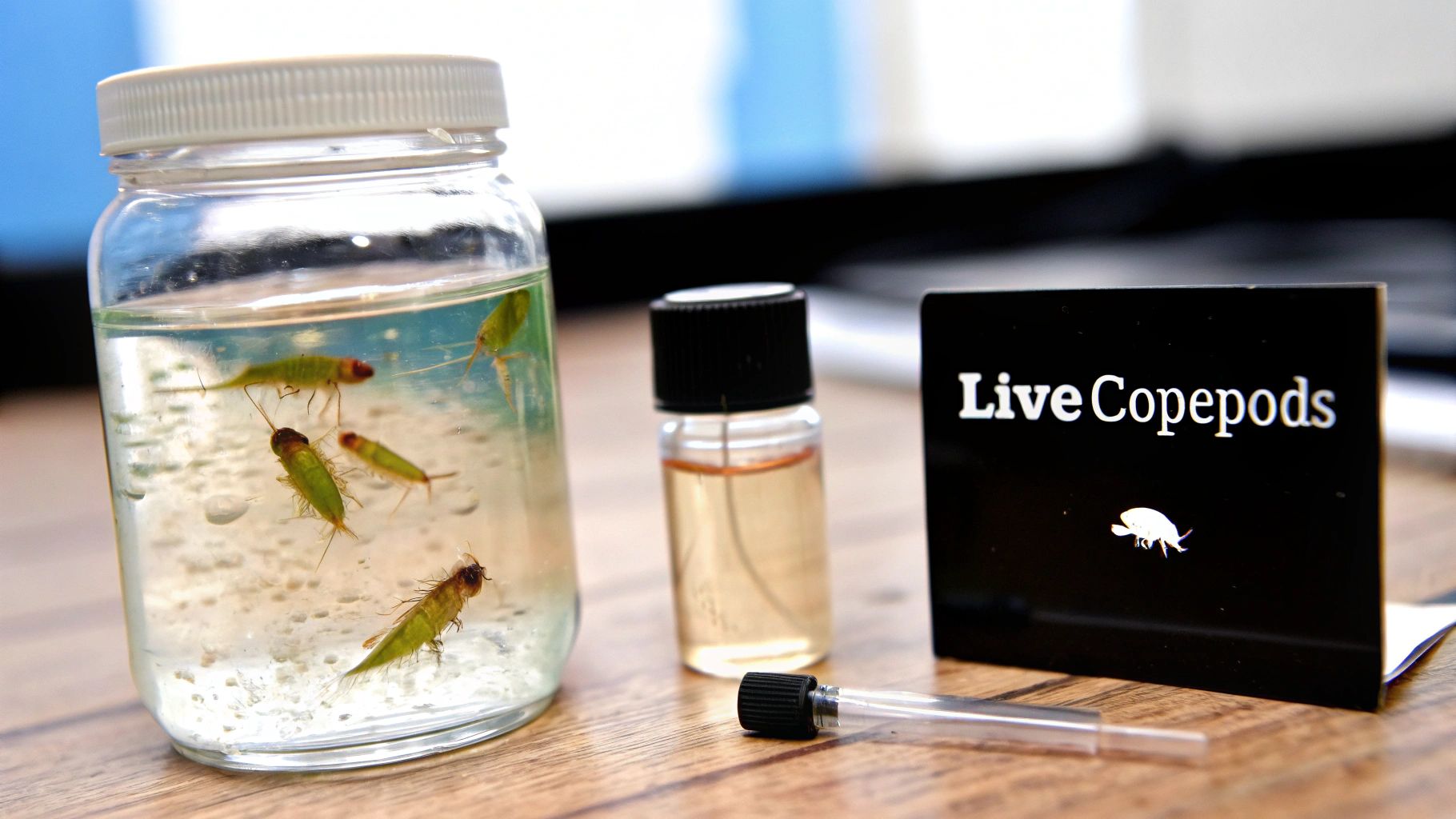
We've talked about the visible workforce—the snails and shrimp you see tirelessly polishing your rockwork and sand. Now it’s time to zoom way in and meet the microscopic engine that truly powers a healthy reef ecosystem. This is the world of copepods and phytoplankton, the unseen but absolutely essential foundation of a vibrant aquarium.
Think of your reef tank's food web as a pyramid. At the very bottom, supporting everything else, are these tiny organisms. Adding them to your system isn't just about feeding a specific fish; it's about building a self-sustaining, natural food source from the ground up that benefits every single inhabitant.
The Powerhouse Role of Copepods
Copepods are tiny, free-swimming crustaceans that play a critical dual role. First and foremost, they are a live, incredibly nutritious food source that nothing else can really replicate. Their constant, jerky movements trigger a natural hunting response in fish that even the pickiest eaters find impossible to ignore.
This makes them an absolute game-changer for keeping notoriously finicky species like Mandarin Dragonets, certain wrasses, and pipefish. These beautiful fish often starve in tanks because they simply don't recognize flake or frozen foods. A thriving copepod population gives them a continuous "grazing" opportunity, letting them behave and feed just as they would in the wild.
Beyond just being fish food, copepods are also a secret weapon for your cleanup crew. Their minuscule size lets them get into the tiniest pores and crevices of your live rock, munching on detritus and nuisance algae films that even your smallest snails can't reach.
Establishing a robust copepod population is one of the single most effective ways to boost the health, color, and natural behavior of your fish and corals. It bridges the gap between a tank that merely survives and one that genuinely thrives.
Choosing the Right Copepod Species
Not all copepods are created equal. Different species have different behaviors and fill slightly different niches in the aquarium, so knowing the difference helps you pick the best ones for your goals.
The two most popular species you'll find in the hobby are Tisbe and Tigriopus.
- Tisbe Copepods (Tisbe biminiensis): Think of these as the perfect "seeding" pods. They're small, prefer to hang out in the rockwork and substrate, and reproduce very quickly. This makes them ideal for establishing a self-sustaining population that provides a constant food source for your tank’s inhabitants.
- Tigriopus Copepods (Tigriopus californicus): These are the big guys. They're larger, bright red, and spend more time swimming up in the water column. Their size and high visibility make them a fantastic choice for directly feeding fish and corals, especially picky eaters that need a more obvious target to chase.
For most reefers, using a combination of both is the ultimate strategy. You can learn more by exploring the benefits of adding live copepods to your aquarium and seeing how different species can support your ecosystem.
Phytoplankton: The Fuel for the Fire
If copepods are the livestock of your miniature ecosystem, then live phytoplankton is the nutrient-rich pasture they need to graze on. Phytoplankton are microscopic, single-celled marine algae that form the absolute base of the entire oceanic food web.
Adding live phytoplankton to your tank does two incredible things. First, it directly feeds many of your tank's inhabitants. Corals, clams, feather duster worms, and other filter feeders will capture and consume these tiny particles right from the water, often showing noticeable improvements in health and color.
Second, and just as important, it provides the essential food source your copepod population needs to reproduce and explode in numbers. By "feeding your pods," you ensure they multiply rapidly, creating a sustainable, ever-replenishing supply of live food right inside your tank. Dosing phytoplankton is like fertilizing the entire system, making sure your microfauna has everything it needs to flourish. This cycle creates a direct energy transfer from the phytoplankton all the way up to your fish and corals, making the whole ecosystem more resilient and vibrant. This natural food source is one of the best ways to care for the invertebrates in your reef tank.
Acclimation and Quarantine: Your First, Most Important Steps
How you handle new invertebrates in the first few hours will make or break your success. Honestly, one of the fastest ways to lose a beautiful new shrimp or a hardworking snail is to rush the introduction. Think of it like bringing a visitor from a tropical island to the arctic—you wouldn't just throw them outside in a t-shirt. You have to let them adjust slowly.
This isn't optional, especially for the really sensitive animals like shrimp, clams, and starfish. They're incredibly vulnerable to osmotic shock, which is a fancy way of saying they get slammed by sudden changes in water chemistry, especially salinity. Tossing them straight into your tank is like yanking a deep-sea diver to the surface in seconds. The sudden shift can be deadly.
Taking your time with a slow, methodical acclimation process gives your new critters a chance to gradually sync their internal chemistry with your tank's water parameters. This one simple step is the best insurance policy you can have against immediate losses. It's just fundamental to responsible reef keeping.
Mastering the Drip Acclimation Method
Drip acclimation is the gold standard for a reason. It's a gentle, low-stress technique that slowly introduces your tank's water into the transport bag water, literally one drop at a time. This gradual exchange prevents shock and gives the animal its best shot at a long, healthy life in its new home.
Here’s how you get it done right:
- Prep the Area: First, dim the room lights. Bright lights are stressful. Float the sealed bag in your tank or sump for about 15-20 minutes so the water temperatures can match up.
- Get Set Up: Carefully empty the invertebrate and all its bag water into a small, clean container. Place this container on the floor, below your aquarium. Now, start a siphon using a piece of airline tubing. You can tie a loose knot in the tube or use a small plastic valve to control the flow.
- Start the Drip: Adjust the flow until you have a slow, steady drip—aim for 2-4 drips per second. The idea is to slowly double, or even triple, the amount of water in the container. This should take at least 60-90 minutes. Don't rush it.
- The Final Move: Once the water volume has increased, gently net the invertebrate and place it in your aquarium. This is critical: never, ever pour the acclimation water into your tank. It’s full of concentrated waste from shipping and could be carrying who-knows-what.
Why You Absolutely Need a Quarantine Tank
Acclimation handles the water chemistry, but quarantine protects your entire reef. A quarantine tank (QT) is just a simple, separate tank where new arrivals can be observed for a few weeks before they touch your main display. This is your frontline defense against introducing pests and diseases that can wreck everything.
A quarantine tank isn't a sign of paranoia; it's the mark of a seasoned aquarist. An ounce of prevention here is worth a pound of cure, protecting the significant investment of time and money you've poured into your display tank.
Your QT doesn't need to be fancy. A basic 10-gallon tank with a heater, a simple hang-on-back filter, and a few pieces of PVC pipe for hiding spots is perfect. During this 2-4 week observation period, you're on high alert for hitchhikers like nasty bristle worms, coral-eating pyramidellid snails, or the dreaded pest anemone, Aiptasia. Skipping this step is a gamble that could turn your beautiful reef into a constant battle against invasive pests that are a nightmare to get rid of.
Troubleshooting Common Invertebrate Problems
Even the most seasoned reef keeper runs into trouble now and then. It’s incredibly frustrating to see an invertebrate you’ve carefully chosen start to fail, but don’t panic. The cause is rarely some exotic disease; more often, it’s a simple mismatch in their environment or a sneaky tank mate causing problems.
When your inverts start looking rough, it’s time to put on your detective hat. The clues almost always lead back to one of three things: unstable water parameters, not enough food, or a predator you didn't know you had. Pinpointing the real issue is the key to fixing it.
Why Are My Snails Dying?
A single snail passing away might just be old age, but when you start losing several at once, that’s a serious red flag for your whole system. Before jumping to conclusions, check your water and think about what they’ve been eating.
Here are the usual suspects:
- Starvation: This is surprisingly common. In a super-clean, established tank, your snails might have simply done their job too well and eaten all the available algae.
- Salinity Swings: Invertebrates are extremely sensitive to changes in salinity. A sloppy water top-off or poorly mixed saltwater can cause osmotic shock, which is a fast killer.
- Predation: You might not see it happen, but many fish and crabs (and even some bristle worms) see snails as an easy meal, especially after the lights go out.
The Case of the Disappearing Shrimp
So, your brand-new, vibrant Cleaner Shrimp has vanished into thin air? It’s a classic reef tank mystery, but there’s usually a logical explanation. Shrimp are at their most vulnerable right after they molt, when their new shell is still soft and defenseless.
When an invertebrate just disappears, it’s almost never random. It’s usually a predator seizing an opportunity—like a recent molt—or the animal is just an expert hider who has found a crevice you’d never think to check.
If your shrimp is gone, it was likely picked off by a hidden crab, a hitchhiking mantis shrimp, or even an opportunistic fish. On the other hand, it might just be hiding out for a few days until its new armor hardens up.
This all ties back to why keeping our little glass boxes healthy matters so much. With a shocking 32% of reef-building corals threatened with extinction, our home aquariums can be small arks. Choosing aquacultured invertebrates helps take the pressure off wild populations. You can learn more about the critical connection between stable reef systems and invertebrate health. Solving problems in our own tanks is a small but vital piece of a much bigger conservation puzzle.
Common Questions About Reef Invertebrates
Diving into the world of reef tank invertebrates can feel a bit overwhelming. You're not just picking pretty critters; you're building an ecosystem. Let's walk through some of the most common questions hobbyists have, clearing up the confusion so you can make confident choices for your tank.
How Big Should My Cleanup Crew Be?
Forget the rigid rules you might have read online. While a general guideline of one snail per 1-2 gallons and one small hermit crab per 5-10 gallons can be a starting point, it's not the full story. The real answer depends entirely on your tank's unique bioload, not just its volume.
The best approach is to start small and observe. Add a conservative crew and watch them work for a few weeks. Is algae still creeping up the glass? Is detritus collecting in the corners? If so, you can slowly add a few more members to the team. For a typical 40-gallon tank, you might start with a mix of 20 different snails and maybe 4 small crabs, then adjust from there.
Are All Invertebrates "Reef-Safe"?
Not even close. This is probably one of the most critical lessons for any new reefer to learn. The term "reef-safe" means a creature won't deliberately munch on your prized corals, clams, or other invertebrates you want to keep. Many animals sold for marine aquariums definitely do not fit this description.
Pro Tip: Always, always research every single species before it goes into your tank. If you see something labeled "reef-safe with caution," that's a red flag. It usually means the animal is an opportunist—it might behave when full, but it could turn into a predator the second it gets hungry.
For instance, many larger hermit crabs are notorious for killing snails just to steal their shells. The popular Chocolate Chip Starfish is a known coral-eater, and even some shrimp, like the Camel Shrimp, have a reputation for picking at soft corals and zoanthids. A quick search on your phone before you buy can save you a world of heartache and money.
How Often Do I Need to Add Live Copepods?
Think of it like starting a garden. You begin by planting a good number of seeds to get things going. For a reef tank, this means "seeding" it with a substantial dose of live copepods to establish a healthy, breeding population.
After that initial seeding, topping off the population with a smaller "booster" bottle every month or two is a fantastic way to keep the numbers high and the genetics diverse.
However, if you have fish that are heavy copepod hunters—like a Mandarin Goby or certain wrasses—you'll need to add them more often. Tanks packed with filter-feeding corals also create high demand. For these systems, adding a fresh batch of copepods and phytoplankton weekly or every other week is key to keeping that crucial microfauna food web strong and productive.
Ready to build a vibrant food web from the rock up? PodDrop Live Aquarium Nutrition has you covered. Our lab-grown, pure live copepods and phytoplankton deliver the foundational nutrition your corals and fish crave. See what a difference life in every drop can make at https://www.getpoddrop.com.