

A Guide to Good Saltwater Fish for Beginners
So, you're ready to take the plunge into the saltwater hobby. That's fantastic! The key to a successful and enjoyable experience often comes down to one crucial decision: choosing your very first fish.
When you're starting out, you want fish that are tough, calm, and not too picky about dinner. That’s why you always see classics like the Ocellaris Clownfish or the Royal Gramma Basslet in new tanks. They're popular for a reason—they can handle the small bumps in the road as you get the hang of managing a marine aquarium.
What Makes a Saltwater Fish Beginner Friendly?
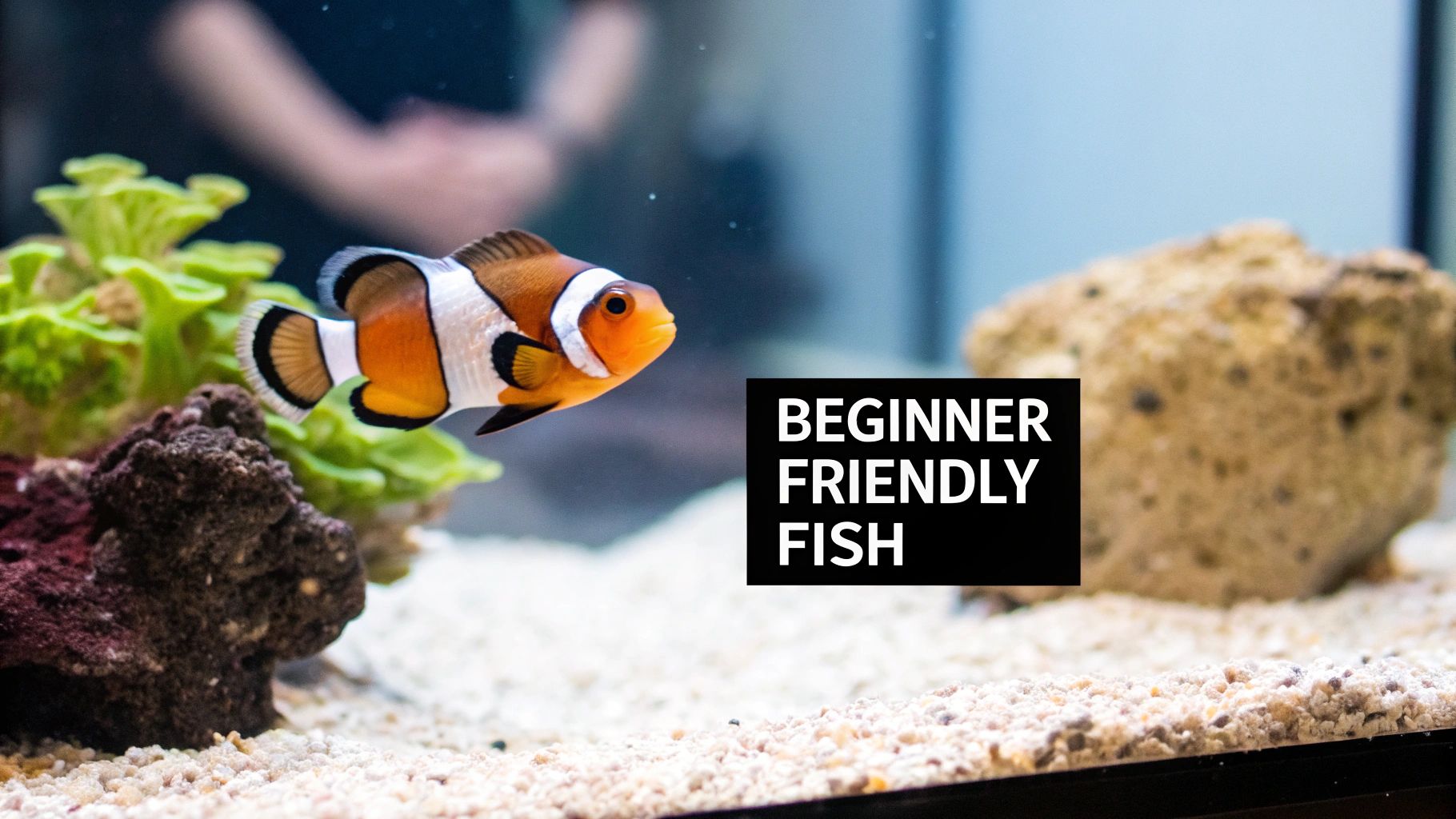
It’s easy to get mesmerized by the most dazzling, exotic-looking fish at the local shop, but for your first inhabitants, looks aren't everything. Think of your first fish as forgiving teachers; they need to be resilient enough to roll with the punches while you master the art of saltwater chemistry.
A great starter fish is less about flashy colors and more about its ability to thrive while you're on that learning curve. They give you a little breathing room as your new ecosystem finds its balance.
The Three Pillars of a Great Starter Fish
To make things simple, just focus on three core traits when you're browsing. If a fish ticks these three boxes, you're setting yourself up for success and a lot less stress.
-
Hardiness: This is non-negotiable. A hardy fish can handle the minor, temporary swings in water parameters—like salinity or pH—that are almost guaranteed to happen in a new tank. As your biological filter establishes itself, a hardy fish will be just fine.
-
Peaceful Temperament: The last thing you want is a bully in your tank. Aggressive fish create a chaotic environment, stressing out their tank mates and making it a nightmare to add anyone new down the line. A peaceful community is a healthy one.
-
Simple Care Needs: Stick with fish that aren't picky eaters. The best beginner species will happily gobble up readily available foods, like frozen brine shrimp or quality pellets. You want to avoid fish that require a highly specialized diet or super-specific tank conditions to flourish.
To give you a handy reference, here’s a quick checklist to keep in mind when you're at the fish store.
Beginner-Friendly Fish Checklist
| Characteristic | Why It Matters for Beginners | What to Look For |
|---|---|---|
| Hardiness | Forgives the small mistakes common in new tanks. | Captive-bred species are usually tougher than wild-caught. |
| Peaceful Temperament | Ensures a low-stress environment for all tank inhabitants. | Look for terms like "community" or "reef-safe." Avoid "semi-aggressive" for now. |
| Easy to Feed | You won't need to hunt for specialized or live foods. | Readily accepts prepared foods like flakes, pellets, and frozen varieties. |
| Small Adult Size | Won't outgrow the typical starter tank (20-40 gallons). | Check the maximum adult size, not the size it is in the store. |
| Disease Resistance | Less prone to common illnesses that can plague new aquariums. | Again, captive-bred fish are often more robust and pre-acclimated. |
This simple framework will help you look past the initial "wow factor" and choose fish that will truly thrive under your care.
The saltwater hobby has exploded in popularity, and a lot of that is thanks to the wider availability of these awesome starter species. Ocellaris Clownfish, one of about 30 different clownfish species, have become the poster child for the hobby precisely because they are almost entirely captive-bred, making them incredibly tough.
Getting these fundamentals right is your first big step toward a beautiful, thriving aquarium. By choosing fish with resilience and a calm demeanor, you're building a foundation for a hobby that's rewarding instead of frustrating. If you're ready to see some specific examples, check out our other guide on great starter fish for a saltwater aquarium.
Our Top 10 Fish for Your First Saltwater Tank
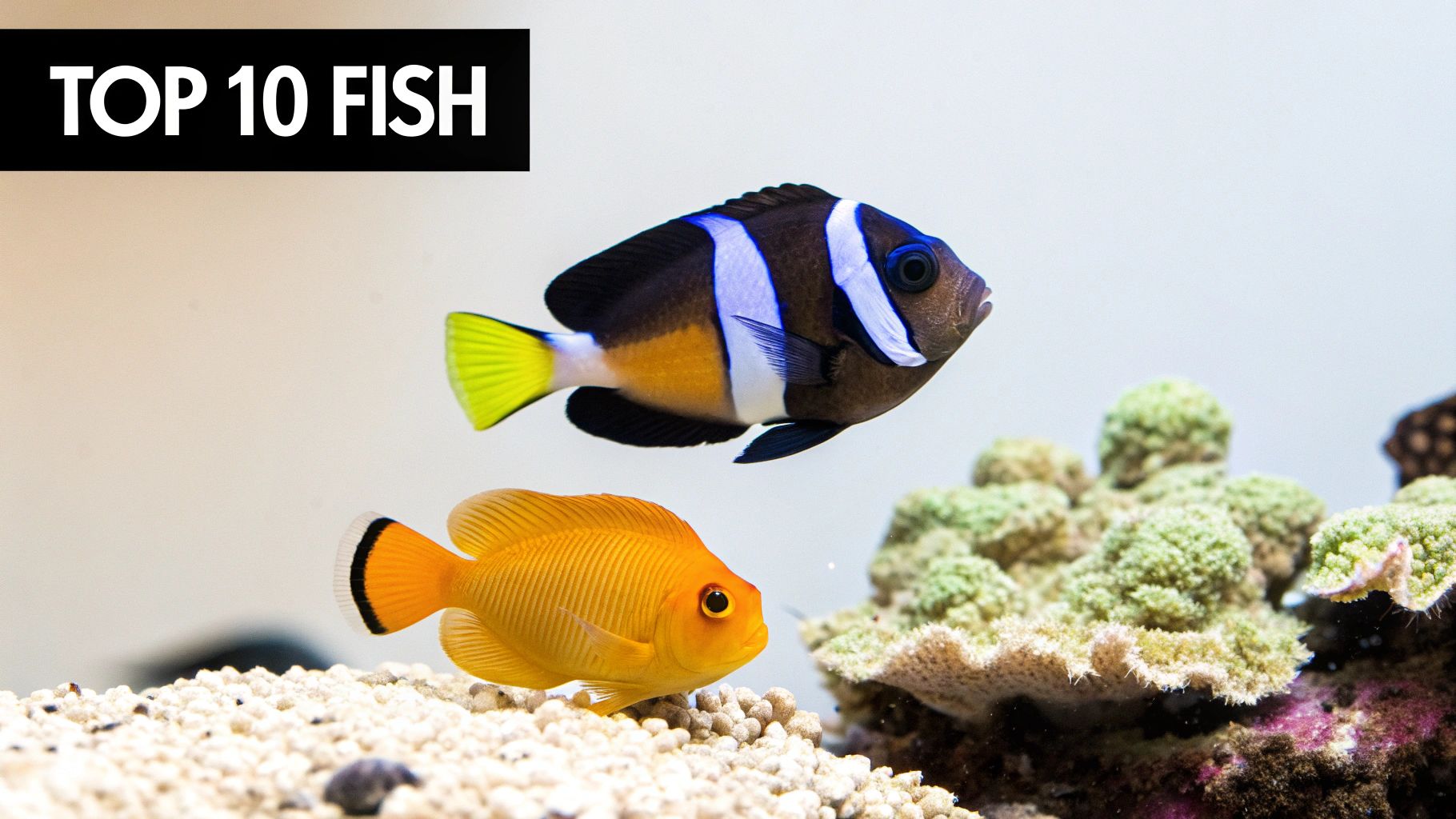
Alright, now for the fun part—choosing the stars of your new aquarium! We've handpicked ten of the best species out there, all known for being tough, peaceful, and packed with personality. Any one of these fish would be a fantastic choice for someone just getting their feet wet in the saltwater world.
Think of these profiles as your cheat sheets. We'll give you the must-know details for each one, helping you find the perfect inhabitants for your tank and your lifestyle.
Ocellaris Clownfish
Let's start with a classic. The Ocellaris Clownfish is probably the most recognized saltwater fish on the planet, and for good reason. Made famous on the big screen, these guys are incredibly hardy, especially when you get captive-bred ones. They're famous for their charming, wobbly swimming style and their habit of "hosting" an anemone—though you don't actually need one to keep them happy.
- Minimum Tank Size: 20 Gallons
- Temperament: Peaceful
- Diet: Omnivore—they're not picky and will happily eat pellets, flakes, and frozen foods.
- Care Difficulty: Very Easy
Royal Gramma Basslet
The Royal Gramma is a living splash of color. With a stunning deep purple front half that melts into a vibrant yellow tail, this fish is a showstopper. They can be a bit shy at first, so they really appreciate having plenty of rockwork with caves and crevices to duck into. It’s the perfect way to add a pop of color without adding any drama.
Pajama Cardinalfish
With its goofy polka-dotted rear and totally unique body shape, the Pajama Cardinalfish is a quirky and fascinating addition. These are slow, deliberate swimmers that often just hang out in one spot, making them incredibly relaxing to watch.
Pajama Cardinals are nocturnal, which means they really come alive in the evening and at night. They're a great fish to watch when all the daytime swimmers have settled down.
They are incredibly mellow and do well in small groups, which is a rare treat for many saltwater species.
- Minimum Tank Size: 20 Gallons
- Temperament: Very Peaceful
- Diet: Carnivore—they prefer meaty frozen foods like mysis and brine shrimp.
- Care Difficulty: Easy
Tailspot Blenny
If you're looking for a fish with personality for days, the Tailspot Blenny is your guy. These little fish have huge eyes and an even bigger character. You'll constantly see them perched on rocks, peeking out of little holes and watching everything you do. Plus, they're useful! They spend their days grazing on nuisance algae, helping to keep your rocks and glass clean. If you need more cleanup crew ideas, our guide on the best saltwater aquarium algae eating fish has you covered.
Firefish Goby
The Firefish Goby is pure elegance. Its slender, snow-white body transitions into a fiery red-orange tail, and that long, dramatic dorsal fin is just the cherry on top. They are timid little things and absolutely require a tank with a secure lid—they are famous for jumping when startled.
- Minimum Tank Size: 20 Gallons
- Temperament: Peaceful but shy
- Diet: Carnivore—it snags small, meaty foods that drift by in the water.
- Care Difficulty: Easy
Yellow Watchman Goby
This bottom-dweller is famous for its brilliant yellow color and its amazing partnership with pistol shrimp. It's a classic symbiotic relationship: the goby acts as a lookout while the nearly blind shrimp does all the housekeeping for their shared burrow. Even without a shrimp buddy, they're entertaining fish that love to sift sand and build a neat little home under a rock.
Chalk Bass
The Chalk Bass is a true unsung hero for beginner nano tanks. They are unbelievably tough, disease-resistant, and stay nice and small. Their subtle lavender-and-orange pattern gets more vibrant as they grow, making them both a beautiful and bulletproof choice.
- Minimum Tank Size: 20 Gallons
- Temperament: Peaceful
- Diet: Carnivore—will readily take almost any prepared aquarium food.
- Care Difficulty: Very Easy
Blue Green Chromis
If you've got a slightly larger tank, a small school of Blue Green Chromis is a must-have. Their shimmering, iridescent bodies create a stunning effect as they move together. These are active, generally peaceful fish that bring a ton of life to the upper parts of the aquarium. For best results, add a group of 3-5 all at once to a tank that's at least 30 gallons.
Longfin Fairy Wrasse
Wrasses are some of the most dazzling fish on the reef, and the Longfin Fairy Wrasse is a great way to get started with this family. They are active, peaceful, and known for being quite hardy. Just like the Firefish, these guys are acrobats, so a tight-fitting lid is non-negotiable.
Lawnmower Blenny
Here's another algae-eater with a comical personality. The Lawnmower Blenny is a workhorse, plain and simple. Its mottled brown pattern gives it great camouflage as it scoots along the rocks, constantly grazing away. To keep one of these fat and happy, you'll need a mature tank with plenty of natural algae growth for it to munch on.
Matching Your Fish to Your Aquarium Size
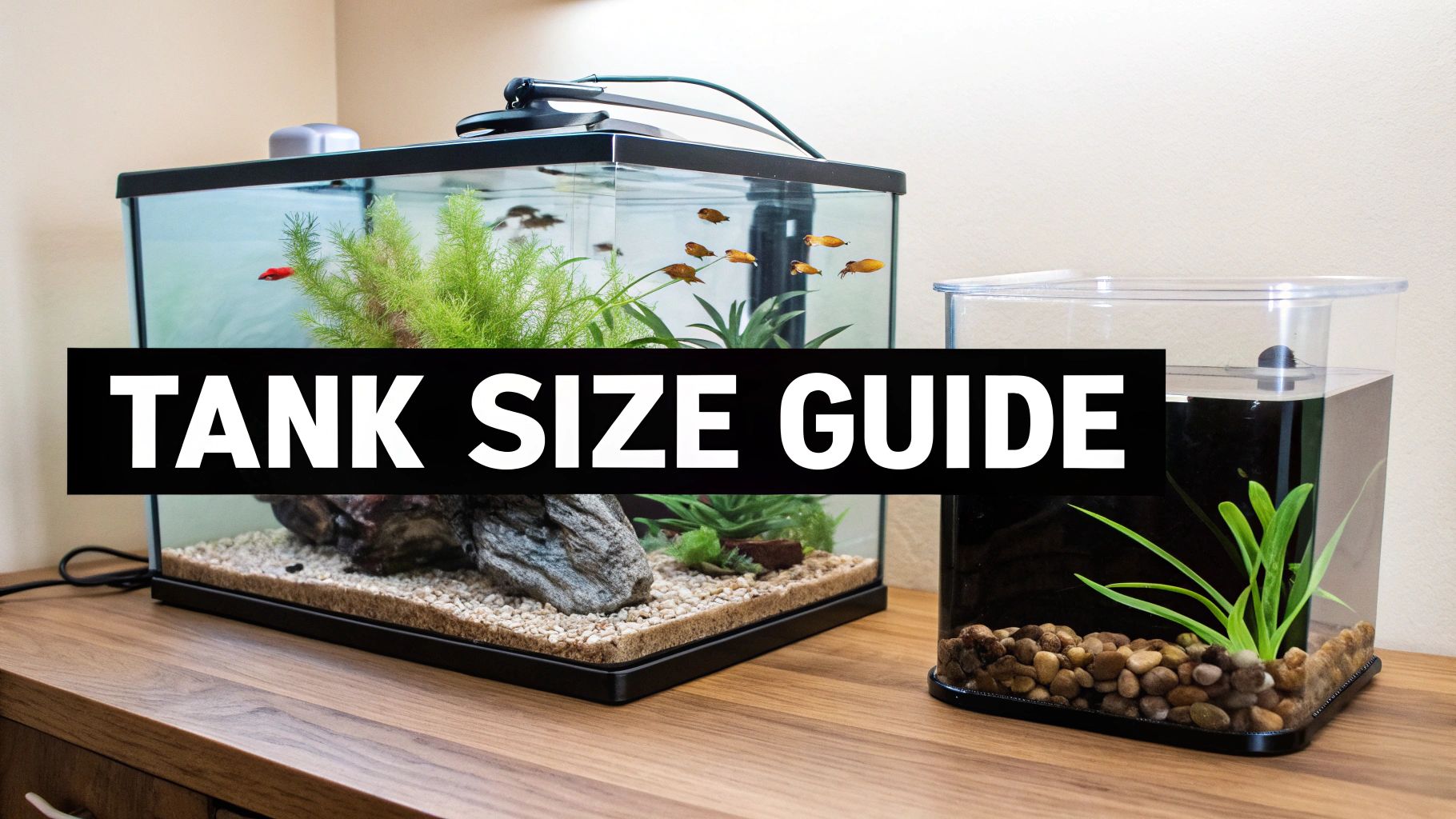
It’s tempting to look at a small fish in a big tank and think it's a waste of space, but all that extra water is your best friend in this hobby. Think of it like this: a large aquarium is a cruise ship in a storm, while a small one is a canoe. The cruise ship barely rocks, offering a safe, stable ride. The canoe, on the other hand, gets tossed around by every little wave.
Your aquarium is no different. A larger volume of water dilutes waste much more effectively and resists sudden swings in temperature and water chemistry. This stability is the single biggest key to fish health, especially when you're learning the ropes and might accidentally overfeed or miss a water change. Crowding a small tank is like putting your fish in that canoe during a hurricane—it's stressful and dangerous.
Stocking Your First Tank The Right Way
Picking fish for your tank isn't just about whether they fit now. You have to consider their adult size, how much they swim, and whether they get territorial. That adorable little tang might look perfect today, but many grow to be nearly a foot long and need a huge tank to be healthy and happy. Research is absolutely your most powerful tool.
Over the years, experienced reefers have found that a tank in the 20 to 30-gallon range is a real sweet spot for newcomers. It’s large enough to be stable but not so big that maintenance becomes a massive chore. For a standard 20-gallon tank, you have about six fantastic beginner species to choose from, including favorites like the Ocellaris Clownfish, Royal Gramma, Firefish Goby, and Tailspot Blenny.
Key Takeaway: Always, always stock your tank based on the adult size and behavior of the fish. A lightly stocked aquarium is always healthier and far easier to manage than an overstocked one.
A Quick Guide to Stocking Starter Tanks
To help you visualize what works, we've created a simple table showing which of our recommended beginner fish are suitable for the most common starter tank sizes.
Beginner Fish Stocking Guide by Tank Size
| Fish Species | 10 Gallon Tank | 20 Gallon Tank | 30+ Gallon Tank |
|---|---|---|---|
| Ocellaris Clownfish | ❌ | ✅ | ✅ |
| Royal Gramma Basslet | ❌ | ✅ | ✅ |
| Firefish Goby | ❌ | ✅ | ✅ |
| Tailspot Blenny | ❌ | ✅ | ✅ |
| Yellow Watchman Goby | ❌ | ✅ | ✅ |
| Blue Green Chromis | ❌ | ❌ | ✅ |
| Pajama Cardinalfish | ❌ | ✅ | ✅ |
| Lawnmower Blenny | ❌ | ❌ | ✅ |
| Mandarin Dragonet | ❌ | ❌ | ✅ |
| Banggai Cardinalfish | ❌ | ✅ | ✅ |
As you can see, a 10-gallon tank is extremely limiting, while jumping to a 20 or 30-gallon tank opens up a world of possibilities.
Proven Stocking Recipes for Beginners
To take the guesswork out completely, here are a few time-tested, compatible stocking combinations for popular starter tanks. These "recipes" use fish from our top 10 list and are designed to give everyone enough space and minimize squabbles over territory.
-
20-Gallon "Nano" Tank Plan: A 20-gallon setup is a fantastic way to start. It’s big enough to be stable but small enough to feel manageable. If you want to explore more options, our guide on the best fish for a nano reef is a great next step.
- Option 1: One pair of Ocellaris Clownfish and one Tailspot Blenny.
- Option 2: One Royal Gramma Basslet and one Yellow Watchman Goby.
- Option 3: One Firefish Goby and one Pajama Cardinalfish.
-
30-Gallon+ "Community" Tank Plan: Once you move up to a 30 or 40-gallon tank, your options for a lively community really expand.
- Option 1: One pair of Ocellaris Clownfish, one Royal Gramma, and one Tailspot Blenny.
- Option 2: A group of three Blue Green Chromis and one Lawnmower Blenny.
Bringing Your New Fish Home Safely
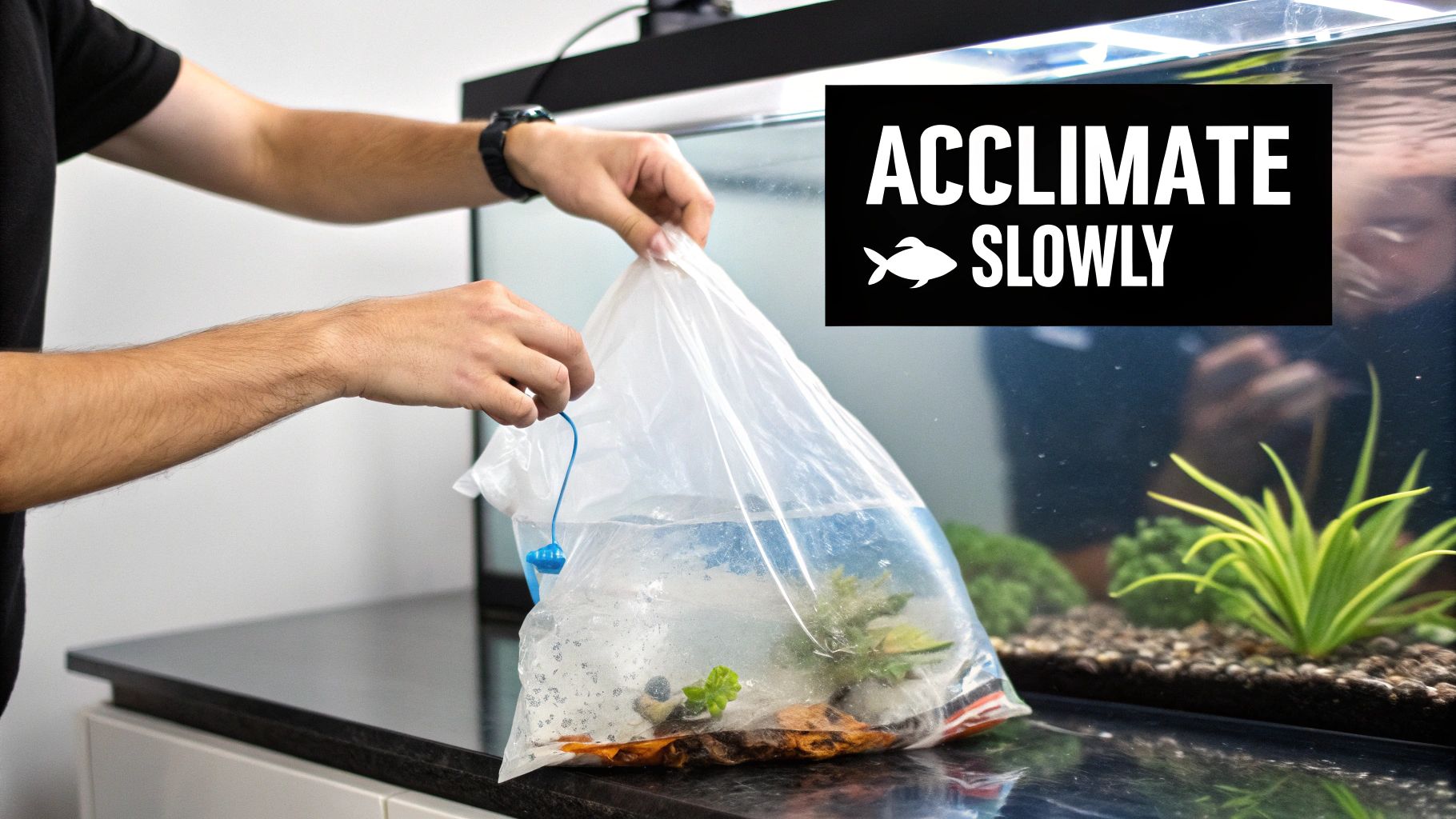
The trip from the fish store to your aquarium is probably the single most stressful event your new fish will ever face. Your job is to make this move as gentle and shock-free as you can, and it all boils down to one critical process: acclimation.
Think of it like this: you wouldn't take someone living in Alaska and instantly drop them in the middle of the Sahara Desert. You’d let them adjust. Fish are no different; they are incredibly sensitive to sudden shifts in their environment. Drastic changes in water temperature, salinity, and pH can cause osmotic shock, which is often fatal. Proper acclimation gives the fish’s body time to slowly adjust, which is the single biggest factor in ensuring its survival and long-term health.
The Drip Acclimation Method: Your Best Friend
For saltwater fish, the undisputed best practice is drip acclimation. This method involves slowly dripping your tank's water into the container holding your new fish, creating the most gradual transition possible. Even the hardiest good saltwater fish for beginners will benefit immensely from this careful approach.
Here’s how to do it step-by-step:
- Start by dimming the lights in the room and turning your main aquarium lights completely off. This helps keep the fish calm.
- Float the sealed bag in your aquarium for 15-20 minutes. This step is just for equalizing the water temperature—nothing more.
- Next, carefully cut the bag open and gently pour the fish and all the bag water into a small, clean bucket. Make sure this bucket is used only for your aquarium.
- Set up a siphon using a piece of airline tubing, running from your display tank down into the bucket. Tie a loose knot in the tubing or use a small valve to slow the flow down to a steady drip, aiming for about 2-4 drips per second.
- Let this process continue until the water volume in the bucket has at least doubled. This should take around 60 minutes.
- Once the time is up, gently scoop the fish out of the bucket with a net and place it in your aquarium. Crucially, discard all the water in the bucket. Never, ever add water from the fish store bag into your tank. It can be full of concentrated ammonia and potential pests or diseases.
Seed Your Tank for Long-Term Success
While your new fish gets used to its surroundings, you can do something that will benefit your entire ecosystem. Consider adding a bottle of live copepods from a trusted source like PodDrop Live Aquarium Nutrition. This one simple step seeds your entire tank with a living, self-sustaining food source.
These tiny crustaceans will find homes in your live rock and sand, reproducing and creating a permanent "snack bar" for your fish. It’s a game-changer for grazers and hunters, making them feel right at home and reducing how often you need to feed them manually.
Taking this step does more than just feed your new fish. It establishes a healthy microfauna population that helps with the natural breakdown of waste, creating a more stable and balanced environment from the very beginning. Your fish will show its appreciation with brilliant colors and confident behavior as it happily forages in its new, food-rich home.
Common Mistakes New Hobbyists Make
Ask any veteran reefer, and they’ll have a story or two about the mistakes they made early on. It’s part of the learning curve. But the journey into this hobby is so much more rewarding when you can sidestep those common pitfalls from the get-go. A little bit of foresight goes a long way in creating a stable, thriving aquarium—and saving you a ton of stress.
One of the classic blunders is rushing the initial setup. We've all felt the excitement, but putting fish into a brand-new tank too soon is a fatal mistake known as "New Tank Syndrome." Think of a new aquarium as a sterile box. It has no biological engine. It needs time, usually several weeks, for beneficial bacteria to colonize the rock and sand, creating the filter that processes fish waste. Adding fish before this happens is like moving into a house without plumbing—waste builds up, ammonia spikes, and the results are almost always tragic.
Resisting Temptation and Incompatible Choices
The local fish store can feel like a candy shop. Everything is vibrant, exotic, and tempting. It’s the perfect storm for an impulse buy. You spot a breathtaking fish, and the next thing you know, you're driving it home. This rarely ends well. That beautiful fish might grow way too large for your tank, have a secret aggressive streak, or require a special diet you’re completely unprepared for. Always, always go to the store with a well-researched plan and do your best to stick to it.
Along the same lines, failing to research compatibility is a surefire way to create a war zone. You can't just throw a bunch of fish together and hope for the best. Mixing two territorial species in a small space or putting a tiny, peaceful goby in with a boisterous dottyback creates a battlefield. The result is constant stress, which leads to injury, disease, and fish that are too terrified to come out and eat.
A peaceful aquarium is a healthy aquarium. The goal isn't just to keep fish alive, but to create a low-stress environment where they can exhibit natural behaviors and thrive.
The Dangers of Over-Caring
It's completely natural to want to pamper your new pets, but in the saltwater world, you can definitely kill with kindness. Overfeeding is probably the single most common mistake beginners make. All that extra food just sinks to the bottom, rots, and becomes fuel for nutrient spikes and massive algae outbreaks. A great rule of thumb is to feed only what your fish can gobble up in about 30 seconds, just once a day.
Inconsistent maintenance is the other side of that coin. It’s easy to let things slide, but skipping a weekly water change or putting off cleaning your filter allows nitrates and other pollutants to creep up. It might not seem like a big deal at first, but over time, it degrades the water quality. These small, regular tasks are the absolute foundation of a healthy tank.
Common Beginner Traps to Avoid:
- Adding Fish Too Fast: Be patient! Let your tank fully cycle for 4-6 weeks before introducing your first fish.
- Impulse Buys: Do your homework on any fish you're considering before you even think about heading to the store.
- Ignoring Compatibility: Make sure every tank resident can coexist peacefully and shares similar requirements.
- Overfeeding: Remember, more food just means more pollution. Less is almost always more.
- Inconsistent Maintenance: Create a regular schedule for water changes and equipment cleaning—and stick to it.
Answering Your First Saltwater Fish Questions
Even the best-laid plans come with questions. Let's be honest, getting into the saltwater world is a huge learning curve, and having straightforward answers to the big questions can make all the difference between success and frustration.
Think of this section as a final check-in before you bring that first fish home. Nailing these fundamentals will set you—and your new aquatic friends—up for a smooth and rewarding experience.
How Many Fish Can I Actually Put in My Tank?
This is the classic question, and unfortunately, there's no single magic number. It really comes down to the type of fish you choose, how big they'll get as adults, and the size and filtration capacity of your aquarium.
A common starting point you'll hear is the "one inch of fish per 5 gallons of water" rule. While it's a decent guideline, it’s far from perfect.
A much safer approach for a beginner is to start slow. After your tank has completely cycled, add just two or three small fish to a 20-30 gallon setup. Give your biological filter a good month or so to adjust to this new load before you even think about adding another one. Always research the specific needs of every fish and remember that a lighter bioload is your best friend.
Expert Tip: Under-stocking is always, always better than over-stocking. A lightly populated tank is more stable, way easier to maintain, and leads to healthier, less-stressed fish. You can't go wrong with giving your fish more room than they need.
Should I Get Wild-Caught or Captive-Bred Fish?
For anyone just starting out, this is an easy one: captive-bred fish are the way to go, hands down.
Why? They're simply tougher. They've been raised in an aquarium environment, so they're already used to the kind of life you're providing. They readily accept prepared foods like flakes and pellets and are far less likely to arrive with nasty diseases or parasites. Plus, choosing captive-bred is the sustainable, ethical choice that takes pressure off our planet's beautiful coral reefs.
Sure, a wild-caught fish might occasionally look a little more vibrant on the shelf, but the peace of mind you get from a robust, tank-acclimated fish like an Ocellaris Clownfish is priceless for a new hobbyist.
What Is the Single Most Important Tip to Keep My Fish Alive?
Patience. Seriously. The number one mistake new reefers make is rushing the process.
This rush shows up in a few common ways:
- Adding fish before the tank has finished its nitrogen cycle.
- Adding too many fish at once and overwhelming the biological filter.
- Constantly tinkering and making sudden, drastic changes to water parameters.
A stable environment is everything in this hobby. Your job is to create consistency. Perform regular, small water changes—about 10-20% each week is a great target. Feed your fish consistently but don't overdo it. Most importantly, stop chasing "perfect" numbers on your test kits with a cabinet full of additives.
Let your tank mature and find its own equilibrium. A patient aquarist with a stable tank will always be more successful than an impatient one looking for a quick fix. By choosing good saltwater fish for beginners and providing them with a steady home, you're building a solid foundation for years of enjoyment.
Ready to give your new fish the best possible start? Seed your aquarium with a vibrant, self-sustaining food source from PodDrop Live Aquarium Nutrition. Our live copepods and phytoplankton create a natural ecosystem, reduce your feeding workload, and boost the health of your entire tank from day one. Explore our live nutrition blends at https://www.getpoddrop.com and discover life in every drop.