

A Guide to Feeding Mandarin Goby a Healthy Diet
Feeding a mandarin goby successfully comes down to one thing, and it's not negotiable: a constant, thriving supply of live copepods. These fish are stunning, but they're also specialist hunters with a lightning-fast metabolism. To put it simply, they must graze on live prey all day, every day, just to survive.
Forget about flake foods and frozen options. They almost always get ignored, which is why a mature aquarium, rich with a self-sustaining copepod population, is an absolute prerequisite.
Why Live Food Is The Only Option
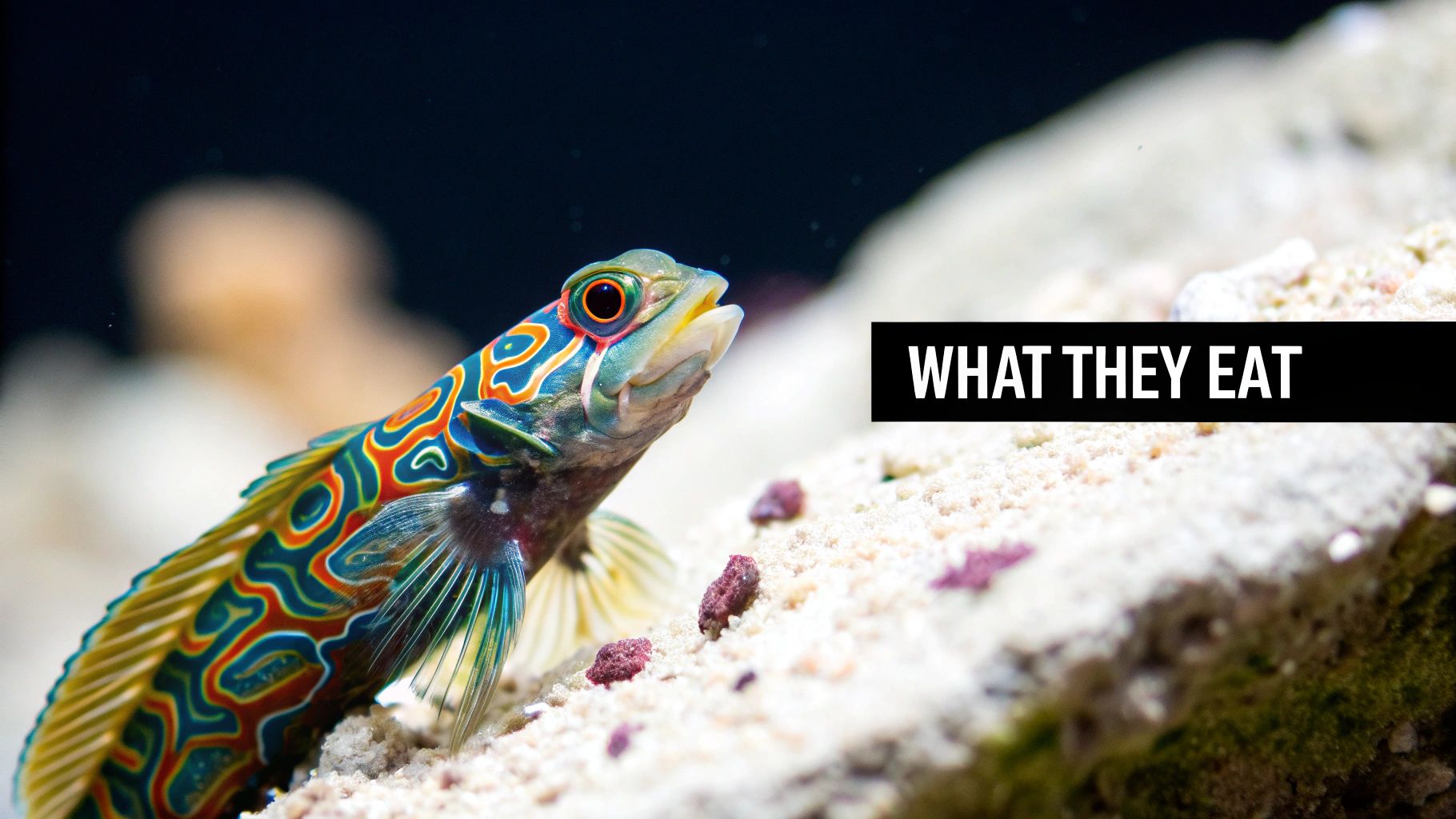
It’s easy to get mesmerized by a mandarin goby's psychedelic patterns, but it's just as easy to underestimate their incredibly specific dietary needs. This isn't like your other reef fish that go wild for pellets or frozen mysis shrimp. The mandarin's feeding behavior is hardwired.
They are slow, methodical hunters, spending every waking moment scanning live rock and sand for the tiniest movements. This isn't just a quirky habit; it's a biological imperative. Their small mouths and unique hunting style are adapted only for capturing tiny crustaceans. Processed foods don't move, so they don't trigger that instinctual feeding response. This is the tragic reason so many mandarins in unprepared tanks slowly starve.
Copepods: The Perfect Nutritional Powerhouse
Copepods aren't just "food"; they are a complete nutritional package perfectly tailored for a mandarin. They’re packed with the proteins and essential fatty acids vital for the goby’s health, immune response, and of course, that famously vibrant coloration.
The diet of the mandarin goby (Synchiropus splendidus) is built entirely around live copepods and other tiny invertebrates. In fact, research shows that a single mandarin goby can mow down 40-60 copepods per hour. The nutritional breakdown is just as impressive—copepods can be up to 50% lipid content by dry weight, rich in the highly unsaturated fatty acids (HUFA) that fuel the goby's metabolism. If you're into the science behind it, you can read the full research on these dietary specifics to see just how critical this is.
This is exactly why a tank needs to be "seeded" with a robust copepod population for weeks, if not months, before you even think about bringing a mandarin home.
Key Takeaway: A mandarin goby doesn’t just prefer live food; its survival is completely dependent on it. Your reef tank has to be a living ecosystem that constantly churns out this food source on its own.
Mandarin Goby Food Suitability Chart
To really hammer this point home, let's compare the good, the bad, and the completely useless. Understanding this chart is the first step to keeping a mandarin successfully. It clearly lays out what works and, more importantly, what will fail.
| Food Type | Suitability | Key Considerations |
|---|---|---|
| Live Copepods | Excellent | The primary, natural, and most nutritious food source. A self-sustaining population is required. |
| Live Amphipods | Good | Larger prey that mandarins will also hunt. A good sign of a healthy, mature tank. |
| Live Baby Brine Shrimp | Supplemental | Can be used for target feeding but lack the nutritional value of copepods for a staple diet. |
| Frozen Foods | Very Poor | Almost always ignored. They don't move and fail to trigger the goby's feeding response. |
| Pellets/Flakes | Unsuitable | Completely inappropriate. Mandarin gobies will not recognize this as food and will starve. |
Ultimately, a well-established population of copepods and amphipods isn't just a "nice-to-have"—it's the only sustainable way to ensure your mandarin goby doesn't just survive, but truly thrives.
Building a Self-Sustaining Food Source in Your Tank
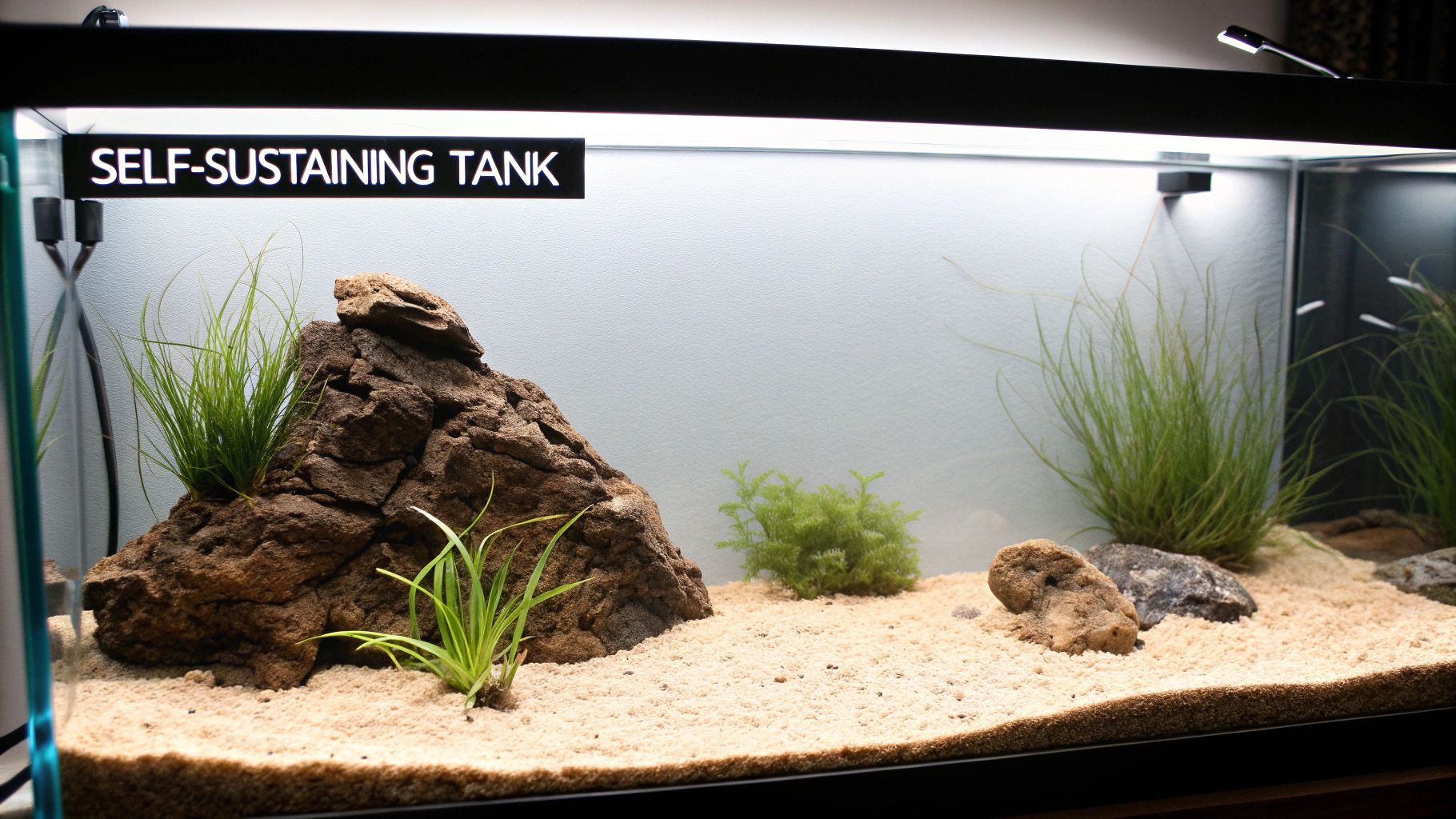
Ask anyone who's successfully kept a mandarin goby, and they'll tell you a secret: the real work happens long before the fish ever touches the water. You aren't just setting up an aquarium; you're cultivating a micro-farm. The goal is a stable, thriving ecosystem that constantly churns out the live food your mandarin needs to graze on all day, every day.
This all starts with creating the perfect home for copepods to breed. You'll want plenty of porous live rock with all its nooks and crannies. A deep sand bed, at least a couple of inches, is also a game-changer, providing a massive surface area for these tiny crustaceans to live and reproduce safely away from predators.
Setting Up a Copepod Factory with a Refugium
While a mature display tank can certainly support a pod population, a refugium is hands-down the best tool for guaranteeing a non-stop food supply. Think of it as a separate, connected chamber where copepods can multiply in a predator-free zone. It's their safe house.
As the pod population booms in the 'fuge, the excess gets carried by the water flow right into your main display. It’s a continuous "pod-fall" for your mandarin—the ultimate automated feeding system.
To turn your refugium into a five-star copepod hotel, you'll need a few key things:
- Chaetomorpha Macroalgae: This stuff is gold. "Chaeto" is a hardy, fast-growing macroalgae that creates an intricate jungle gym for pods to hide and breed in. As a huge bonus, it's also fantastic at naturally removing nitrates and phosphates.
- A Simple Light Source: You don't need anything fancy. A small, cheap LED light running on a reverse daylight cycle (meaning it's on when your main tank lights are off) will fuel the algae growth and help keep your tank's pH stable.
- Low Flow: Gentle water movement is what you're after here. The idea is to encourage breeding, not create a water park.
Seeding Your System for Success
Once the habitat is ready, it's time to introduce the stars of the show: the copepods. Just dumping a bottle of live pods into your display tank isn't the most effective strategy. For the best shot at success, add them directly to your refugium at night when the lights are out and any predatory fish are less active.
There are several species out there, but a couple, in particular, are perfect for this job:
- Tisbe biminiensis: These pods are tiny and tend to hang out on the rockwork and substrate, making them the perfect prey for a grazing mandarin. They are prolific breeders and form the foundation of a solid food web.
- Tigriopus californicus: Often called "Tigger" pods, these are larger and more active in the water column. They're a great supplemental food source and are easily spotted by fish.
A common and highly effective strategy is to seed the tank with a mix of both. This creates biodiversity and gives your mandarin different types of prey to hunt, encouraging natural behaviors. Give it time. Wait at least 4 to 6 weeks after seeding before you even think about adding your mandarin.
Fueling the Food Chain with Phytoplankton
Your new copepod population can't grow out of thin air; it needs its own food. This is where phytoplankton comes in. Dosing live phytoplankton a few times a week directly feeds your copepods, which in turn supercharges their reproduction rates and boosts their nutritional value.
Think of it as "gut-loading" the pods. A well-fed copepod is a much more nutritious meal for your mandarin. You can dive deeper into the many benefits of live phytoplankton in marine aquariums in our detailed guide. Establishing this simple food chain—phytoplankton feeds copepods, and copepods feed your mandarin—is truly the cornerstone of long-term success.
Target Feeding Your Mandarin Goby
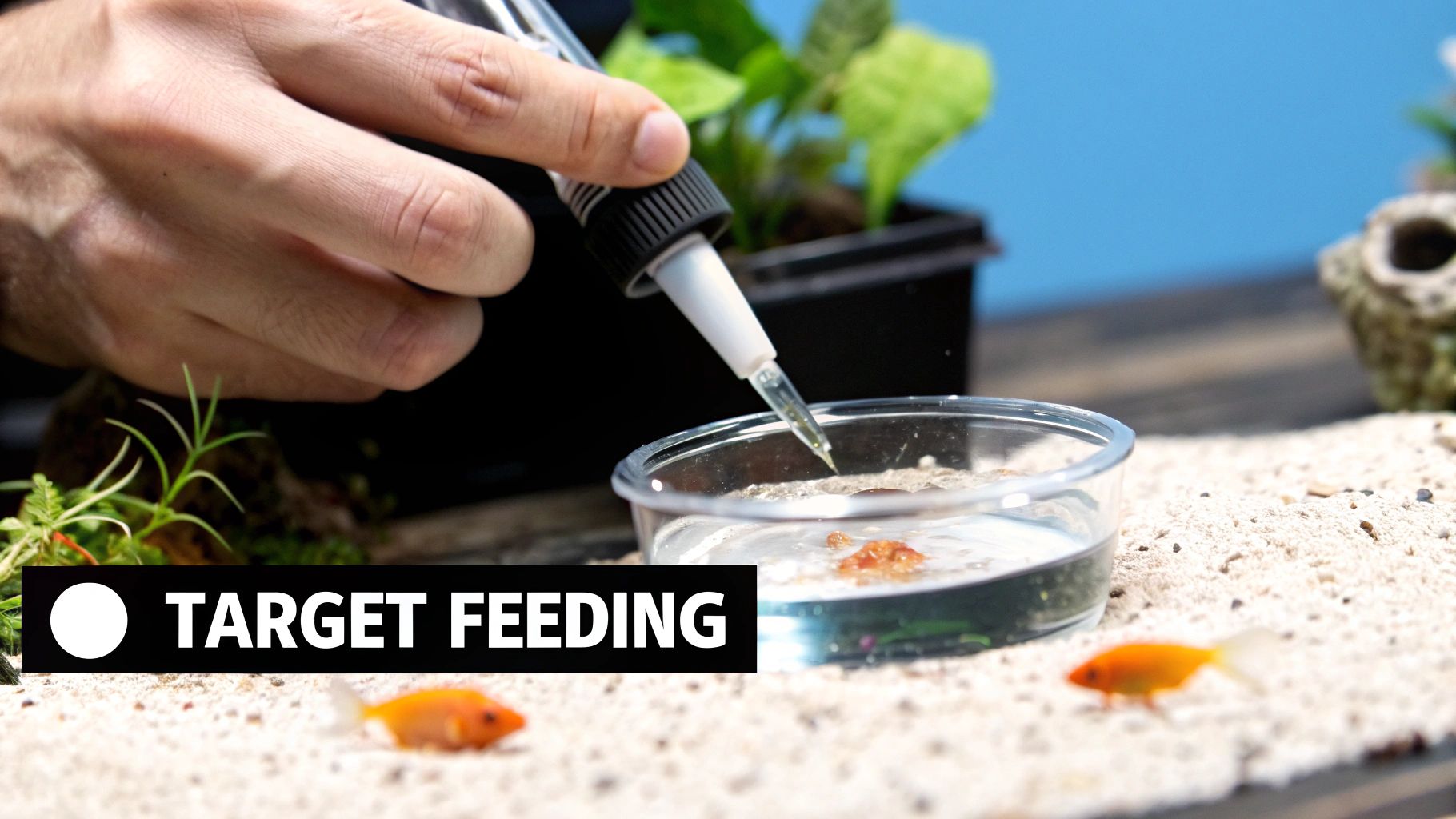
Even in a reef tank that’s been running for years, you might find your mandarin goby needs a little extra help. Maybe the tank is on the smaller side, or faster, more aggressive fish are outcompeting it for food. Sometimes, your copepod population just hits a natural lull. In any of these cases, target feeding becomes one of the most important skills in your reefer toolkit.
This is simply the practice of delivering food directly to your mandarin, making sure it gets a full meal without having to fight for it. It's a hands-on method that can be a literal lifesaver, bridging the gap when the natural food supply just isn't cutting it.
The Tools for Direct Delivery
The go-to method for most hobbyists involves a simple turkey baster or a short piece of rigid airline tubing. The whole idea is to gently puff a concentrated cloud of live copepods right in front of your goby, creating an irresistible feeding opportunity it can't miss.
First things first: turn off your pumps and powerheads. This is a non-negotiable step. If you don't, you're just sending your expensive live food on a chaotic trip around the tank, benefiting no one in particular.
Next, draw a little tank water and your live copepods into the baster. Approach your mandarin’s favorite spot slowly and deliberately. These are shy fish, and any sudden movements will send it darting back into the rockwork.
Once you’re in position, gently squeeze the bulb to release the pods near its head. You're aiming to create a small, dense cloud of food that taps into its natural pecking instinct.
Pro Tip: Don't chase your mandarin. It’s a losing game that will only stress the fish out. Instead, figure out its favorite hunting grounds—that one specific rock or patch of sand—and wait for it to come to you. Patience is your best friend here.
Creating a Mandarin Feeding Station
For a more "set it and forget it" approach, you can create a dedicated feeding station. This is a fantastic technique that trains your mandarin to associate one particular spot with an easy meal, making feeding time way less stressful for everyone involved.
A small, shallow glass dish, like a petri dish or a watch glass from a science supply store, works perfectly. Just set it on the sandbed in a quiet, low-flow area where you often see your goby hanging out.
When it’s time to feed, use your turkey baster to deposit the live copepods right into the dish. The glass walls do a great job of containing the pods, concentrating them in one easy-to-find buffet.
Your mandarin probably won't find it on day one. But its constant foraging behavior means it will eventually stumble upon this treasure trove. If you stay consistent, it will learn to check this spot daily. This method is brilliant because it also shields the copepods from getting instantly snatched up by faster tank mates like wrasses.
This technique does more than just ensure your mandarin is well-fed; it lets you keep a close eye on its appetite and overall health. When done right, target feeding can bolster your tank’s natural food web, especially when you need to buy copepods to supplement your population. It transforms a potential source of anxiety into a rewarding part of keeping these incredible fish.
Culturing Live Foods on a Budget
Keeping a mandarin goby happy doesn't have to mean breaking the bank on live foods. While constantly buying bottles of copepods can feel like a pricey subscription service, there's a much more sustainable and wallet-friendly way: culture your own.
Setting up a small, home-based copepod farm is one of the most rewarding DIY projects in this hobby. It turns a recurring expense into a small, one-time setup cost and gives you an endless supply of the perfect food for your mandarin.
Your Simple Copepod Culture Setup
Forget any images of a complicated science lab. A copepod culture is surprisingly low-tech and low-maintenance. Once you get it going, it pretty much runs itself with just a few minutes of attention each week. You can easily tuck it away in a closet, garage, or fish room corner.
Here's the basic gear you'll need to get started:
- A Culture Vessel: A simple, food-grade 5-gallon bucket works perfectly. The opaque sides are actually a bonus, as they stop algae from growing where you don't want it.
- An Air Pump and Tubing: Any small, cheap aquarium air pump will do the job. You just need to run a piece of airline tubing into the bucket to create gentle bubbles. This keeps the water oxygenated and, just as importantly, keeps the phytoplankton suspended for the pods to eat.
- A Light Source: A basic clamp-on utility light with a low-wattage LED bulb is all you need. Set it up over the bucket and plug it into an outlet timer to run for about 12-16 hours a day.
That’s really it. This simple trio—bucket, air, and light—is the foundation of your personal copepod factory.
Managing and Feeding Your Culture
With your gear in place, fill the bucket with freshly mixed saltwater to a standard reef salinity of 1.025 SG. Now, add your starter bottle of live copepods. The final step is giving them their food: live phytoplankton.
Pour in just enough phytoplankton to give the water a light green tint. You’re not trying to make pea soup; the goal is just to have a visible food source in the water column. The gentle bubbling from the airline will keep the phyto from settling.
Every few days, when you notice the water starting to clear up, it's time to "feed" the culture by adding more phytoplankton. It’s that simple.
A healthy, thriving copepod culture is a significant achievement in fishkeeping. Historically, the ability to culture copepods was a turning point. Upon introducing cultured copepods as a steady food source in the early 2000s, survival rates for mandarin gobies improved to nearly 60-70%, according to several ornamental fish breeding programs. For a deeper look into aquaculture statistics, you can discover more insights from the Southeast Asian Fisheries Development Center.
Harvesting is just as easy. Siphon some of the culture water through a fine mesh sieve. The copepods will get caught in the mesh, ready for a quick rinse before being added right into your display tank.
By periodically harvesting a portion and topping off the bucket with fresh saltwater, you create a sustainable cycle that never runs out. For a more detailed walkthrough, check out our guide on how to culture copepods at home. With this setup, your mandarin goby will never have to hunt for a meal again.
So, you've put in the work to build up a thriving food web for your mandarin. Now for the million-dollar question: is it actually working? Since you can't exactly follow your mandarin around with a notepad counting every copepod it eats, you have to learn to read its body language and physical condition.
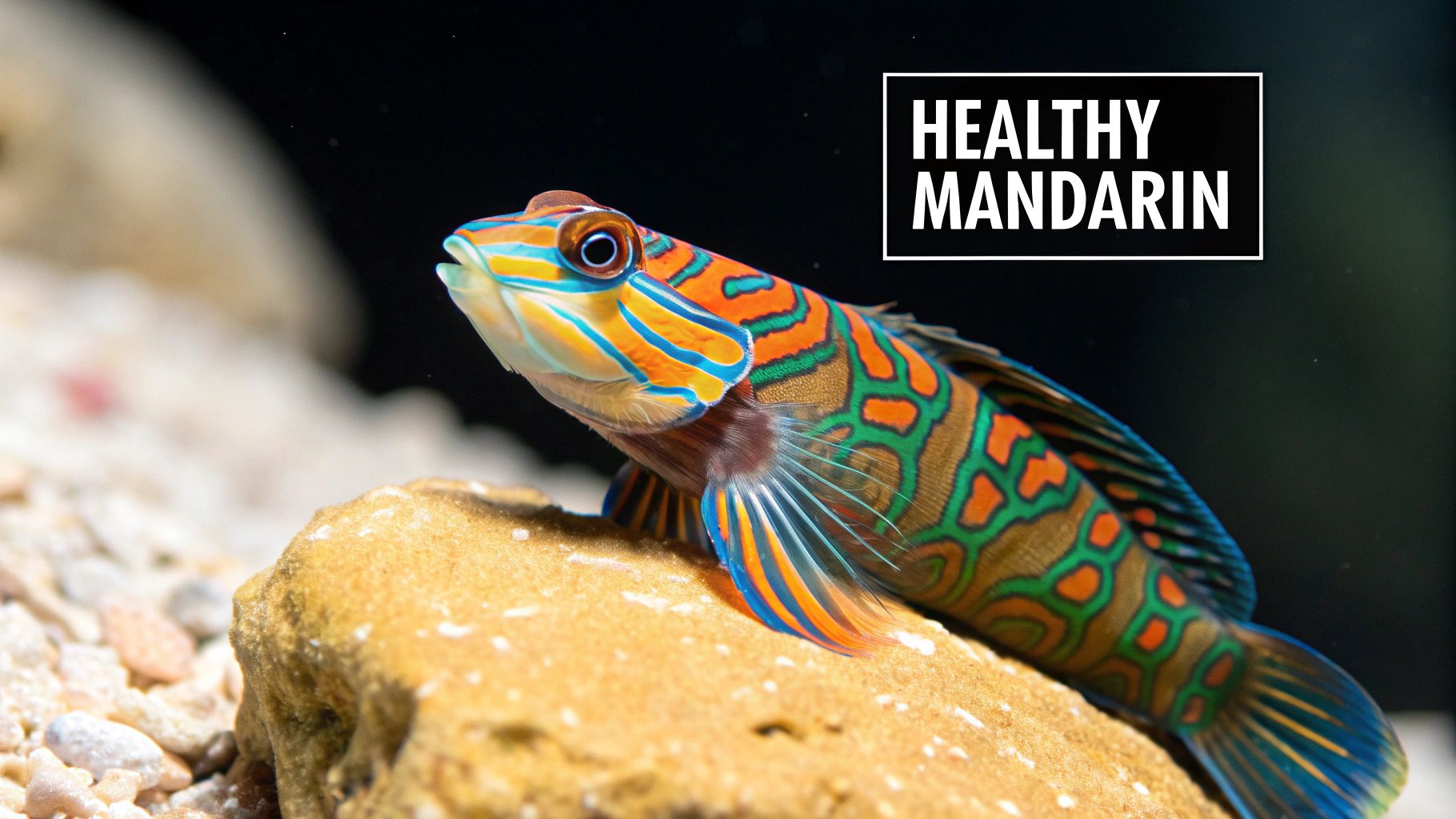
A well-fed mandarin goby is a busy, confident fish. It’s constantly on the move, displaying clear visual cues that tell you it’s in top shape. The single most reliable way to know what's going on is simply to watch your fish. A thriving mandarin is always occupied, spending its entire day methodically pecking at your live rock and sandbed. This isn't just random behavior—it’s the constant, deliberate hunt for copepods.
Positive Signs of a Healthy Goby
Once you know what you’re looking for, a healthy goby is easy to spot. These signs are your confirmation that the copepod population is robust and your feeding strategy is a success.
Here's what a happy mandarin looks like:
- A Plump, Rounded Belly: This is the dead giveaway. A well-fed goby will have a consistently full stomach. When you look at it from the side, its belly should have a gentle, rounded curve. It should never look flat or, worse, concave.
- Vibrant, Intense Coloration: A mandarin's colors are a direct reflection of what it's eating. If you see bright, almost electric blues, deep oranges, and rich greens, you know it's getting a nutrient-packed diet.
- Constant Pecking Behavior: A healthy mandarin is a working mandarin. You should see it actively hunting for 8-10 hours every day. This continuous grazing is a fantastic sign that it has plenty of energy and, more importantly, plenty of food to find.
Red Flags of a Starving Mandarin
Recognizing the early warning signs of malnutrition is absolutely critical. A mandarin's metabolism is incredibly high, which means its health can go downhill fast. Catching these red flags early allows you to intervene before it's too late.
The most glaring and urgent red flag is a pinched or concave stomach. This isn't subtle. It’s a clear and desperate signal that the fish isn't getting anywhere near enough to eat. Instead of that healthy curve, its underside will look hollowed out.
Another deeply concerning sign is lethargy. Is your mandarin hiding all the time? Does it sit motionless for long stretches? That's not normal behavior. It's a classic sign of a fish that is weak from hunger. You'll also notice its brilliant colors begin to fade, appearing dull and washed out.
A mandarin goby's reliance on a live food source is so complete that its needs have been scientifically quantified. To truly succeed, you need to maintain copepod densities of at least 50-100 individuals per liter. When that number isn't met, research shows a staggering 40-60% drop in growth rates, leaving the fish dangerously vulnerable to disease. You can dig deeper into the data on aquaculture production and live feed dependency to see just how crucial this is.
Common Questions About Feeding a Mandarin Goby
Even the most seasoned reef keepers run into questions when it comes to these specialized fish. Let's walk through some of the most common hurdles and concerns I hear from hobbyists, so you can keep your mandarin happy and well-fed.
Can Mandarins Ever Eat Frozen Food?
This is the million-dollar question, isn't it? While you'll always find a story here and there about someone's mandarin miraculously taking to frozen mysis, I can tell you from years of experience that it's the exception, not the rule. Wild-caught mandarins are hardwired to hunt for the specific, jerky movements of live copepods.
Prepared foods just sit there, and they simply don't register as food. Your odds are a little better with captive-bred mandarins, especially if they were raised on pellets, but even then, it’s never a sure thing. The best mindset you can adopt is to assume your mandarin will only ever eat live food. Plan your entire setup around that one principle, and you'll be setting yourself—and your fish—up for success.
Relying on the slim chance you can train a mandarin to eat prepared foods is a gamble. More often than not, it leads to the fish slowly starving. Always, always plan for a live-food-only diet.
How Do I Know If My Tank Has Enough Pods?
Time for a little late-night detective work. This is the best way to get a real sense of your copepod population. About an hour after the tank lights shut off for the night, grab a flashlight and scan the aquarium glass and your rockwork.
What you're looking for are countless tiny white specks scurrying around. If you can easily see them swarming over surfaces, your pod population is in great shape. But if you have to squint and search just to spot a handful, that's a red flag that your numbers are too low to support a mandarin. Another great sign? Seeing your goby actively pecking at rocks and sand all day long—that means it's finding plenty to hunt.
Is a Refugium Absolutely Necessary?
While you can keep a mandarin without one, a refugium dramatically stacks the odds in your favor. I can't recommend it enough. Think of it as a protected, predator-free nursery where your copepods can reproduce like crazy without getting eaten.
This little pod factory creates a constant, overflowing supply of live food that drifts right into your main display tank. For any aquarium under 75 gallons or one that doesn't have a ton of mature, porous live rock, a refugium is often the single factor that separates a thriving mandarin from a struggling one. It’s so much more than just a piece of gear; it’s a dedicated food production line and a fantastic natural filter all in one.
How Often Should I Add New Copepods?
If you're setting up a brand-new tank, your first step is to seed it and the refugium with live copepods. Then, you need to be patient. Let that population establish for at least four to six weeks before you even think about adding the mandarin.
Once the fish is in the tank, the schedule for adding more pods depends on how mature your system is.
As a great rule of thumb for ongoing maintenance, I like to add a new culture of live copepods every one to two months. This does two important things: it diversifies the gene pool and gives the existing population a boost against the mandarin's constant grazing. If you notice your goby is looking a bit thin in the stomach, don't wait—up the frequency to every few weeks until you see both the fish and the visible pod population bounce back.
Keeping your mandarin goby's food source rich and diverse is the single most important job you have as its keeper. To make sure your ecosystem is always teeming with life, PodDrop Live Aquarium Nutrition delivers fresh, high-quality copepod cultures and phytoplankton right to your doorstep. Boost your biodiversity and give your mandarin the fuel it needs to thrive by visiting https://www.getpodpod.com.