

A Practical Guide to the Mandarin Goby Diet
To really succeed with a mandarin goby, you have to think less like an aquarium keeper and more like a microfauna farmer. This fish isn't a scavenger that will learn to love flakes; it's a specialist hunter, and its survival is directly tied to its ability to hunt tiny, living prey.
This is the single most important thing to understand. Get this wrong, and the fish is doomed.
In the wild, a mandarin is in a state of perpetual motion. It spends its entire day meticulously pecking at rockwork and sand beds, on the constant lookout for its next minuscule meal. This isn't just a quirky habit; it’s a biological necessity. Their metabolic rate is incredibly high, so they burn through energy like a race car burns through fuel. They must constantly refuel.
Deconstructing Their Natural Diet
The idea that you can sustain a mandarin with a pinch of food twice a day is a recipe for disaster. Their entire digestive system is built for a steady, continuous supply of small, easily digestible critters. This is precisely why a brand-new or immature aquarium is the worst possible place for one—it's a food desert, plain and simple.
To really grasp what they need, we can look at the science. Studies analyzing the gut contents of wild mandarins confirm what experienced hobbyists have known for years: copepods are the main course.
Research on wild mandarin goby stomach contents shows a diet overwhelmingly composed of tiny crustaceans. This isn't just a preference; their continuous grazing on live prey is a critical survival strategy that we absolutely must replicate in a home aquarium.
A detailed breakdown from this research paints a very clear picture of their real menu. The table below shows just how specialized their diet is.
Natural Mandarin Goby Diet Composition
The gut content analysis of wild mandarin gobies reveals a highly specific diet, highlighting their heavy reliance on a buffet of microfauna, with a clear favorite.
| Food Source | Percentage of Diet |
|---|---|
| Harpacticoid copepods | ~60% |
| Polychaete worms | ~15% |
| Small gastropods | ~10% |
| Gammaridean amphipods | ~8% |
| Fish eggs | ~5% |
| Ostracods | ~2% |
This data leaves no room for doubt. A thriving mandarin needs a diverse menu of microfauna, with a huge emphasis on copepods. If you want to dive deeper into what makes them so nutritious, check out our detailed article on the nutritional profile of copepods.
The Role of Metabolism in Feeding
So why the constant hunting? It all comes down to that incredibly high metabolism. A mandarin can't just chow down on a big meal and digest it for a few hours like a clownfish can. It has to process a steady stream of tiny food items just to maintain its energy levels and body weight.
When that food source disappears, the fish starts to starve, and it happens fast. A pinched or concave stomach is the first tell-tale sign of trouble, a clear signal that its fat reserves are gone.
In a tank without a robust, reproducing population of live copepods, a mandarin can waste away in just a few weeks. This holds true even if you're trying to spot-feed other foods. This crucial biological detail is why a mature, biodiverse aquarium isn't just a recommendation—it's a non-negotiable prerequisite for this stunning fish. You aren't just feeding the fish; you're cultivating its entire food web.
Cultivating a Sustainable Copepod Population
If you want a mandarin goby that truly thrives for years, you can toss out the idea of pellets and frozen cubes. The real secret is to stop thinking like a fish keeper and start acting like a microfauna farmer. Your goal is to cultivate a living, breathing, all-you-can-eat buffet of copepods right inside your aquarium.
This isn’t something you can rush. Building this ecosystem requires a mature tank, one that's been up and running for at least six to nine months. That time allows the rock and sand to develop the crucial biofilm and detritus that form the foundation of the copepod food chain. Think of it like preparing the soil on a farm—you can't expect a good harvest from barren ground.
Creating Essential Pod Habitats
Copepods are survival experts, but they can't last long without safe places to hide and breed away from hungry fish. Creating these havens is the single most important step. If you just dump pods into a bare tank, they’ll become an expensive snack before they ever have a chance to reproduce.
Your primary tools for building this pod paradise are pretty straightforward:
- Mature Live Rock: Good, porous live rock is a five-star hotel for copepods. It’s absolutely riddled with tiny nooks, crannies, and tunnels where they can lay eggs and their babies (nauplii) can mature in peace.
- A Refugium: This is, without a doubt, the ultimate pod-production machine. A refugium is a dedicated, predator-free zone (usually in your sump) where you can grow macroalgae like chaetomorpha. This creates a dense, tangled jungle gym where pods can multiply completely undisturbed.
- Deep Sand Bed: A sand bed around 2-4 inches deep isn't just for looks. The deeper layers create low-oxygen zones that become a safe haven where pods and other beneficial critters can burrow and reproduce far from the prying eyes of your mandarin.
Choosing and Seeding the Right Copepods
Not all copepods are created equal. Different species hang out in different parts of the tank, and a multi-species approach is always the best bet for a robust food web. This ensures that every corner of your tank, from the rockwork to the sand bed, becomes a productive hunting ground.
I always recommend a blend of these popular species:
- Tigriopus californicus: These are the big, reddish-orange guys people call "Tigger" pods. They're incredibly nutritious and tough, but they tend to swim around in the open water more, which makes them an easy target.
- Tisbe biminiensis: These are the MVPs for any mandarin tank. They are tiny, they breed like crazy, and they love living on rocks and in the sand. Their constant reproduction provides a steady stream of nauplii for your mandarin to graze on all day long.
- Apocyclops panamensis: Another fantastic, resilient species that reproduces quickly and isn't too picky about tank conditions. They are great for really boosting the overall density of your pod population.
Pro Tip: Always add new pods to the tank after the lights go out. This gives them a head start to find cover in the rocks and sand before becoming instant targets. It also helps to turn off your skimmer and return pumps for about an hour to let them settle in without getting sucked into the filtration.
Kickstarting Your Pod Population with Cultures
Even in a well-established tank, the native pod population might not be dense enough to keep up with a mandarin's relentless appetite. This is where a high-quality, concentrated pod culture like PodDrop becomes your best friend. Seeding your tank and refugium with a live culture is the fastest, most effective way to jumpstart a booming colony.
Here’s how to do it right: Split the bottle. Pour about half directly into your refugium, right into the macroalgae. Then, pour the other half into the main display, aiming for the most complex areas of your rockwork. This seeds breeding colonies in multiple safe zones. I recommend repeating this process monthly—or any time you notice the visible pod population looking a bit thin—to keep the buffet well-stocked.
If you're interested in taking it a step further, you can even set up a simple, dedicated culture station at home. We've got a great walkthrough on that in our simple guide on how to culture copepods at home.
Ultimately, your success hinges on building and maintaining this hidden ecosystem. By creating the right habitats and regularly boosting them with diverse, live cultures, you create a system where your mandarin goby doesn’t just survive—it thrives. You'll see its best colors and its fascinating, natural hunting behavior. You're not just feeding a fish; you're sustaining a small piece of the ocean.
Getting Hands-On: Active Feeding Strategies for Your Mandarin
Even with a reef tank teeming with copepods, sometimes you need to step in and play waiter. This is especially true if you have other, faster fish that gobble up food, or if your mandarin is looking a little thin and needs to pack on some weight. Active feeding is all about making sure your slow, deliberate hunter actually gets its meal.
Target Feeding: The Direct Approach
One of the most reliable methods is target feeding. It's simple, really. You just use a turkey baster or a long pipette to deliver live food right to your mandarin's favorite hangout spot. The trick is to be slow and calm—no sudden movements that will send your shy fish darting for cover. Gently release a little cloud of copepods near its head, and you'll bypass all the greedy tank mates that would otherwise steal the food from the water column.
This technique is a game-changer for supplemental feeding. You're not just dropping food in; you're ensuring your mandarin gets the calories it needs and encouraging its natural hunting behavior. Watching them meticulously peck at each tiny pod is one of the coolest parts of keeping these fish.
Live Baby Brine Shrimp: A Good Treat, Not a Main Course
I get asked all the time: what about live baby brine shrimp? Yes, they can be a great addition, but with a big asterisk. Freshly hatched baby brine shrimp are fantastic for triggering a feeding response. Their jerky movements are irresistible to a mandarin. They’re an easy way to get some extra calories into your fish.
But here’s the catch: baby brine shrimp are basically junk food. They don't have the essential fatty acids and lipids that copepods are packed with. Think of them as a treat, not a staple meal. You can boost their nutritional value by enriching them with phytoplankton or other supplements before feeding, which definitely helps.
- Pros: Super easy to hatch yourself, their movement gets mandarins excited to eat, and they add variety.
- Cons: They are not a complete meal on their own and should never be the primary food source.
To put it another way, copepods are the nutrient-dense steak dinner. Baby brine shrimp are the french fries. You need the steak to thrive. Regular additions of live copepods are non-negotiable for their long-term health. If you're curious about just how much they do for your tank, check out the top benefits of adding live copepods.
The Ultimate Challenge: Training to Eat Frozen Foods
For the truly patient and dedicated reefer, training a mandarin to eat frozen food is the holy grail. I’ll be honest—it’s a long shot, and it takes a ton of persistence. Wild-caught mandarins are especially tough customers; their instincts are hardwired to hunt living, wiggling prey.
The most common method is a slow weaning process. You start by target feeding live food mixed with a tiny amount of high-quality, finely chopped frozen food, like enriched mysis shrimp. The idea is that the mandarin will accidentally slurp up some frozen bits while going after the live pods. Over weeks, you gradually decrease the live food and up the frozen.
A neat trick is to set up a DIY feeding station. Just place a small glass jar or a shot glass on the sandbed to contain the food. This concentrates the food in one spot, forcing the mandarin to investigate and increasing the odds it will try the frozen offering.
Science backs up how tough this is. While it's possible to train juvenile mandarins to accept prepared diets, the success rate is pretty low. A 2017 study found that this kind of training works in only about 20% of cases and requires a very careful weaning process that lasts for weeks.
At the end of the day, getting a mandarin on frozen food is a fantastic goal, but it should never be your Plan A. Always set up your tank assuming your fish will only eat live food. If you manage to get it to take frozen, consider that a huge win and a great way to add another layer of nutritional security for your amazing little fish.
What To Do When Things Go Wrong
Even with the best-laid plans, you might hit a snag. It happens. You might notice your mandarin is looking a little thin, even though you seeded pods and have a refugium chugging away. Or maybe that flashy wrasse you added has discovered it loves copepods too, gobbling them up before your mandarin gets a look-in. Tackling these issues head-on is the secret to your mandarin's long-term health.
The first, and most important, job is learning to spot the early warning signs of a problem. A well-fed mandarin has a nice, full, rounded belly. The most glaring red flag is a pinched stomach, where you can see a distinct concave dip right behind the gills. This is a serious sign the fish is burning through its reserves and isn't finding enough food.
Keep an eye out for more subtle clues, too:
* Hiding More Than Hunting: Is your mandarin tucked away in a crevice instead of actively pecking at the rocks all day? A listless, stationary fish is often a hungry fish.
* Dull Colors: While it's not always a direct sign of hunger, a chronically underfed mandarin can lose some of that jaw-dropping vibrancy.
"My Mandarin Looks Thin, But I Swear I See Pods!"
This is probably the most common headache for mandarin keepers. You grab a flashlight after lights-out, scan the glass, and see those little white specks scooting around. "Great," you think, "plenty of food." But what you're seeing might be a tiny fraction of what’s needed to fuel your mandarin's hyperactive metabolism.
The flashlight test is a decent starting point, but it's far from the whole story. The pods on the glass don't tell you about the density in the rockwork, and they might not even be the right kind of pods. A mandarin needs to eat almost constantly—a handful of pods here and there just won’t do.
If your fish is skinny despite some visible pods, it's a clear sign your pod population isn't dense enough or reproducing fast enough. The only real fix is to get aggressive with boosting your microfauna. This means dosing a high-quality, multi-species copepod culture, like a PodDrop blend, directly into both your display tank and refugium. And do it weekly, not just once a month. This consistent infusion creates a constant surplus, ensuring food is always available.
So many people make the mistake of thinking a single bottle of pods is a "one and done" solution. A mandarin is an eating machine. You have to treat your pod population like a garden that needs regular seeding and tending, not a project you finish once.
Dealing with Greedy Tank Mates
Competition can be a huge issue. Many of the fish we love in reef tanks, especially certain wrasses (I'm looking at you, six-line wrasse), are also expert pod hunters. The big difference is they're lightning-fast and aggressive, while the mandarin is slow and methodical. If you've got a known pod-eater in the tank, you have to get a bit more strategic.
Here are a few tricks I've used with great success:
- Set Up a Private Dining Area: This is a fantastic way to give your mandarin an exclusive restaurant. Grab a small glass jar or a short piece of PVC pipe and lay it on the sandbed. You can then use a turkey baster to shoot live copepods directly inside. Your mandarin will have no problem wiggling in, but bigger, faster fish are usually out of luck.
- Feed After Lights Out: Many of the more boisterous fish become much less active once the main lights go off. This is the perfect window to add a fresh batch of pods. Your mandarin is a natural crepuscular hunter (active at dawn and dusk), so it will still be out and about, ready to feast with far less competition.
- Supercharge Your Refugium: Your refugium should be your primary pod factory. Pack it with chaetomorpha algae and run its light on a reverse schedule from your display tank. This creates a predator-free haven where pods can multiply like crazy, with the overflow constantly trickling into the main tank.
By figuring out the root cause—whether it’s not enough pods or a greedy tank mate—you can take direct, effective action. Don't wait for that pinched stomach to get worse. Being proactive is what separates a mandarin that just survives from one that truly thrives, showing off its spectacular beauty for years to come.
How to Spot a Healthy and Well-Fed Mandarin
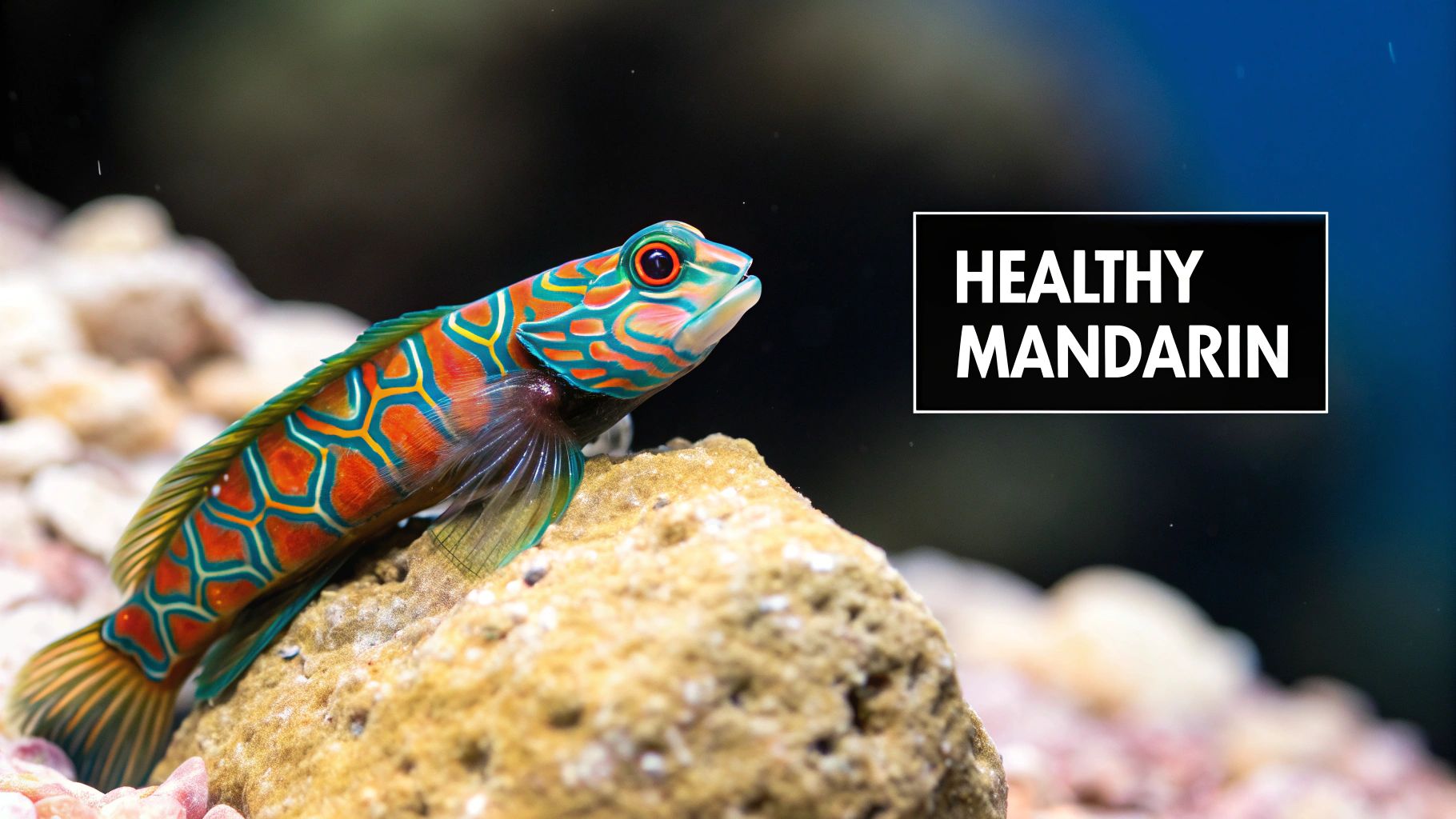
So, you've put in the work establishing a thriving copepod population and dialing in your feeding routine. But how do you know if it's actually paying off? Thankfully, mandarin gobies are pretty transparent about their health, giving you clear visual cues that are easy to read once you know what to look for.
Learning these signs will not only give you peace of mind but also equip you to do a quick daily wellness check, ensuring your stunning fish is truly thriving.
The single most important indicator of a well-fed mandarin is the shape of its stomach. A healthy, happy specimen will have a gently rounded belly, a clear sign it's getting more than enough food to power its famously high metabolism.
This is a world away from the number one sign of trouble: a pinched stomach. If you see a concave or sunken area right behind the gills, that's a major red flag. It means the fish is burning through its reserves and is, quite simply, starving. A healthy belly should look full, but never bloated or unnaturally swollen, which might point to a different health problem altogether.
Observing Natural Hunting Behavior
Beyond its body shape, a mandarin's behavior is a powerful window into its well-being. A healthy mandarin is a busy mandarin. Period.
It should spend most of its day actively exploring the rockwork and sandbed, methodically pecking at surfaces in a constant hunt for its next meal. This curious, deliberate foraging is the sign of a fish that feels secure and has plenty of energy. You’ll notice its eyes moving independently, constantly scanning its territory for any hint of a copepod.
A fish that’s lethargic, hiding all the time, or staying motionless for long stretches is often a fish that’s in trouble.
A healthy mandarin is a hunter. If your fish is always hiding and rarely seen exploring the live rock, it's often a sign of either stress from tank mates or, more commonly, a lack of available food to encourage its natural foraging instincts.
The Vibrancy of Their Colors
Those dazzling colors aren't just for show—they're a direct reflection of a mandarin's health and nutrition. It takes a proper diet, rich in the essential fatty acids and carotenoids found in live copepods, to fuel that incredible pigmentation. A dull mandarin is often an unhealthy one.
Here’s a quick visual checklist for a thriving fish:
- Vivid Colors: The blues, oranges, and greens should be deep, sharp, and almost iridescent. A fish with faded or washed-out colors is often suffering from malnutrition.
- Clear Eyes: Its eyes should be clear and alert, constantly moving and scanning its surroundings.
- Intact Fins: Look for full fins that are free of any tears or fraying. This points to good overall health and a low-stress environment.
Ultimately, becoming a keen observer is your best tool. Taking just a minute each day to look for that rounded belly, vibrant coloration, and active hunting behavior will tell you everything you need to know. These daily check-ins allow you to spot potential issues early, tweak your feeding plan if needed, and ensure your mandarin goby remains the healthy, spectacular centerpiece of your reef.
Mandarin Goby Diet FAQs
Even after you've done all your homework, questions always come up when you're responsible for a fish this specialized. Let's tackle some of the most common things reefers ask about feeding their mandarin goby, with direct answers to help you succeed.
How Long Can a Mandarin Goby Survive Without Copepods?
This is the big one, and the answer is scary: not long at all. A mandarin's metabolism is incredibly high, and it has to graze pretty much constantly just to maintain its weight.
In a tank without an established, reproducing food source, a mandarin can start showing signs of starvation in just a few days. It might perish in as little as one to two weeks. Their survival is measured in days, not months. This is exactly why they should only go into mature reef tanks (at least six months old) that already have a huge, visible copepod population.
Can I Keep Two Mandarin Gobies in the Same Tank?
Putting more than one mandarin in a tank is a massive challenge. Success hinges entirely on the tank's size, the sheer amount of food available, and the sex of the fish. You can never keep two males together. They are fiercely territorial and will fight relentlessly, often until one is dead.
A male-female pair can sometimes work out in a very large aquarium—think 75+ gallons—with an absolutely booming pod population. The main hurdle is always the food supply. Two mandarins means you need to support double the grazing pressure, which demands a large, mature system, likely with a well-established refugium churning out food.
Key Takeaway: The food supply dictates everything. If you can't confidently support one mandarin with a ridiculous overabundance of pods, adding a second is just a recipe for starving them both.
What Are the Best Tank Mates for a Mandarin Goby?
Choosing the right neighbors is critical. You're looking for peaceful fish that won't bully the slow-moving mandarin or, just as importantly, steal its food. Aggressive and hyperactive fish are completely out. This includes most wrasses, dottybacks, and larger, feistier damselfish.
Instead, think about calm community fish. Good companions include:
* Clownfish
* Firefish
* Royal Grammas
* Other small, peaceful gobies and blennies
It's also crucial to avoid direct competition. Any fish that also spends its day picking at rocks for copepods—like a scooter blenny or another type of dragonet—is going to create a food war. Your mandarin will likely lose.
How Do I Know If My Tank Has Enough Copepods?
The classic "flashlight test" is still the most reliable way to check. Wait until about an hour or two after your main tank lights have turned off for the night. Grab a flashlight and shine the beam right up against the aquarium glass and across your live rock.
What you're looking for are dozens of tiny, white "specs" scurrying all over the surfaces. These are your copepods and amphipods. If you can easily see a dense swarm of them in a small area, you probably have a healthy population. But if you have to hunt around just to spot a few here and there, your pod population is nowhere near strong enough to sustain a mandarin's constant appetite.
A thriving mandarin goby is the direct result of a thriving, self-sustaining ecosystem of live food. At PodDrop Live Aquarium Nutrition, we provide the high-quality, diverse live copepod cultures needed to build that foundation. Ensure your mandarin doesn't just survive but flourishes by seeding your reef with the best. Explore our live nutrition blends today at https://www.getpoddrop.com.