

A Complete Guide to Live Copepods for Your Reef Tank
Picture this: a microscopic cleanup crew that also happens to be a 24/7, all-you-can-eat superfood buffet for your fish and corals. That's the real magic of adding live copepods to your reef tank. For so many of us in the hobby, these tiny crustaceans are the missing link that finally clicks everything into place, creating a stable, self-sufficient ecosystem that actually mimics a natural ocean reef.
Why Your Reef Tank Needs Live Copepods
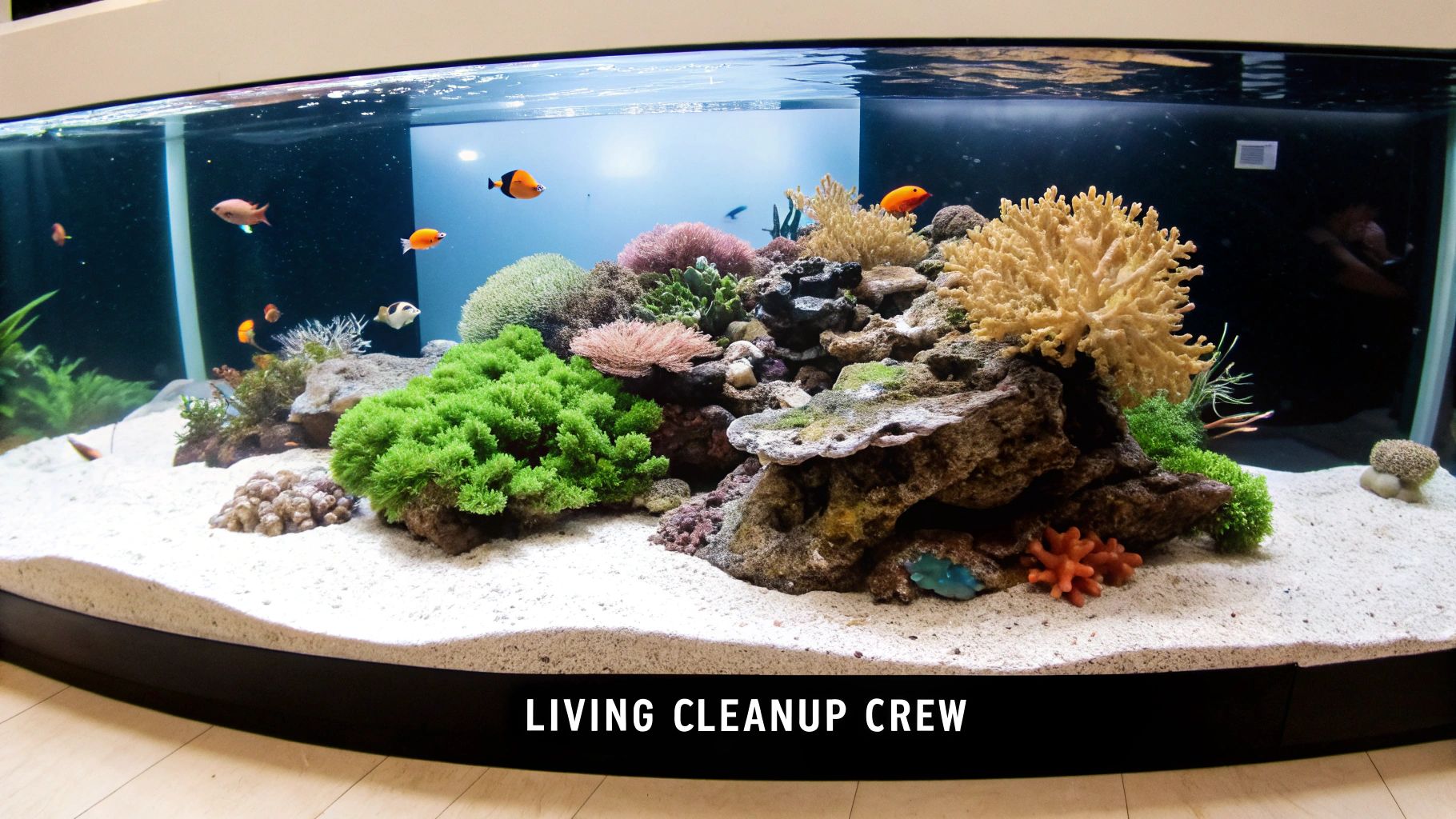
It’s helpful to think of your reef tank not as a simple collection of animals, but as a living, breathing ecosystem. And for that system to truly thrive, it needs a solid foundation. Live copepods are that foundation—they're the living engine driving the entire food web, keeping the whole aquarium clean and balanced. It's a critical dual role that dry foods and your cleaning tools just can't touch.
Their value is so well-known now that the worldwide live copepods market has exploded to USD 182.4 million. This is part of a much bigger shift, with the entire reef aquarium market projected to jump from USD 4.9 billion in 2020 to an incredible USD 11.0 billion by 2028. This boom highlights a major change in how reefers think: we're moving beyond traditional flakes and pellets and recognizing that live foods are absolutely essential for vibrant fish and healthy corals. You can dig into the copepod market growth and see the data for yourself.
The Ultimate Cleanup Crew
First and foremost, live copepods are nature’s most dedicated janitors. They are detritivores, which is a fancy way of saying they actively hunt down and eat all the gunk that would otherwise foul up your water quality. We're talking fish waste, leftover food, and the beginnings of nuisance algae.
A healthy population of pods tirelessly grazes on your rockwork, sandbed, and even the glass, acting as a powerful preventative measure against common tank headaches. They help keep your system pristine, which means less maintenance work for you and a more stable home for your delicate corals and fish.
Think of it this way: Every single copepod is a tiny, autonomous vacuum cleaner, reaching all the nooks and crannies your scraper and siphon can't. When you establish a thriving colony, you have a round-the-clock team working to keep your reef spotless.
A 24/7 Superfood Buffet
Beyond their janitorial services, live copepods are a superior, nutrient-dense food source. Unlike processed foods that start losing their nutritional value the second they hit the water, live pods are swimming packages of essential fatty acids, proteins, and lipids. This living food is a game-changer for many reef inhabitants.
A constant supply of live copepods benefits your tank in a few key ways:
- Feeds Finicky Eaters: Some of the most stunning fish, like Mandarin Dragonets, Pipefish, and certain Wrasses, almost exclusively hunt microfauna. A stable pod population is often the only way to keep these species successfully long-term.
- Boosts Coral Health: Many corals are surprisingly active predators that will snatch copepods right out of the water. This natural food gives them the energy they need for brilliant coloration, better polyp extension, and faster growth.
- Encourages Natural Behaviors: Having live prey in the tank encourages your fish to hunt and forage just like they would in the wild. This reduces stress and dramatically improves their overall vitality.
When it comes down to it, introducing live copepods is one of the most impactful steps you can take to create a reef that is truly self-sufficient and buzzing with life.
Choosing the Right Copepod Species for Your Tank
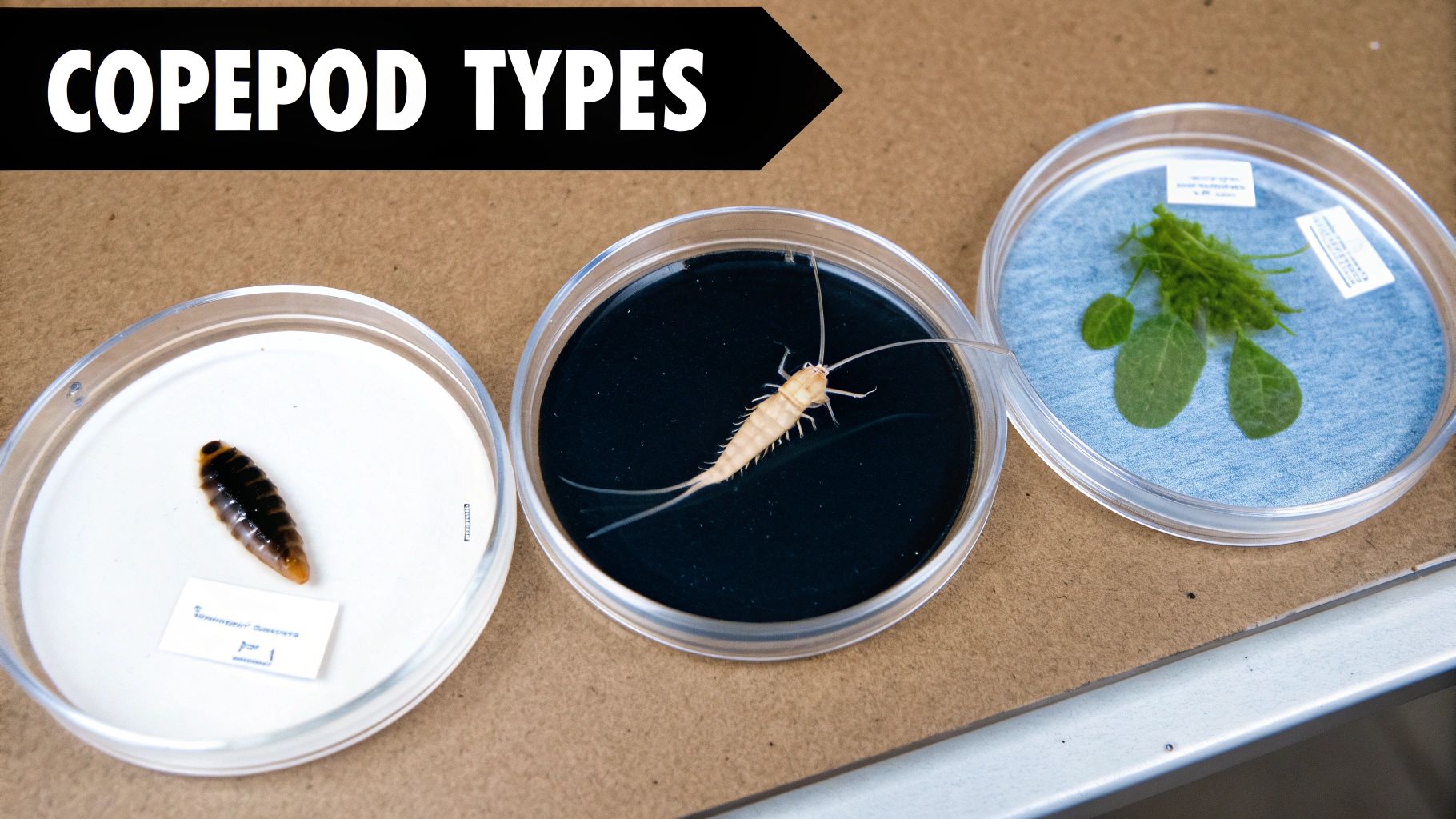
Diving into the world of live copepods can feel a bit like staring at a menu full of exotic ingredients you’ve never seen before. While it’s true that all pods help create a healthier reef, they aren’t all created equal. Each species brings a unique skillset to the table, perfectly suited for specific jobs in your aquarium.
Understanding these differences is the secret to unlocking their full power.
Think of it like assembling a specialized crew for your reef. You wouldn’t hire a plumber to do electrical work, right? The same logic applies here. Picking the right copepod ensures you get the most bang for your buck, whether your goal is to feed a picky mandarin, keep your sandbed sparkling clean, or just establish a rock-solid, self-sustaining food source.
Meet the Specialists of the Pod World
To make the right call, you need to get to know the main players. Each species has its own size, behavior, and preferred hangout spot in the tank, making them specialists for certain tasks.
-
Tisbe biminiensis (The Benthic Cleaner): These are the tiny, tireless groundskeepers of your reef. As benthic (bottom-dwelling) creatures, they spend their days crawling through your sandbed and exploring every nook and cranny of your live rock. They’re fantastic detritivores, constantly munching on waste and biofilm right where it collects. Because they stick to the substrate, they’re less likely to get snapped up by fish, giving their population a great chance to take hold and reproduce.
-
Tigriopus californicus (The Water Column Drifter): Bigger, bolder, and more active, Tigriopus pods are the perfect meal for hungry fish. They have a signature jerky swimming motion that sends them drifting through the open water, making them an irresistible target for finicky eaters like Mandarin Dragonets and certain wrasses. Their size and visibility make them a fantastic "target feeding" pod to directly supplement your fishes' diet.
-
Apocyclops panamensis (The Hardy Pioneer): This species is the ultimate survival expert. Apocyclops are incredibly resilient, tolerating a much wider range of temperatures and salinity levels than most other pods. This toughness makes them an excellent choice for seeding a new tank, jump-starting a population in a refugium, or for any system that might see a few minor environmental swings.
Matching the Pod to Your Purpose
Now that you've met the crew, how do you pick one? It's simple: match the copepod's natural behavior to what you’re trying to achieve.
If your main goal is to keep a Mandarin Dragonet fat and happy, a steady supply of Tigriopus is your best bet. Their swimming behavior makes them easy targets. But if you're more focused on long-term nutrient control and establishing a hidden, self-sustaining cleanup crew, the secretive and hard-working Tisbe is the clear winner.
Pro Tip: Why limit yourself to just one? A multi-species blend often creates the most dynamic and effective micro-ecosystem. By combining benthic cleaners with water column drifters, you fill every ecological niche in your tank and build a more robust and comprehensive food web.
The nutritional punch these tiny creatures deliver is huge. Live pods are packed with lipids and proteins that can boost fish coloration and growth rates significantly. This is a game-changer for delicate species like mandarins and pipefish. The global live copepods market, valued at USD 187 million, is built on the needs of these animals and the coral farms that rely on the superior nutrition of live prey. Hobbyists often report 30-50% better survival rates for fish that depend on microfauna when a healthy pod population is present.
PodDrop Copepod Species Comparison
To make your decision even easier, we've put together a head-to-head comparison of our primary copepod species. This table will help you select the perfect fit for your aquarium's specific needs, whether you're feeding picky eaters or battling detritus.
| Copepod Species | Primary Role | Best For | Size & Behavior | PodDrop Product |
|---|---|---|---|---|
| Tisbe biminiensis | Detritus Control & Seeding | Establishing long-term populations, cleaning sandbeds, and feeding corals. | Tiny & Benthic: Lives on rock and sand, largely avoiding fish. | Tisbe Pods |
| Tigriopus californicus | Fish Nutrition | Feeding finicky fish like Mandarins, Wrasses, and Pipefish directly. | Larger & Pelagic: Actively swims and jerks through the water column. | Tig Pods |
| Apocyclops panamensis | Resilient Seeding & Feeding | Seeding new tanks or refugiums; tolerates wider temp/salinity swings. | Medium & Hardy: Active in both the substrate and water column. | Apo Pods |
Choosing the right live copepods is a strategic move that pays off in tank health, animal vitality, and overall stability. By understanding what each species brings to the table, you can build a custom microfauna crew perfectly suited to your reef's unique needs. To see these specialists in action, you can explore a variety of our single-species copepods and find the perfect match for your system.
How to Seed and Sustain Your Copepod Population
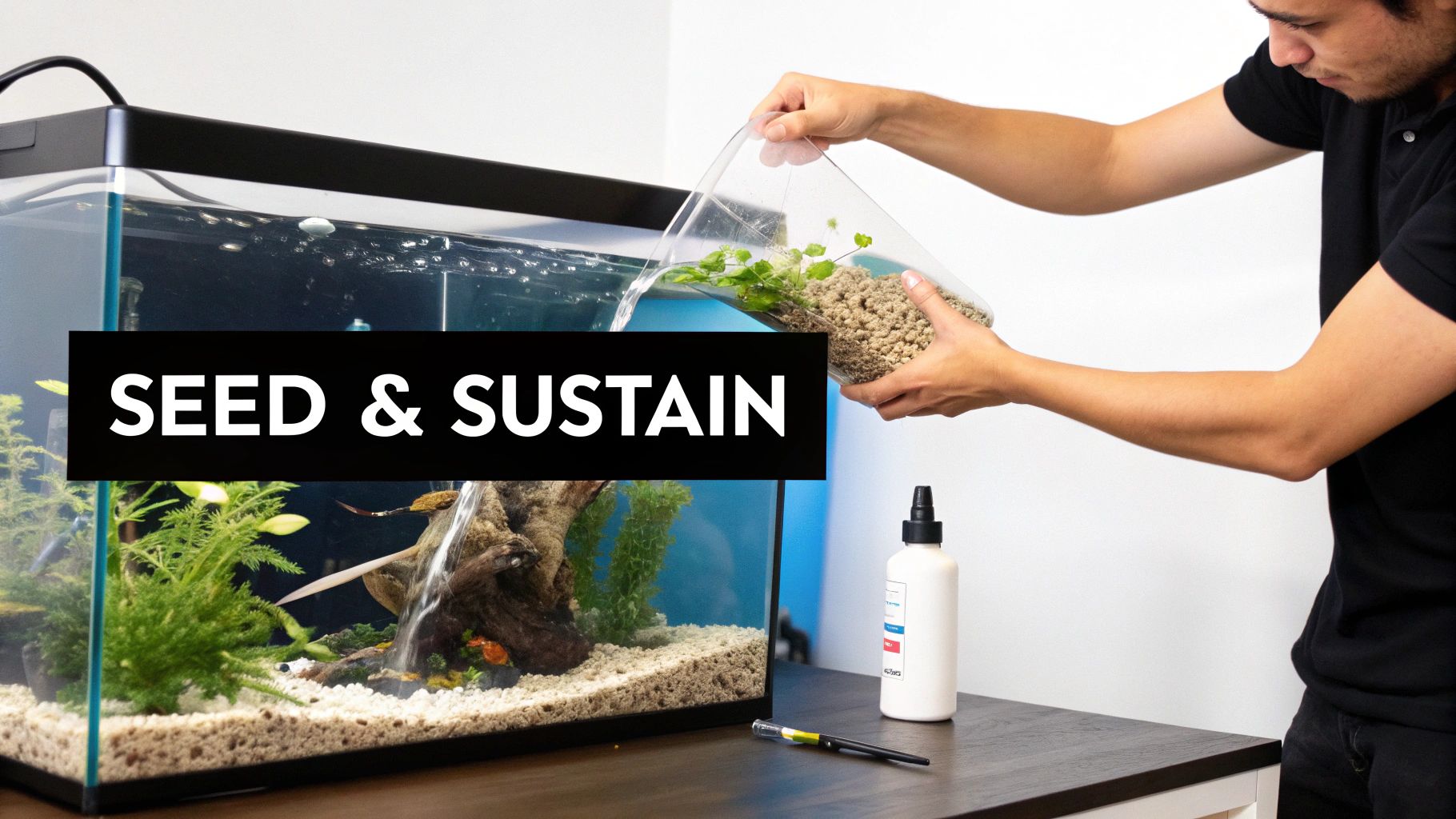
Successfully establishing a thriving, self-sufficient population of live copepods isn't as simple as dumping a bottle in your tank and crossing your fingers. It's a two-part strategy: a careful introduction—or "seeding"—followed by smart maintenance to "sustain" the colony for the long haul.
Think of it like planting a garden. You don't just toss seeds on the ground. You prepare the soil, plant them correctly, and then provide the right conditions for them to sprout and multiply.
This approach is what turns a one-time purchase into a permanent, living food source and an always-on cleanup crew. Getting the introduction right gives your new population a strong foundation, and from there, creating the right environment ensures they reproduce faster than they get eaten. This is how you build a resilient colony that becomes a pillar of your reef's food web.
The Seeding Phase: Your Introduction Playbook
Those first 24 hours are absolutely critical for your new copepods. Your mission is simple: give them the best possible chance to find shelter and get settled before they become an expensive snack for your fish. A few easy steps can make a massive difference in their survival rate.
Start by turning off the lights in your tank. Darkness is the universal "all clear" signal for copepods to get moving, and it's when many fish slow down. This gives the pods a huge advantage, letting them disperse and find nooks and crannies without being hunted immediately.
Next, you'll want to create a calm, safe environment by temporarily shutting down some key equipment.
- Turn Off Your Protein Skimmer: Skimmers are fantastic at pulling out gunk, but they can't tell the difference between fish waste and a copepod. Leaving it on will suck out a huge chunk of your new arrivals.
- Disable High-Flow Pumps and Powerheads: Strong currents will just blast the pods all over the tank, preventing them from settling into the rockwork or sandbed where they need to be.
- Halt Filtration Systems: Canister filters, HOB (hang-on-back) filters, and especially filter socks will trap and remove pods just as effectively as a skimmer.
Keep this equipment off for at least 30-60 minutes after adding the copepods. Gently pour the bottle's contents into a low-flow area of the tank—ideally near your rockwork or, even better, directly into your refugium if you have one. This process ensures the maximum number of live copepods survive the move-in day and start colonizing your system.
The Sustaining Phase: Playing the Long Game
Once your pods are seeded, the game shifts to creating an environment where they don't just survive but thrive and reproduce. It all boils down to two things: a steady food source and protection from being eaten into oblivion. Nail this, and you'll be farming copepods right in your own tank.
The single biggest factor for a booming copepod colony is a reliable food supply. Their primary food is phytoplankton—the microscopic algae that forms the very base of the marine food web. Dosing phytoplankton is like adding supercharged fertilizer to your copepod garden. It’s the fuel for growth and reproduction.
A healthy copepod population is directly tied to its food supply. Without adequate phytoplankton, their numbers will stagnate or decline. Consistent dosing ensures they have the energy needed to establish a strong, self-sustaining colony.
Feeding them is easy, but consistency is key. You can learn more about the crucial role of live phytoplankton for your reef and see how it fuels not just pods, but your entire ecosystem. Dosing small amounts several times a week is far more effective than one big weekly dump, as it mimics the constant availability of food on a natural reef.
Creating Safe Havens
Finally, your copepods need places to hide, breed, and raise their young away from hungry mouths. If every pod is out in the open, they'll be picked off faster than they can multiply. Creating refuges is absolutely essential for sustaining their numbers long-term.
- A Refugium: This is the ultimate copepod sanctuary. A separate, protected area, usually in the sump, filled with macroalgae like chaetomorpha creates a perfect, predator-free breeding ground.
- Dense Rockwork: A complex aquascape with tons of small caves, cracks, and crevices gives copepods countless places to hide from fish during the day.
- Deep Sandbed: A sandbed that's at least a few inches deep is a perfect home for benthic species like Tisbe, allowing them to burrow down and reproduce in safety.
- Rubble Piles: Even a small pile of rubble rock in a back corner of the tank or sump can act as a fantastic mini-refuge, offering excellent protection.
By combining a smart seeding technique with a steady food supply and plenty of hiding spots, you shift from simply adding live copepods to actively farming them. This is the approach that guarantees your reef tank has a permanent, reliable source of nutrition and a tireless cleanup crew working for you 24/7.
The Cascading Benefits of a Healthy Pod Population
Adding a healthy population of live copepods to your aquarium is like setting a small stone rolling down a hill. It starts a powerful chain reaction that positively touches every corner of your ecosystem. This isn't just about tossing another creature into your tank; it's about kickstarting a natural, self-sustaining cycle that ripples outward, making your reef more stable, vibrant, and alive.
The first ripple hits your most prized and delicate inhabitants: your corals. We often think of corals as just needing light, but many are hungry predators that actively hunt. Copepods are the perfect, bite-sized meal, absolutely packed with the essential fatty acids and lipids that light alone just can't provide.
This nutritional boost fuels results you can actually see. Corals with a steady supply of live prey almost always show significantly better polyp extension, as they're constantly reaching out to snag this abundant food. Better feeding leads directly to richer, more vibrant coloration and faster skeletal growth, transforming your reef from a static display into a dynamic, colorful world.
Fueling Your Fish and Promoting Natural Behavior
The ripple effect doesn't stop there—it flows right to your fish. For some species, a constant supply of live copepods isn't just a nice bonus; it's a lifeline. Finicky eaters like Mandarin Dragonets, Pipefish, and certain wrasses are specialized micro-predators, hardwired to hunt tiny crustaceans all day long.
A thriving pod population lets these fish do what they're meant to do: forage. It drastically cuts down their stress and boosts their health. Instead of anxiously waiting for you to drop in some frozen food, they can graze throughout the day, just like in the wild. This constant access to top-tier nutrition helps them maintain a healthy weight, flash their most brilliant colors, and can even trigger successful spawning.
The presence of a self-sustaining food source creates a more balanced and less stressful environment. It's the difference between an animal waiting for its next meal and one living within a complete, interactive ecosystem.
This shift toward live, sustainable nutrition isn't just a niche trend; it's a huge movement in the hobby. The ornamental fish feed market is projected to grow by USD 1.01 billion, with live feeds being a major driver. This demand stems from a growing understanding that live copepods are essential for supporting the millions of hobbyists whose tanks are sustained by aquaculture—which now covers 78% of the marine aquarium trade volume. By creating these micro-ecosystems, reefers can cut the risk of tank crashes by up to 40% and support a more sustainable hobby that relies less on wild collection. You can learn more about the growing role of live feeds in the industry.
Creating a Cleaner, More Stable Ecosystem
Finally, the benefits cascade all the way down to the bedrock of your aquarium: water quality and overall stability. As tireless detritivores, copepods are always on the job. They're constantly grazing on fish waste, leftover food, and the nasty biofilm that often leads to nuisance algae outbreaks.
This microscopic cleanup crew helps process and cycle nutrients right inside your tank. By gobbling up waste before it can decompose and spike your nitrates and phosphates, they become a living, breathing part of your biological filtration system.
The result of all this activity is a cleaner, more balanced system with some serious perks:
- Clearer Water: By munching on suspended particles and organic gunk, copepods help polish your water, making it crystal clear.
- Reduced Nuisance Algae: They directly outcompete and consume the fuel for ugly algae growth on your rocks and glass.
- Enhanced Stability: By helping keep nutrient levels locked down, they create a much more stable environment, reducing the risk of sudden parameter swings that stress out corals and fish.
From making your corals pop to keeping your most delicate fish thriving and even cleaning your water, the interconnected benefits of a healthy copepod population are undeniable. It's amazing how one small addition can create such a massive positive impact across your entire reef.
Your Live Copepod Shipping and Acclimation Guide
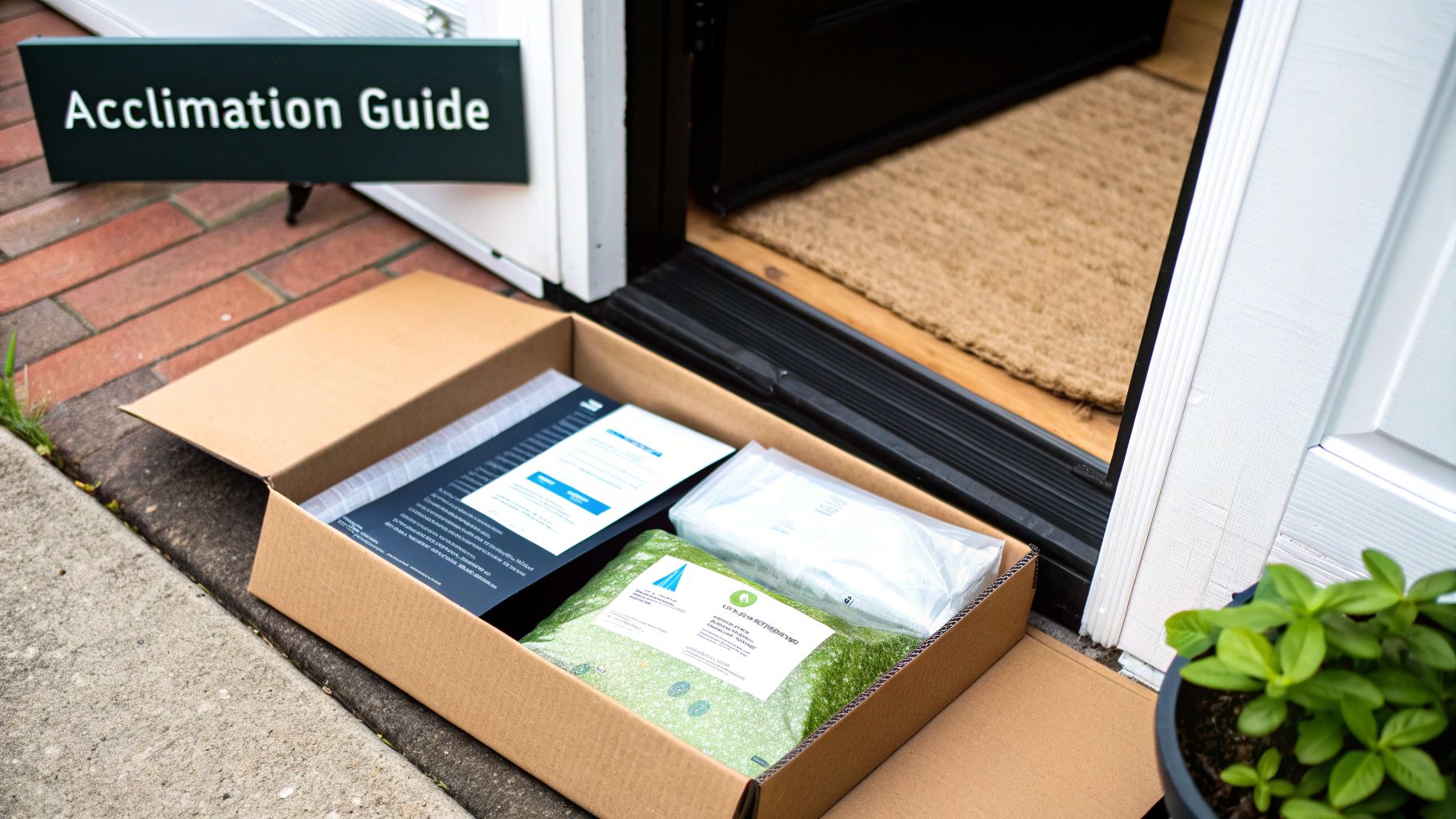
Ordering live critters online can feel like a bit of a leap of faith, but we've dialed in our process to make it completely stress-free. Once you understand how your live copepods get from our lab to your doorstep, you’ll have the confidence that they'll show up healthy, vigorous, and ready to get to work in your reef.
Success really starts with smart logistics. We exclusively ship orders on Mondays and Wednesdays, which ensures your package never gets stranded in a warehouse over the weekend. It's a simple strategy, but it dramatically cuts down on transit time—something that's absolutely critical for the health of any living organism.
What to Expect When Your Pods Arrive
Your PodDrop package is designed for one thing: keeping its precious cargo safe and sound. We use eco-friendly, temperature-controlled packaging that shields the copepods from the extreme heat or cold they might face on their journey. This means they arrive with minimal stress.
When you open the box, you’ll find your bottle of live copepods. The water might look surprisingly clear at first glance, but don't worry. A closer look will reveal hundreds, if not thousands, of tiny specks zipping around inside. The very first thing you should do is a quick visual check to make sure they're active and moving.
Your goal is to get the copepods into your aquarium within 24 to 48 hours of their arrival. While they're hardy little creatures, they are at their nutritional peak and will have the best shot at establishing a colony when you add them to your system promptly.
Step-By-Step Acclimation Checklist
Acclimation is the bridge between the bottle and your tank, and a gentle transition is the key to maximizing their survival rate. This process helps the copepods adjust to your tank's specific water temperature and chemistry, which prevents shock.
Just follow these simple steps for a successful introduction:
- Float the Bottle: Place the sealed bottle right in your aquarium or sump and let it float for a good 15-20 minutes. This allows the water temperature inside the bottle to slowly equalize with your tank's temp.
- Prepare Your Tank: While the bottle is floating, go ahead and turn off your protein skimmer, return pumps, and any high-flow powerheads. You're creating a calm, safe environment for the pods to settle in.
- Lights Out: If you can, it's best to add the pods after your main tank lights have gone out for the day. Darkness encourages their natural behavior and cuts down on the chances of them becoming an instant snack for your fish.
- Release the Pods: Gently open the bottle and slowly pour the entire contents into a low-flow area of your tank. Your refugium or a spot near your rockwork is perfect.
- Wait and Resume: Leave your equipment off for at least 30-60 minutes. This gives the copepods plenty of time to find shelter before the currents kick back on.
This careful introduction ensures the highest number of live copepods survive and start colonizing your rockwork and sandbed. Our commitment to your success is backed by our guarantee. You can find all the details by reading about our PodDrop Live Arrival Guarantee, which explains exactly what it covers and the simple steps to take if you ever have a concern.
Of course. Here is the rewritten section, crafted to sound like an experienced human expert, following all your provided instructions and examples.
Troubleshooting Common Copepod Population Problems
Even with the most dialed-in reef tank, you might hit a snag with your copepod population. Don't sweat it—this happens to everyone, and the fix is usually pretty simple once you figure out what’s going on. Let's walk through the most common headaches hobbyists run into.
Why Can't I See My Copepods?
This is, without a doubt, the number one question we get. You dump in thousands of live copepods, and a week later, it looks like they’ve completely vanished. More often than not, this is actually a fantastic sign.
Copepods are masters of staying hidden. Their entire existence revolves around not becoming a quick snack, so they instinctively dive into your rockwork, burrow into the sandbed, and cram into any dark crevice they can find. If you can't easily spot them during the day, it just means they've successfully settled into your tank's nooks and crannies and are avoiding predators—which is exactly what you want for a healthy, sustainable population.
Pro Tip: Give the "flashlight test" a try. Wait an hour or two after your main tank lights shut off for the night, then shine a flashlight on the glass or a piece of rock. You’ll probably be surprised to see dozens, if not hundreds, of pods scurrying around.
Why Did My Copepod Population Crash?
Seeing a sudden, noticeable drop in your copepod numbers almost always points to an imbalance in the system. The two main culprits are simple: over-predation and starvation. Nailing down which one is the problem is the key to getting things back on track.
Over-Predation Causes:
- Hungry Fish: Some fish are absolute pod-hunting machines. Wrasses (especially a Six Line or Melanurus), Mandarin Dragonets, and certain gobies can wipe out a pod population in a new or smaller tank in no time.
- Nowhere to Hide: An aquascape with very little rockwork or a bare-bottom setup gives your copepods zero places to hide and reproduce safely.
Starvation Causes:
- Not Enough Food: Copepods are grazers, and their primary food is phytoplankton. If your tank is a little too "clean" or you aren't feeding them, they’ll quickly run out of fuel to reproduce, and their numbers will dwindle.
To fix a crash, first take a look at your fish list for any well-known pod predators. If you have a heavy fish load, you need to give the pods a fighting chance by adding more safe zones. A small pile of rubble rock in your sump or tucked away in a back corner of the display works wonders. Most importantly, start dosing live phytoplankton two or three times a week. This is the fuel that will kickstart your copepod population, helping them reproduce faster than they're getting eaten.
Your Copepod Questions, Answered
Even with the best plan, new questions always seem to surface when you're adding something different to your reef. Let's tackle the most common ones about live copepods so you have quick, clear answers and can feel confident about what you're doing.
How Many Pods Do I Actually Need for My Tank?
This really boils down to your main goal. Are you seeding a tank, or are you feeding a specific fish?
If your aim is to establish a breeding population in a new or existing tank (up to 50 gallons), a single bottle is a fantastic starting point. This initial "seed" is usually enough to get a healthy colony going in your rockwork and sandbed.
But, if you're trying to keep a notoriously picky eater like a Mandarin Dragonet happy, your strategy shifts. You’ll likely need to add a bottle weekly to directly supplement its diet, as these fish can wipe out a pod population in no time. The best approach? Start with one bottle, add it at night when the fish are asleep, and then do some recon. If you can still spot pods with a flashlight a week later, your population is taking hold.
Can I Just Dump Them Straight Into My Display Tank?
Yes, you absolutely can! In fact, that's what most people do. The trick is to give them a fighting chance to settle in safely.
For the best results, turn off your pumps, protein skimmers, and any mechanical filters for about 30 to 60 minutes. This creates a calm environment.
Gently add the copepods near your rockwork or in a quiet, low-flow spot. The key is to do this after your main lights are off for the night. This simple step gives them crucial time to find shelter before the fish wake up and your equipment roars back to life. Following this little ritual dramatically boosts their survival rate and your odds of establishing a permanent, breeding colony.
Don't just pour them into the middle of the tank during the day. That’s just ringing the dinner bell for your fish to enjoy an expensive, all-you-can-eat buffet. A gentle, lights-out introduction is the secret to success.
What's the Difference Between a Blend and a Single Species?
Think of it like hiring a specialized contractor versus a versatile construction crew.
Single-species cultures are perfect for very specific jobs. For example:
* Tisbe pods are tiny, bottom-dwelling workhorses. They are fantastic for cleaning up your sandbed and crawling all over your rockwork.
* Tigriopus pods are bigger and more active swimmers, making them an irresistible snack for fish cruising the water column.
A blend, on the other hand, is all about biodiversity. It's designed to fill every nook and cranny of your tank's ecosystem. You’ll get some species that live on the glass, some that burrow in the sand, and others that swim freely. This creates a far more robust and stable microfauna population that benefits your entire reef from the sandbed to the surface.
How Long Do the Pods Last in the Bottle?
For the best results, you'll want to add the copepods to your aquarium within 24 to 48 hours of them arriving at your door.
While they are shipped to be hardy, they're living creatures. They will always do better when introduced to a stable system quickly. Our shipping schedule is built around this, ensuring they spend as little time in transit as possible and show up vigorous and ready to get to work in their new home.
Ready to build a thriving, self-sustaining food web in your reef tank? The team at PodDrop Live Aquarium Nutrition provides freshly cultured, lab-grade live copepods and phytoplankton to fuel a healthier, more vibrant aquarium.